If your South Bay home was built between roughly 1945 and 1955, there's a real chance you have orangeburg sewer pipe buried in your front yard. It was installed in thousands of homes across El Segundo, Old San Pedro, Vinegar Hill, parts of Torrance, and the post-war tracts across the region. It's also the single worst residential sewer pipe material ever widely deployed in the United States — and most homeowners who have it don't know until it fails.
Here's what it is, how to identify it, and what to do if you have it.
What orangeburg actually is
Orangeburg is a pipe made from layers of wood fiber pressed together and saturated with coal tar pitch. It was manufactured primarily by the Orangeburg Manufacturing Company (Orangeburg, New York) from the early 1900s through the 1970s. Residential adoption peaked during the post-WWII housing boom, when steel and clay were in short supply and builders needed a cheap, lightweight alternative for residential sewer laterals.
The appeal at the time: orangeburg was about half the weight of clay pipe, easier to handle, and substantially cheaper. Installation was fast. What nobody knew in 1949 was that bituminized fiber doesn't hold up well against 60–70 years of soil load, ground moisture, and biological activity.
The failure mode is distinctive and ugly: orangeburg doesn't crack like clay or rust like cast iron. It deforms. The pipe walls soften and compress under soil load until the interior diameter collapses — sometimes slowly over decades, sometimes rapidly after a ground disturbance. A pipe that started as a round 4-inch interior ovals out to 3-inch, then 2-inch, then effectively pinches shut.
How to tell if your house has it
Age is the first screen. Homes built between roughly 1945 and 1955 are the highest-probability candidates. Some later installations through the early 1970s also used orangeburg, but it's less common after about 1960 when PVC and cast iron became widely available.
Location matters within the South Bay. Neighborhoods built primarily in the post-WWII window — Old San Pedro, Vinegar Hill, parts of Old Torrance, older sections of El Segundo, some pockets of Gardena and Lomita — have a higher concentration. Neighborhoods built mostly before WWII (mostly clay) or mostly after 1965 (mostly cast iron or clay) have lower concentrations.
The definitive answer comes from a camera inspection. Orangeburg has a distinctive appearance on camera: the interior looks layered or slightly fibrous rather than the smooth interior of clay or the scaled interior of cast iron. Experienced techs recognize it within seconds of getting the camera into the line.
Symptoms that suggest orangeburg failure: recurring main-line backups that snake temporarily clears but that return within a few months, belly-trap symptoms (sewage pooling in a low spot that reforms after clearing), or visible deformation under camera inspection.
Why it's a ticking clock
Orangeburg pipe has an expected service life that, by 2026, has been exceeded in every installation. There is no installation of orangeburg anywhere in the United States that is still within its design life. When people say a failing orangeburg line is "at the end of its service life," that's understating it — it's been past end-of-life for 20+ years.
The failure pattern is also worse than clay or cast iron. Clay fails at joints — usually one section or one joint at a time. Cast iron fails at the bottom of horizontal runs where water pools. Orangeburg fails structurally along the full length — the entire pipe weakens uniformly, and when it goes, it tends to go over a longer section.
That means orangeburg repair isn't spot-repairable in most cases. Once it starts deforming, the whole line needs to come out. Patches and liners can buy some time but don't address the underlying structural weakness of the host pipe.
Replacement: trenchless is usually the right answer
For orangeburg replacement, pipe bursting with HDPE is almost always the right call. CIPP lining doesn't work well on orangeburg because the host pipe can't reliably support the cure process — the felt liner needs a structurally intact host pipe to conform to, and orangeburg that's already deforming doesn't qualify.
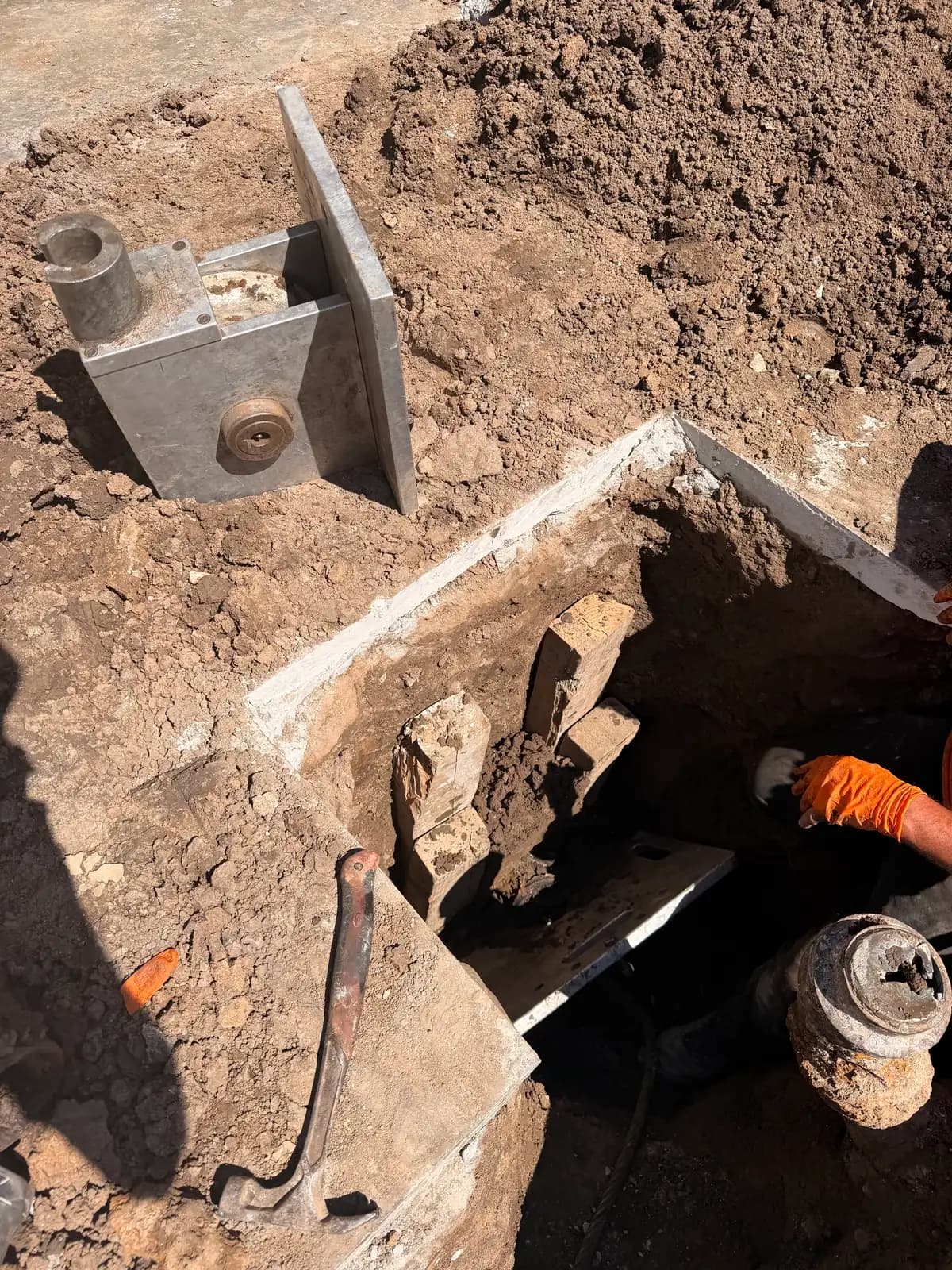
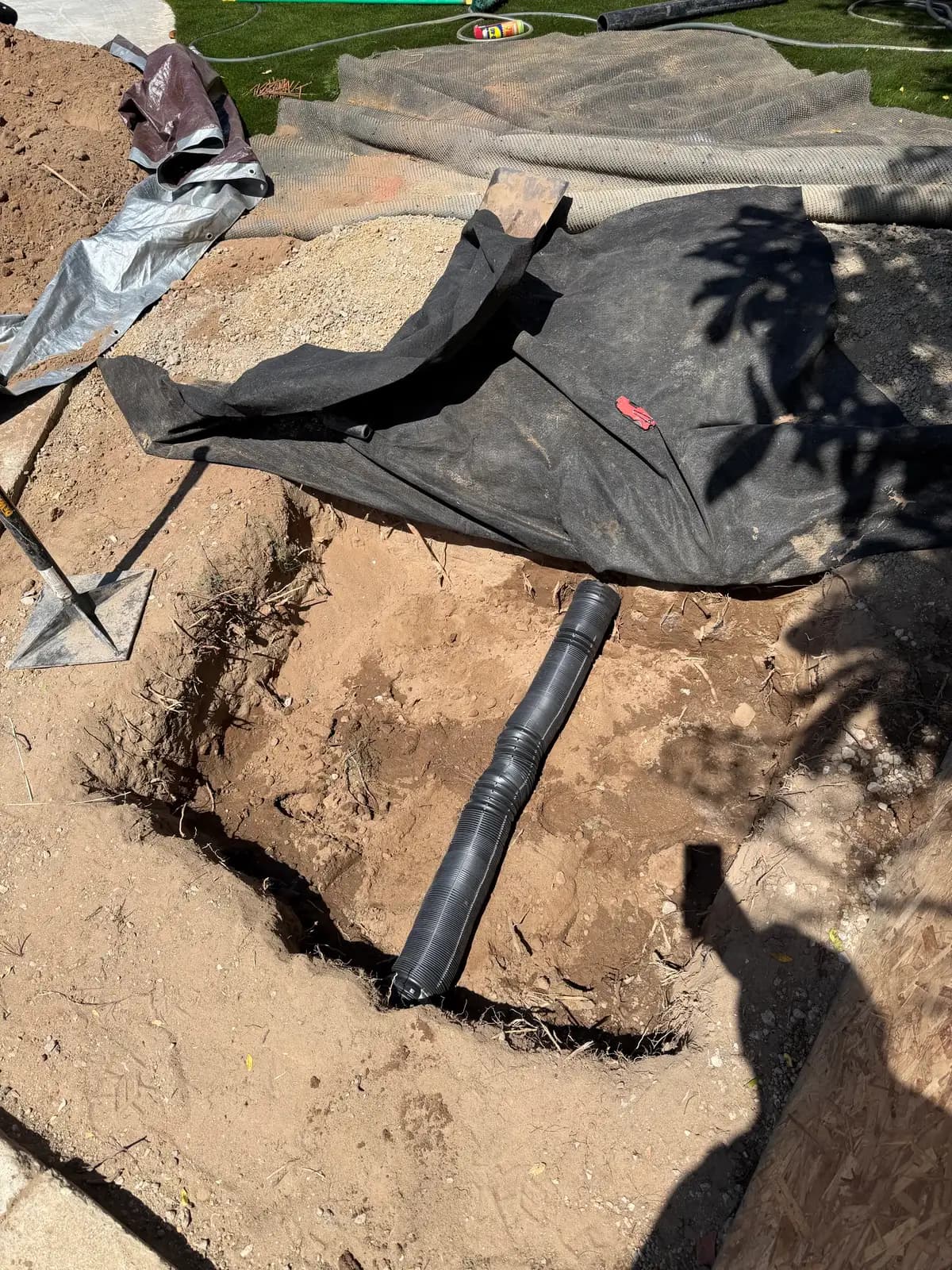
Pipe bursting with HDPE fractures the orangeburg outward into the surrounding soil (it disintegrates readily, actually — it's one of the easier materials to burst) and pulls a new HDPE line into the same path. The replacement is fully fused, joint-free, and rated for 50+ years.
Cost: a typical residential orangeburg replacement via pipe bursting runs $7,500–$16,000 in the South Bay, depending on length, access, and permit complexity. Traditional excavation could theoretically be cheaper on the base plumbing but is almost never the right choice for homes old enough to have orangeburg — those homes typically have mature landscaping and decades of hardscape investment that a traditional dig would destroy.
What to do if you suspect you have orangeburg
Schedule a camera inspection. It's a 30–45 minute appointment and definitively answers the question of what material your lateral is. If it's orangeburg, the footage tells you how advanced the deformation is.
If the inspection shows healthy orangeburg (rare at this point, but occasionally it happens with protected installations): monitor with an annual inspection and plan for replacement within 5 years.
If the inspection shows moderate deformation: plan the replacement within 12 months, before a failure forces an emergency timeline.
If the inspection shows advanced deformation or active backups: schedule the replacement in the next 30–60 days. Do not wait for the actual collapse — the cost of emergency sewage mitigation plus the repair substantially exceeds the cost of a planned replacement.
The bottom line
Orangeburg sewer pipe is one of the few residential plumbing materials that has essentially zero useful life remaining in 2026. If your home has it, the question isn't whether you'll need to replace it — it's whether you'll replace it on your schedule or on its schedule.
A camera inspection confirms material and condition definitively. Trenchless pipe bursting is the replacement method that preserves your property above ground while installing a new line that will serve for the next 50+ years. Most homeowners with orangeburg don't know they have it until something fails. Being proactive saves thousands of dollars and avoids an emergency at 2 AM.
Tags
Related Services