
Non-Invasive Trenchless Technology
Precision Sewer Line Repair.
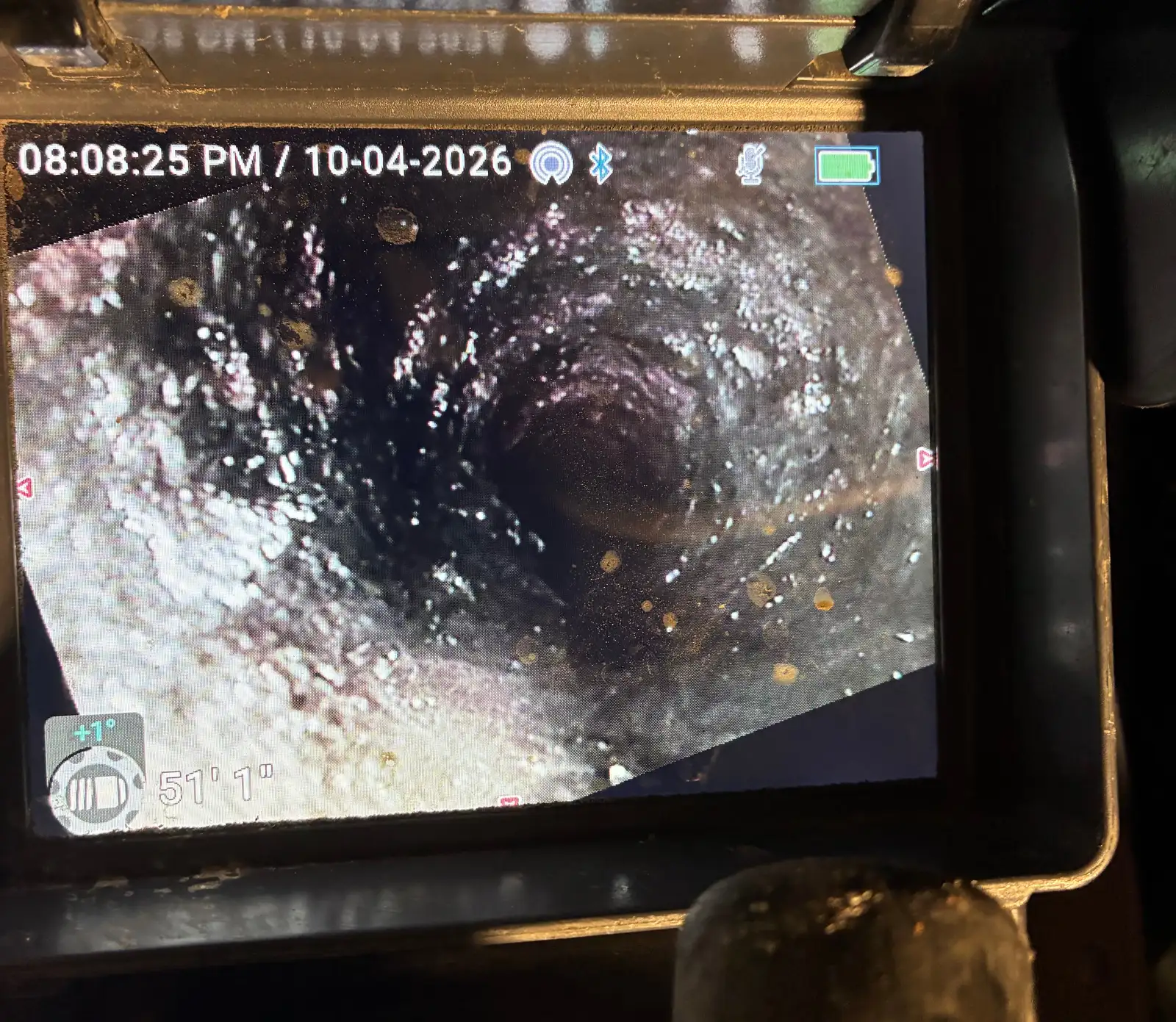
Sewer repair starts with a camera inspection that identifies the pipe material, location, and exact failure. Mainline then recommends the least destructive durable fix—targeted repair, CIPP lining, or pipe bursting—based on whether the line has roots, cracks, offsets, bellies, corrosion, or collapse, with written pricing before work begins.
About This Service
Advanced CIPP lining and trenchless rehabilitation for damaged sewer infrastructure. We restore full flow capacity without excavation.
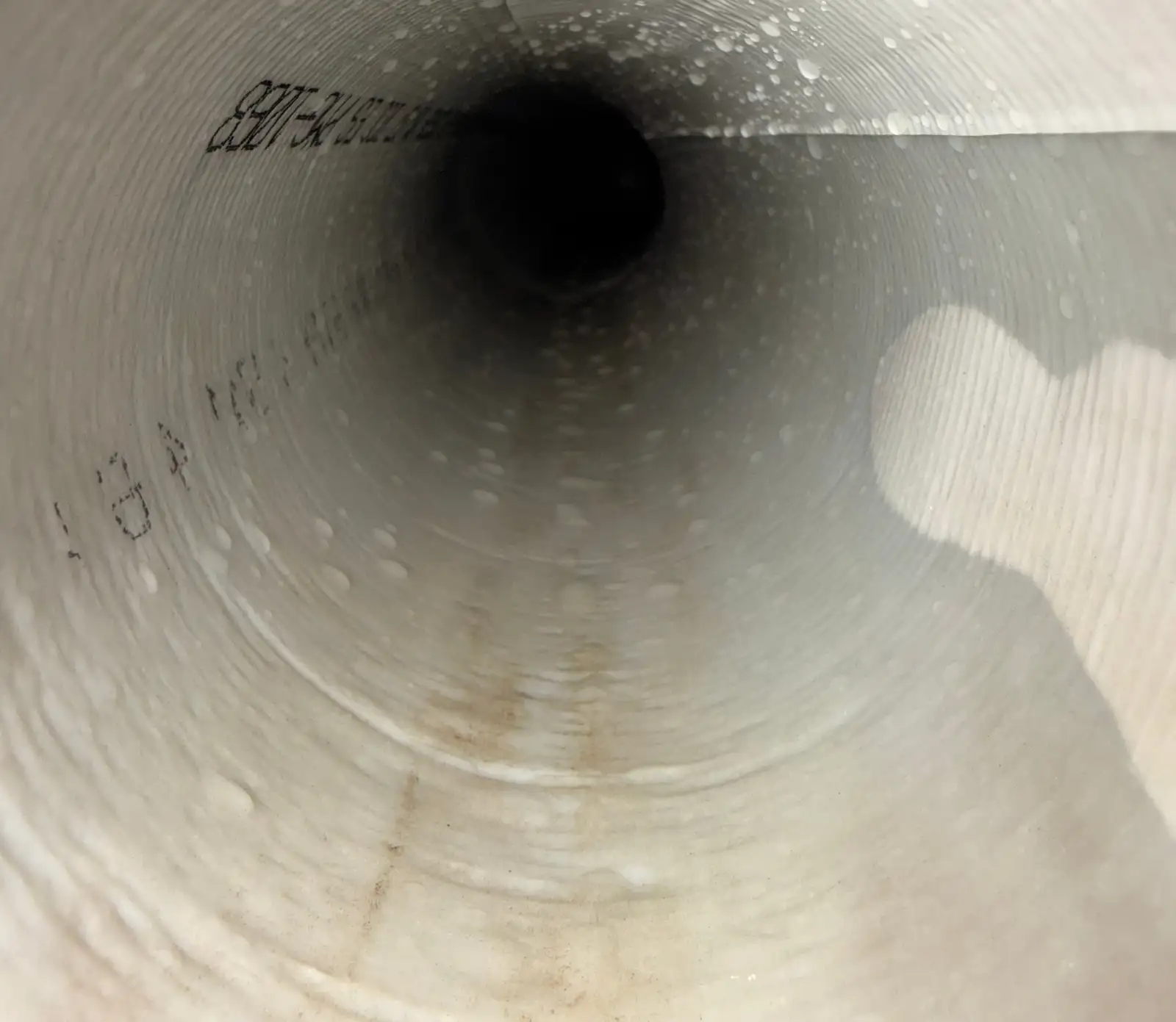
CIPP (cured-in-place pipe) lining is the precision repair method for sewer lines that are structurally sound but leaking, cracked, or have minor root intrusion at the joints. A resin-impregnated felt liner is inverted or pulled into the existing host pipe, inflated to conform to the interior, and then cured in place — using hot water, steam, or UV light depending on the liner chemistry. The result is a new seamless pipe-within-a-pipe that adds 50+ years of service life without any excavation beyond the access point.
Lining earns its keep in the beach cities, where what is underground is old but often still structurally sound. Redondo Beach's 1900–1940 bungalows and the 1948–1965 North Redondo tract sit on sandy coastal backfill that gives a lateral almost no side support — cracked joints and settling-induced offsets show up here far more than inland, while the pipe barrel itself is frequently intact. Hermosa Beach is sand from the Strand inland to PCH, and bellies in older laterals are common because the original bedding compacted unevenly over decades. El Segundo's downtown core still carries 1920s and '30s vitrified clay alongside Orangeburg laterals from the 1940s. Culver City's Carlson Park and Sunkist Park originals date to 1917–1940, with original clay still underneath many of them.

What the camera is actually looking at
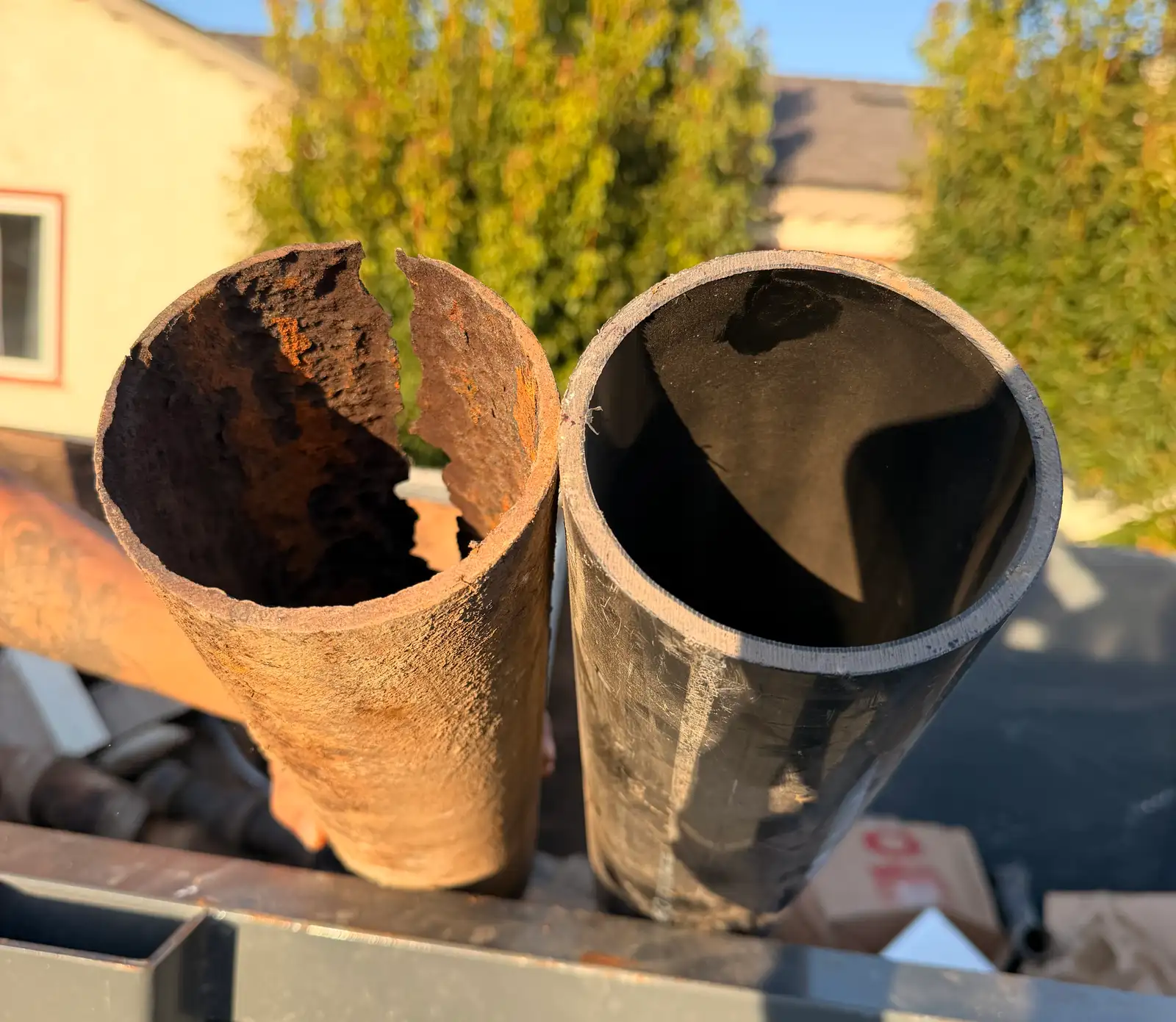
- Same nominal diameter
- Wall split lengthwise
- Bore lost to tuberculation
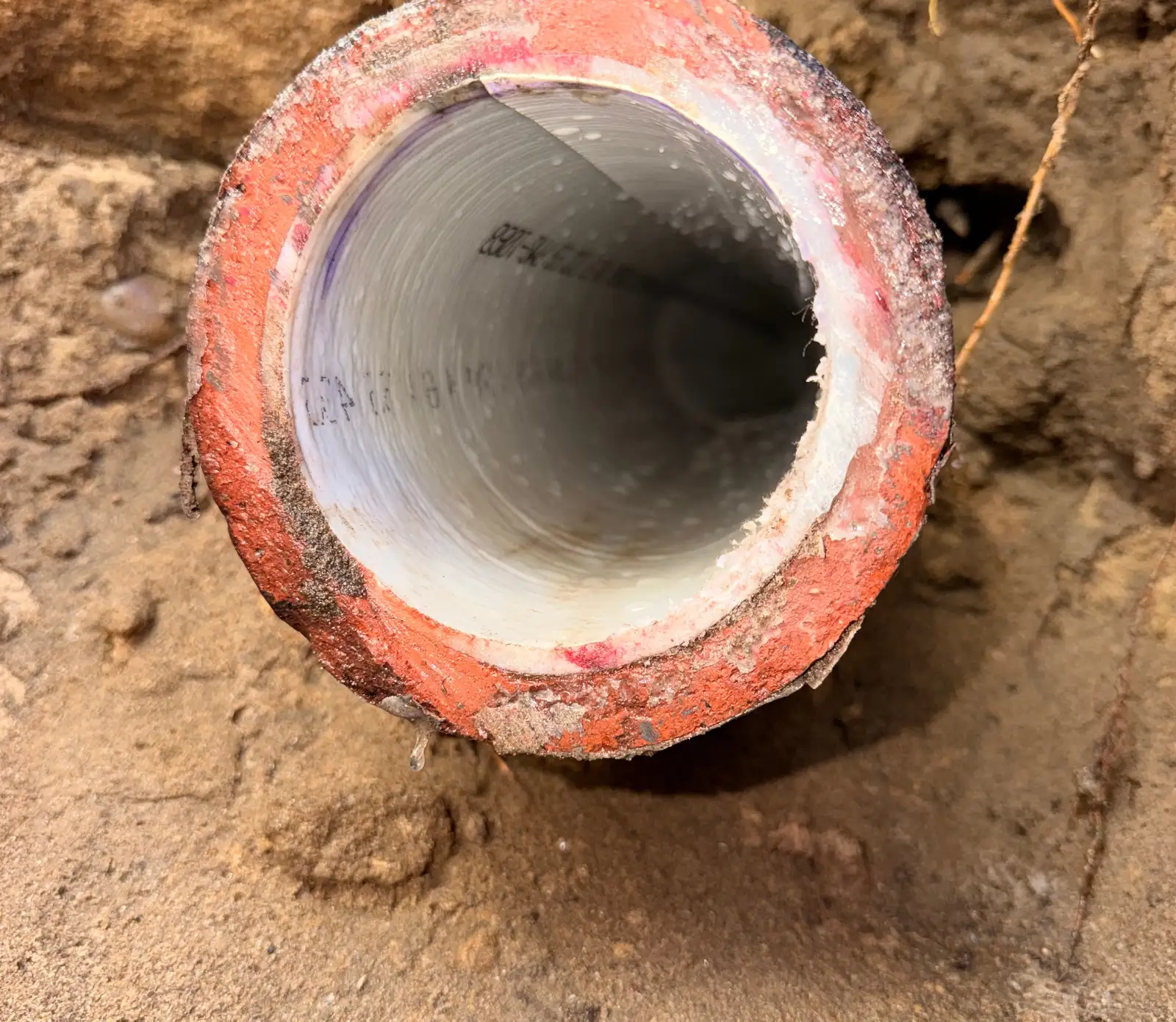
Both pieces are the same size on paper. The one on the left came out of the ground — rust had grown inward until the working bore was a fraction of the pipe, and the wall had split along its length. No cable and no jetter brings that back; there is nothing left to clean.
CIPP makes the most sense when pipe bursting would be overkill. If your host pipe is basically intact but has cracks letting groundwater in or roots finding their way through loose joints, CIPP seals the entire interior in a single application. It also works where pipe bursting is difficult — under foundations, through tight bends, or on lines that are close to other utilities. We camera-inspect every line before we recommend CIPP versus pipe bursting, because the right answer depends entirely on the host pipe's actual condition.
Access is the other reason lining wins on the coast. Hermosa Beach lots average about thirty feet wide, and on the walk streets there is no vehicle access at all — reaching the pipe is the hard part of the job, not repairing it. A liner goes in through your existing cleanout, so it can be installed on a property where staging an excavator was never realistic in the first place. Redondo's high groundwater near the Strand and the Esplanade is the same story from a different angle: open excavation there needs dewatering before anyone touches the pipe, and lining sidesteps that entirely by never opening the ground.

What lining is avoiding
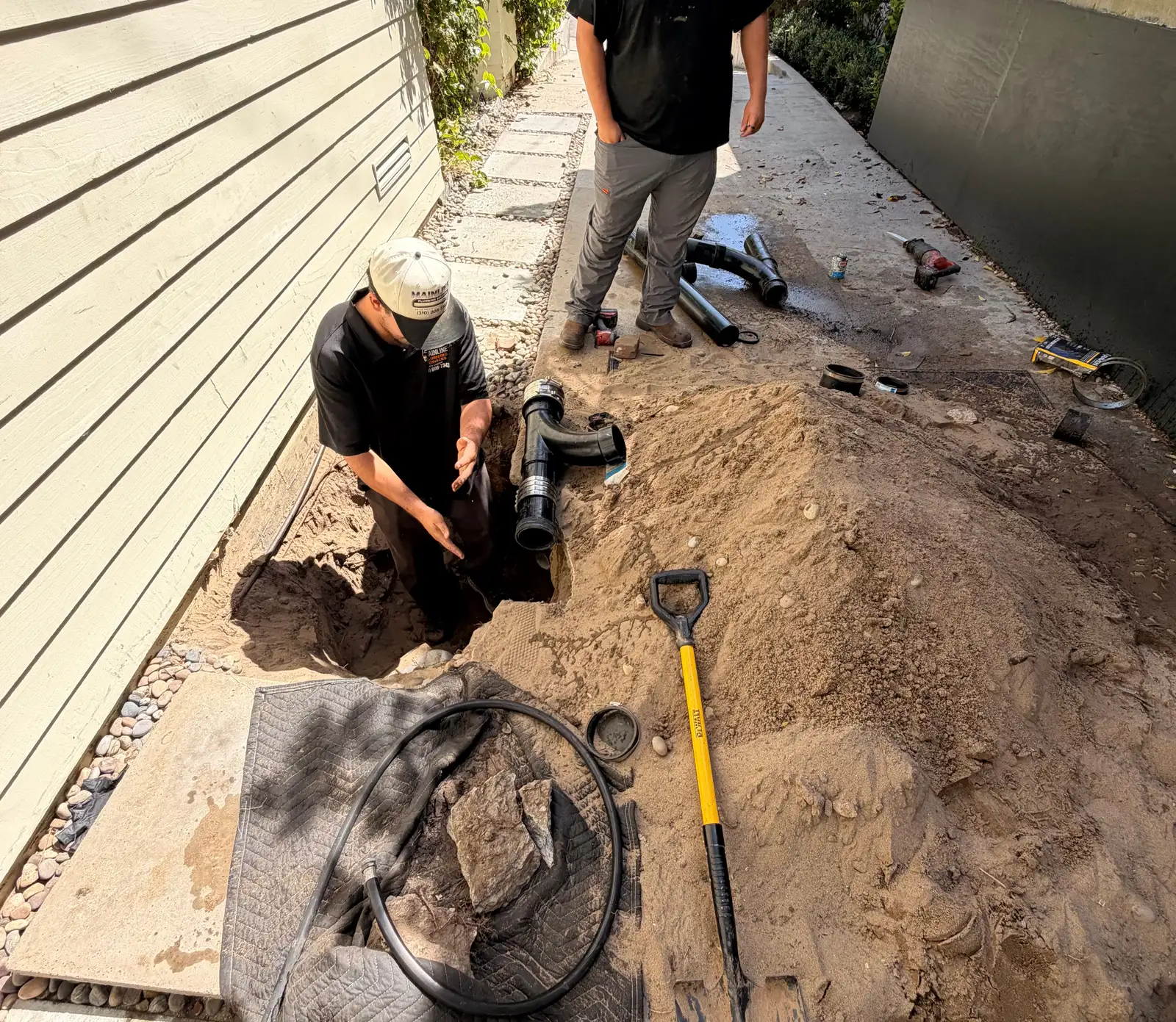
- Trench through the planting bed
- Walkway cut
- Mature roots severed
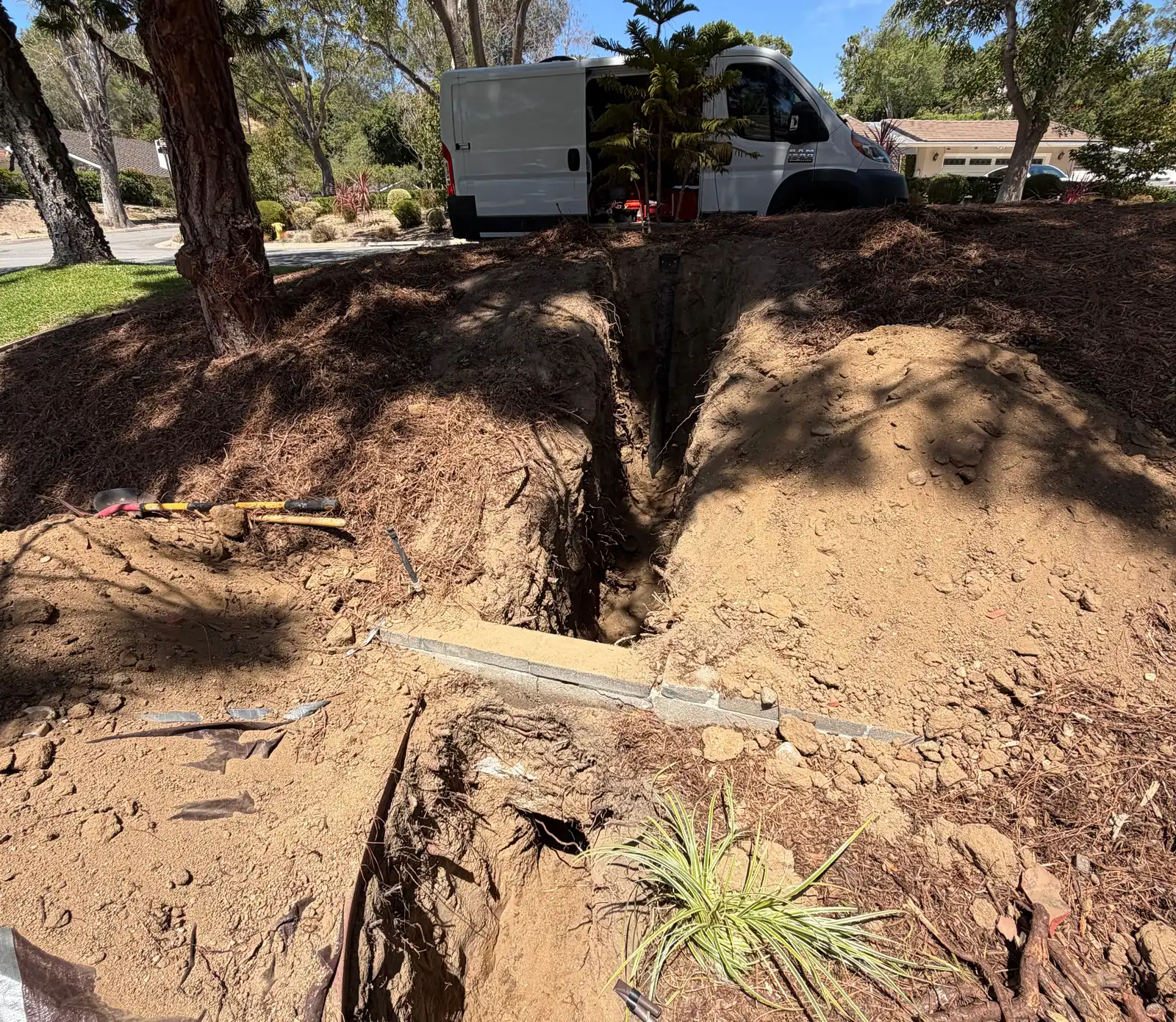
This is the method CIPP replaces. The trench itself is the cheap part — the cost lands afterwards, in the walkway, the irrigation, the planting bed and the trees whose roots were cut to reach the pipe.
Root intrusion is the failure we line for most often, and it is worth understanding why lining beats cutting them out. Roots do not break into a sound pipe barrel; they find the joints, where a hairline gap and a little moisture is all the invitation they need. Cutting them back with an auger clears the blockage and leaves the opening, so the roots come back on roughly the same schedule they did before. A liner seals the full interior of the run in one pass, joints included, which removes the entry point rather than the symptom. We hydro-jet the line first to strip roots, scale and grease back to bare pipe wall, because a liner can only cure tight against a surface that is genuinely clean.
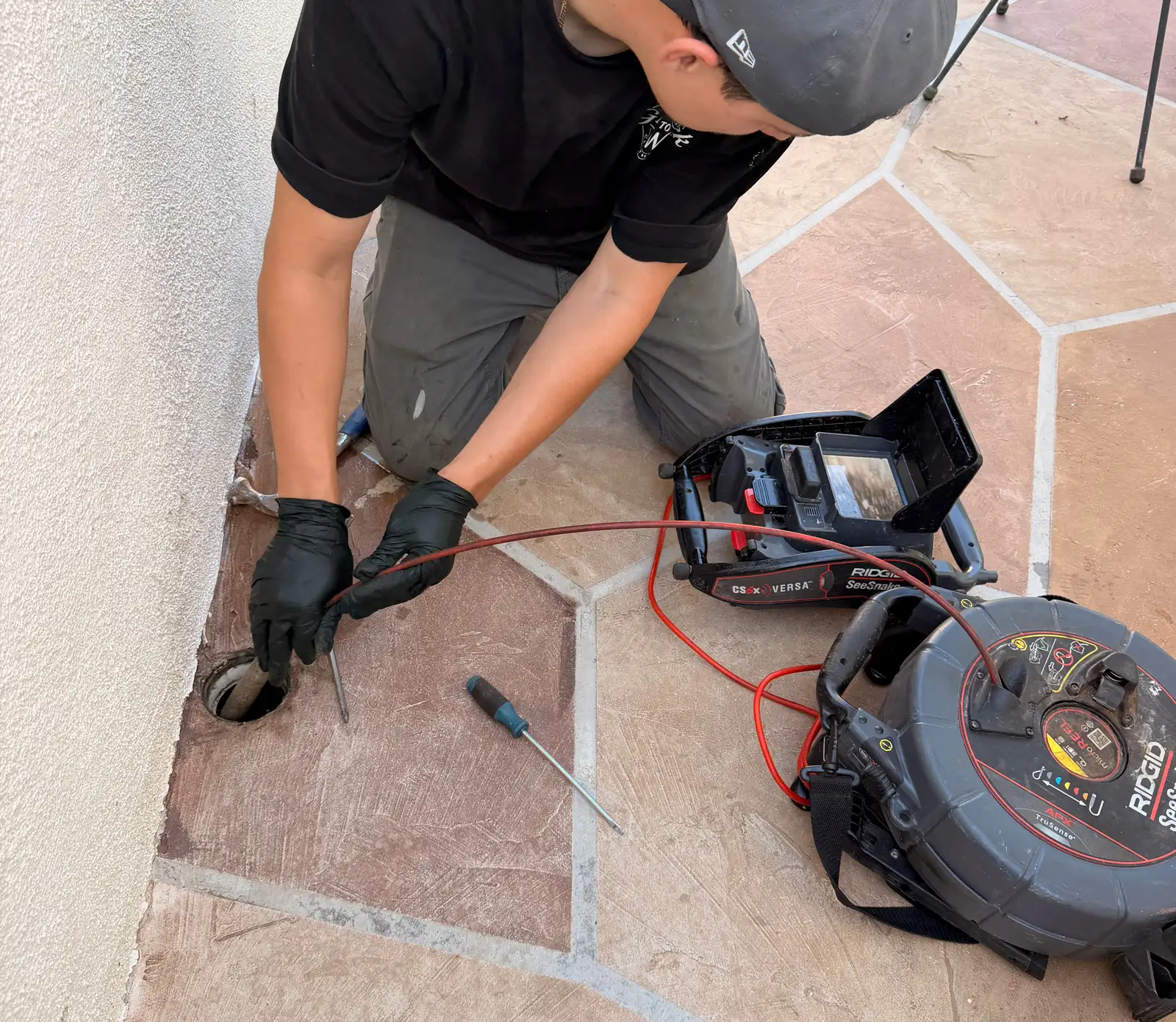
The lining process is less disruptive than most homeowners expect. Access is typically through your existing cleanout — no excavation at all for most residential jobs. The line is cleaned with high-pressure hydro-jetting to remove scale, roots, and debris, the liner is installed and cured (usually 2–4 hours of cure time for ambient or hot-water cure), and a final camera pass confirms the liner is properly seated and the pipe is delivering unrestricted flow. You're looking at a one-day job in most cases, and your property above ground is completely undisturbed.
Permitting on the coast carries an extra layer worth knowing about before you plan the work. Coastal Commission jurisdiction can apply to properties near the shoreline in both Redondo Beach and El Segundo. Hermosa Beach Building & Safety is one of the more rigorous shops in the South Bay — a small city with a small staff and correspondingly high scrutiny. Culver City is incorporated separately from the City of Los Angeles with its own Building Safety department, and historic preservation review applies to designated properties. Because lining usually needs no excavation beyond an existing cleanout, it is often the shortest permitting path available on a constrained coastal lot.
Lining is not a universal fix either. CIPP needs a host pipe that still holds its shape: where a section has fully collapsed, or a joint has separated far enough that the liner would be bridging open ground, replacement is the honest recommendation and we will tell you so. In that case trenchless pipe bursting replaces the line outright without a trench. A liner also takes up a small amount of interior diameter, which almost never matters on a residential four-inch lateral but occasionally does on a line that was undersized to begin with. We camera every line before quoting, because the right method is a property of your pipe — not of what we happen to want to sell you.
The Property-Friendly Difference: 18+ Years of Subterranean Infrastructure Mastery in the South Bay. Fully Licensed, Bonded, Insured, and Factory-Certified.
Step by Step
How It Works
Diagnostic Camera Survey
HD camera inspection identifies cracks, root intrusion, and collapse points with exact depth and location data.
High-Pressure Hydro Cleaning
The existing line is scoured clean of debris, grease, and root material to prepare the host pipe for lining.
CIPP Liner Installation
A resin-saturated liner is inverted or pulled into the host pipe, then cured in place to form a structurally independent pipe-within-a-pipe.
Post-Lining Inspection
A final camera pass confirms the liner is fully cured, properly seated, and delivering unrestricted flow.
The Difference
Traditional vs. Property-Friendly
- Destructive excavation of your property
- Days or weeks of disruption
- Expensive landscape restoration
- Mess and debris left behind
- Minimal to no excavation needed
- Completed in hours, not days
- Your landscaping stays intact
- Clean, professional worksite
Where We Serve
Precision Sewer Line Repair in the South Bay
We provide precision sewer line repair services across the South Bay of Los Angeles and surrounding communities.
Common Questions
Frequently Asked Questions
SERVICE AREA
Precision Sewer Line Repair Across the South Bay
We provide precision sewer line repair to every neighborhood in these South Bay cities.
Ready to Get Started?
Our Property-Friendly technicians specialize in precision sewer line repair. Call now or dispatch online.
