Tankless water heaters get sold hard. Every plumbing company has a reason you should replace your standard tank with a tankless unit today — efficiency, unlimited hot water, tax credits, space savings. Most of those reasons are real. Some are overstated. And for a surprising number of South Bay households, a standard tank is still the right answer.
This guide is written from actually installing both types for 18+ years across Torrance, Manhattan Beach, Palos Verdes, and the rest of our coverage. It's the comparison we give friends and family — not the marketing version.
How each one actually works
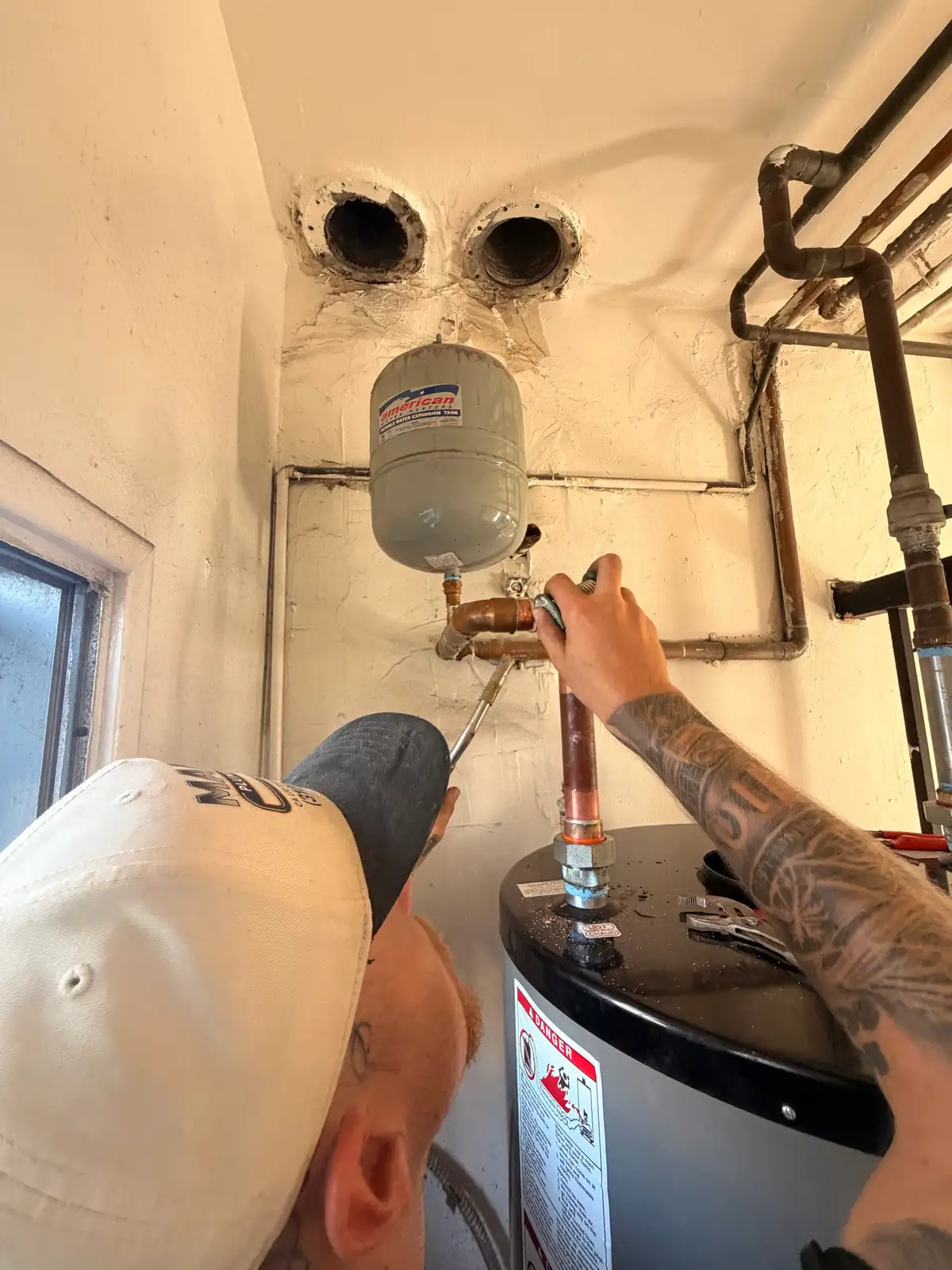
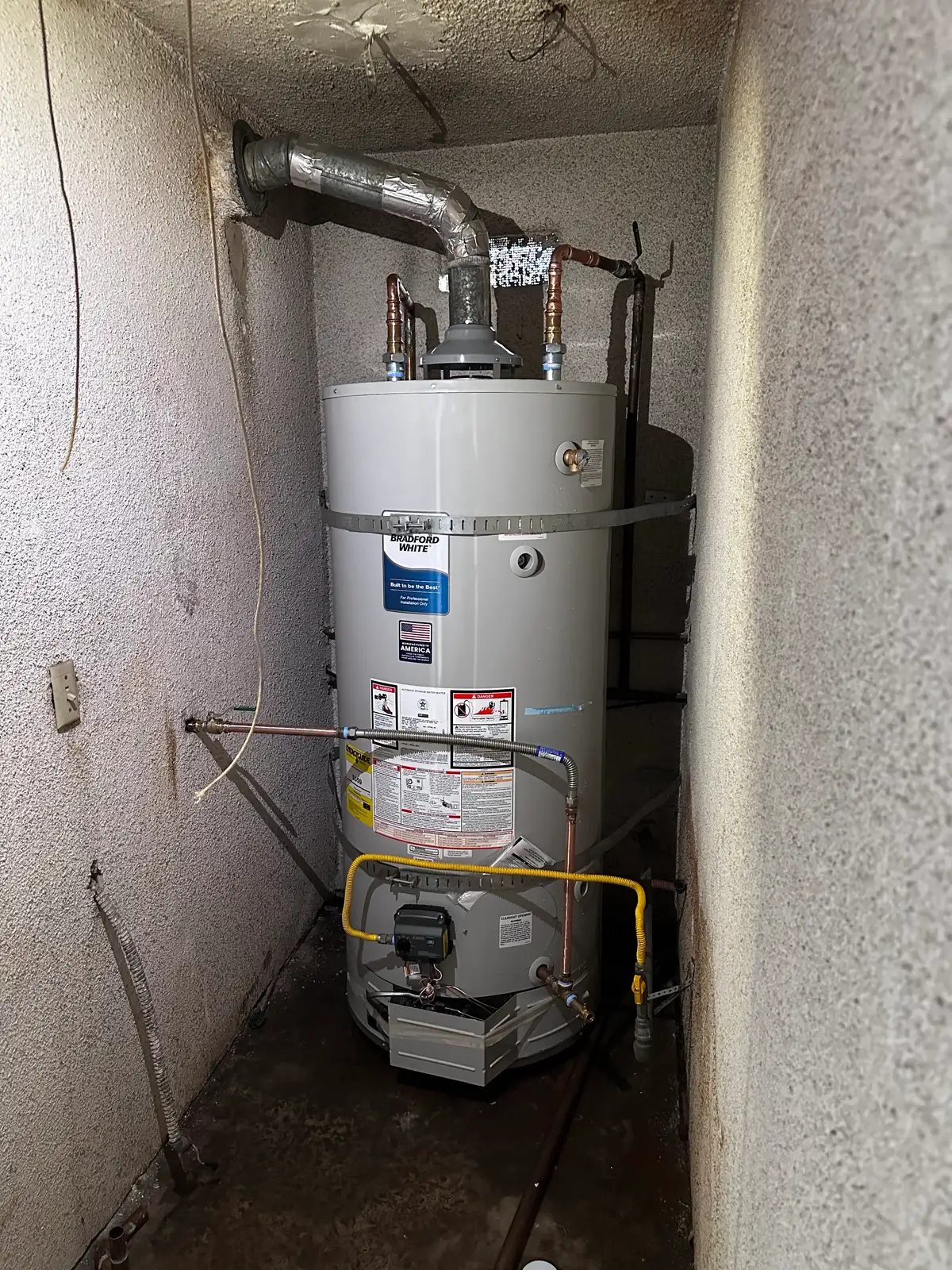
A standard tank water heater stores 40–80 gallons of water, heats it to your setpoint temperature (typically 120°F), and maintains that temperature 24/7. When you turn on a hot tap, heated water flows out of the tank while cold water flows in at the bottom to replace it. Once the tank is drawn down, you wait for recovery — typically 20–30 minutes for a 40-gallon tank to fully reheat.
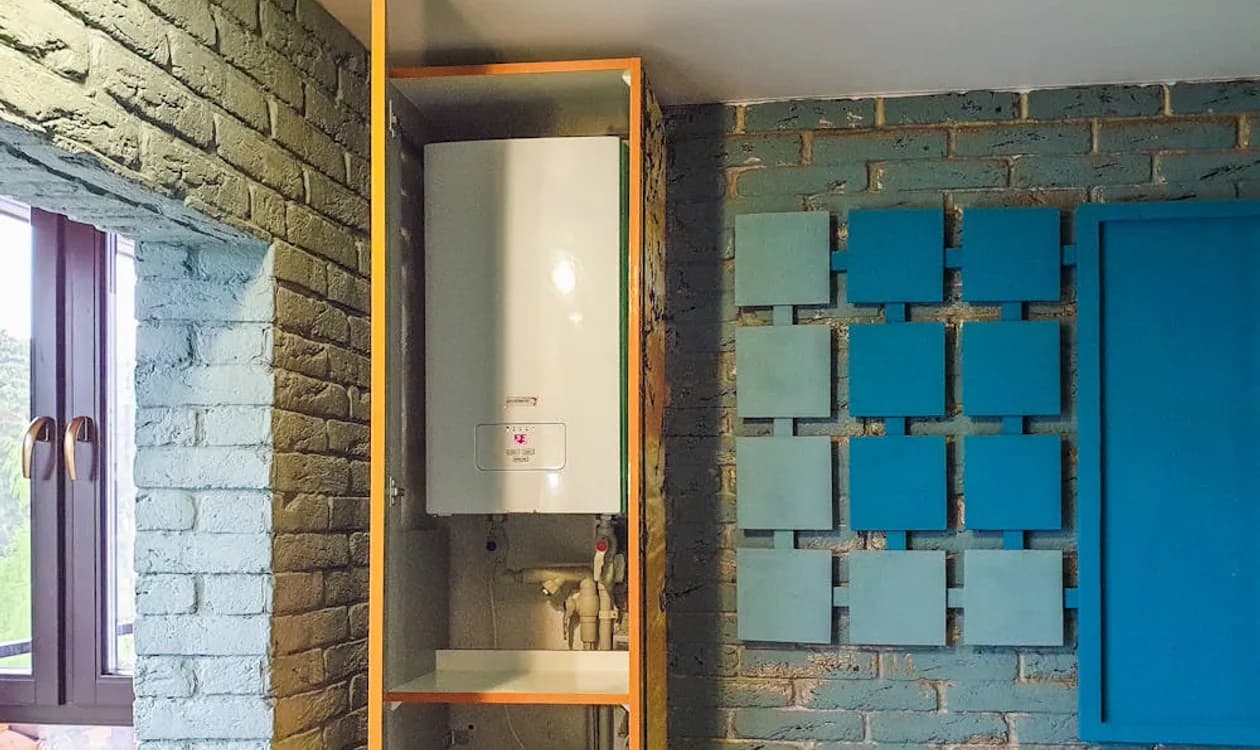
A tankless water heater has no storage. When you turn on a hot tap, a flow sensor fires a high-BTU burner, and water passes through a heat exchanger where it's heated to setpoint in under two seconds. As long as the tap is running, hot water flows continuously. No recovery time, no storage limit. When the tap closes, the burner shuts off.
That architectural difference drives every one of the tradeoffs that follows.
Upfront cost
Standard tank water heater, installed: $1,400–$3,000 for most residential installs in the South Bay. That includes the unit, standard hookup, and code-compliant venting. Installation is typically 2–4 hours.
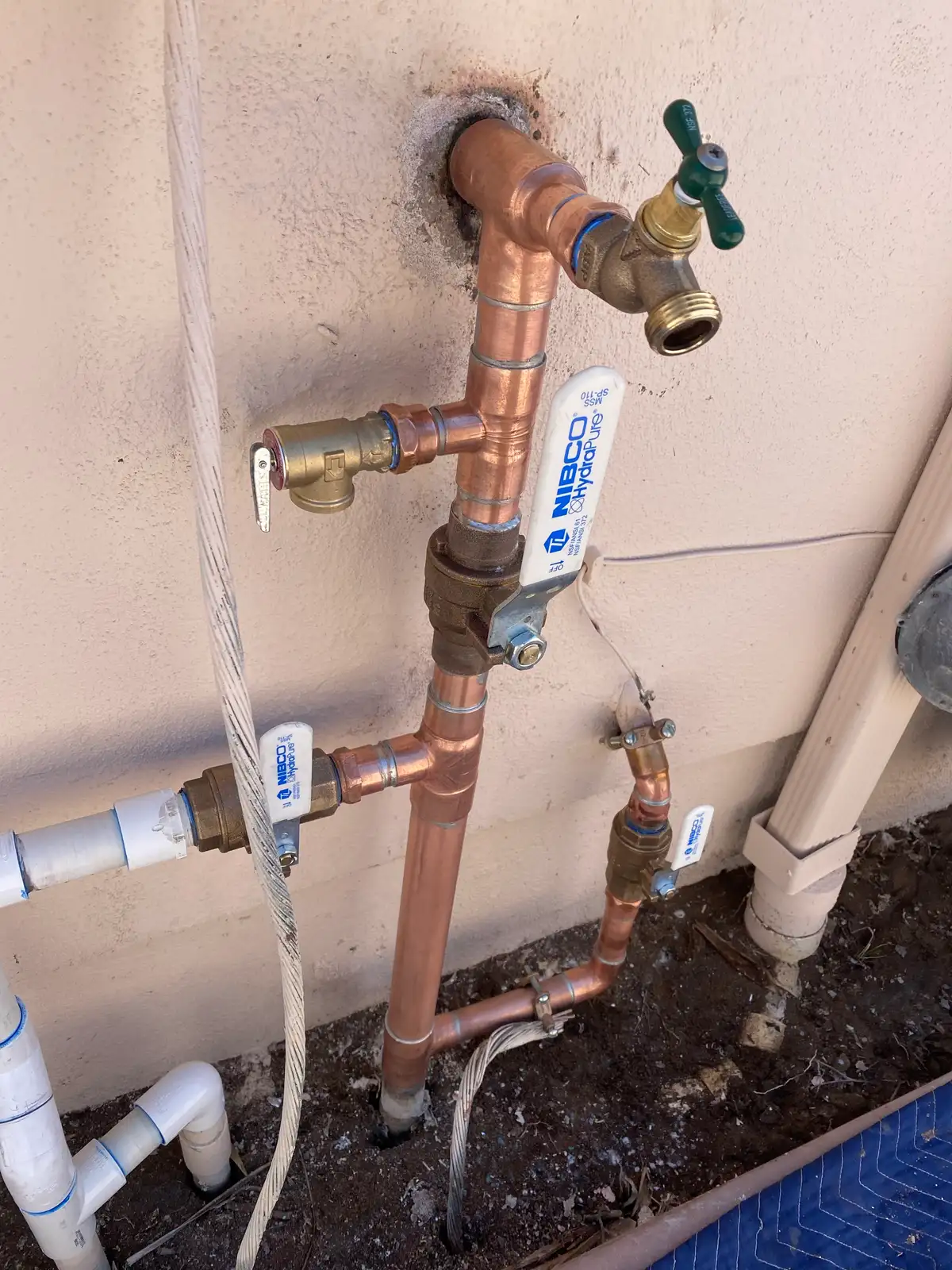
Tankless water heater, installed: $4,500–$8,500 for most residential installs. That's a higher unit cost (tankless units themselves run $1,500–$3,000 versus $600–$1,500 for tanks), plus gas line upsizing (often required, since most pre-2005 homes have 1/2-inch gas feeding the water heater and tankless typically needs 3/4-inch), plus different venting (PVC sidewall instead of B-vent through the roof), plus electrical. Installation is typically 6–10 hours.
So tankless is roughly 2–3x the upfront cost. That's the headline number most people start from when comparing. Now the other side of the ledger.
Operating cost and efficiency
Standard tanks lose heat through the tank walls 24/7, even when nobody is using hot water. That's called standby loss, and it's the reason tank water heaters consume gas even on days when you're out of the house. For a typical 40-gallon gas tank, standby loss is roughly 20–25% of total annual gas consumption.
Tankless units only fire when there's actual flow. No flow, no gas burn, no standby loss. That's where the efficiency advantage comes from.
In practical terms: a typical South Bay household sees 20–30% reduction in water-heating gas consumption with a tankless versus a tank. At current SoCalGas residential rates, that's roughly $150–$350 per year in savings. Vacation rentals and second homes see substantially more (40–50%+) because standby loss is a bigger share of their total usage.
Payback math: $3,000–$5,000 upfront premium divided by $200–$350/year savings = 10–15 year simple payback on the initial investment. That's a reasonable payback period but not an obvious win. The tankless case gets stronger when you factor in lifespan (below).
Lifespan
Standard tank water heaters in the South Bay: typical lifespan 10–15 years. The tank itself eventually corrodes from the inside out — once the tank body fails, the unit is done. No repair fixes a failed tank.
Tankless water heaters: typical lifespan 20+ years with annual maintenance. The heat exchanger is serviceable, electronic components are replaceable, and there's no storage tank to corrode. We regularly service tankless units from the early 2000s that are still running efficiently.
Over a 20-year horizon, a standard tank household typically buys two units; a tankless household typically buys one. That adds another $1,500–$3,000 of cost avoidance to the tankless case, which changes the payback math considerably.
Hot water availability
This is the capacity comparison that matters for households with high simultaneous demand.
Standard tank can deliver as much hot water as it has stored, then you wait for recovery. A 40-gallon tank draws down in roughly 30 minutes of continuous use (two back-to-back 15-minute showers, or one shower plus a load of dishes). Then you're cold for 20–30 minutes. A 75-gallon tank handles more simultaneous demand before drawdown but still has a finite capacity.
Tankless can deliver unlimited hot water — but only at its rated flow capacity. A typical residential tankless (Navien NPE-180 or equivalent) handles about 5–6 GPM of hot flow. That's enough for 2–3 simultaneous showers on most days, but if you try to run three showers plus a dishwasher plus a washing machine at the same time, you'll see flow reduction.
For large homes with multiple simultaneous high-demand points (4+ bathrooms), we often parallel two tankless units — doubling the flow capacity. For smaller households where peak demand is limited, a single unit is usually adequate.
When to choose which
Choose a standard tank if: your existing gas line and venting is configured for a tank, you have light to moderate hot water demand, you're budget-constrained on the initial install, or you're planning to sell the house within a few years (you won't recover the tankless premium).
Choose a tankless if: you want endless hot water for a teenage household with morning shower conflicts, you're running a vacation rental where guest demand is unpredictable, you're planning to stay in the home 10+ years, you want 20-year service life, or you're doing a major remodel where the installation labor delta is smaller because walls are already open.
Choose a parallel tankless install if: you have 4+ bathrooms, multiple master suites, or an outdoor kitchen/spa with serious hot water needs. Dual Navien NPE-240A2 or similar can handle essentially any residential demand scenario.
What to watch for
Tankless installs are more technically complex than tank installs. The most common problems we see come from non-certified installs: undersized gas line (causes flame issues and premature component failure), incorrect venting path (causes combustion issues), skipped recirculation on large homes (causes long waits for hot water at remote fixtures).
Level 5 factory certification (Navien, Rinnai, Raypak) is the training program the manufacturers require for full warranty coverage. Not every plumber has it. For a tankless install, insist on a certified installer — the warranty delta alone justifies the difference in labor cost.
Maintenance matters for tankless. Annual descaling flush is recommended (hard water areas especially), combustion verification every few years, filter cleaning every 6 months. Skipping maintenance can shorten the lifespan from 20+ years to 12–15. We include a maintenance reminder schedule with every install.
The bottom line
Tankless is the right answer for most South Bay households staying in their homes long-term — especially larger households, multi-bathroom homes, and vacation rentals. The upfront premium is real, but the combined efficiency, lifespan, and unlimited hot water delivery justify it over a 10+ year horizon.
Standard tank is the right answer for budget-constrained installs, light-demand households, short-term owners, and situations where the existing gas and venting make tankless conversion cost-prohibitive.
Both are legitimate choices. Ignore the plumbers who push tankless on every call regardless of situation — the right answer depends on your specific household, not on the installer's preferred product line.
Tags