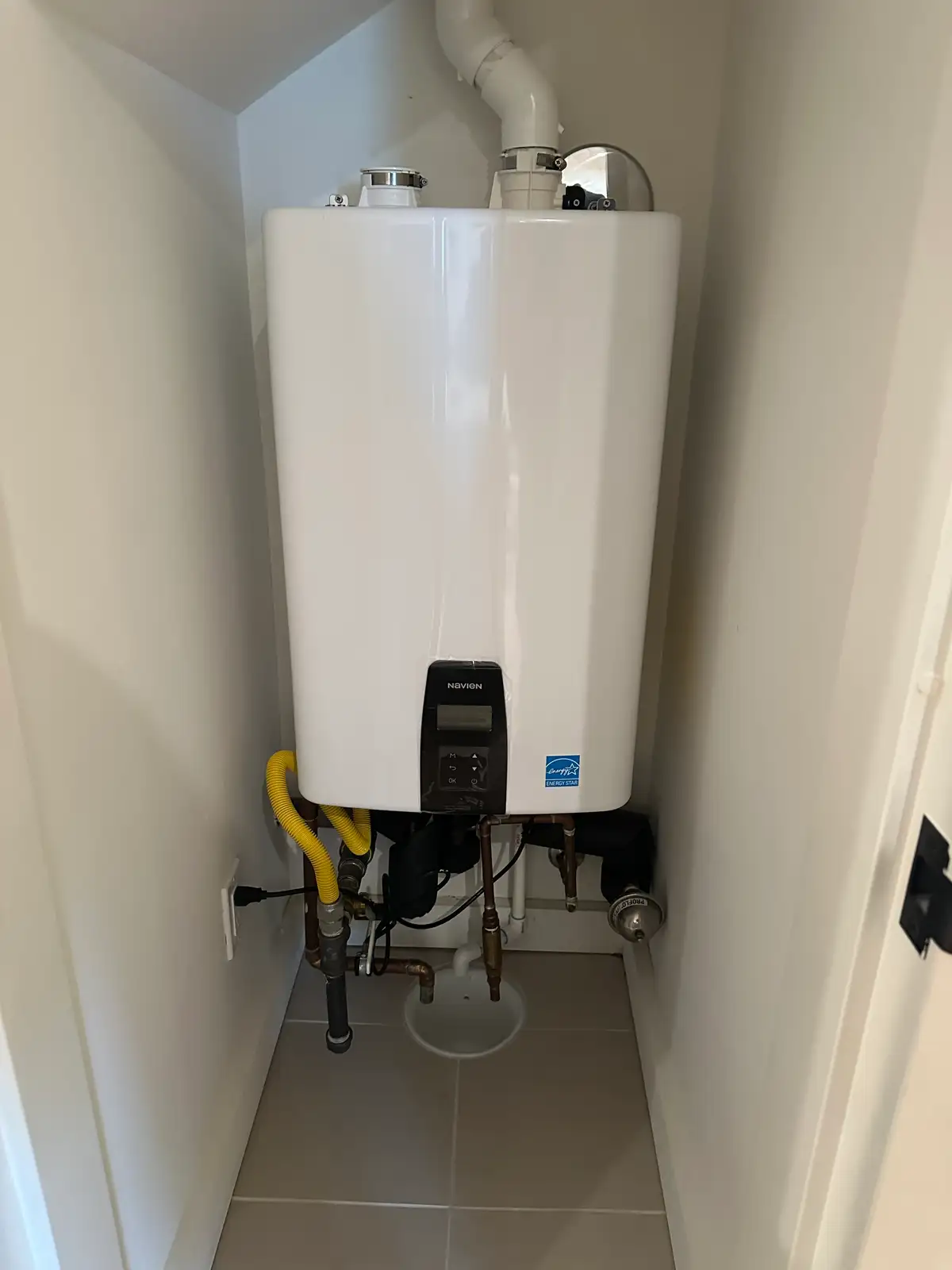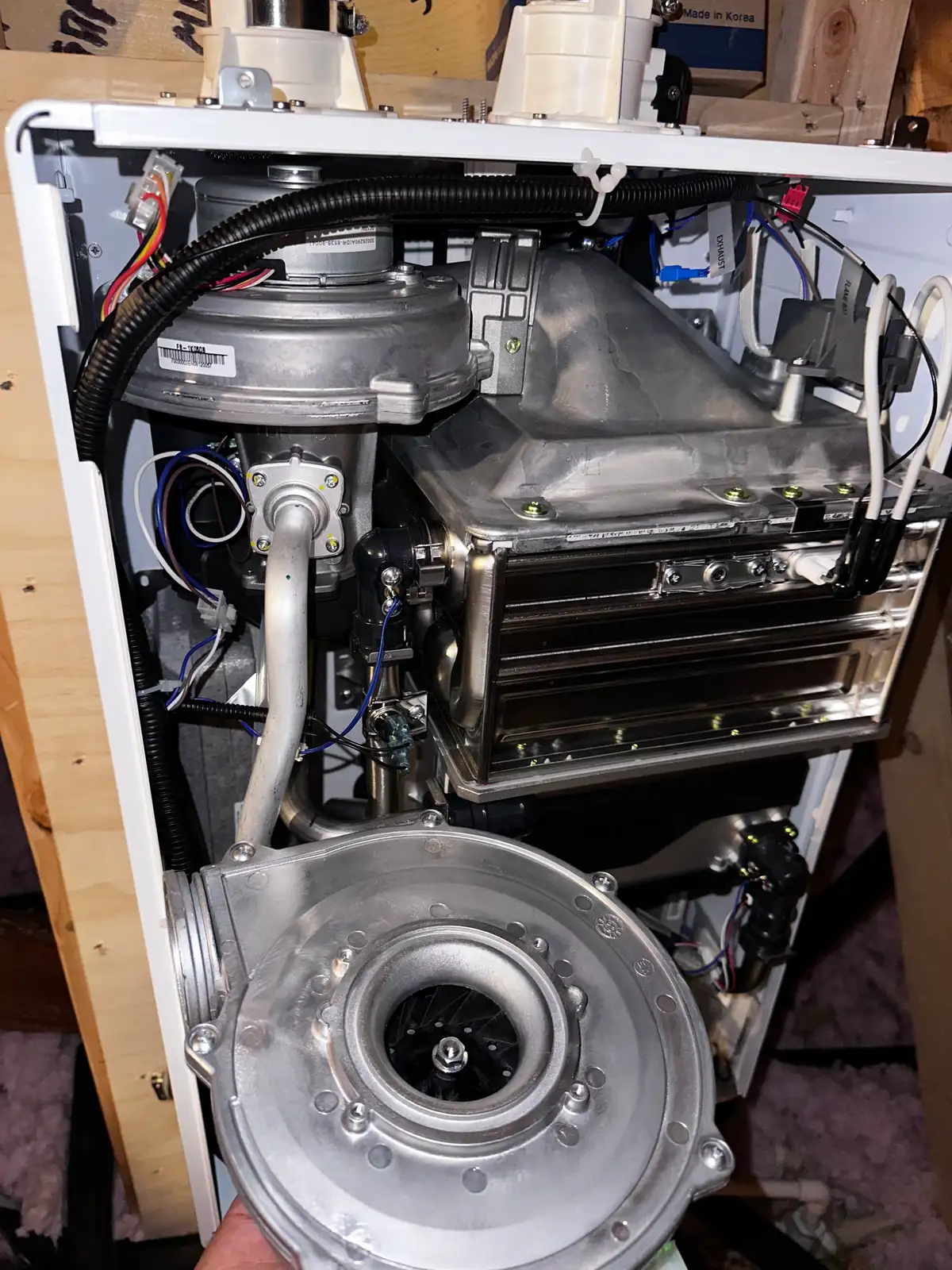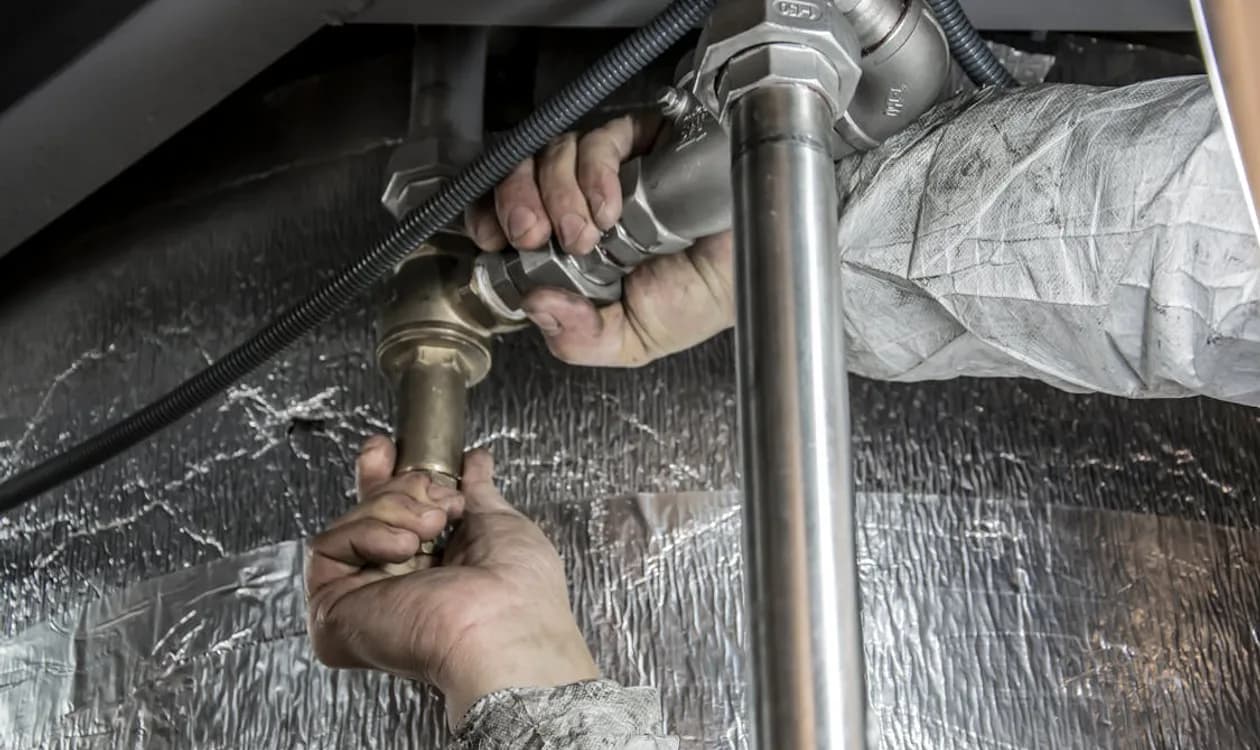
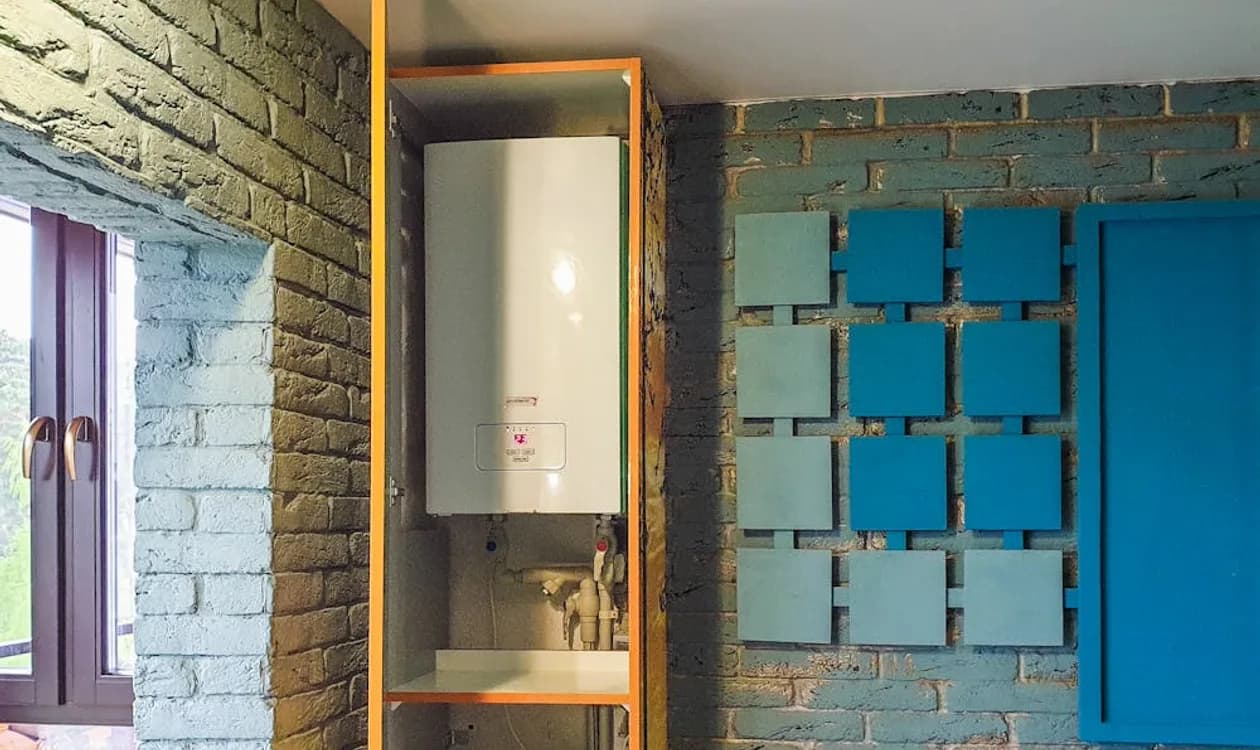
A tankless water heater installation in the South Bay runs $4,800 to $7,200 for most residential jobs. That's the honest range — unit cost plus the labor and infrastructure work that a complete, code-compliant install actually requires. Some jobs land below $4,800 when conditions are ideal. Many land above $7,200 when the house fights you on gas capacity, venting, or electrical.
What moves that number isn't the unit itself. A mid-tier condensing tankless unit runs $900 to $1,600 depending on flow rate and brand. The rest of the cost is in four infrastructure categories: gas line resizing, vent path, electrical work, and recirculation. Understanding each one tells you exactly why your specific job costs what it does — and why a quote under $3,500 almost always means something is being left undone.
The unit cost is the smallest variable
Most residential tankless units installed in the South Bay fall into a narrow band. A 6.6–9.5 GPM non-condensing natural gas unit runs $700 to $1,100 for the unit alone. A condensing unit in the same flow range — the type that recovers heat from flue gases and runs higher efficiency — runs $1,100 to $1,800. The condensing units cost more upfront but reduce long-term gas consumption, which matters in areas like Torrance and Redondo Beach where households run multiple fixtures simultaneously.
Don't optimize on unit cost. A $200 savings on the unit means nothing if the gas line feeding it is undersized for the BTU demand. The unit selection should follow from your household's peak flow needs and your existing infrastructure — not the other way around.
Gas line resizing: the most common hidden cost
Tankless water heaters demand substantially more BTU input than tank heaters during firing. A standard 40-gallon tank heater draws around 36,000 to 40,000 BTU/hr. A tankless unit sized for a 3-bathroom household can draw 150,000 to 199,000 BTU/hr at peak. That's a 4x to 5x increase in instantaneous gas demand — and the existing 1/2-inch or 3/4-inch gas line that served the old tank heater often can't deliver it.
Resizing a gas line typically adds $400 to $1,200 to the job, depending on line length and routing difficulty. In Old Torrance homes built in the 1920s and 1930s, original gas piping is frequently undersized and corroded — a full gas line run from the meter to the new unit location is sometimes the only reliable solution. In newer homes in Manhattan Village or the Hill Section of Manhattan Beach, the existing line is often closer to adequate, but still needs verification before the unit is commissioned.
Any installer who quotes a tankless job without pulling a gas pressure test and calculating available BTU capacity at the appliance location is skipping a step. If the gas supply can't sustain the unit's firing demand, you'll get cold water mid-shower when another appliance kicks on — and no amount of unit warranty covers that.
Venting: where the job gets complicated fast
Non-condensing tankless units produce high-temperature exhaust and require Category III stainless steel venting — the same material used for high-efficiency furnaces. Condensing units produce cooler, acidic exhaust and vent through PVC or CPVC. In either case, the vent path has to be engineered, not improvised. Horizontal runs need correct slope for condensate drainage. Vertical runs need correct termination clearances from windows, eaves, and gas meters per California Plumbing Code.
Vent installation adds $300 to $900 to most jobs. The high end applies when the ideal unit location — typically near an exterior wall — isn't accessible, or when the existing flue from the old tank heater is the wrong diameter or material for the new unit. In the Sand Section of Hermosa Beach, where lots average 30 feet wide and units often need to be mounted on an interior wall, vent routing becomes a constraint that drives real cost.
Direct-vent (concentric pipe-in-pipe) units simplify the venting problem by drawing combustion air from outside through the outer pipe while exhausting through the inner pipe. They cost more as a unit but can reduce vent installation labor significantly. Whether that trade makes sense depends on the specific job geometry.
Electrical requirements
Every tankless water heater — even gas-fired models — requires a dedicated electrical circuit for the control board, igniter, and fan. Most residential units require a 120V, 15-amp dedicated circuit. If the panel is nearby and has available capacity, this is a $150 to $300 add. If the panel is on the opposite side of the house or is already full, it's an electrician call and can add $400 to $800 or more depending on the panel situation.
Electric tankless units are a separate category entirely. A whole-house electric tankless unit requires 240V at 150 to 200 amps — a load that most South Bay panel installations can't support without a service upgrade. We don't generally recommend whole-house electric tankless in this region for that reason. Point-of-use electric tankless units at a single fixture are a different discussion.
Recirculation loops: the comfort upgrade that adds real cost
One of the most common complaints about tankless water heaters is the wait for hot water at distant fixtures. In a 2,500 square-foot house in Walteria or South Torrance, the kitchen sink or guest bathroom might be 60 feet of pipe away from the unit. Without a recirculation system, you're running water until the hot arrives — wasting water and time.
A dedicated recirculation loop with a pump and timer adds $600 to $1,400 to the installation. The dedicated-loop approach — which requires a separate return line — is more efficient and more comfortable than a crossover valve system that uses cold lines as return paths. If the home doesn't have a return line roughed in, running one adds to both materials and labor.
Some tankless units have built-in recirc pumps. That can reduce installation cost compared to adding an external pump, but it only works well when the unit is positioned to serve the furthest fixture efficiently. For larger homes in Rolling Hills Estates or Rancho Palos Verdes where the water heater might be in a utility room far from the primary bathrooms, an external pump on a dedicated loop is usually the right call. You can see how we approach this on [Torrance water heater installations](/service-areas/torrance/water-heaters), where house sizes and layouts vary significantly across neighborhoods.
Permits, disposal, and the things quotes often omit
A water heater replacement in California requires a permit in most jurisdictions. Permit fees in South Bay cities run $100 to $350 depending on the city. Some contractors quote without permits, which saves them the administrative work but leaves you with an unpermitted installation — a problem at resale and a potential insurance issue if there's ever a water or gas incident.
Old unit disposal adds $50 to $150 in most cases. Some quotes include it; many don't. Seismic strapping to current code is required on any water heater installation in California — that should be in any complete quote at no additional charge, but it's worth confirming. When you're comparing quotes, a $3,200 number that omits permits, disposal, gas line work, and venting isn't really a lower price — it's an incomplete scope.
For a full picture of what's involved in a [tankless water heater installation](/services/water-heaters), the line items above should all be addressed in writing before any work begins. Any quote that's a single lump number without itemized scope is worth questioning.
Why under $3,500 is a warning, not a deal
The math on a complete tankless installation doesn't compress below $3,500 without cutting scope. At the low end of an honest install — small home, unit already in a good location, gas line close to adequate, simple vent path, no recirc — you're still looking at $1,000 to $1,500 in unit cost, $500 to $700 in labor for the core swap, $300 in venting, $200 in electrical, $150 in permits, and $150 in miscellaneous materials and disposal. That's $2,300 to $2,800 at absolute minimum, and it assumes everything goes smoothly.
A $3,200 quote that skips permits, doesn't verify gas capacity, runs the vent wrong, or installs a unit sized below the household's actual demand will cost more to fix than the difference saved. The installation failures we see most often — insufficient hot water, nuisance lockouts, CO concerns from improper venting — trace directly back to jobs where cost was minimized at the expense of proper scoping.
Licensed C-36 #901735 work comes with a complete permit pull and a job scope that covers all four infrastructure categories before we quote a number. That's not a premium service — it's what a complete installation requires.
What to do next
If you're pricing a tankless installation, start with a site assessment — not a phone quote. Gas supply, vent path, electrical panel proximity, and recirc feasibility all need to be evaluated in person before anyone can give you an accurate number. A phone quote of any kind is based on assumptions, and the assumptions are often wrong.
The Mainline crew serves 16 South Bay cities from our Lomita headquarters with a 60-minute target response on emergencies and same-week scheduling on planned work like water heater replacements. No overtime fees on after-hours calls. Call (310) 808-7343 to schedule a site assessment or reach out through the contact form to describe your current setup and we'll get back to you the same day.
Tags
Related Services