Most plumbing failures aren't sudden. A water heater that floods a garage on a Tuesday in February started corroding three winters ago. A sewer lateral that backs up during a holiday weekend had root intrusion visible on camera a year before. The difference between a $300 maintenance visit and a $15,000 emergency repair is usually whether anyone looked before the failure.
The South Bay presents specific conditions that accelerate that timeline. Salt air off the Pacific corrodes anode rods and brass fittings faster than inland climates. Homes in Redondo Beach's The Avenues or Hermosa Beach's Hill Section that are within a mile of the water see accelerated corrosion rates on exposed metal components. Homes in Old Torrance, Old Lomita, and the pre-war blocks of San Pedro's Vinegar Hill still have original cast iron or galvanized supply lines that are at or past their design life. None of that is visible without a deliberate inspection.
What follows is a practical, month-by-month checklist structured around the tasks that actually matter. Each item notes whether it's owner-serviceable or requires a licensed technician, and why.
January – February: Water heater inspection
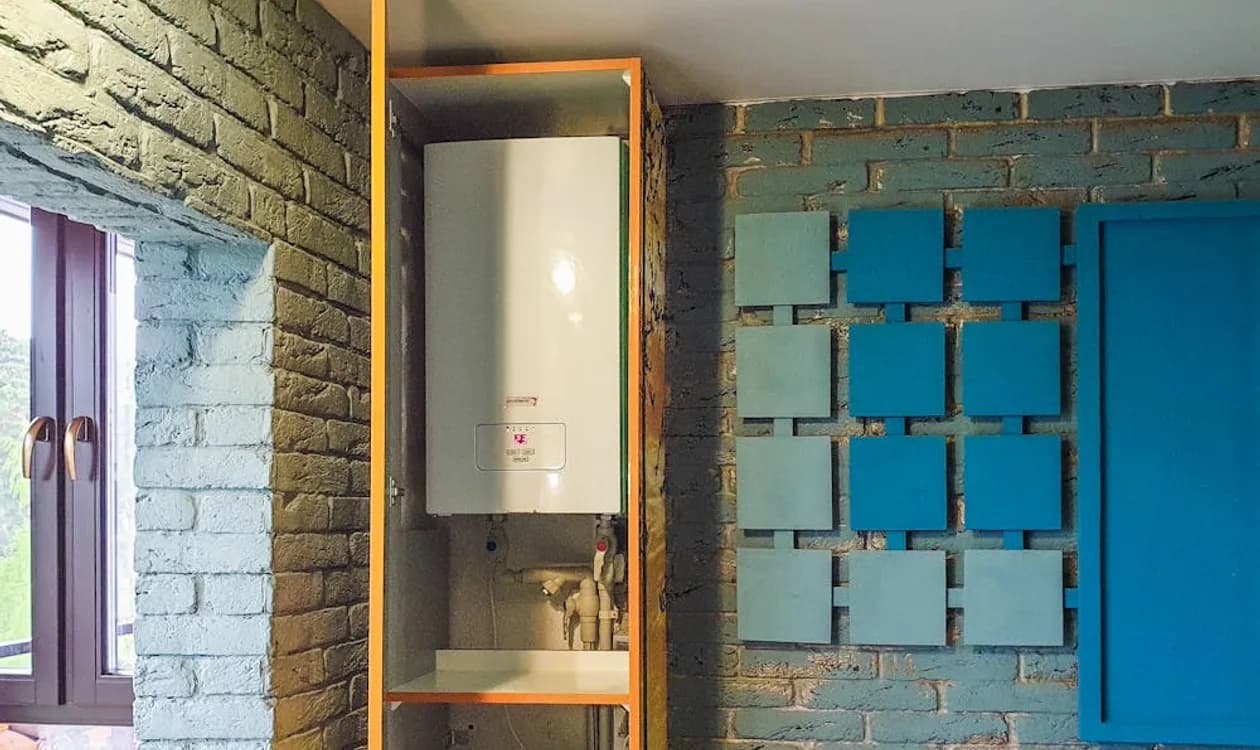
The start of the year is the right time to assess your water heater. If it's a tank unit, flush the tank to remove sediment accumulation. On the bottom of every storage tank, mineral deposits from hard water settle and insulate the burner from the water above it — the unit runs longer, uses more gas or electricity, and heats less efficiently. Flush procedure: connect a garden hose to the drain valve at the base of the tank, route it to a floor drain or outside, shut off the cold supply, open the drain valve, and let it run until the discharge runs clear. This takes 10–30 minutes depending on sediment load.
While the tank is partially drained, inspect the anode rod. This is the item most homeowners skip, and it's the single highest-leverage maintenance task on a tank water heater. The anode rod — typically magnesium or aluminum — sacrifices itself through electrolytic corrosion so the steel tank doesn't corrode. When the rod is depleted, the tank corrodes instead. In coastal South Bay cities, anode rods should be inspected every 3 years, not the 5-year interval often cited for inland homes. If the rod is reduced to a thin wire core or has heavy calcium buildup, replace it. A replacement rod costs $20–$50 in materials; a new water heater costs $900–$2,500 or more installed.
Checking the anode rod requires a 1-1/16-inch socket and some torque — the hex fitting at the top of the tank is often corroded in place. If you can't break it free, don't force it past the point where you risk cracking the fitting. That's when you call a plumber.
March – April: Hose bibs and outdoor supply lines
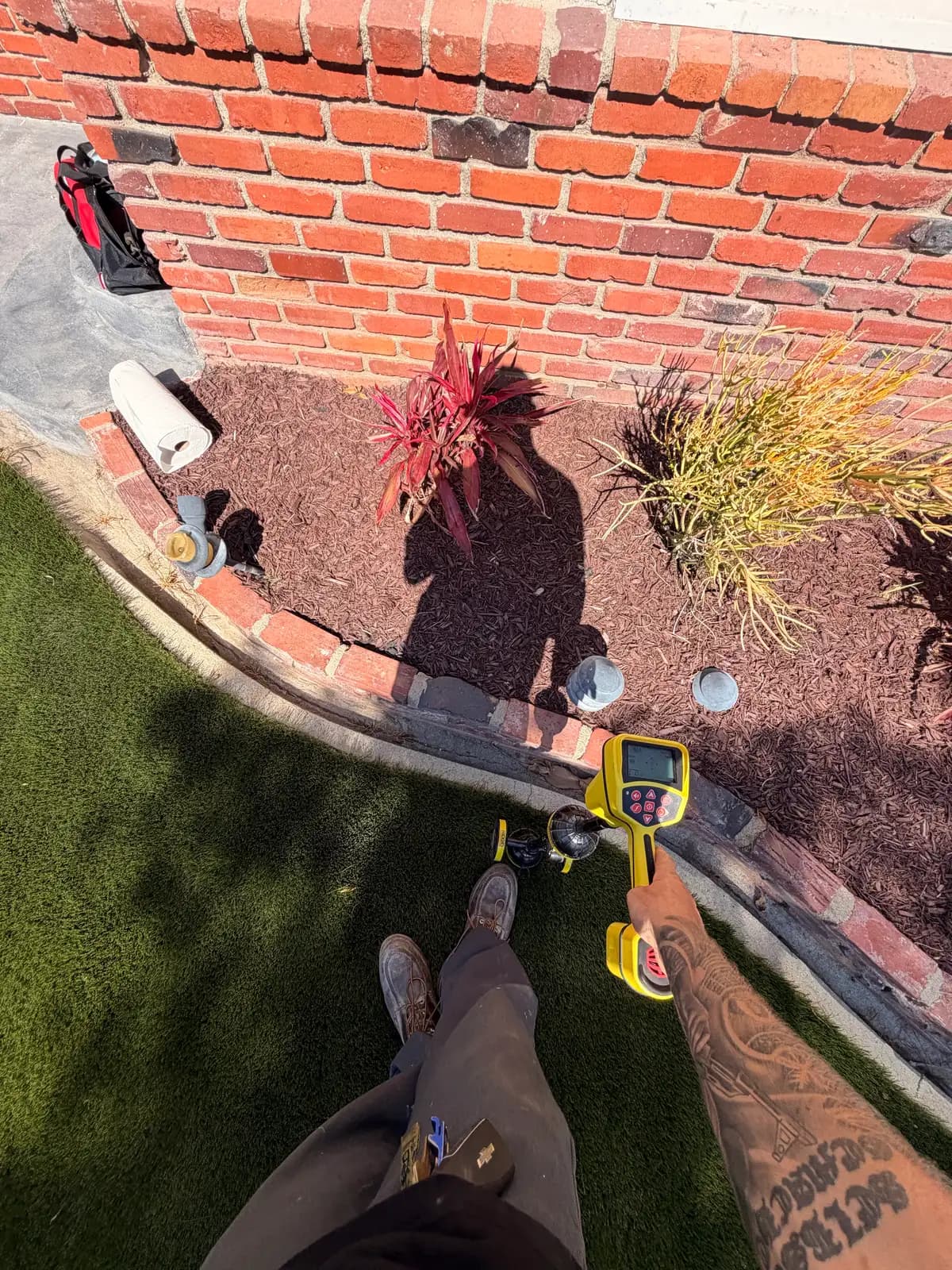
Southern California doesn't get hard freezes, so outdoor hose bibs don't fail from freeze-thaw cycles the way they do in colder climates. They fail from UV degradation on rubber washers, worn packing nuts, and corrosion at the wall fitting. Walk every exterior hose bib on your property. Turn it on, let it run for 30 seconds, then shut it off. Watch the spigot itself and the wall escutcheon for drips after shutoff. A slow drip at the spigot is usually a failed seat washer — a $2 part and 15 minutes with a wrench. A drip behind the wall escutcheon means the packing nut or the valve body itself needs attention and is worth a plumber's assessment.
Also inspect the supply lines under every sink and behind every toilet. These are the braided stainless or rubber hoses connecting shutoff valves to fixtures. They have a functional life of 5–10 years. A failed supply line under a bathroom sink can discharge 2–4 gallons per minute undetected behind a vanity cabinet. Look for any discoloration, kinking, or mineral buildup at the fittings. If a line is more than 8 years old and you don't know when it was last replaced, replace it — the materials cost under $15 per line and the labor is typically under an hour.
May – June: Water pressure and pressure regulator
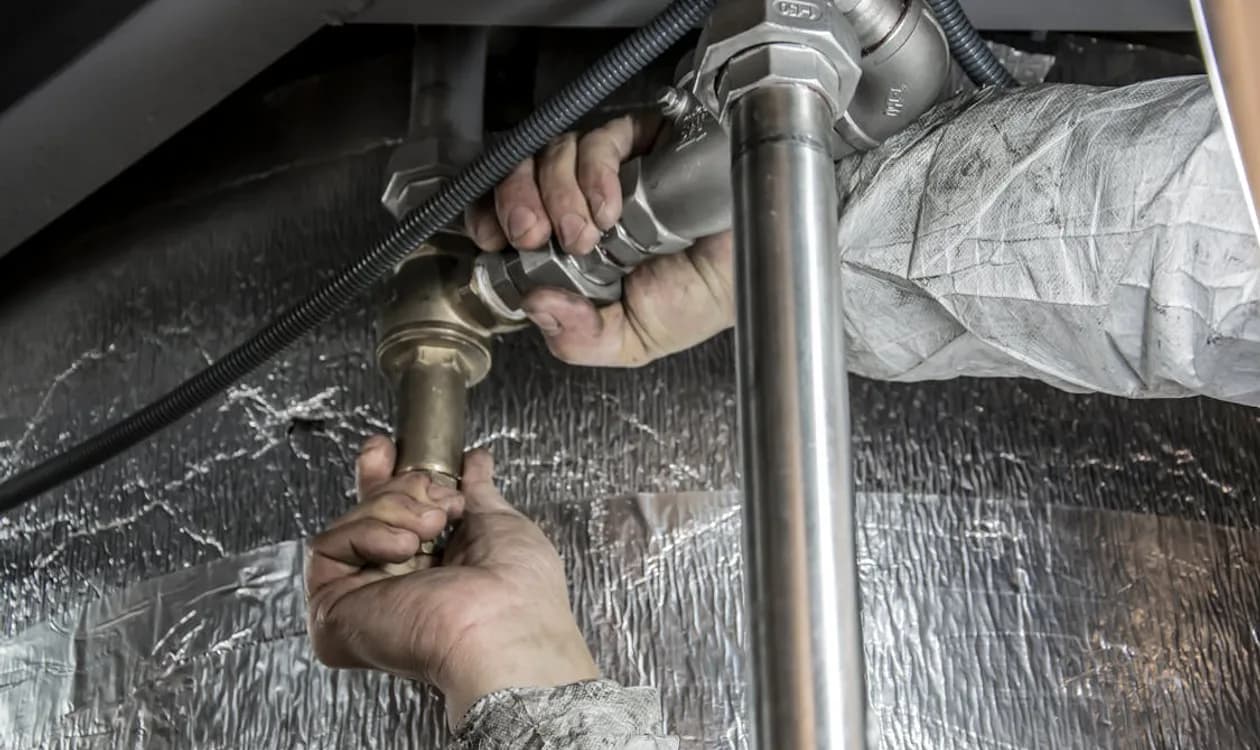
Static water pressure in a residential supply line should sit between 60 and 80 PSI. Above 80 PSI, fixtures wear faster, supply line fittings fatigue, and water hammer becomes chronic. Below 40 PSI, you'll notice it at the shower — but the more insidious problem is that low pressure sometimes masks a pressure regulator that's failing open or closed. A pressure regulator valve (PRV) is the bronze fitting on the main supply line near where it enters your house, usually in a meter box, near the water main shutoff, or at the garage wall.
Testing pressure is owner-serviceable with a $10–$15 gauge that threads onto any hose bib. Replacing a PRV is not — it requires cutting into the supply line and working under live pressure until shutoff. If pressure tests outside the 60–80 PSI range, or if you're getting pressure fluctuations that you can hear in the pipes, have a plumber assess the PRV. A PRV replacement typically runs $250–$450 in materials and labor. The cost of not replacing a failing one shows up as failed washing machine hoses, blown toilet fill valves, and supply line ruptures.
Homes in Gardena's Moneta neighborhood and in Carson's Scottsdale area tend to see higher incoming pressure from their distribution zones — if you've never tested yours, start there.
July – August: Drain performance and early clog indicators
Mid-summer is the point in the year when drainage slowdowns that built up through spring become impossible to ignore. Hair, soap scum, and grease accumulate in trap arms and drain lines gradually. A bathroom sink that drains in 8 seconds instead of 3 isn't a crisis yet — but it's a signal. Run every drain in the house: all sinks, showers, tubs, and floor drains if accessible. Time the drainage informally. Note which ones are slower than last year.
A single slow drain is almost always a localized clog — a drain cleaning job, often DIY-able with a hand snake or a barbed plastic drain tool for hair. Multiple slow drains, or a slow drain paired with gurgling elsewhere, points to a shared drain line or a problem at the main sewer lateral. That's not a plunger situation. If you're seeing simultaneous slow drains in a Hawthorne Hollyglen home or a Lawndale slab-foundation tract house, the more likely culprit is a partially obstructed main line, not four individual clogs. A [camera inspection](/services/trenchless/camera-inspection) will tell you what's in there in 20 minutes.
Don't pour chemical drain cleaners into a slow drain as a first response. Lye-based or acid-based drain chemicals degrade rubber gaskets and can damage older cast iron and ABS fittings. They're also ineffective on grease-based blockages and do nothing for root intrusion.
September – October: Sewer scope and lateral condition
Fall is the practical window to run a camera inspection on your sewer lateral before the rainy season adds groundwater infiltration to whatever's already happening underground. A lateral in good condition doesn't need annual scoping — but if your home is on a property more than 30 years old and you've never had it scoped, this is the year to do it.
What a camera inspection reveals: root intrusion at clay tile joints, offset joints from soil movement, pipe belly sections where water pools and solids accumulate, and deterioration on Orangeburg or original cast iron mains. In Old San Pedro and Point Fermin, where pre-1940 housing stock is common, we regularly find laterals that are still on original clay tile, some with joint separation visible from decades of soil movement. In Rolling Hills Estates neighborhoods like Dapplegray and The Terraces, steep grade changes cause pipe belly sections that don't self-clear. Neither of those fails visibly from inside the house until it's a full blockage.
A sewer scope by itself is $250, and it's free with any service call. If you're within a few years of selling, or if you've had any drain slowdowns during the year, it's worth doing now. [Torrance](/service-areas/torrance) homeowners should know the city holds them responsible for the entire lateral including the tie-in at the public main — scoping before you list gives you time to address issues on your schedule, not escrow's.
November – December: Gas lines, shutoff valves, and year-end audit
End-of-year is the right time to verify that every shutoff valve in your house actually works. The main water shutoff, individual fixture shutoffs under sinks and toilets, the water heater shutoff — turn each one off and back on. If a valve won't close completely, or if it seizes after a quarter-turn, note it. A shutoff valve that fails during a burst pipe situation is the difference between a manageable leak and a flooded room. Replacement is inexpensive when it's planned; it's not when the floor is already wet.
For gas-line safety, check every flexible connector at the range, dryer, and water heater visually. Look for corrosion at the fittings, any kinking of the flex line, and verify the connector is rated corrugated stainless steel (CSST or black iron) — older uncoated brass connectors have been out of code for years but still exist in homes that haven't been updated. If you have a gas leak or suspect one, don't test it yourself beyond a soap-and-water bubble check at fittings — call the gas company or a licensed plumber. Our [gas line service](/services/gas-lines) covers both leak detection and connector replacement.
An earthquake gas shutoff valve is a simple addition for any South Bay home on a gas supply line. It automatically closes the gas supply when it detects seismic movement above a threshold magnitude. Installation is a single-morning job. Given that the South Bay sits in close proximity to several active fault systems, it's a reasonable precaution regardless of when your home was built.
What to do next
Run through this checklist once — it takes most homeowners about two hours spread over the year. The items you can handle yourself are identified above. The items that need a licensed plumber are the ones where the cost of a mistake exceeds the cost of the call: PRV replacement, sewer scoping, anode rod replacement if corroded in place, shutoff valve replacement, gas line work.
Mainline No-Dig Trenchless Plumbing is a Licensed C-36 #901735 contractor serving 16 South Bay cities from our Lomita headquarters. We run 24/7 dispatch with a 60-minute target response for emergencies, and no overtime fees regardless of when you call. For scheduled maintenance work — water heater flush, sewer scope, valve audit — call us during the day and we'll get you on the calendar without urgency pricing.
To schedule an inspection or get a question answered, call (310) 808-7343. If you want to understand what specific [general plumbing services](/services/general-plumbing) apply to your property, that page covers the full scope of what a maintenance visit typically includes.
Tags
Related Services