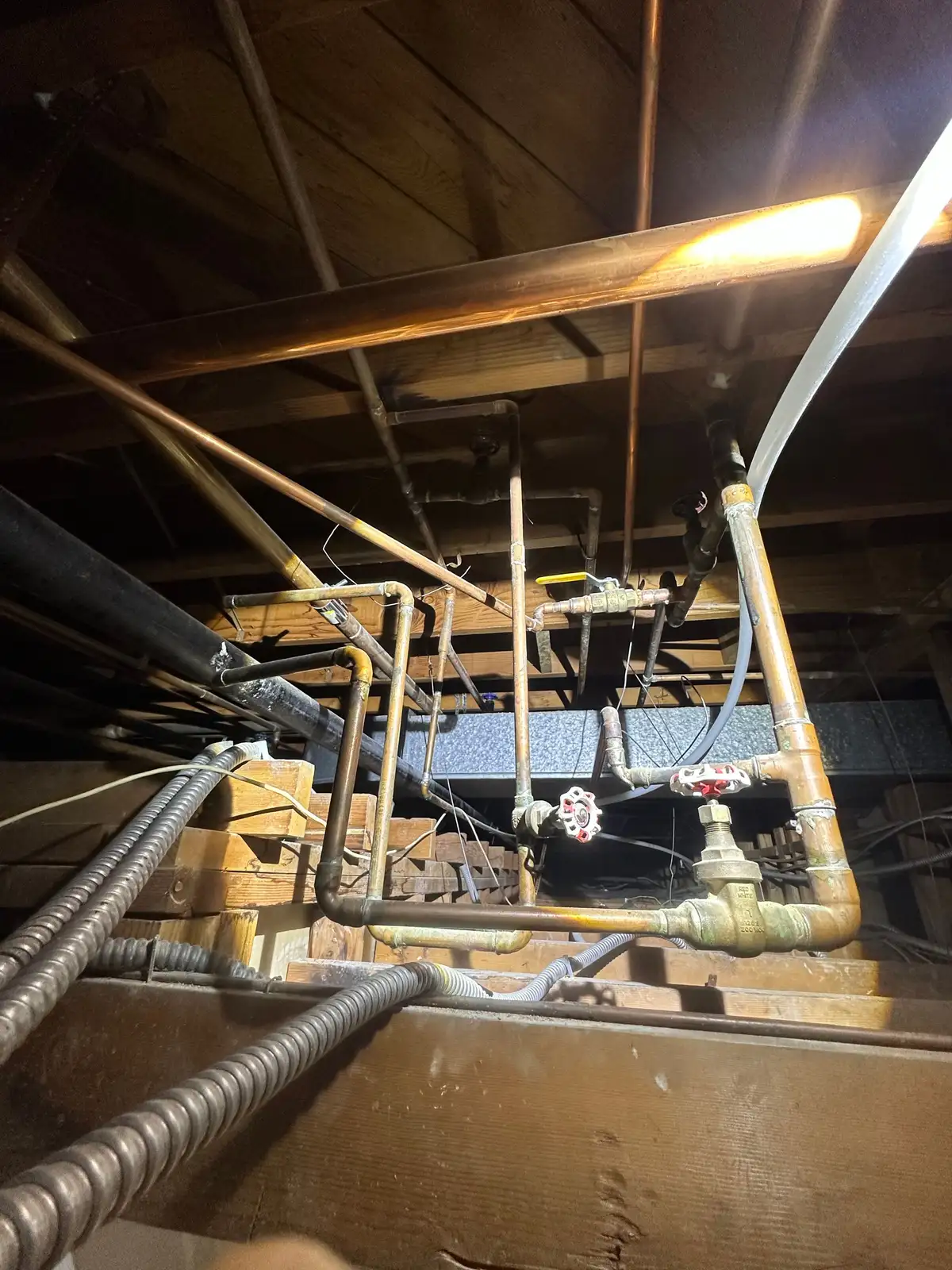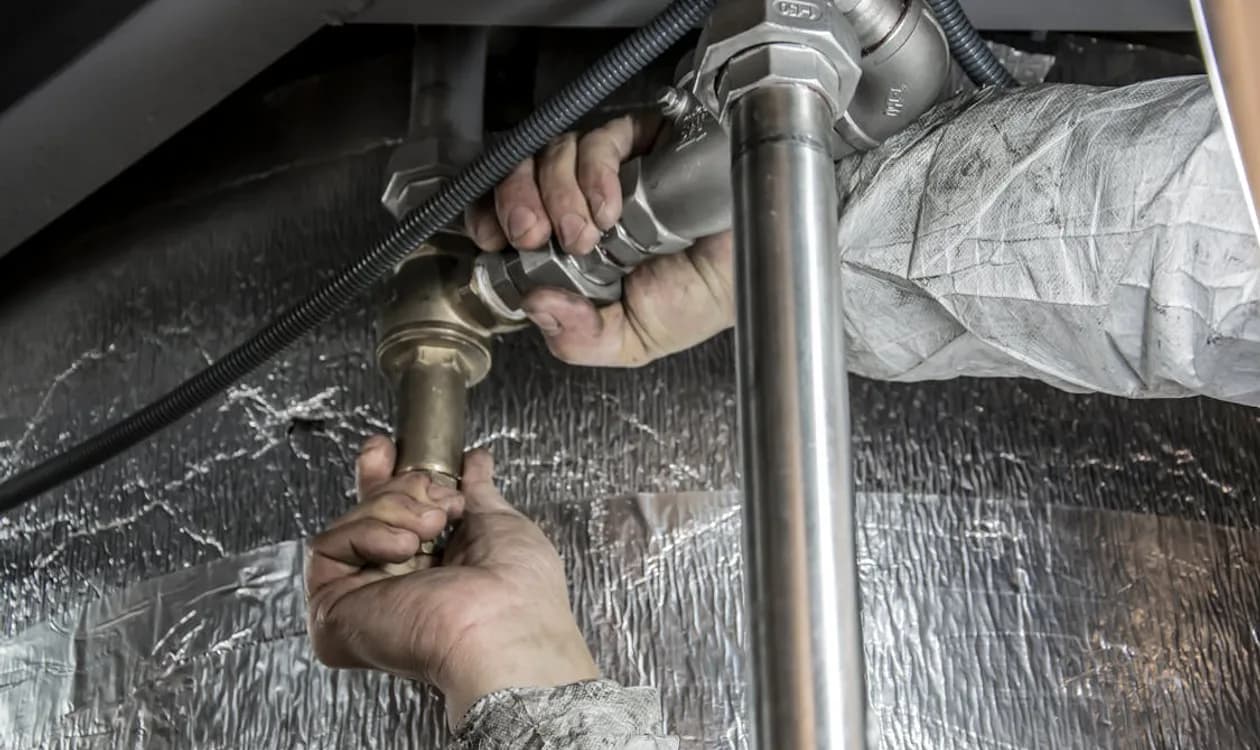
When your galvanized supply lines have finally corroded past the point of no return — or you're pulling permits for a full renovation and the inspector flags original 1958 pipe — you face one real decision before the crew shows up: PEX or Type-L copper. Both are code-compliant in California. Both will outlast the people who install them if the job is done correctly. The difference is in the specifics of your house, your water, and what you're trying to protect.
The short version is that PEX costs less to install, handles South Bay conditions differently than copper, and carries limitations that matter for some homes and are irrelevant for others. Copper costs more upfront, is more tolerant of certain chemicals, and has a longer proven track record in demanding environments. Neither answer is universally correct. What follows is a breakdown of every variable that actually matters so you can make the call with accurate information.
Material costs and labor: what drives the price difference
On a typical South Bay single-family home — three bedrooms, two baths, 1,400 to 1,800 square feet — a whole-house repipe in Type-L copper runs $9,500 to $16,000 installed. The same job in PEX runs $4,500 to $8,500. That's not a rounding error. The gap is real, and it comes from both material cost and labor hours.
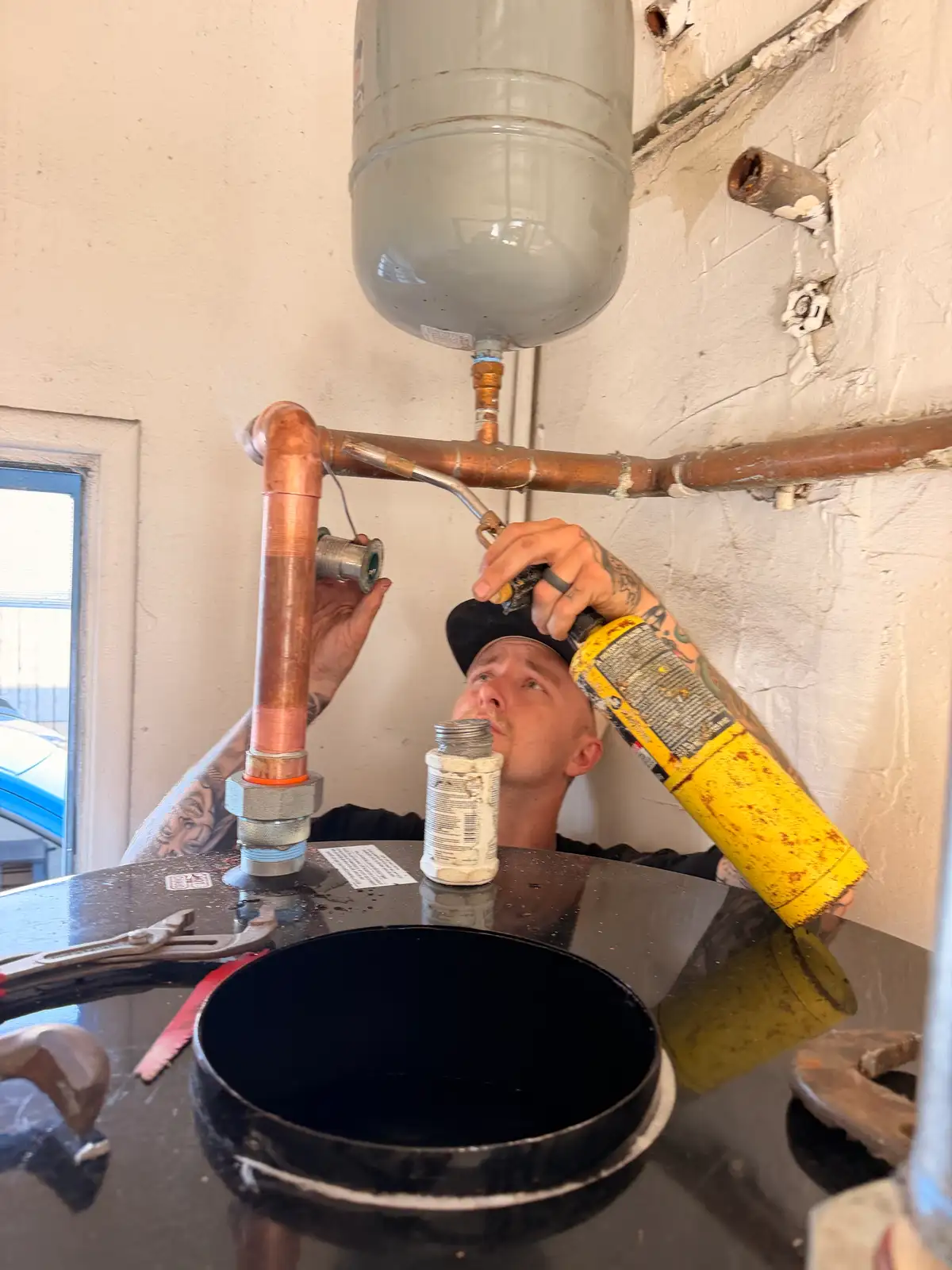
Copper tubing itself costs roughly 3 to 4 times more per linear foot than PEX tubing of the same diameter. More significantly, copper requires soldering at every joint — a skilled, time-intensive process. PEX uses mechanical fittings, crimp rings, or expansion connections that go in faster and require fewer specialty tools per linear foot of run. A crew that takes two days on a copper repipe can finish the same PEX layout in one.
Where the gap narrows: access. In a 1950s Hawthorne tract home with original galvanized in the walls — the kind of Hollyglen or Bodger Park house built to house aerospace workers — a lot of the labor is demo and drywall regardless of material. When access accounts for 40 percent of total labor, switching from copper to PEX saves you less proportionally than the raw per-foot numbers suggest.
Longevity and what the South Bay environment actually does to pipe
Type-L copper has a documented service life of 50 to 70 years under normal residential conditions. PEX manufacturers rate their tubing at 25 to 50 years, with some products carrying 25-year limited warranties. In practice, PEX in a protected interior application — inside walls, away from UV and chlorine degradation — has performed well in the 30+ years since it entered the US residential market. The long-term data on PEX simply doesn't go back as far as copper's.
Salt air matters here. Redondo Beach, Hermosa Beach, Manhattan Beach — homes within a few blocks of the ocean see accelerated corrosion on any exposed copper, particularly at fittings and valve connections. Interior copper in a sealed wall is largely protected, but anywhere the pipe emerges — under sinks, at shutoff valves, in mechanical closets — the marine environment works against it. PEX itself doesn't corrode, though brass fittings used with PEX do contain some copper and can be affected by dezincification in aggressive water conditions.
Chloramines are the other South Bay-specific variable. The Metropolitan Water District shifted from chlorine to chloramine disinfection across much of its service area. Chloramines are more aggressive toward some PEX formulations and toward copper over long exposures. If your home is on MWD-sourced water — most of the South Bay is — this isn't a dealbreaker for either material, but it's a reason to use PEX tubing rated for chloramine resistance and to pair any [water filtration system](/services/water-filtration) with whichever pipe you choose.
Freeze tolerance: relevant in the South Bay or not
PEX can expand and contract under freezing conditions without cracking, which is a genuine advantage in cold climates. In most of the South Bay — Torrance, Redondo Beach, Carson, Lomita — ground temperatures don't get low enough for buried supply lines to freeze, and interior pipe in a conditioned wall is not at risk. Freeze tolerance is a secondary consideration here.
The exception is exposed pipe in uninsulated spaces: attic runs in Rolling Hills Estates or Palos Verdes properties with unheated crawl spaces, or outdoor supply lines on hillside properties. If your house has pipe that runs through an unheated attic or an exposed exterior wall, PEX's expansion tolerance is a practical advantage worth naming.
Water taste and water quality
This comes up in almost every repipe conversation. Copper does leach trace amounts of copper ions into water, particularly in the first few years after installation and particularly in lower-pH water. The levels in a well-installed residential system are well within EPA action levels, but some homeowners with higher taste sensitivity notice a metallic quality in water from brand-new copper. It dissipates as the pipe develops a protective mineral layer.
PEX has faced scrutiny over leaching of chemical compounds — MTBE and other VOCs — particularly in early formulations and in areas where pipes were left stagnant. Newer NSF/ANSI 61-certified PEX tubing addresses this substantially. If this is a concern, a point-of-use or whole-house filter solves it for either material. We don't use PEX that isn't NSF 61-certified, and we can walk you through [whole-house repipe options for any Redondo Beach or South Bay home](/services/repipes) in the context of your existing water source.
Resale impact and what buyers actually notice
In the South Bay's real estate market — where a Walteria remodel or a West Torrance flip gets scrutinized in disclosure documents — copper has a perception advantage. Buyers and their agents recognize copper. Home inspectors note it positively. PEX is increasingly accepted and standard, but in higher-end properties — Palos Verdes Estates, Manhattan Beach Tree Section, Rolling Hills — listing a copper repipe on the disclosure report carries more weight.
For a rental property in Gardena's Moneta neighborhood or a turnover in Lawndale, the resale optics matter less than the installed cost and the warranty terms. PEX's lower install cost improves your return on that investment faster. The resale premium for copper is real but modest — we're talking about a marginal disclosure-document advantage, not a significant dollar figure in a market where a two-bedroom sells for $900,000.
One practical note: if you're repiping because of a slab leak and you're running new lines through the attic to reroute around the slab, PEX's flexibility makes the routing significantly cleaner. Copper in an attic reroute isn't unusual, but it requires more support and more joints. More joints means more potential failure points on a 20-year horizon.
Which one we'd recommend for your situation
We install both. Licensed C-36 #901735, and we've done [repipes across the South Bay](/services/repipes) on everything from 1930s Old Lomita bungalows to 1970s Carson tract homes to oceanfront Hermosa Beach properties. Here's how we actually think through the material choice with a homeowner.
For a 1950s or 1960s slab home with original galvanized — the most common repipe scenario in Hawthorne, Gardena, or Lawndale — PEX is the practical choice unless the homeowner has a specific preference for copper or the property is positioned at the high end of the market. The cost savings are significant, the performance is solid, and the install is faster with less wall disruption.
For a pre-war home in Old San Pedro's Vinegar Hill or a Malaga Cove property where the character of the house supports the investment, copper is the right call. Same answer for any homeowner who plans to stay 30-plus years and wants the longest documented track record. For a coastal property where exposed fittings are a concern, we typically recommend copper in the walls with dielectric unions at any transition to dissimilar metal — the same approach regardless of which main material you choose.
If you have hard water and you're not running a softener, copper's mineral-scaling vulnerability is a real consideration. Scale buildup in hard-water areas can reduce effective pipe diameter over time and accelerate failure at solder joints. In that scenario, PEX performs better over the long term — or you add a softener to the scope and copper works fine.
What to do next
A repipe quote isn't just a price — it should tell you what material the crew recommends and why, what access points they'll use, how they'll patch drywall, and what the warranty covers. If a quote doesn't address the material trade-off for your specific house, ask. The answer reveals whether the crew has actually thought about your job or just dropped a number.
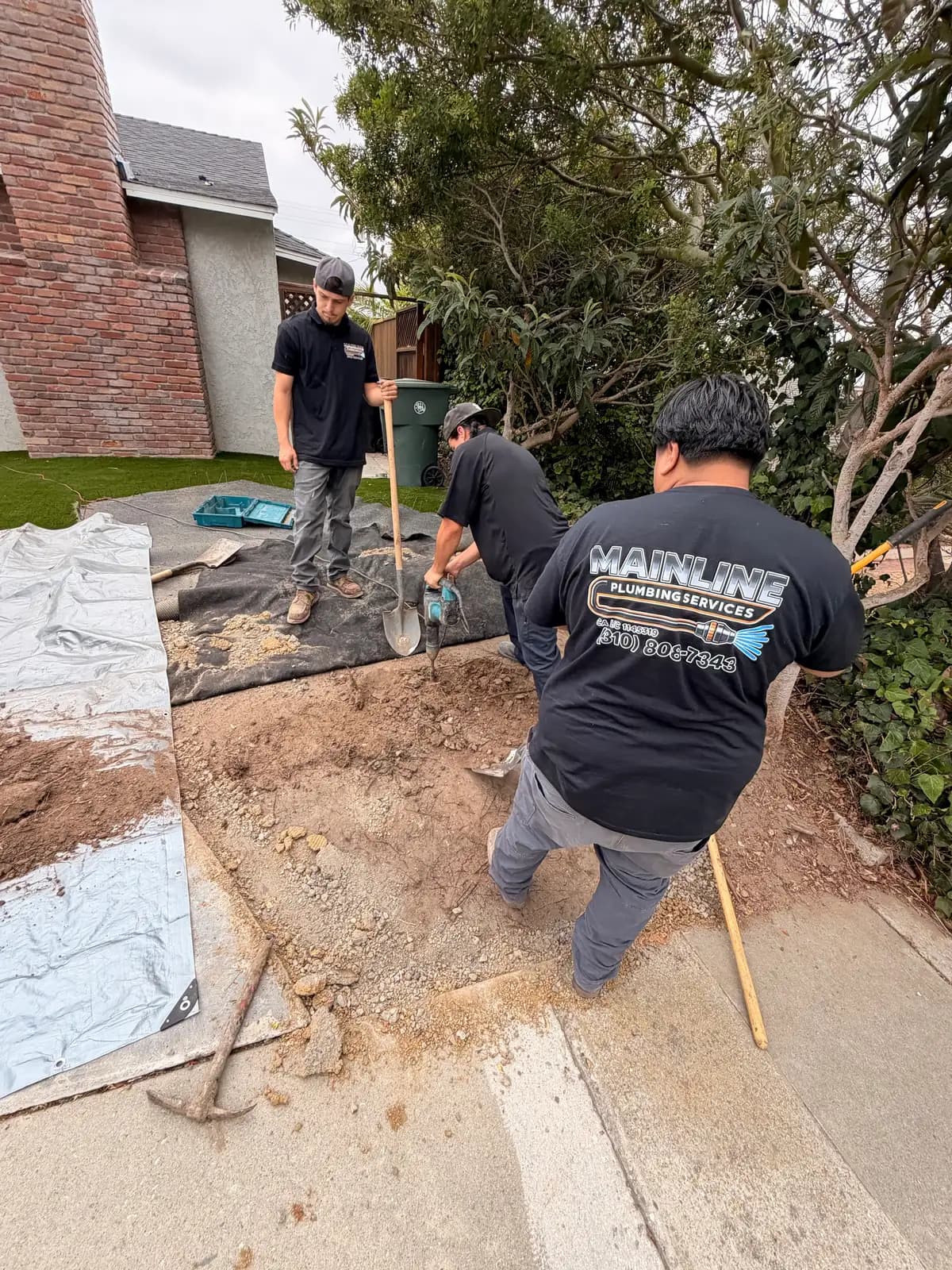
Mainline No-Dig Trenchless Plumbing serves 16 South Bay cities out of our Lomita headquarters with a 60-minute target response on emergencies and no overtime fees. If you want a repipe assessment — including a clear recommendation on PEX versus copper for your specific property — call (310) 808-7343 or use the contact form on this site. We'll scope the job, give you a written breakdown, and tell you exactly what we'd do if it were our house.
Tags
Related Services