A gas smell in your home is not a 'wait and see' situation. Natural gas and propane are both heavier than air in certain concentrations, and either one can accumulate to explosive levels inside an enclosed space faster than most people expect. The response window between 'I smell something' and 'I need to be outside' is shorter than most homeowners realize.
This post walks through exactly what to do, in order, from the moment you detect the smell. It also explains who handles what afterward — because Southern California Gas Company and a licensed plumber have separate, non-overlapping scopes of work, and confusing those roles wastes time when time is the one thing you don't have.
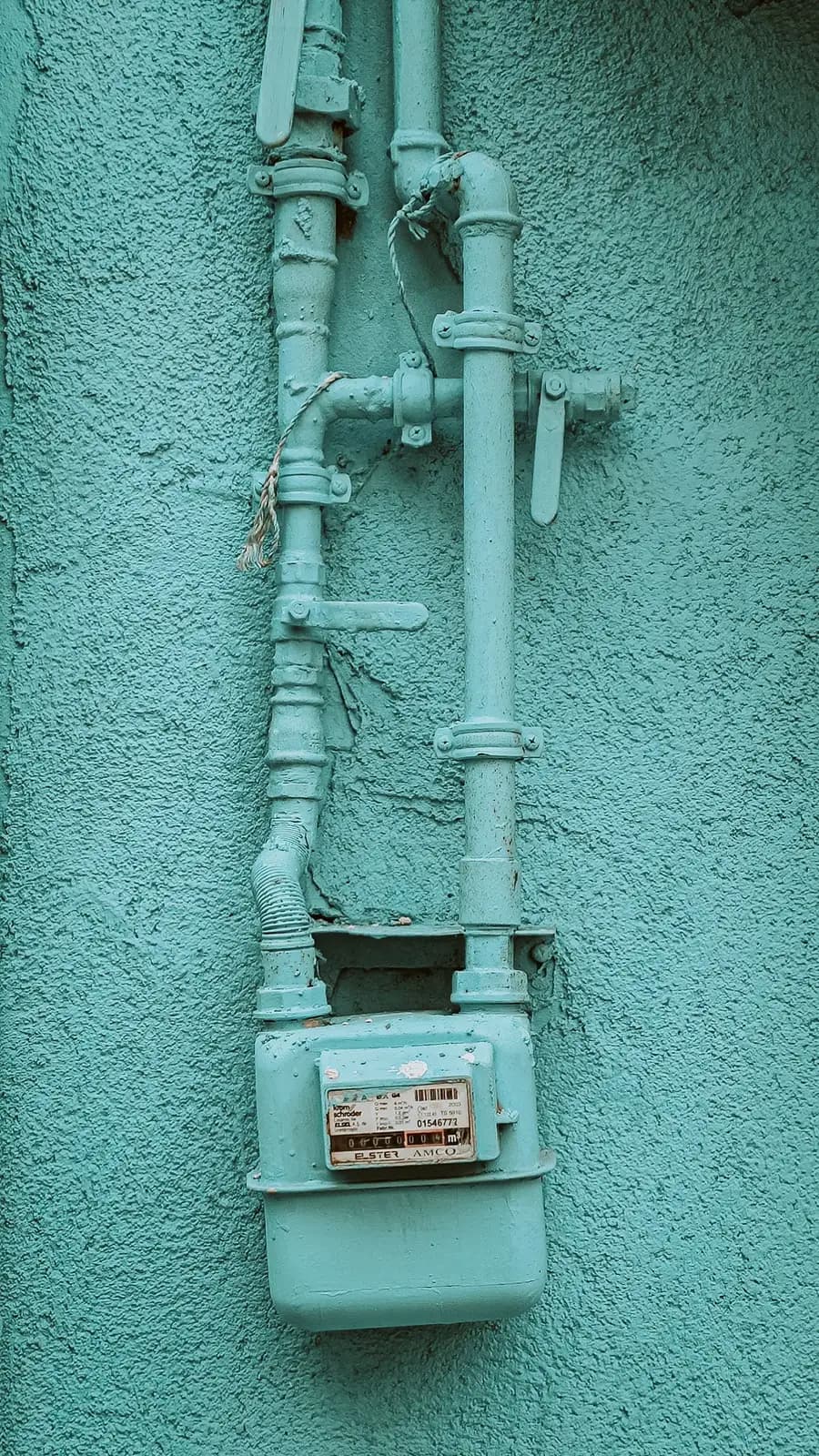
One thing to clear up first: SoCalGas is responsible for the gas supply up to and including the meter. Everything on the house side of the meter — the appliance lines, the branch lines inside the walls, the underground service line from the meter to the house — is your responsibility as the property owner. That distinction matters for every call you make after you get to safety.
Step one: Get out now, and don't touch anything on the way
If the smell is strong, don't stop to investigate the source. Don't turn lights on or off. Don't flip any switch on any appliance, thermostat, or circuit breaker. Don't open the garage door using the wall button or remote — the motor spark is enough to ignite accumulated gas. Leave through a door you can open manually without electronics.
Leave your phone in your pocket. Don't stop to grab your laptop. Don't open windows to 'air it out.' Every extra minute inside a potentially gas-filled space is unnecessary exposure, and the ventilation you'd create by opening windows isn't worth the time it takes.
Get everyone — including pets — out of the house. Go to a neighbor's house or the street, at least 100 feet from the building. Once you're outside and away from the structure, then you make calls.
Step two: Call SoCalGas from outside
SoCalGas operates a 24-hour emergency hotline for suspected gas leaks. Look the number up on your phone from a safe distance, or check the top of any recent SoCalGas bill — it's printed on every statement. Do not go back inside to retrieve the number from a bill or any document. Look it up from outside, then call.
SoCalGas will dispatch a technician to your address. They will locate the meter, shut off gas supply to the property, and check for active leaks on the utility side of the system. If they find the leak is on the homeowner side — the gas piping inside your home or yard — they will note that in their report and leave the gas off until the homeowner-side repair is completed and pressure-tested by a licensed contractor.
Don't call SoCalGas expecting them to fix the pipes inside your home. Their technician will not do that work, and they're not required to. Their job ends at the meter. What happens between the meter and your appliances is a licensed plumber's scope.
Also call 911 if the smell is strong or the source is unknown
If the odor is heavy — not a faint whiff, but something you can clearly smell across a room or upon entering — call 911 in addition to SoCalGas. Fire department personnel can assess whether the concentration warrants evacuation of adjacent units or structures. In densely built neighborhoods like Old Torrance or the Sand Section of Hermosa Beach, where homes share walls or sit 5 feet apart, that assessment matters.
The fire department does not repair gas lines either. Their role is life safety: ventilating the structure, confirming the concentration drops to safe levels, and ensuring no ignition source is present before anyone re-enters. They coordinate with SoCalGas on scene.
What SoCalGas does — and what they don't
When the SoCalGas technician arrives, they will use a combustible gas detector to scan the meter, the service line from the street to the meter, and the immediate exterior of the property. If the leak is upstream of the meter, that's their repair to make at no cost to you. If the reading is clean on their side and the smell is coming from inside the property, they will shut off the meter and document the finding.
At that point, your gas service is off — no heat, no hot water, no range — and it stays off until a licensed C-36 plumber performs the homeowner-side repair and passes a pressure test. SoCalGas will not restore service until that test is documented. There's no workaround on this.
This is also why you want a plumber en route before SoCalGas leaves if possible. The SoCalGas tech can tell you roughly where the problem appears to be — near the water heater, near the furnace, underground between the meter and the house — and that information helps us scope the job faster when we arrive.
What a licensed plumber does on the homeowner side
Once the scene is declared safe to re-enter — typically by the fire department or SoCalGas tech — a licensed plumber scopes, repairs, and pressure-tests the homeowner-side gas system. The scope of that work depends on where the leak originated. A failed flex connector behind a range is a 30-minute repair. A corroded black iron line buried under a slab in a 1960s Carson or Gardena tract home is a different job entirely.
Pressure testing is non-negotiable before SoCalGas restores service. We pressurize the repaired section of line, hold pressure for a set interval, and confirm there's no drop. That result gets documented. Without it, SoCalGas will not turn the meter back on — and they shouldn't.
For homeowner-side gas work in the South Bay, our [gas line repair and installation service](/services/gas-lines) covers everything from individual appliance connections to full line replacements and underground runs. If you're in Lomita, Torrance, Redondo Beach, or any of the 16 cities we cover, we can be on site typically within 60 minutes on an emergency call.
Common sources of homeowner-side gas leaks in South Bay homes
The most common failure points we see are flexible connectors behind ranges and dryers — the corrugated stainless or brass flex lines that connect the appliance to the rigid supply stub. These have a finite service life and can crack at the crimp fittings, especially if the appliance has been moved or bumped. They're inexpensive to replace and frequently overlooked during appliance installs.
The second most common source is the underground gas line running from the meter to the house. In post-war tract homes across Gardena, Lawndale, and Hawthorne — where most of the housing stock dates from the 1950s and 1960s — the original black iron service line is now 60 to 70 years old. Soil movement and corrosion work on those joints over decades. A pinhole in an underground section often shows up as a faint outdoor odor before it becomes an indoor one.
Older homes in areas like Vinegar Hill in San Pedro or Old Lomita can still have original gas infrastructure that hasn't been touched since installation. If your home predates 1970 and you've never had a gas system inspection, that's worth doing proactively — not after an incident. Our [Lomita gas line service page](/services/gas-lines) covers what a full system inspection involves for older properties.
What to do next
If you're reading this because you currently smell gas: stop reading, get out, and call the SoCalGas emergency line from outside (look it up on your phone, or check a recent SoCalGas bill). The rest of this can wait.
If you've already been through an incident and SoCalGas has shut your meter, or if you want a gas system inspection before something goes wrong, call Mainline at (310) 808-7343. We're a Licensed C-36 #901735 contractor operating out of Lomita, with 24/7 dispatch and a 60-minute target response for emergencies — no overtime fees regardless of when you call.
Gas leaks don't fix themselves, and the meter stays off until the homeowner-side work is done and pressure-tested. The faster that repair is scoped and completed, the faster your gas service is restored. That's the practical reason to have a plumber moving toward your address at the same time SoCalGas is.
Frequently Asked Questions
What should I do if I smell gas in my home?
Leave immediately — do not flip light switches, use phones, or light anything, since a spark can ignite gas. Once everyone is outside and away from the house, call 911 and SoCalGas at 1-800-427-2200. Only after the gas company confirms it is safe should you call a licensed plumber to repair the source of the leak.
Who do I call if I smell gas?
From a safe location outside the home, call 911 and your gas utility's emergency line — in the South Bay that's SoCalGas at 1-800-427-2200. They will shut off and make the area safe. A licensed C-36 plumber then locates and repairs the gas line leak once the utility clears the home for re-entry.
What causes a gas smell in a house?
A rotten-egg odor is the odorant added to natural gas and usually points to a leak at a fitting, an aging gas line, a loose appliance connection, or a pilot light that has gone out. Older South Bay homes with original steel gas piping are especially prone to corrosion-related leaks at threaded joints.
Tags
Related Services