When a sewer lateral fails, the first question is usually whether to dig. The answer, for most South Bay properties, is no — trenchless technology has made open excavation the exception rather than the rule. But trenchless isn't a single method. It's a category, and the two dominant technologies — pipe bursting and cured-in-place pipe lining (CIPP) — are not interchangeable. Each one is the right answer under specific conditions and the wrong answer under others.
Most contractors quietly favor whichever method their crew is best equipped to run. We offer both, which means our recommendation comes from the pipe condition and site constraints rather than equipment preference. This guide lays out exactly how we make that call — and how you can think through it before a camera ever goes down your cleanout.
How each method works
Pipe bursting replaces your existing pipe entirely. A bursting head — slightly larger in diameter than the host pipe — is pulled through the old line by a hydraulic machine at the far end. As it travels, it fractures the old pipe outward into the surrounding soil and simultaneously pulls a new HDPE pipe in behind it. The result is a completely new pipe running through the same corridor, with no excavation beyond two access pits at each end.
CIPP lining — cured-in-place pipe — works differently. A felt or fiberglass liner saturated with resin is pulled or inverted into the existing pipe, then inflated against the pipe wall and cured using hot water, steam, or UV light. Once cured, the resin hardens into a rigid, smooth-interior tube that bonds to the host pipe from the inside. Your original pipe stays in place; the liner becomes the new flow surface. CIPP reduces the internal diameter by roughly 6 to 12 percent depending on liner thickness, which matters in sizing calculations but rarely affects residential flow capacity.
The condition of the pipe is the deciding factor
This is where most homeowners get confused — they hear 'trenchless' and assume both methods are always available. They're not. The host pipe condition sets hard limits on which technology is viable.
CIPP requires a structurally intact host pipe. The liner has to have something to conform to and bond against. If the pipe has collapsed sections, is missing pieces, or has significant offset joints where one pipe segment has shifted laterally against another, the liner can't bridge those gaps reliably. CIPP is the right call on a pipe that's cracked, root-infiltrated, or corroded but still holds its basic round shape and maintains continuous invert. We see this frequently in mid-century clay tile lines throughout Bixby Knolls and California Heights in Long Beach — the pipe is deteriorated but structurally present.
Pipe bursting tolerates far worse conditions. Because the bursting head destroys the host pipe as it moves through, the existing pipe's condition is almost irrelevant — as long as the line can be navigated from one end to the other. Collapsed pipe, heavily deformed orangeburg, severely offset joints — bursting handles all of these where lining simply can't. In Rolling Hills Estates, where steep terrain generates significant soil load on old clay lines, we routinely encounter pipes deformed past the threshold where lining is viable. Bursting is the standard answer there.
Cost comparison: what the numbers actually look like
CIPP lining typically runs $80 to $130 per linear foot on a standard 4-inch residential lateral, including mobilization, access, and liner material. A 60-foot lateral comes in at roughly $4,800 to $7,800. For longer runs — 100 feet or more — the per-foot cost drops slightly as mobilization becomes a smaller fraction of the total. There are no new pipe materials to procure at scale, and installation is faster on a qualifying pipe, which keeps labor costs contained.
Pipe bursting runs higher: typically $110 to $180 per linear foot on the same 4-inch residential lateral, with the same 60-foot run landing at $6,600 to $10,800. The cost difference comes from several factors — HDPE pipe material, the two access pit excavations required at each end, and the more equipment-intensive bursting operation. Permit fees are similar for both methods and depend on the jurisdiction, not the technology. In Torrance, for example, permit and inspection fees for sewer lateral work add $300 to $600 to most jobs regardless of method.
When pipe bursting is the only viable option — which is any time the pipe is collapsed or missing sections — cost comparison is irrelevant. You're not choosing between methods; you're choosing between bursting and a full open-cut excavation, where bursting wins on cost by a wide margin. The comparison above only applies when both methods are technically feasible, which typically means a structurally degraded but still-intact pipe.
Longevity and what you're actually getting
A properly installed HDPE pipe from a pipe bursting job carries a 50-year service life under normal conditions. HDPE is chemically inert, has no joints along the run (it's one continuous fused pipe), and doesn't support root intrusion. You're starting fresh with a material that outperforms what most South Bay homes were built with originally.
A quality CIPP liner is rated for 50 years as well, per industry standards, but that number assumes the host pipe continues to provide adequate support. On a pipe with significant soil voids around it — common after root intrusion cycles or in the sandy soils near the coast in Hermosa Beach or Manhattan Beach's Sand Section — the liner can develop unsupported spans over time. This isn't a reason to avoid CIPP; it's a reason to assess the surrounding soil conditions as part of the pre-job camera inspection rather than skipping that step.
Both methods eliminate the galvanic and biological corrosion mechanisms that kill old clay, cast iron, and orangeburg lines. The long-term performance difference between the two, on qualifying pipes installed correctly, is marginal. The bigger variable is installation quality — a well-installed CIPP liner outperforms a sloppily pulled HDPE pipe every time.
Access, property impact, and restoration scope
CIPP lining typically requires one access point — usually an existing cleanout or a small access pit at one end of the run. The liner is pulled or inverted through that single opening. Property disturbance is minimal: a cleanout cap, a small work area, and no excavation of landscaping or flatwork beyond what's needed for access.
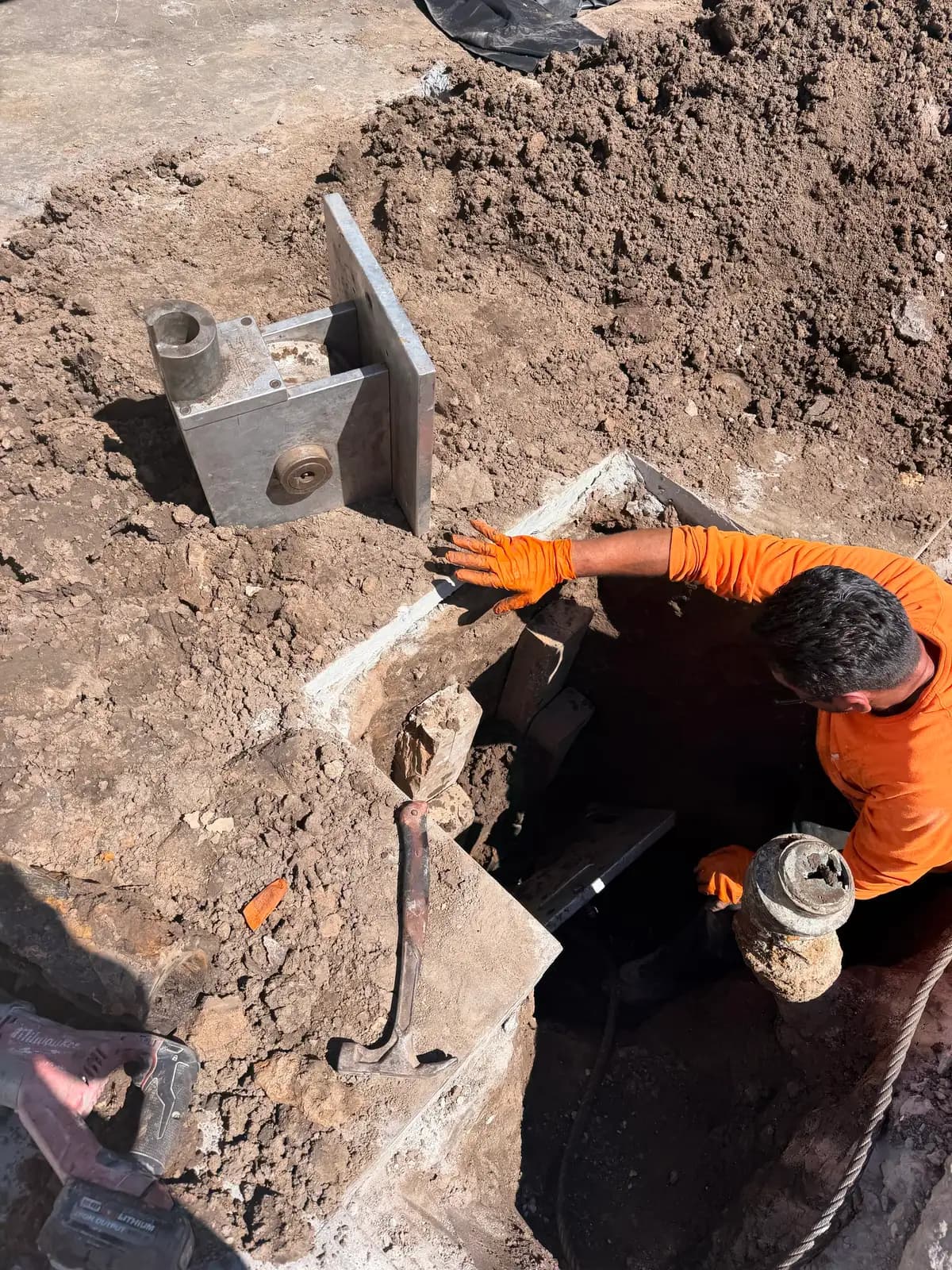
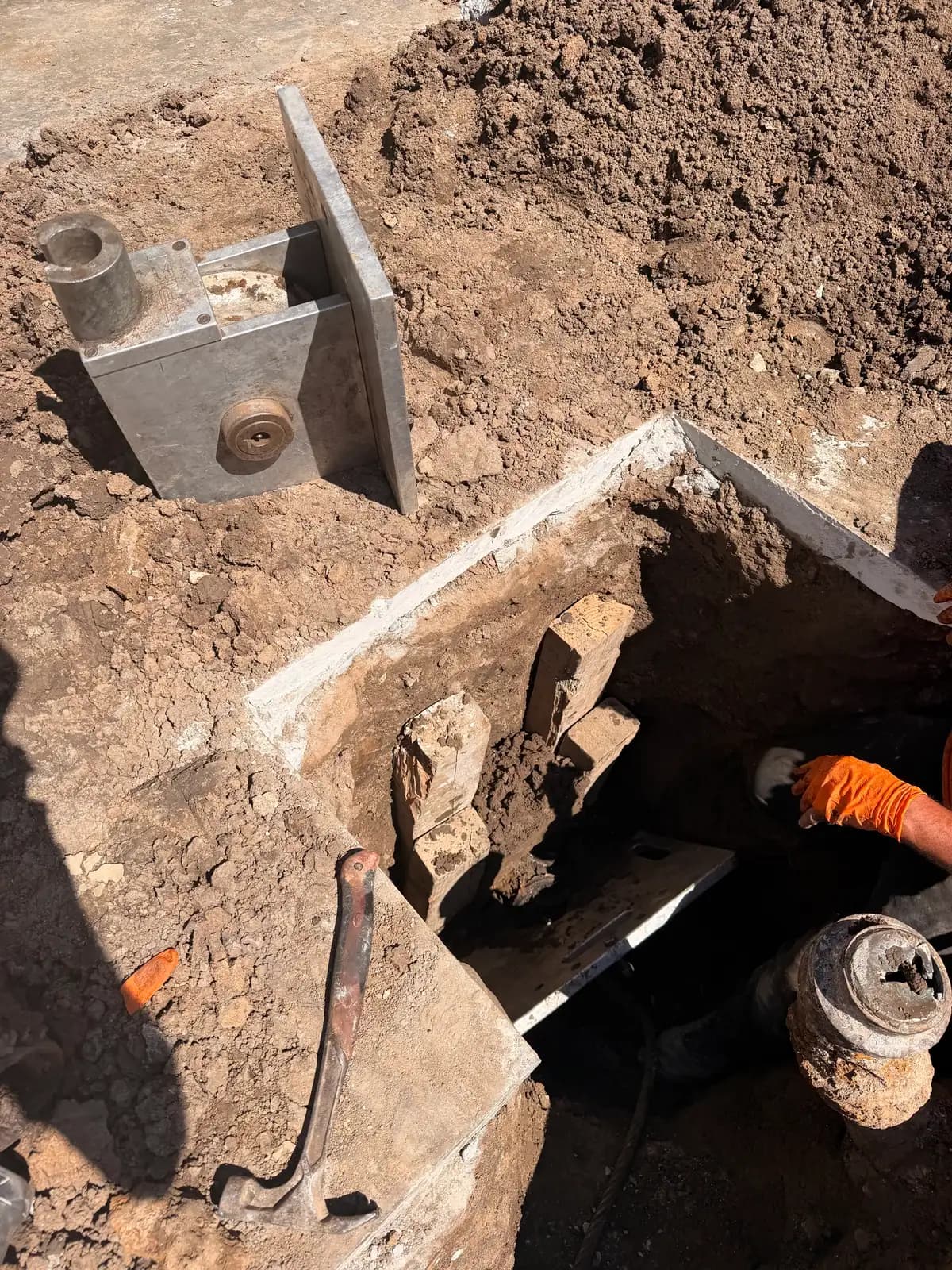
Pipe bursting requires two access pits — one at each end of the replacement run. That means two excavations, two backfill operations, and two areas of surface restoration. On a typical residential lateral, those pits are roughly 4 feet by 4 feet and 4 to 6 feet deep. It's still dramatically less disturbance than open-cut excavation, but it's more than CIPP. In Hermosa Beach's Sand Section, where 30-foot lot widths mean every square foot of yard is accounted for, that access pit footprint matters. On a large Palos Verdes Estates lot, it's a non-issue.
If you have a concrete driveway or decorative hardscape over the lateral run, CIPP can often thread through existing cleanouts with no flatwork impact at all. Pipe bursting requires at least one pit that may land in paved surface. That driveway restoration cost — typically $800 to $2,500 depending on concrete versus pavers — should be factored into the true project cost when comparing methods.
The camera inspection comes first, every time
Neither method should be proposed until a [camera inspection](/services/trenchless) has documented the pipe's actual condition. The inspection tells you what you're working with: pipe material, interior diameter, joint condition, root infiltration pattern, collapse points, and the grade and alignment of the line. Without that data, any method recommendation is a guess.
A pre-job camera inspection is free when it's paired with a trenchless or repair quote. On any job where we're proposing a liner or a bursting operation, that inspection happens first — it's how we confirm which method is viable and how we scope the job accurately. In [Torrance](/service-areas/torrance/trenchless) the footage serves double duty, since the same documented pipe condition supports the permit application and tells you whether the work will cross into the public right-of-way and need a second permit.
The inspection also rules out scenarios where neither trenchless method works — for example, a pipe with major belly sections or severe negative grade that would cause standing water regardless of the liner or replacement material used. In those cases, the grade has to be corrected, which means targeted excavation at the low point before any lining or bursting proceeds.
Why we offer both instead of picking one
Some contractors push CIPP on every job because the equipment is cheaper to mobilize and the job moves faster. Others default to bursting because they've built their operation around it. Neither approach serves the homeowner — it serves the contractor's equipment investment. The right method depends entirely on what the camera shows and what the site allows.
We've run pipe bursting on collapsed orangeburg lines in Old Gardena that no liner could have navigated, and we've installed CIPP in Culver City's Carlson Park neighborhood on 1930s clay tile that was cracked but perfectly round — where bursting would have been overkill and more disruptive than necessary. Offering both methods means we're not steering jobs toward a predetermined solution. Licensed C-36 #901735, we've been doing this for 18+ years across 16 South Bay cities. The method recommendation follows from the pipe — not from what we happen to have in the truck.
What to do next
If you've got slow drains, recurring backups, or you're seeing wet spots in the yard, the first step is a camera inspection — not a method selection. The inspection drives the recommendation. If you're in escrow and a lateral compliance inspection has flagged a problem, time is tighter and you need a crew that can scope, permit, and execute without unnecessary delays.
Call us at (310) 808-7343 to schedule a camera inspection or get a same-day assessment on an active backup. We dispatch 24/7 with a 60-minute target response on emergencies, and there are no overtime fees regardless of when you call. If you want to understand what a trenchless project looks like for your specific area, the [Torrance trenchless service page](/service-areas/torrance/trenchless) covers the local compliance requirements and what a typical lateral job involves from permit to final inspection.
Tags
Related Services