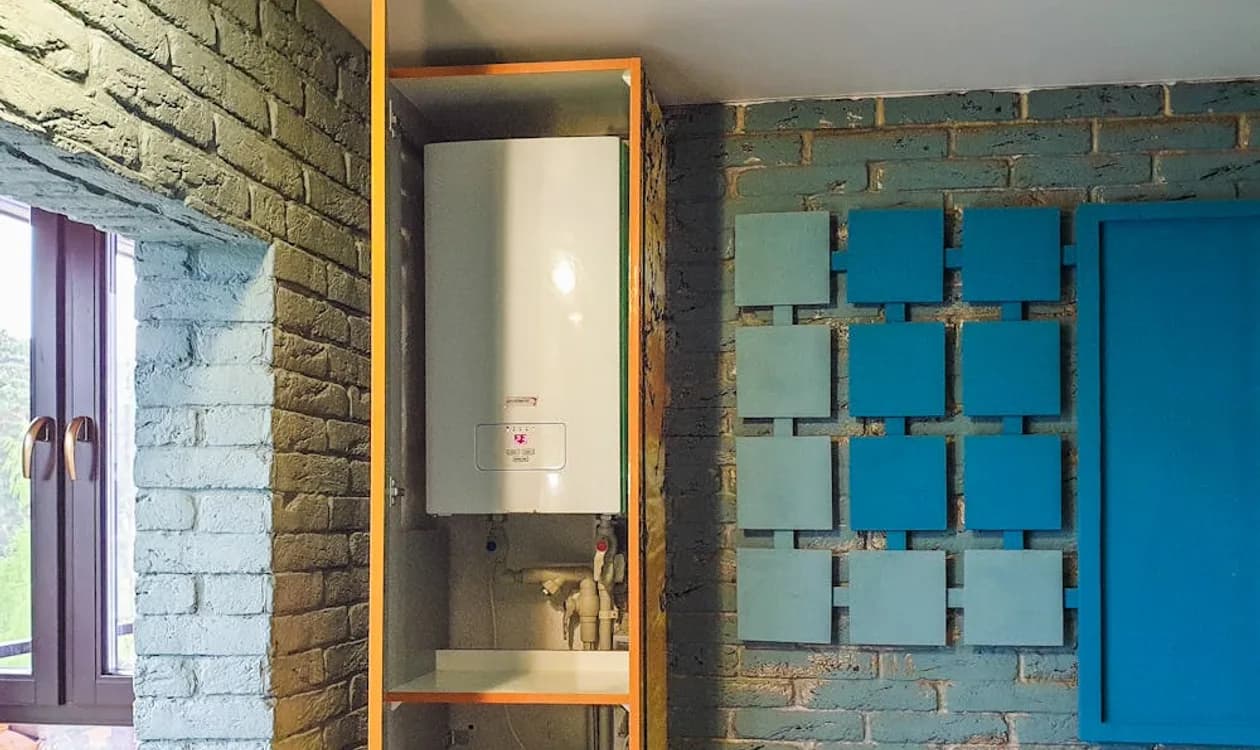
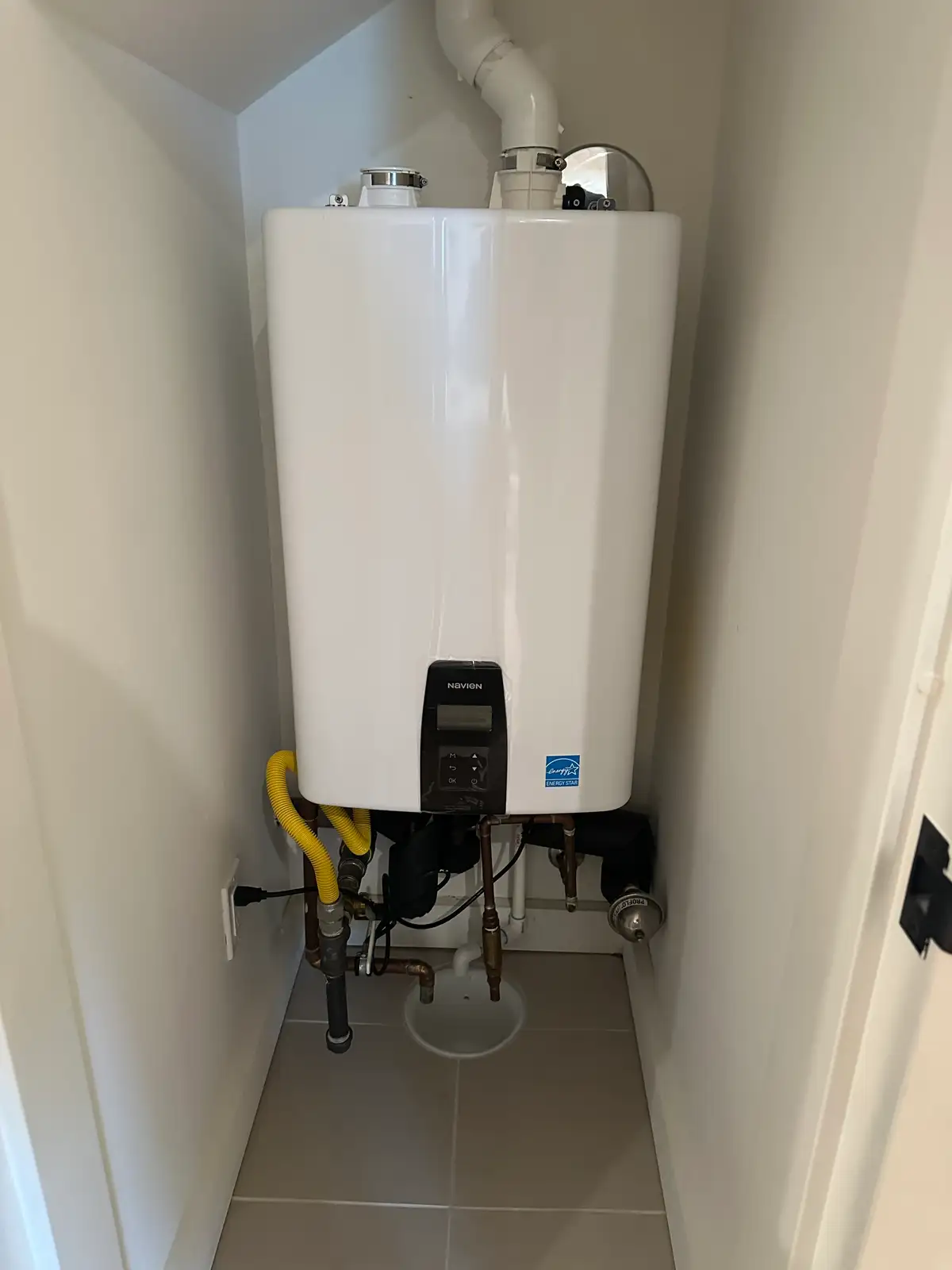
Tankless water heater installation in Hawthorne typically runs $2,800–$4,800 all-in — but that number almost always moves once a technician inspects the existing gas line and tests the incoming water. Two variables drive the cost more than the unit itself: whether the 1/2-inch galvanized gas stub feeding the old tank can handle the flow a tankless unit demands, and whether the home has a water softener or scale pre-filter protecting the heat exchanger.
Hawthorne's housing stock is dominated by 1950s and 1960s aerospace-worker tract homes in neighborhoods like Hollyglen, Holly Park, and Bodger Park. Those homes were built around 30,000–40,000 BTU storage tanks. A modern condensing tankless unit draws 150,000–190,000 BTU at full fire. The infrastructure gap between those two numbers is where most of the installation surprises live.
Why the gas line almost always needs work
A standard 40-gallon tank heater runs on a 1/2-inch gas supply line in most Hawthorne tract homes — that sizing made sense in 1962. A tankless unit at high-demand draw can require 3/4-inch or even 1-inch supply depending on the run length from the meter. When the line is undersized, the unit fires, drops gas pressure mid-cycle, and throws an error code. Homeowners often blame the unit. The actual problem is the line.
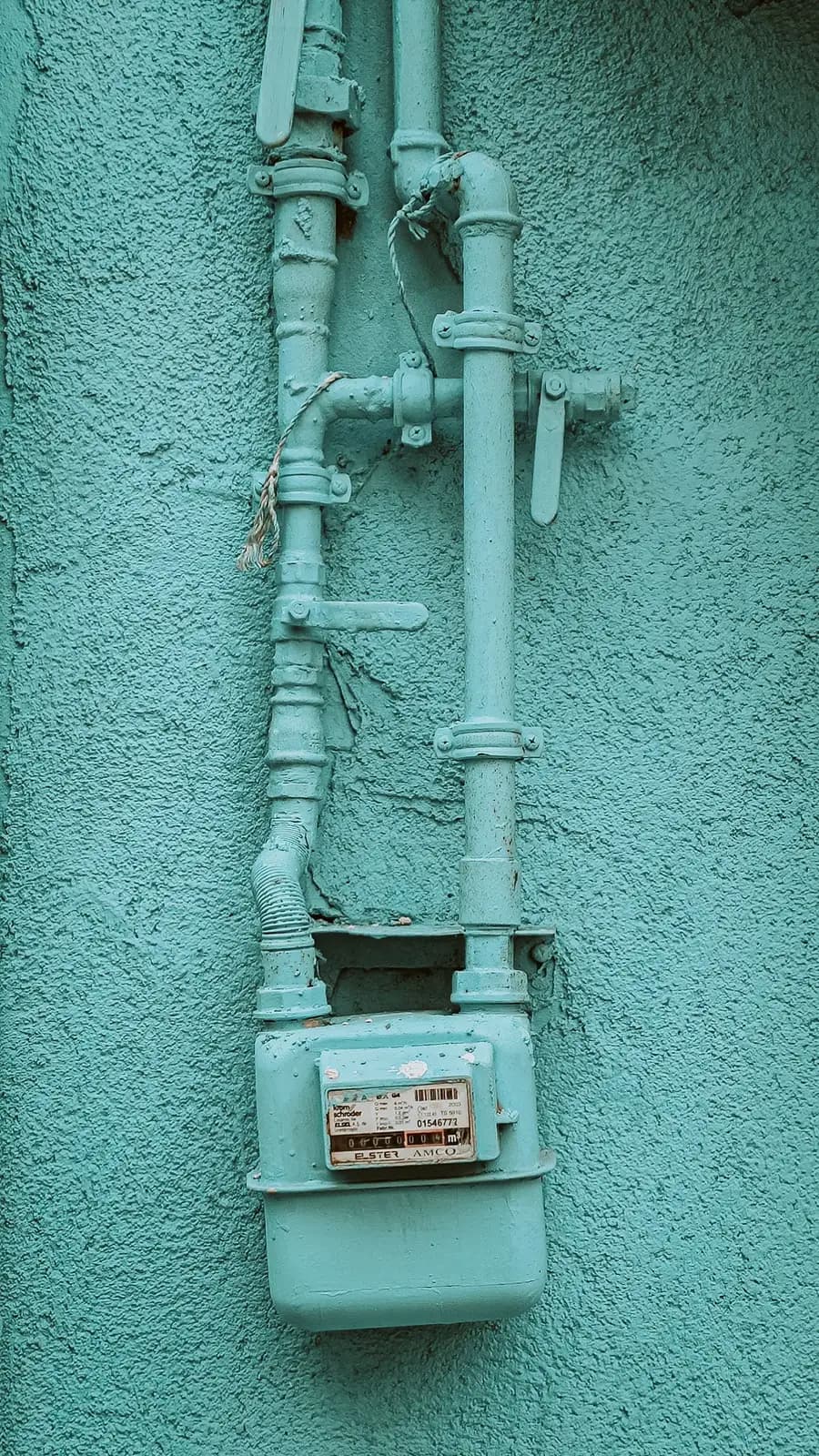
We scope every Hawthorne tankless job for gas line capacity before quoting the upgrade. The meter itself also matters. Older diaphragm meters rated for lower BTU throughput may need an upgrade through SoCalGas — that's a separate coordination step that adds 1–3 weeks to a project in some cases. We handle that paperwork as part of the installation, but the timeline isn't in our hands once the utility is involved.
Gas line upsizing from the meter to the unit adds $400–$900 to the job depending on run length and whether the line passes through a finished wall or runs exposed in the garage. In most Hollyglen and Ramona-area homes, the water heater was installed in the garage or a utility closet on an exterior wall — that's the favorable case. Homes in the 360 District or along the Hawthorne Boulevard Corridor that have had interior remodels sometimes have longer runs through finished space, which raises the number.
What 9–11 grain water does to a heat exchanger
Hawthorne sits in the same Southern California water district service area that feeds most of the South Bay. Incoming water hardness runs 9–11 grains per gallon (roughly 155–190 ppm). That's moderate-to-hard, and it matters for tankless units in a specific way: unlike a storage tank where scale settles on the tank floor, in a tankless unit scale deposits inside the heat exchanger's copper tubes. Those tubes are narrow — sometimes 3–5mm — and they restrict faster than you'd expect.
An unprotected tankless unit in Hawthorne can lose 20–30% of its rated efficiency within 3–5 years from scale accumulation. Annual descaling flushes with food-grade white vinegar solution slow the process, but they don't stop it. The more durable fix is a dedicated scale inhibitor or softener on the cold-water inlet. A whole-home water softener costs $1,200–$2,200 installed and extends the heat exchanger's service life from a typical 10–12 years to closer to 15–20.
We document the water hardness on every [tankless water heater](/services/water-heaters) job we run in Hawthorne and include a written maintenance schedule with the warranty paperwork. If you skip the annual flush and the heat exchanger fails from scale, most manufacturers void the warranty on that component. That's a $400–$700 part replacement you'd be paying out of pocket.
Venting: direct vent versus power vent in a Hawthorne garage
Most Hawthorne garage installs use a direct-vent (concentric pipe) configuration — combustion air in through the outer pipe, exhaust out through the inner. This keeps all combustion air sealed from the garage interior, which matters in California and is required in many installation scenarios. The vent penetrates the exterior wall and terminates outside, typically through the stucco.
Power-vent configurations (single exhaust pipe only, drawing combustion air from the surrounding space) are sometimes used when the unit can't be positioned near an exterior wall. Those are less common in Hawthorne's single-story tract homes but show up in remodeled spaces where the heater location moved indoors. The venting material for condensing units must be rated for acidic condensate — standard B-vent or Type L is not acceptable and won't pass inspection.
Permit and inspection add $150–$300 to the total depending on Hawthorne's current fee schedule at time of permit pull. We pull the permit on every installation — no exceptions. An unpermitted tankless install creates disclosure problems at resale and can trigger a repair requirement if a buyer's inspector catches it.
What a real Hawthorne tankless quote should include
A quote that lists only the unit and labor isn't complete. Before you sign anything, the quote should explicitly itemize: gas line inspection and any upsizing required, water hardness mitigation recommendation, venting material and penetration work, permit fee, and a startup inspection. If those line items are missing, ask for them individually. A quote that doesn't mention gas line capacity on a 1960s Hawthorne tract home wasn't built on a real site inspection.
You can see a breakdown of what we include on [Hawthorne water heater installations](/service-areas/hawthorne/water-heaters) — it's the same checklist we use internally before any job goes on the schedule. The unit brand and model matters less than getting the infrastructure right first.
For homeowners in Holly Park or Bodger Park who are comparing quotes, the number to watch isn't the unit price — it's whether gas line work and permit are included or listed as allowances. An allowance means the contractor doesn't actually know what's there yet. We don't quote allowances for gas lines; we inspect first and quote a fixed scope.
Hawthorne tankless water heater questions we hear most
**How long does a tankless installation take in Hawthorne?** Most single-unit residential installs complete in one day — typically 4–6 hours for the unit swap, venting, and gas line work if the run is simple. If a gas line upsize requires opening a finished wall or the permit inspection can't be scheduled same-day, the job runs across two visits.
**Does the city of Hawthorne require a permit for water heater replacement?** Yes. Any water heater replacement — tank or tankless — requires a permit from the city. We pull that permit as part of every installation. An inspector signs off on the venting, gas connections, and seismic strapping before the job is considered complete.
**Will my current gas meter handle a tankless unit?** In many 1960s Hawthorne homes, the answer is: maybe. We measure the BTU demand of all appliances on the meter — furnace, range, dryer, fireplace — and add the tankless unit's maximum draw. If the aggregate exceeds the meter's rated capacity, we coordinate a meter upgrade with SoCalGas. This step is free to identify; the utility handles the meter upgrade at no charge to the homeowner in most cases.
**How often does a tankless water heater in Hawthorne need descaling?** With incoming water at 9–11 grains hardness, annual descaling is the right maintenance interval. If you add a scale inhibitor pre-filter, you can extend that to every 18–24 months. We include a maintenance schedule with every install.
**Is Mainline licensed to do this work in Hawthorne?** Yes. We hold California C-36 plumbing license #901735, which covers all plumbing and gas work. You can verify that license number on the CSLB website at cslb.ca.gov.
**What's the difference between a condensing and non-condensing tankless unit for a Hawthorne home?** Condensing units extract more heat from combustion gases — efficiency ratings typically run 0.94–0.96 EF versus 0.80–0.82 for non-condensing. They require corrosion-resistant PVC or CPVC flue venting and produce a small amount of acidic condensate that needs a drain nearby. Non-condensing units use metal flue pipe and don't require a condensate drain, but they're less efficient and the exhaust runs hotter. For most Hawthorne garage installs, condensing units are the right choice if the budget allows.
What to do next
If you're in Hollyglen, Holly Park, Bodger Park, or anywhere else in Hawthorne and you're pricing a tankless upgrade, the first step is a site inspection — not a phone quote. Gas line capacity and water hardness need to be assessed in person before any number means anything. We've run enough of these jobs in 1950s–60s Hawthorne tract homes to know what's usually there, but 'usually' isn't a quote.
Mainline No-Dig Trenchless Plumbing is a licensed C-36 contractor (#901735) headquartered in Lomita with a 30-minute target response to Hawthorne. We dispatch 24/7 with no overtime fees. Call us at (310) 808-7343 to schedule a site inspection, or use the contact form to describe your setup and we'll get back to you same day.
Frequently Asked Questions
How long does a tankless installation take in Hawthorne?
Most single-unit residential installs complete in one day — typically 4–6 hours for the unit swap, venting, and gas line work when the run is straightforward. If the gas line requires opening a finished wall or the permit inspection can't be scheduled same-day, the job runs across two visits.
Does the city of Hawthorne require a permit for water heater replacement?
Yes. Any water heater replacement — tank or tankless — requires a permit from the city. We pull that permit as part of every installation. An inspector signs off on the venting, gas connections, and seismic strapping before the job is considered complete.
Will my current gas meter handle a tankless unit?
In many 1960s Hawthorne homes, it depends on total appliance load. We measure the BTU demand of every appliance on the meter and add the tankless unit's maximum draw. If the aggregate exceeds the meter's rated capacity, we coordinate a meter upgrade with SoCalGas — the utility handles most meter upgrades at no charge to the homeowner.
How often does a tankless water heater in Hawthorne need descaling?
With incoming water at 9–11 grains hardness, annual descaling is the right maintenance interval. Adding a scale inhibitor pre-filter can extend that to every 18–24 months. We include a written maintenance schedule with every install.
Is Mainline licensed to do tankless water heater work in Hawthorne?
Yes. We hold California C-36 plumbing license #901735, which covers all plumbing and gas work in Hawthorne and across the South Bay. You can verify that license number at cslb.ca.gov.
What's the difference between a condensing and non-condensing tankless unit for a Hawthorne home?
Condensing units extract more heat from combustion gases — efficiency ratings typically run 0.94–0.96 EF versus 0.80–0.82 for non-condensing. They require corrosion-resistant PVC or CPVC flue venting and produce acidic condensate that needs a drain nearby. For most Hawthorne garage installs with an accessible exterior wall, condensing units are the right choice if the budget allows.
Tags