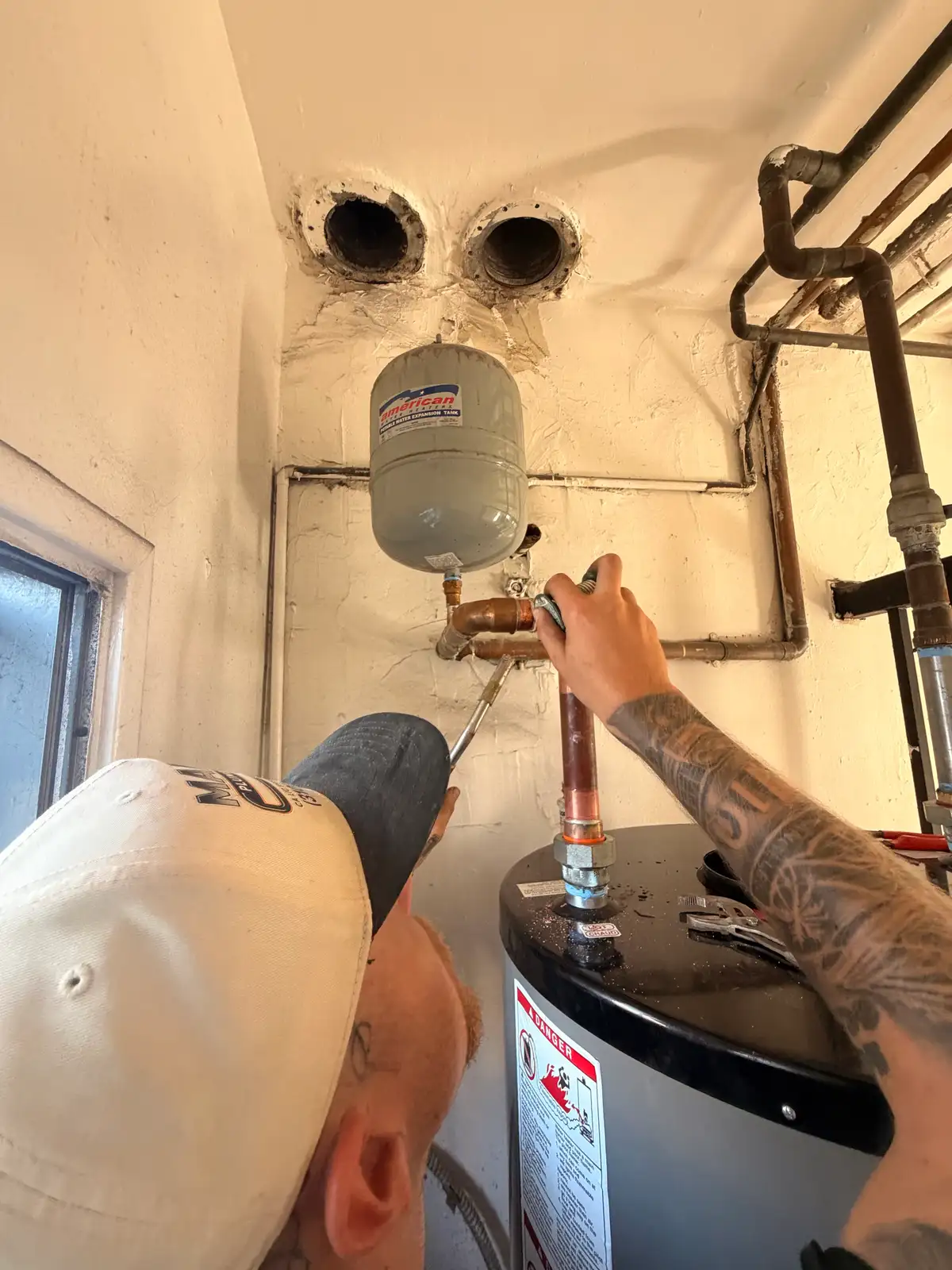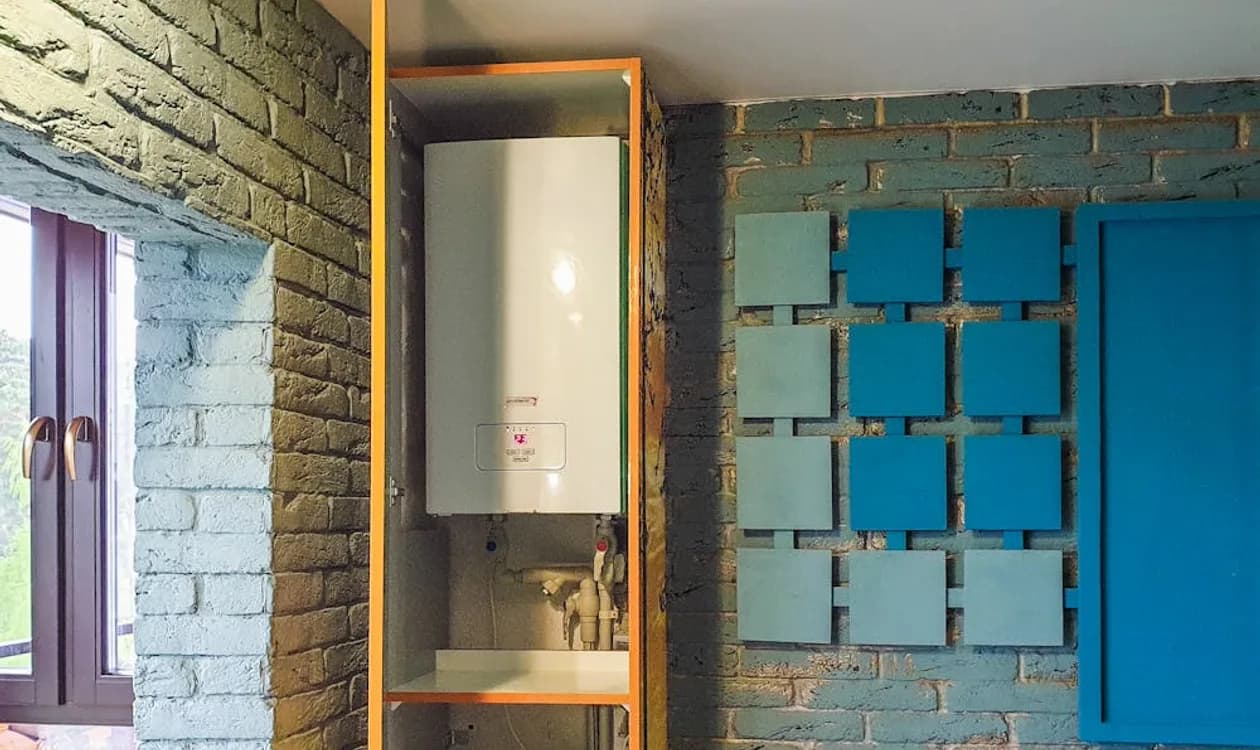
A tankless water heater in Long Beach is the right call for most homes — but only when the install accounts for salt air corrosion, hard water scaling, and the gas supply capacity of an older structure. Skip those details and a unit that should last 20 years starts degrading in five.
Long Beach's 40-minute response zone from our Lomita headquarters still lands us in Belmont Shore and Naples regularly. The coastal micro-climate in those neighborhoods adds real complexity to a water heater replacement that a generic box-store install simply won't address.
Why salt air changes the venting equation
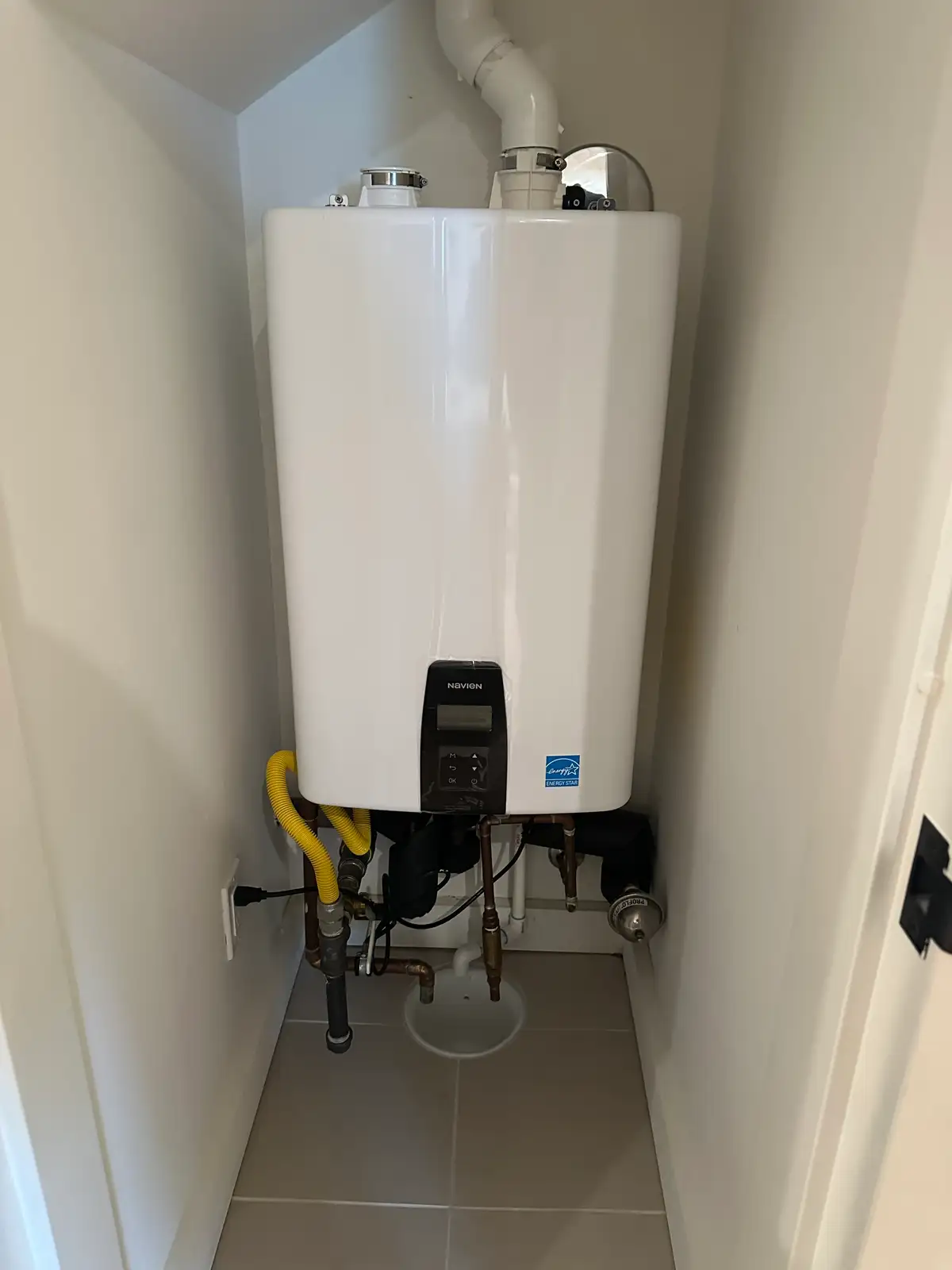
Tankless units exhaust combustion gases through a flue — typically PVC on inland installs. Within a few blocks of the water in Belmont Shore or along the Naples canals, PVC degrades faster than rated. The mechanism is airborne chloride infiltration at the joint seams and termination cap, which softens the plastic and causes micro-cracking over time.
The correct material for coastal Long Beach is 316L stainless steel venting or CPVC rated for marine environments. It costs more upfront — roughly $200–$400 more for a typical single-story run — but it's the specification that holds up. We won't install standard PVC venting within two blocks of the waterfront.
The termination point matters too. Salt-laden air concentrates at the eave line. A termination cap facing the prevailing ocean breeze without a drip loop will corrode faster than one positioned with the exposure in mind. This is a detail that matters on installation day, not after the fact.
Hard water and heat exchangers: the pairing problem
Long Beach municipal water runs between 15 and 18 grains per gallon hardness depending on the blend and season. That's moderately hard to hard by any classification. Inside a tankless unit, water passes through a narrow copper or stainless heat exchanger at high velocity and elevated temperature — the two conditions that accelerate scale deposition fastest.
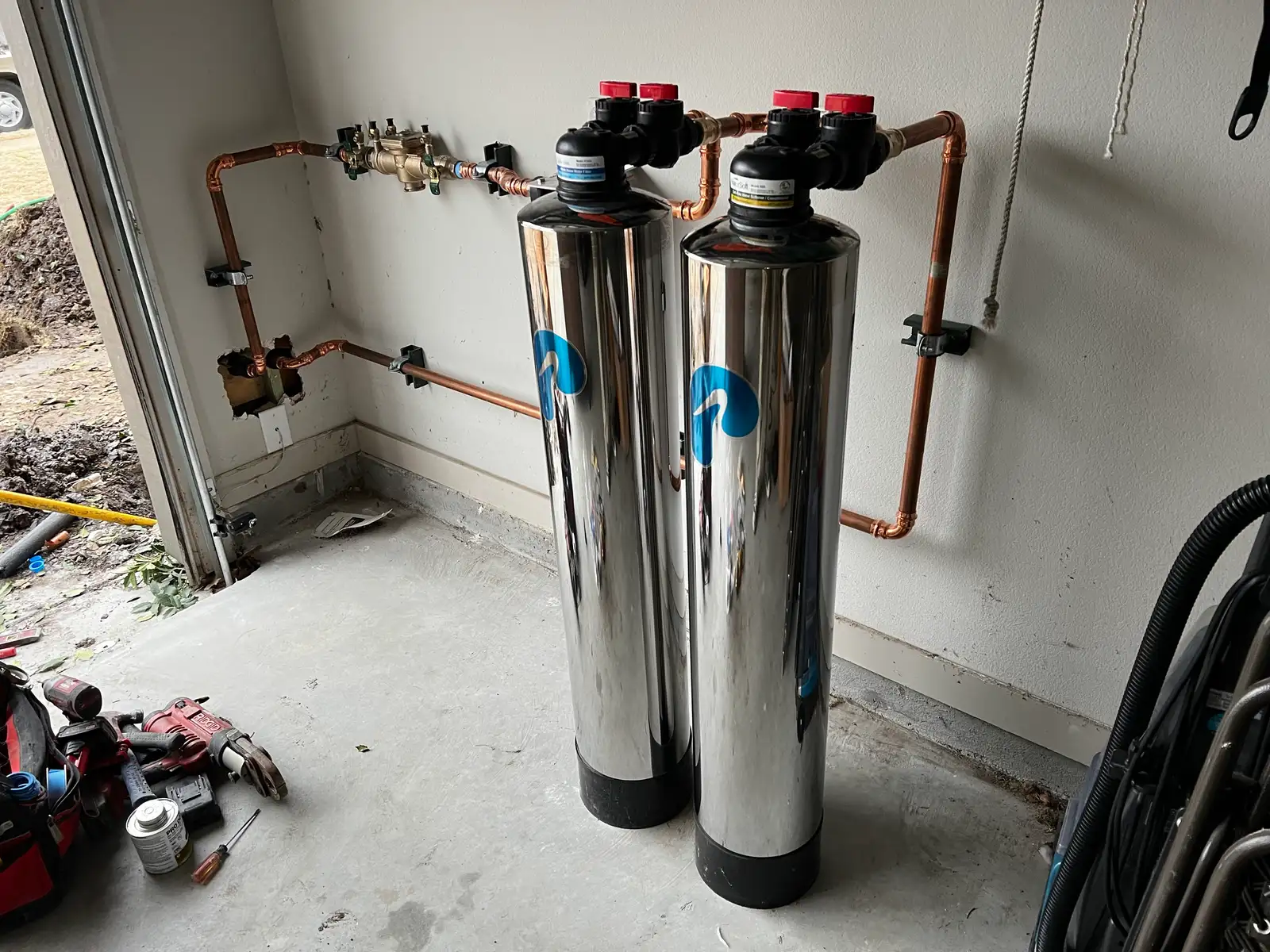
Scale buildup reduces flow rate through the exchanger, forces the burner to run longer to hit set temperature, and eventually causes the unit to error-code and shut down. Flushing with descaling solution annually helps, but it's maintenance, not prevention. The prevention is a water softener or salt-free conditioner installed upstream of the unit.
For most [Long Beach water heater installs](/service-areas/long-beach/water-heaters), we recommend pairing the tankless unit with a whole-home softener or a dedicated pre-filter on the cold inlet. The softener adds cost — typically $800–$1,500 installed for a salt-based system — but it extends the heat exchanger's service life from roughly 10–12 years unprotected to closer to 20 years. That math works on any unit above entry-level.
Sizing for Long Beach's older housing stock
Long Beach has one of the more varied housing stocks in the South Bay — Belmont Heights Craftsmans from the 1910s and 1920s, California Heights bungalows, mid-century Bixby Knolls ranchers, and newer infill. The size and era of the home matters directly for tankless sizing because gas line diameter is often the binding constraint.
A high-output tankless unit at full demand can require 150,000 BTU or more. Pre-war and early post-war homes were typically plumbed with 1/2-inch or 3/4-inch gas lines sized for a furnace and range, not a high-BTU water heater. Before recommending a unit, we assess the existing line from the meter to the proposed equipment location and calculate whether the diameter supports the required flow at operating pressure.
Undersizing the gas line produces a unit that works fine during low demand but drops temperature under simultaneous load — two showers plus a dishwasher, for example. A [tankless water heater](/services/water-heaters) that can't meet demand at your peak usage pattern is not properly sized, regardless of what the unit's spec sheet says.
Permits, rebates, and what the utility actually pays
Every tankless water heater replacement in Long Beach requires a permit through the Department of Building and Safety. That means an inspection of the venting, gas connection, seismic strapping on any adjacent components, and the condensate drain on condensing units. The permit process adds a few days to project timeline but is not negotiable — an unpermitted water heater creates a disclosure problem at resale.
Southern California Gas and SoCalGas rebate programs periodically offer $100–$200 on qualifying high-efficiency condensing tankless units. LADWP has offered rebates on gas appliances in the past as well, though availability changes year to year. The relevant threshold is typically a uniform energy factor (UEF) of 0.87 or higher for gas tankless. We pull permit and handle utility paperwork as part of every install — homeowners don't need to navigate those forms independently.
One detail many homeowners miss: the rebate is usually tied to the unit installed, not the brand. If a contractor substitutes a lower-efficiency model on install day, the rebate eligibility changes. We confirm the unit on the job matches what was quoted before work begins.
Recirculation in a long home
Tankless units heat on demand, which means a home with long pipe runs — a common situation in Bluff Park two-stories or larger Bixby Knolls ranchers — still has a wait for hot water at the far fixture. The fix is a recirculation system: a small pump circulates water through the hot line on a timer or thermostat, keeping the pipe primed.
On a tankless unit, the recirculation pump must be matched to the unit's minimum flow rate. Some units require 0.5 gallons per minute to activate the burner. A recirculation pump that runs below that threshold will cycle water without activating the heater, delivering warm but not hot water. This is a setup issue, not a hardware failure — but it's one we see on installs done without attention to that spec.
Long Beach tankless water heater questions we hear most
**Can I keep standard PVC venting if the previous unit had it?** Not in coastal neighborhoods like Belmont Shore or Naples. If the previous unit's PVC venting has held up, it's worth inspecting — but we won't reuse material that shows chloride degradation at joints or the termination cap. The cost of stainless venting is far less than replacing a failed unit from combustion exhaust backflow.
**Does the water here actually damage tankless units faster than inland?** Yes, on two fronts. Hard water scale hits the heat exchanger harder than in lower-hardness areas, and salt air degrades external components and venting faster than inland air. Both are manageable with the right install spec — neither is a reason to avoid tankless.
**How do I verify your license?** We hold C-36 plumbing contractor license #901735, issued by the California State License Board. You can verify current status at cslb.ca.gov by searching the license number directly.
**What's the typical installed cost in Long Beach right now?** A mid-tier condensing tankless unit with stainless venting, permit, and gas line evaluation runs roughly $3,200–$4,800 installed depending on access and line upgrades needed. Pairing a softener adds $800–$1,500. We provide itemized quotes before any work begins.
**Do I need a dedicated gas line?** Possibly. If your existing line is 1/2-inch diameter or undersized for the unit's BTU demand, a new or supplemental run is required. We assess this during the site evaluation — it's not an add-on we discover mid-job.
**What's the maintenance schedule on a coastal install?** Annual descaling flush regardless of whether a softener is installed. Anode inspection if the unit has one. Inlet filter screen cleaning every 6 months in hard water conditions. Venting inspection every 2–3 years in salt-air zones.
What to do next
If you're replacing an aging tank heater in Belmont Shore, Naples, California Heights, or anywhere else in Long Beach, the install details covered here are worth raising with any contractor you talk to. Ask specifically about venting material, gas line assessment, and whether they pull permit. The answers will tell you a lot.
Mainline No-Dig Trenchless Plumbing serves Long Beach with 24/7 dispatch and no overtime fees. Call us at (310) 808-7343 to schedule a site evaluation or ask about current utility rebate eligibility. We'll tell you what the job actually requires before any work starts.
Tags