
Expert Plumbing Services
Sump Pump Installation & Repair.
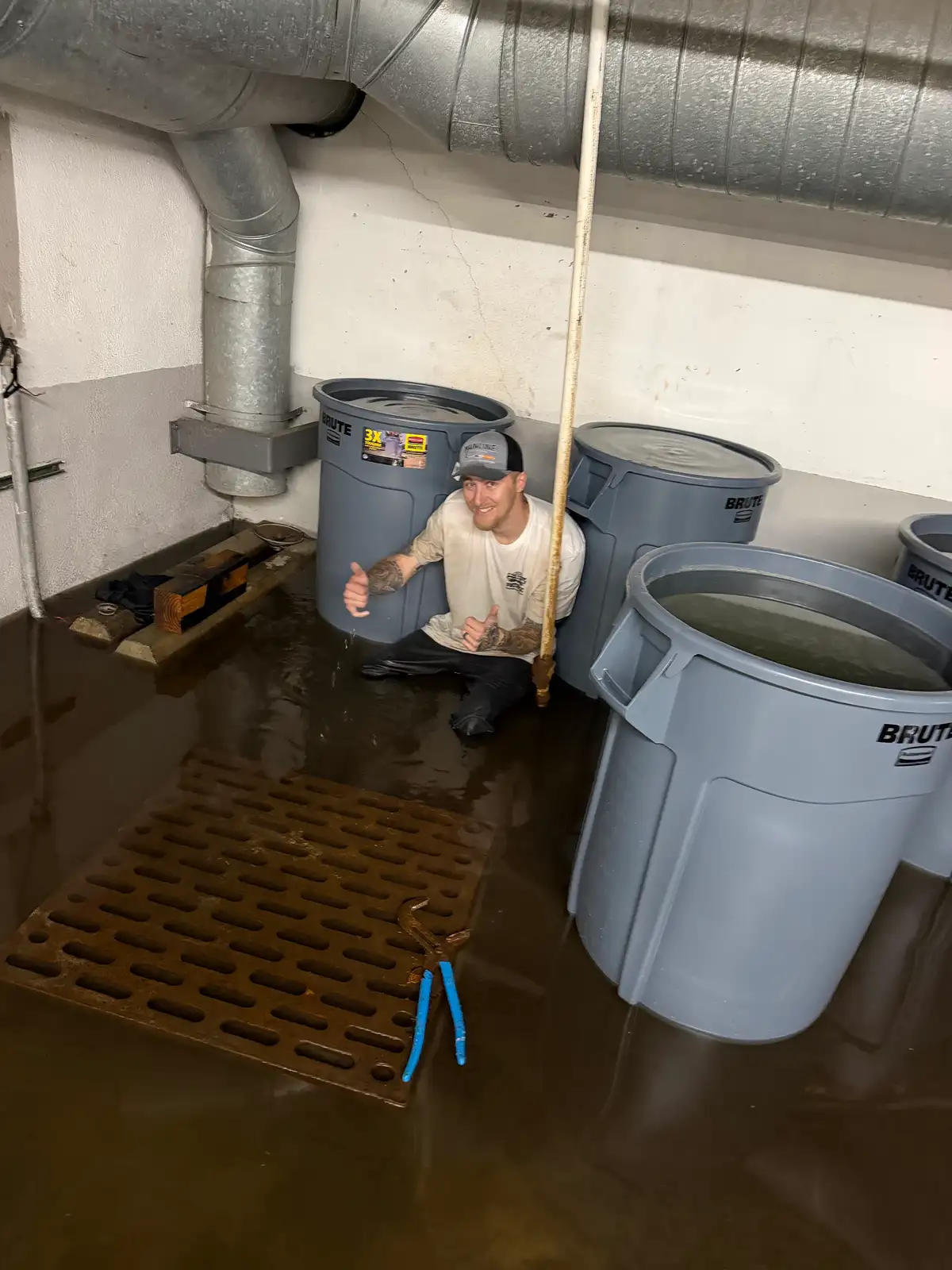
A sump pump protects a basement, crawlspace, or below-grade room by collecting rising groundwater and discharging it away from the foundation. Mainline sizes the pump to measured inflow and head height, checks the basin, float, check valve, and discharge route, and can add battery backup for storm-related power outages.
About This Service
Basement and crawlspace sump pumps, battery backup systems, and float-switch replacement. Pre-storm-season inspections in October.
Sump pumps protect basements, crawlspaces, and below-grade utility rooms from groundwater intrusion. The pump sits in a pit — the sump basin — at the lowest point of the space; when water rises high enough, a float switch triggers the pump and discharges it through a check valve to the exterior. Failure modes are predictable: stuck float switches, failed check valves, motor burnout, and undersized pumps that cannot keep up with peak inflow.
The first honest question is whether you need one at all. Most of Southern California builds on slab with no basement, and a lot of South Bay homes will never take on groundwater no matter how hard it rains. The properties that genuinely need a pump fall into a few groups, and they are geographic rather than universal: homes with a below-grade garage or utility room, houses with a crawlspace that has standing water in it after a storm, and low-lying lots where the surrounding grade sends runoff toward the structure instead of away from it. If you are outside those groups, a sump pump is solving a problem you do not have, and we will tell you so.
Where it does matter, the reason is usually the water table rather than the rain. The Strand and the blocks west of Pacific Coast Highway in Hermosa Beach sit on sand with a high coastal water table — high enough that winter storms push groundwater into an open excavation within a few feet of grade. The same holds near the Esplanade and through parts of South Redondo Beach. Sand drains beautifully at the surface, which is why people are surprised: the water is not sitting on top waiting to soak in, it is rising from underneath. A below-grade room in that soil takes on water in a heavy season whether or not the surface ever puddles.
The Sand Section of Manhattan Beach is the clearest case in the South Bay. Below-grade garages are common there and the water table is shallow, which makes a working pump the difference between a dry slab and a call at two in the morning. Port-side and low-lying San Pedro sees the same thing from a different direction — groundwater plus storm runoff arriving faster than an undersized pump can clear it. And in Long Beach the beachfront blocks of Naples and Belmont Shore sit on sand with high water tables, so a below-grade space there is a candidate by default rather than by exception.
Clay behaves in the opposite way and produces the same result. Through Old Torrance and Walteria, and across the clay-heavy tracts inland, water does not percolate — it sheets across the surface and collects at the lowest point it can find. On a low-lying lot that point is often the crawlspace. There is no water table involved; the ground simply refuses to take the water, and the house is downhill of the problem.
Sizing is where most of the bad installs go wrong, and it goes wrong in both directions. A pump is specified against two numbers: the inflow rate the pit actually sees under load, and the head height it has to lift against to reach the discharge point. Undersized, it runs continuously and still loses ground during the hour that matters. Oversized, it empties the pit faster than the pit refills, shuts off, refills, and starts again — short-cycling that kills a motor in a fraction of its rated life. A bigger pump is not a safer pump. We measure rather than round up.
The single most common failure is also the cheapest part in the system. Float switches seize, hang up on the pit wall, or foul with silt, and the pump then either never starts or never stops. On a submersible unit the switch is a $15 to $40 part and replacing it is straightforward — if you catch it before the storm rather than during it. That is the entire argument for an October inspection: nearly everything that fails in January is visible and cheap in October, and invisible and expensive once there is water on the floor.
Check valves are the second one. The valve sits in the discharge line to stop the column of water above it draining back into the pit when the pump shuts off. When it fails, that water returns, the float rises again, and the pump restarts — so a failed check valve looks exactly like short-cycling and gets misdiagnosed as an oversized pump. It is worth ten seconds with a hand on the pipe to tell them apart before anyone buys a new pump.
We install battery-backup secondary pumps on essentially every job, because the failure that costs the most is the one where nothing is broken. South Bay storm outages and peak inflow arrive in the same twenty-four hours by definition — the wind that takes the power down is the wind carrying the rain. A primary pump that has run faultlessly for eight years is no protection at all when the panel is dead. The backup is a modest addition on top of the pump and the pit, and it is the part of the system that earns its keep on the one night it is needed.
Two things worth doing yourself. Pour five gallons into the pit and watch: the float should rise, the pump should start, the pit should clear, and the pump should stop and stay stopped. If it restarts a few seconds later, suspect the check valve. And walk the discharge line to where it ends — it should put water well away from the foundation and not into a bed that drains straight back toward the house, which is a surprisingly common way to build a closed loop that runs the pump all winter.
Standing water under a house is worth a second look even after the pump is sorted, because a crawlspace that stays wet in dry weather is not a groundwater problem. A supply line weeping under the slab produces exactly the same puddle, and slab leak detection tells the two apart in an afternoon. We check for it whenever the water in a pit does not track the weather.
Sewage is a different machine and a different job. If what collects below grade is waste rather than groundwater — a below-grade bathroom or laundry that has to lift into the main — that is an ejector pump, and for commercial buildings we handle those under commercial ejector pump service. The distinction matters because a sump pump is not built for solids and will fail quickly if it is asked to move them.
Pre-storm-season inspections run through October. Licensed C-36 901735, flat-rate quoting before any work starts, and the same crew across Torrance, San Pedro, Long Beach and the beach cities. Call (310) 808-7343.
The Property-Friendly Difference: 18+ Years of Subterranean Infrastructure Mastery in the South Bay. Fully Licensed, Bonded, Insured, and Factory-Certified.
Step by Step
How It Works
Inspect the pit & inflow
Measure basin depth, check inflow rate, inspect existing pump for actual condition vs. age. Sometimes a new check valve and float switch is right; sometimes full pump replacement.
Spec the right pump
Pump size is a function of inflow rate and head height. Sized to actual measured conditions, not generic recommendations.
Install with battery backup
New pump, check valve, discharge line. Battery-backup secondary pumps installed at the same visit so power outages during storm season don't leave the basement defenseless.
Test under simulated load
Pour water into the basin to confirm float trips at the right level, pump runs to full discharge, check valve seats cleanly.
The Difference
Traditional vs. Property-Friendly
- Destructive excavation of your property
- Days or weeks of disruption
- Expensive landscape restoration
- Mess and debris left behind
- Minimal to no excavation needed
- Completed in hours, not days
- Your landscaping stays intact
- Clean, professional worksite
Where We Serve
Sump Pump Installation & Repair in the South Bay
We provide sump pump installation & repair services across the South Bay of Los Angeles and surrounding communities.
Common Questions
Frequently Asked Questions
SERVICE AREA
Sump Pump Installation & Repair Across the South Bay
We provide sump pump installation & repair to every neighborhood in these South Bay cities.
Ready to Get Started?
Our Property-Friendly technicians specialize in sump pump installation & repair. Call now or dispatch online.