A full repipe in Manhattan Beach costs $8,000–$18,000 depending on which section your home sits in — not because labor rates vary by zip, but because dune sand, sandy loam, and decomposed bedrock each impose different access constraints, pipe failure patterns, and corrosion timelines. The section matters before the first fitting goes in.
Mainline serves Manhattan Beach from our Lomita headquarters with a 30-minute target response. The three geographic zones — Sand, Tree, and Hill — aren't just real estate categories. They're distinct engineering environments, and treating them the same is how repipe estimates end up wrong.
Sand Section: dune substrate and salt-air chloride
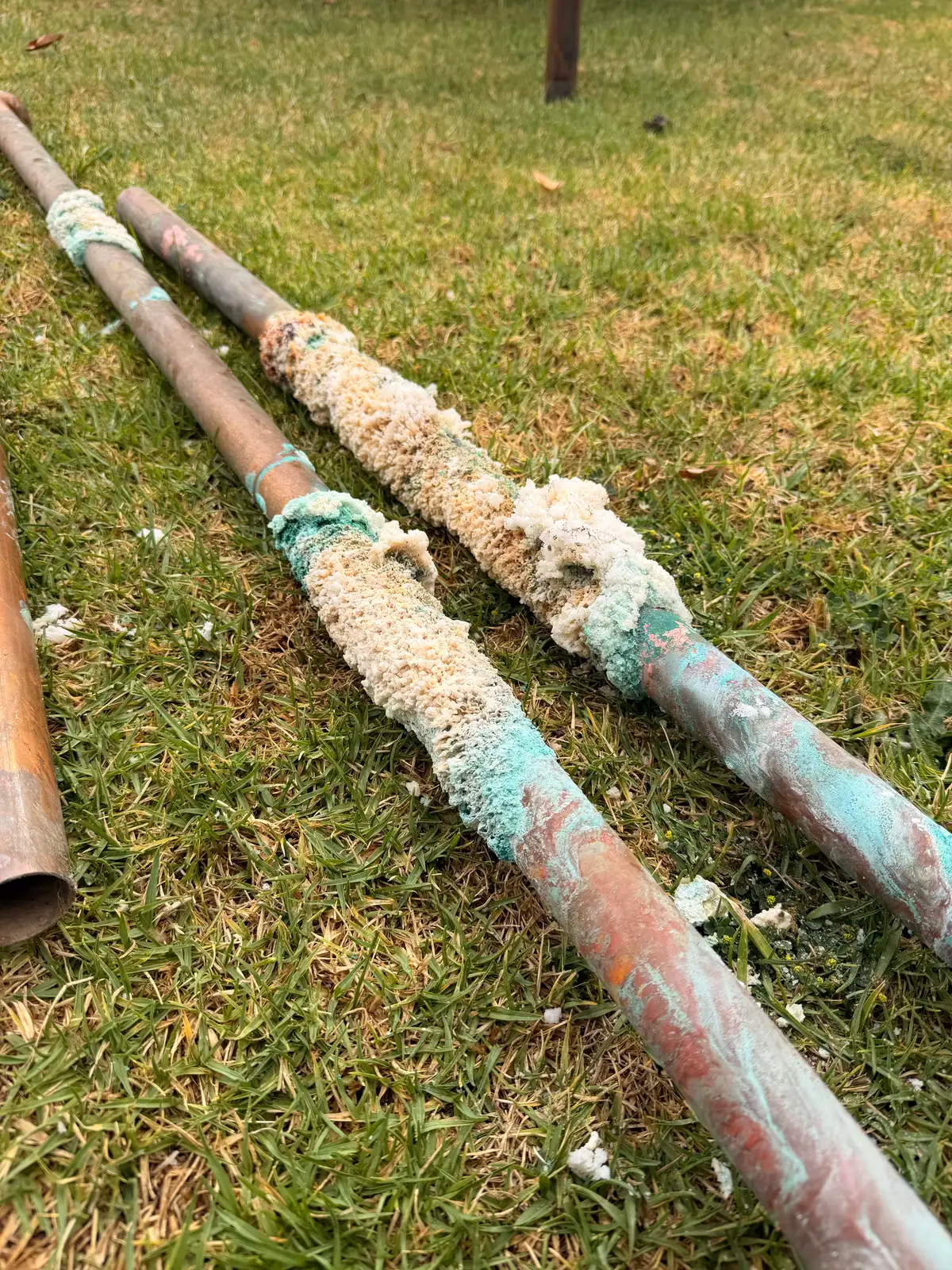
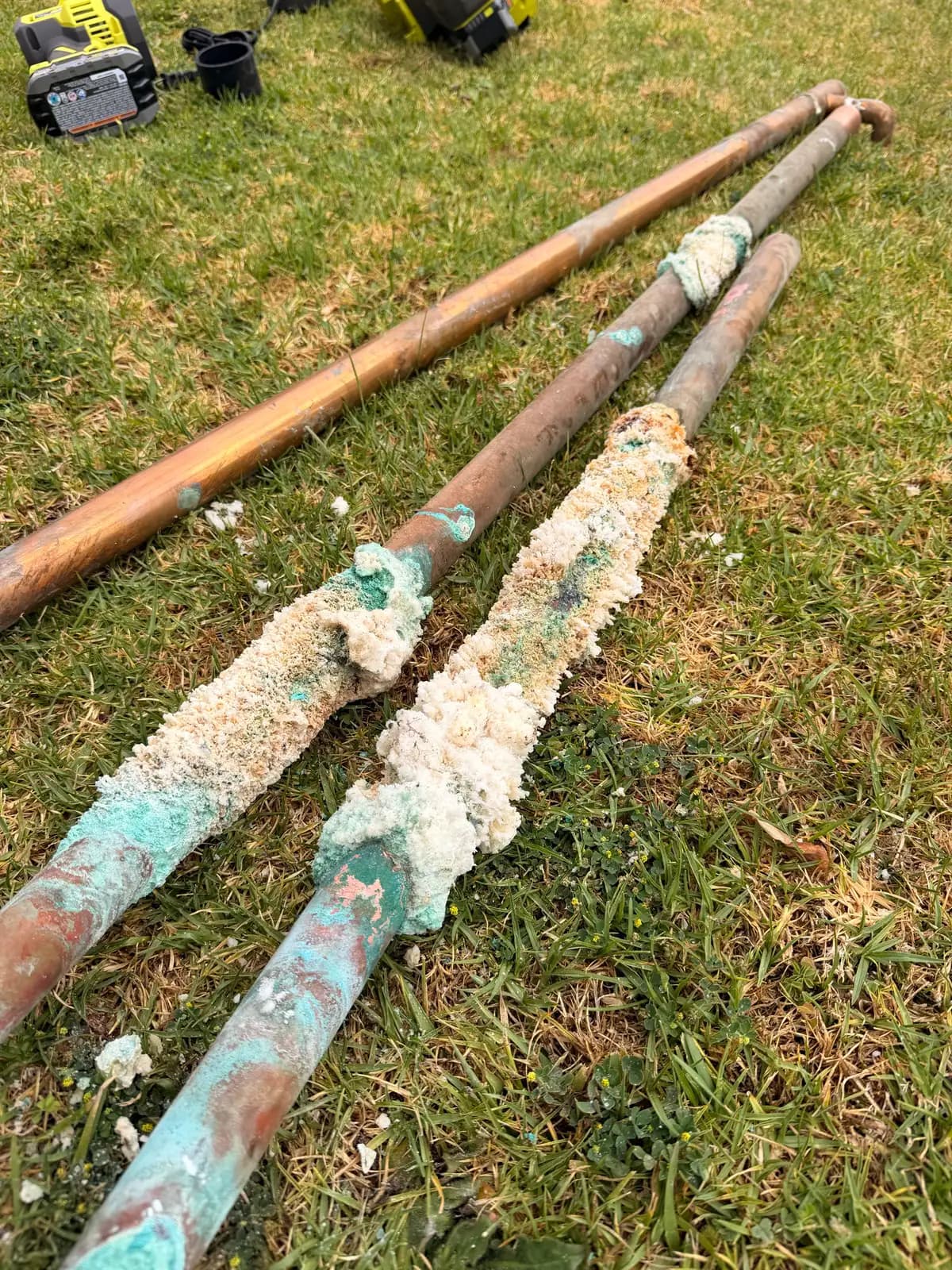
Homes in El Porto and the Sand Section sit on coastal dune material — loose, saline, and in direct contact with marine air. Salt-air chloride accelerates copper pinholing on the west-facing side of any structure, and the Sand Section gets more of it than anywhere else in Manhattan Beach. Copper supply lines in 1985–2015 townhomes here can show pinhole failures a decade ahead of their rated service life.
The Sand Section townhome wave produced a lot of slab-on-grade and three-story stacked construction. Access to horizontal supply runs often means cutting into drywall across multiple floors. There's no crawl space to work through. Every linear foot of pipe in the walls is a drywall repair afterward — a cost that belongs in the repipe estimate, not as a separate line item that surprises you later.
We scope the existing layout before quoting. On Sand Section jobs, the camera and pressure test tell us where pinholing has already started and where the copper wall thickness is marginal. That determines whether a targeted reroute makes sense or whether a full [whole-home repipe](/services/repipes) is the better call over the next five years.
Tree Section: sandy loam, root pressure, and older copper
The Tree Section — covering most of the inland residential blocks between Sepulveda and the coast — sits on sandy loam with a higher organic content than the Sand Section. The mature street trees that define the neighborhood are also the main mechanical threat to supply lines and sewer laterals that run close to grade. Root pressure on copper is a slower failure mode than pinholing, but it's real and common on pre-1980 installs.
Tree Section originals from the 1940–1965 era are likely on Type M copper, which was standard at the time. Type M has a thinner wall than Type L and is the first to fail under the combination of hard water scale and mild soil movement. Homes that haven't been repiped since original construction are running 60-year-old supply lines. That isn't alarmist — it's math.
The sandy loam here is workable when a crawl space exists, but slab foundations still require in-wall routing. On Tree Section jobs with a raised foundation and accessible crawl space, we can often complete a full repipe with minimal wall cuts — typically 3–5 access points for cleanout connections rather than a room-by-room drywall project.
Hill Section: decomposed bedrock and elevation changes
The Hill Section, which includes the higher elevations above Ardmore and into the upper residential streets, sits on decomposed granite and weathered bedrock. Soil movement is more pronounced here than in either the Sand or Tree sections — particularly on sloped lots where differential settling has been ongoing since original construction. Copper joints under repeated micro-stress from settling are where failures concentrate.
Elevation change also means supply line runs are longer, and pressure at the low end of the house can be 10–15 psi higher than at the upper fixtures. Homes that haven't had a pressure regulator serviced in a decade may be running above 80 psi internally — that accelerates joint fatigue and fitting failures at elbows and tee connections.
Hill Section homes from the 1940–1965 build era frequently have original galvanized steel on cold supply and early copper on hot. Galvanized corrodes from the inside out — reduced diameter, brown water from the tap, and low pressure at fixtures are the signs. When we pull permits for [Manhattan Beach repipe work](/service-areas/manhattan-beach), galvanized-to-PEX is the most common conversion we complete in this zone.
PEX versus copper for a Manhattan Beach repipe
Cross-linked polyethylene (PEX) is the standard replacement material in all three sections. It's chloride-resistant — directly relevant in the Sand Section — flexible enough to route through tight wall cavities in townhomes, and doesn't corrode or scale internally the way copper does under hard water. California AB 1953 PEX-A and PEX-B materials are both code-compliant; we use PEX-A for its superior flexibility on longer runs.
Some homeowners in the Tree Section request copper replacement-for-copper because the home has a specific aesthetic or resale consideration. That's a legitimate choice and we'll work with it, but the spec should be Type L minimum, and the anode protection on any water heater downstream needs to stay current. Copper without water quality management is a slower version of the same failure timeline.
The material choice also affects permit scope. A like-for-like copper repipe may be reviewed differently than a PEX conversion under the current California Plumbing Code. Our [licensed repipe service](/services/repipes) includes permit filing as part of the job — no homeowner has to coordinate with the building department separately.
What the permit and inspection process actually looks like
Manhattan Beach requires a plumbing permit for any whole-home repipe. The permit triggers a rough inspection before walls close and a final inspection after pressure testing. On a typical single-family repipe, rough inspection happens on day two and final closes the job within the same week. Scheduling the inspector is our responsibility, not the homeowner's.
Pulling the permit creates a documented record that the work was inspected and passed. For resale, that record matters — an unpermitted repipe is a disclosure issue, and buyers' inspectors increasingly ask whether supply line replacement was permitted. There's no reason to skip it on a job this size.
Manhattan Beach repiping questions we hear most
**How do I know if my Manhattan Beach home actually needs a full repipe?** Recurring pinhole leaks, brown or discolored water at first draw, low pressure at multiple fixtures simultaneously, and visible corrosion at shutoff valves are the four clearest indicators. A single isolated leak doesn't necessarily mean a full repipe — a camera inspection and pressure test will tell you how much of the system is affected.
**Does the section of Manhattan Beach my home is in change the cost significantly?** Yes. Sand Section townhomes with no crawl space require more wall cuts and more drywall repair than Tree Section homes with accessible crawl spaces. Hill Section jobs on sloped lots with longer supply runs add material cost. The difference between a straightforward Tree Section job and a complex Sand Section townhome can be $4,000–$6,000.
**How long does a repipe take?** A single-family home typically takes 2–3 days for the rough work plus inspection. Townhomes with stacked supply routing can run 3–4 days. We restore water service at the end of each workday when the schedule allows — you're not without water overnight on a standard job.
**Is Mainline licensed to do repipe work?** Yes. We're licensed C-36 #901735. You can verify the license number and contractor status directly at the CSLB website — search by license number or the business name Mainline No-Dig Trenchless Plumbing.
**Will a repipe affect my water heater?** The repipe itself doesn't require a new water heater, but if the existing unit is more than 10 years old, it's worth evaluating while the system is already open. A repipe can expose a water heater that's been partially masking its own sediment and scale problems by running on a degraded supply system.
**Do I need to move out during the repipe?** Most homeowners stay in the home. Water is off during active work hours, typically 7 a.m. to 4 p.m. We restore service at end of day. The main disruption is drywall dust in affected rooms — cover furniture and expect 3–5 days of patch and paint after we're done.
What to do next
If your Manhattan Beach home is showing any of the warning signs above — pinhole leaks, discolored water, pressure loss — the right starting point is a pressure test and camera inspection of the existing supply system. That tells you whether you're looking at a targeted repair or a full repipe, and it gives you a scoped estimate instead of a guess.
Mainline No-Dig Trenchless Plumbing (C-36 #901735) is available 24/7 with no overtime fees. Call (310) 808-7343 to schedule a diagnostic or to talk through what a repipe in your section of Manhattan Beach would actually involve.
Frequently Asked Questions
How do I know if my Manhattan Beach home actually needs a full repipe?
Recurring pinhole leaks, brown or discolored water at first draw, low pressure at multiple fixtures simultaneously, and visible corrosion at shutoff valves are the four clearest indicators. A single isolated leak doesn't necessarily mean a full repipe — a pressure test and camera inspection will show how much of the system is affected.
Does the section of Manhattan Beach my home is in change the cost significantly?
Yes. Sand Section townhomes with no crawl space require more wall cuts and drywall repair than Tree Section homes with accessible crawl spaces. Hill Section jobs with longer supply runs on sloped lots add material cost. The difference between a straightforward Tree Section job and a complex Sand Section townhome can be $4,000–$6,000.
How long does a repipe take in Manhattan Beach?
A single-family home typically takes 2–3 days for rough work plus inspection. Townhomes with stacked supply routing can run 3–4 days. We restore water service at the end of each workday when the schedule allows — you're not without water overnight on a standard job.
Is Mainline licensed to do repipe work in Manhattan Beach?
Yes. We hold C-36 license #901735. You can verify the license number and contractor status directly at the CSLB website — search by license number or the business name Mainline No-Dig Trenchless Plumbing.
Will a repipe affect my water heater?
The repipe itself doesn't require a new water heater, but if the existing unit is more than 10 years old, it's worth evaluating while the system is already open. A repipe can expose a water heater that's been partially masking sediment and scale problems behind a degraded supply system.
Do I need to move out during the repipe?
Most homeowners stay in the home. Water is off during active work hours, typically 7 a.m. to 4 p.m., and restored at end of day. The main disruption is drywall dust in affected rooms — plan for 3–5 days of patch and paint after the plumbing work is complete.
Tags
Related Services