If your San Pedro home was built before 1960 and you're fighting brown water, weak pressure, or pinhole leaks, the cause is almost always the same: original galvanized steel supply pipe that has corroded from the inside out. A whole-home repipe replaces that failing steel with copper or PEX in two to four days — and on most jobs we do it without tearing your house apart. This guide explains why San Pedro homes are unusually prone to galvanized failure, how to read the warning signs, and what your replacement options actually cost in real terms.
We're based in Lomita and reach most of San Pedro in about 30 minutes, from Vinegar Hill down to Point Fermin. Repiping is one of the most common jobs we run in the 90731 — not because San Pedro homeowners neglect their plumbing, but because the housing stock here is old enough that the original pipe has simply reached the end of its service life.
Why San Pedro has more galvanized pipe than almost anywhere in the South Bay
San Pedro is one of the oldest continuously developed communities in the Harbor Area. Neighborhoods like Vinegar Hill, Barton Hill, and the streets above the port were built out in the early 1900s through the 1950s, decades before copper became the residential standard. Almost every home from that era was plumbed with galvanized steel — iron pipe dipped in a protective zinc coating.
Galvanized pipe was a reasonable choice in 1925. The problem is that it has a service life of roughly 50 to 70 years, and the bulk of San Pedro's pre-war and immediate post-war homes are now well past that window. The pipe didn't fail on a schedule, but the clock has run out on most of it.
It's also worth understanding why galvanized was used so widely here specifically. San Pedro grew as a working port and Navy town, and much of the early housing was modest, fast-built worker housing — bungalows and small Craftsman homes on tight lots in Vista Del Oro, Holy Trinity, and the Palisades. Builders used the standard material of the day across entire blocks at once, which is why we often find the same failing galvanized system in a whole row of neighboring homes.
How galvanized pipe fails from the inside out
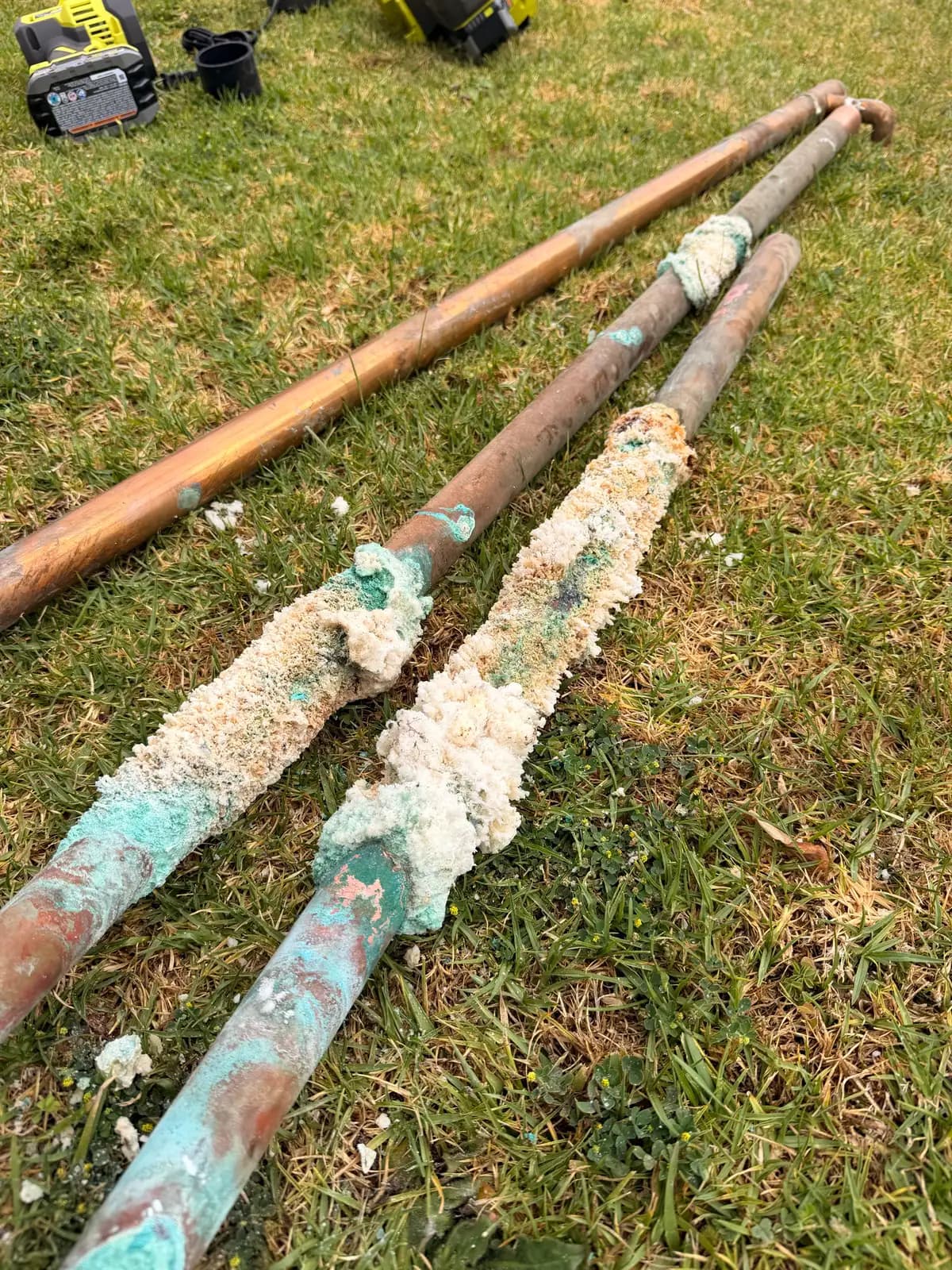
The zinc coating that gives galvanized pipe its name is sacrificial — it corrodes first, protecting the steel beneath. Once the zinc is gone, the exposed iron begins to rust. But unlike a leak you can see, galvanized corrosion happens inside the pipe wall where you can't.
Rust forms a rough, scaly buildup called tuberculation that grows inward and narrows the bore of the pipe. A half-inch supply line can constrict to the diameter of a coffee stirrer over decades. That's why the first symptom most San Pedro homeowners notice isn't a leak — it's pressure that has slowly gotten worse, often so gradually that they stopped noticing until a guest pointed it out.
As the rust scale flakes loose, it discolors the water — the brown or yellow tint that shows up first thing in the morning or after the house has sat unused. Eventually the corroded wall thins to the point of a pinhole leak, frequently at a threaded joint where the wall is already thinnest. Those leaks tend to appear inside walls and under slabs, which is where a hidden leak quietly does the most damage.
The five signs your San Pedro home is ready for a repipe
First, low water pressure that's gotten worse over years — especially if running the kitchen sink drops the shower to a trickle. That simultaneous-use drop is the signature of constricted galvanized supply lines.
Second, discolored water, particularly brown or rusty water at the first draw of the day. If it clears after running for a minute, you're flushing rust scale out of the pipe.
Third, recurring pinhole leaks. One galvanized leak is rarely the last — once the system starts perforating, repairing a single section just moves the next failure a few feet down the line. At that point spot repairs cost more over time than a planned repipe.
Fourth, visible corrosion or rust staining on exposed pipe in the garage, crawl space, or where the main enters the house. If you can see scaling and rust at the threads, the inside is worse.
Fifth, age plus material. If your home predates 1960 and has never been repiped, the original galvanized is on borrowed time regardless of symptoms. If you're not sure what you have, an [electronic leak detection and pipe assessment](/services/trenchless/leak-detection) visit settles it without guesswork.
Why coastal salt air accelerates the problem near the port
San Pedro's location works against its plumbing. Homes near the waterfront — Point Fermin, the Cabrillo Beach area, and the bluffs above the port — sit in a marine layer that carries salt. Salt-laden humidity accelerates corrosion on any exposed metal, and that includes the galvanized pipe in crawl spaces, exterior walls, and unconditioned garages.
We consistently see faster external corrosion on galvanized and even on older copper in the homes closest to the water than we do a few miles inland. It doesn't change the repipe itself, but it does mean coastal San Pedro homes often hit the failure point a little earlier than their build date alone would predict. If you're on the water side of Gaffey, don't assume you have until the 70-year mark.
Copper vs PEX: which repipe makes sense for a San Pedro home
Type L copper is the long-proven standard: rigid, time-tested, and rated for 50-plus years. It handles San Pedro's water chemistry well and is the choice many homeowners still prefer for its longevity and resale familiarity. The trade-offs are cost and labor — copper is more expensive and takes longer to install because every joint is soldered.
PEX (cross-linked polyethylene) is a flexible plastic tubing that has become the dominant repipe material nationally for good reasons. It installs faster, requires fewer fittings (which means fewer potential leak points), resists the scale buildup that killed your galvanized, and tolerates the occasional cold snap better than rigid copper. For most San Pedro repipes, PEX delivers the same dry-walls-and-strong-pressure result for less money.
There's no universally correct answer — it depends on your budget, how long you plan to stay, and access to the runs. We walk every homeowner through both on-site. What matters far more than copper-versus-PEX is that the failing galvanized comes out entirely; a partial repipe that leaves old steel feeding the new lines just reintroduces the rust you paid to remove.
What a whole-home repipe actually involves — and why it doesn't have to wreck your walls
A repipe replaces all the supply lines that carry pressurized water to your fixtures — not the drain lines, which are a separate system. We map the existing runs, plan the new routing, and open small, strategic access points in drywall rather than demolishing whole walls. On a typical San Pedro bungalow, that means a handful of patch points, not a gutted house.
Most single-family repipes take two to four days depending on size, number of bathrooms, and access. Water is shut off only during active connection windows, not the entire job, so you're rarely without water overnight. We pressure-test the new system before closing anything up, then patch the access points; many homeowners bring in a painter to finish the texture match, or we coordinate it.
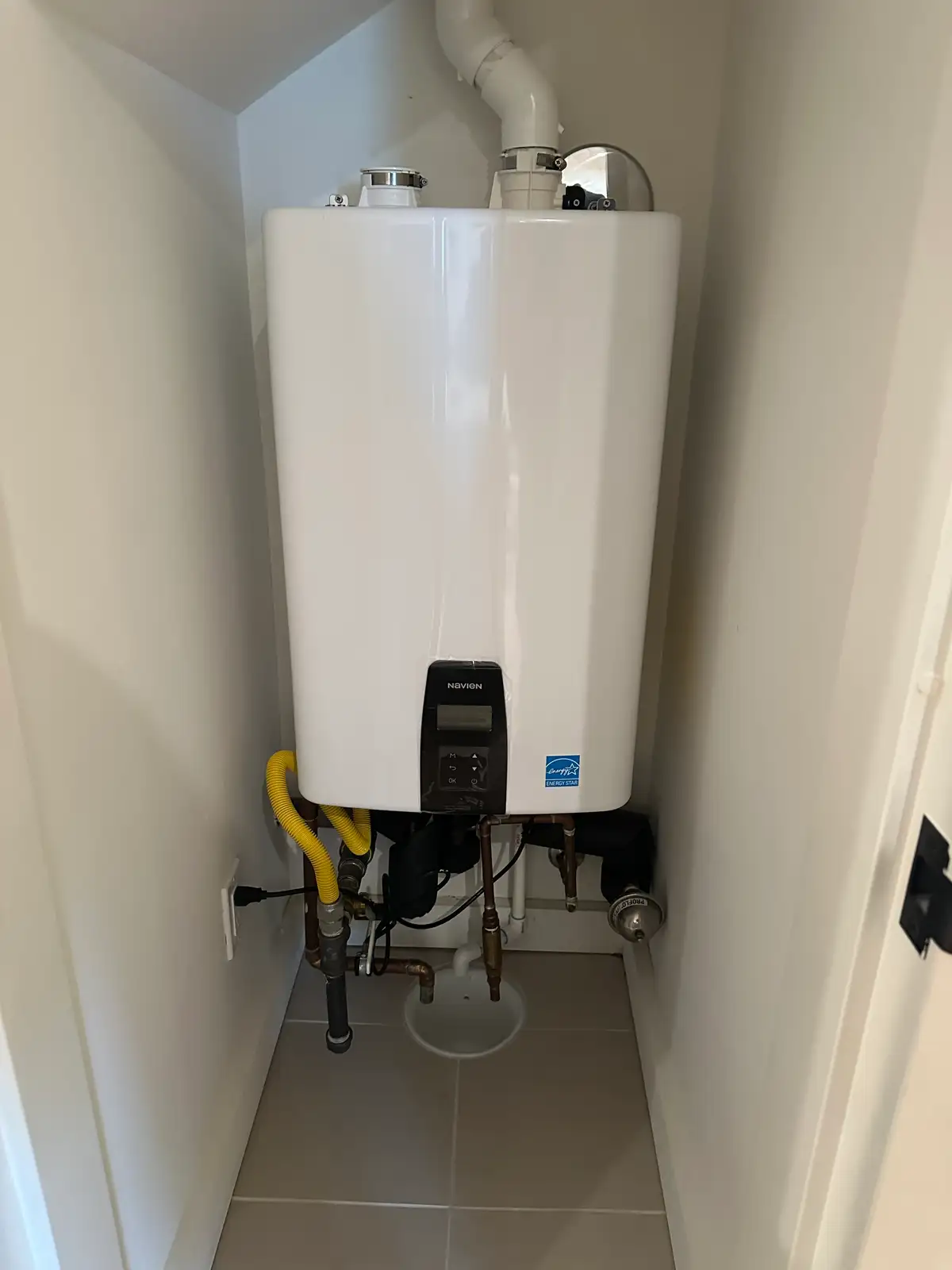
Because San Pedro's older homes frequently have the water heater and main shutoff in tight, retrofitted spaces, we also check those during a repipe. It's the right moment to replace a corroded shutoff valve or an aging [water heater](/service-areas/san-pedro/water-heaters) while the system is already open — far cheaper than coming back for it later.
San Pedro repiping questions we hear most
How much does a whole-home repipe cost in San Pedro? It depends on square footage, number of bathrooms, material, and access, but most single-family repipes fall in a few-thousand-dollar range rather than the tens of thousands homeowners often fear. We give a fixed quote after seeing the home — no hourly surprises.
How do I know your company is properly licensed? Mainline holds California C-36 plumbing contractor license 901735, which anyone can verify directly on the state CSLB website. We're fully licensed, bonded, and insured, and we pull the proper permits for repipe work in the City of Los Angeles, which San Pedro falls under.
Will I lose water for days? No. Water is off only during the actual cut-over windows. You'll have water at the end of each work day in the large majority of jobs.
Can you repipe without retiling my bathrooms? In most cases, yes — we route to reach fixtures through accessible walls and ceilings and avoid finished tile wherever the layout allows. We flag any unavoidable exceptions before we start, not after.
Do I have to do the whole house at once? It's strongly recommended. Phasing a repipe leaves old galvanized in the system, and the corrosion and pressure problems persist in the unaddressed sections. A complete repipe is what actually solves it.
What to do next
If your San Pedro home is pre-1960, has never been repiped, and you're seeing any combination of weak pressure, brown morning water, or repeat leaks, the galvanized has reached the end of its life and a repipe is the durable fix. The first step is a straightforward assessment — we confirm what pipe you actually have, check pressure and water quality, and give you a fixed quote with both copper and PEX options.
We serve all of San Pedro, from Vinegar Hill and Barton Hill to South Shores and the Palisades, with a 30-minute target response from Lomita. Call (310) 808-7343 to schedule a [whole-home repiping](/services/repipes) assessment, or learn more about everything we handle across the harbor on our [San Pedro plumbing page](/service-areas/san-pedro).
Frequently Asked Questions
How much does whole-home repiping cost in San Pedro?
Most San Pedro single-family repipes land between $8,000 and $18,000 depending on square footage, number of bathrooms, whether the run is slab or crawlspace, and whether you choose copper or PEX. We quote flat-rate with permits, drywall patching, and inspection coordination in the number.
Copper or PEX for a San Pedro repipe?
PEX costs less, installs faster with fewer wall openings, and is unaffected by the water chemistry that pits copper. Type-L copper has a longer track record and holds resale value with inspectors. Near the port, where salt air reaches exterior and attic runs, PEX has a real durability advantage on anything not fully enclosed.
How long does a whole-home repipe take?
Three to five working days for most San Pedro homes. Water is off during working hours and restored each evening on nearly every job. Drywall patching adds a day or two, and we schedule the inspection so the walls close on our timeline rather than sitting open over a weekend.
Do I need a permit to repipe a house in San Pedro?
Yes. San Pedro is part of the City of Los Angeles, so repipe permits pull through LADBS rather than a separate city department. We file the submission, coordinate the inspection window, and meet the inspector on site. Unpermitted repipe work becomes a disclosure problem when you sell.
Will a repipe destroy my walls?
No. A repipe is a series of small, deliberate access openings at fixture and manifold points, not demolition. Most jobs open drywall in a handful of places, and we patch and texture as part of the work rather than leaving you to find a drywall contractor.
How do I know if my galvanized pipe needs replacing or just repair?
Pressure that drops when a second fixture opens, rust-colored water at first draw, and any pinhole leak are the three signals. A pinhole in galvanized almost always means the wall thickness is gone throughout the system, which makes a spot repair the first of several rather than a solution.
Tags
Related Services