The ground in Portuguese Bend moves. Not metaphorically — measurably, consistently, and in some years by more than a foot. The Palos Verdes Peninsula sits on a complex of ancient marine sediments and bentonite clay layers that absorb water and slide downhill when saturated. The active zones — Portuguese Bend, Abalone Cove, and Klondike Canyon — have been in documented motion since the 1950s. That movement doesn't stop at your property line, and it doesn't spare the pipe buried under your yard.
Standard sewer pipe materials — vitrified clay tile, cast iron, even Schedule 40 PVC — are designed for stable soil. They handle hydraulic pressure, temperature swings, and the occasional tree root. What they are not designed for is differential ground displacement, which is exactly what happens when one section of your yard moves 2 inches relative to an adjacent section over a six-month period. The result is shear stress at pipe joints and bells that no rigid material can absorb indefinitely.
This is not a hypothetical risk for Rancho Palos Verdes and Palos Verdes Estates homeowners in the active zones. It is a recurring maintenance reality. Understanding why certain pipe materials fail here — and which ones don't — changes how you approach every sewer repair decision on the Peninsula.
How landslide movement breaks rigid sewer pipe
Vitrified clay tile (VCT) was the standard sewer lateral material for Peninsula homes built between 1923 and 1970. It's a fired ceramic product: strong in compression, completely brittle under bending or shear. A single 4-inch displacement across a joint — the kind that Portuguese Bend soil produces in a wet winter — can crack a clay bell joint cleanly. Once the joint opens, ground water infiltrates, roots enter, and the lateral starts to fail.
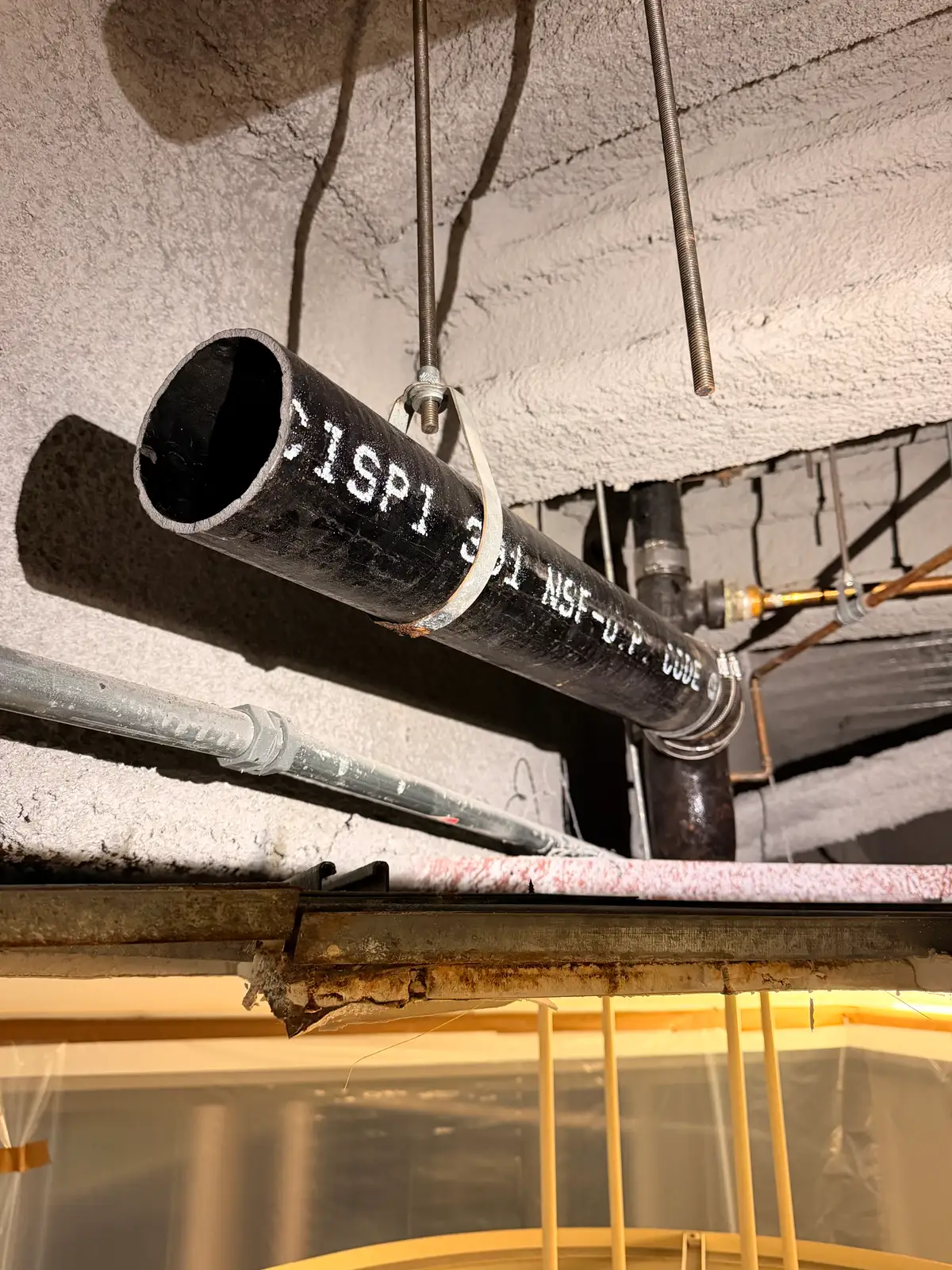
Cast iron performs marginally better than clay because its tensile strength is higher, but it's still a rigid material with mechanical joints that rely on static soil support. When the soil moves, the pipe section between two joints acts as a lever. At sufficient displacement, the pipe itself fractures rather than the joint separating. We've pulled sections of 4-inch cast iron from Lunada Bay laterals that looked like they'd been bent by hand.
PVC presents a different failure mode. It's flexible enough to absorb minor soil movement, but its solvent-welded joints and relatively low yield strain mean that once differential displacement exceeds a few inches — well within the range of an active Abalone Cove winter — the pipe kinks rather than flexes. A kinked PVC lateral doesn't fail catastrophically. It just constricts flow progressively until you're backing up into the house.
The underlying problem is the same across all three materials: they treat a static soil assumption as a design constraint. In the active landslide zones, that assumption is wrong.
Why fusion-welded HDPE is the correct answer
High-density polyethylene pipe (HDPE) has two properties that matter here. First, it has a yield strain roughly 20 to 30 times greater than PVC before permanent deformation occurs. It can flex — meaningfully, not just theoretically. Second, when joined by butt fusion or electrofusion rather than mechanical couplings, HDPE becomes a continuous monolithic pipe run with no discrete joints to shear. There is no bell, no gasket, no solvent weld — just pipe fused to pipe at the same material strength.
In active landslide terrain, that joint-free continuity is the critical attribute. Ground movement loads are distributed along the full pipe run rather than concentrated at joint locations. The pipe deforms with the soil instead of resisting it until fracture. This is why HDPE is the specified material for subsea pipelines, permafrost environments, and seismically active zones — it's engineered for exactly the kind of differential movement that the Palos Verdes slide complex produces.
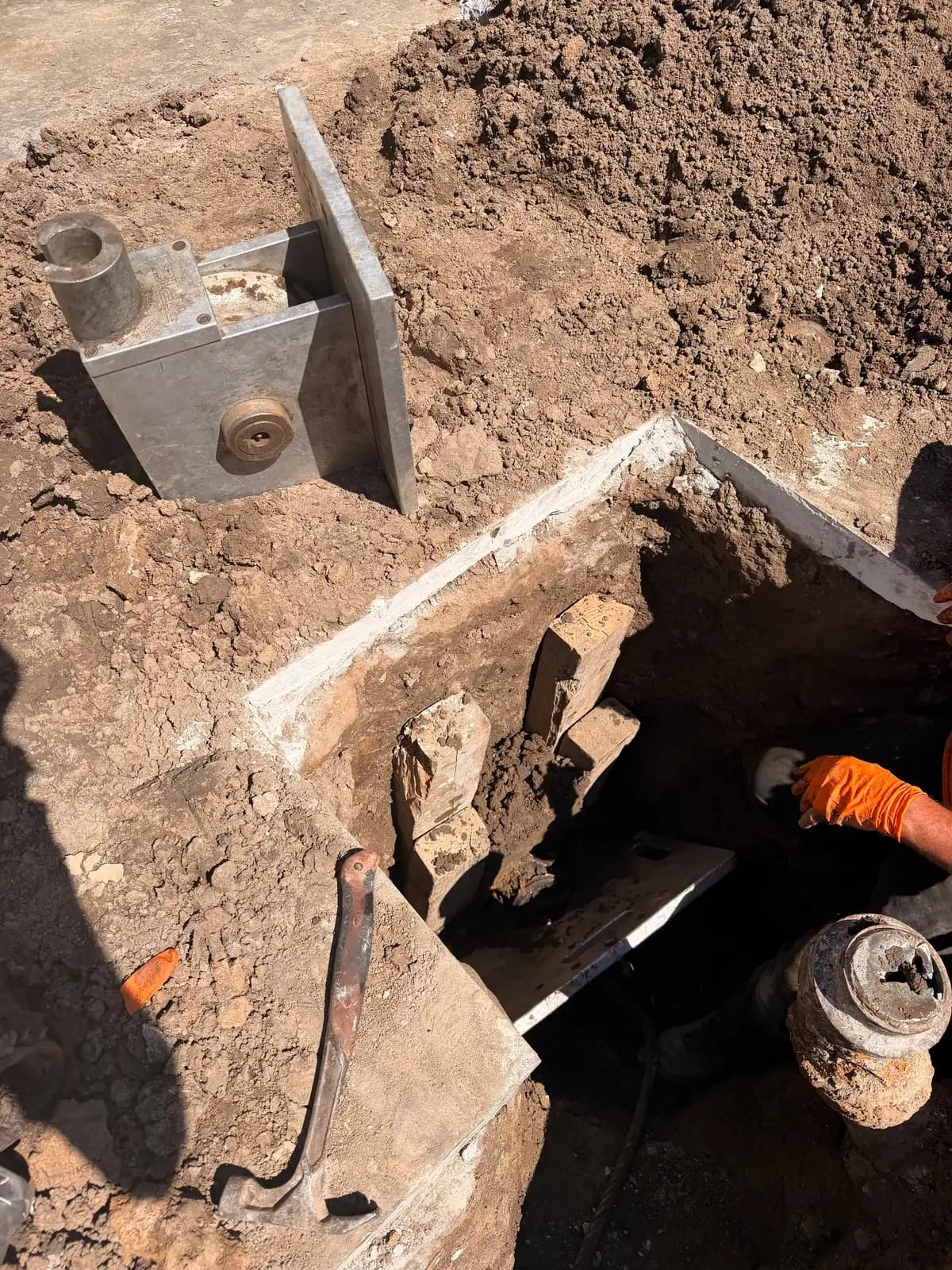
Fusion welding does require specialized equipment and operator training. It also requires sufficient burial depth and bedding to allow the pipe to flex without surface expression. For [trenchless sewer repair in Palos Verdes](/service-areas/palos-verdes/trenchless), HDPE pipe bursting is the preferred installation method: the old clay or cast iron host pipe is fractured and displaced outward while new HDPE is pulled through in a single continuous run. No open trenching, no excavation across landscaped hillside terrain, and no mechanical joints left in the ground.
The alternative — replacing a failed lateral with standard PVC using open trench — puts a rigid pipe back into moving ground. It will fail again, typically within 5 to 15 years depending on that year's rainfall and slide velocity.
Realistic replacement intervals for the active zones
Portuguese Bend and Abalone Cove receive different slide velocities depending on the year and rainfall totals. In dry years, movement may slow to under an inch annually in some parcels. In wet years — the kind the Peninsula sees every three to five years — the same parcel can move 8 to 18 inches in a single rainy season. Any rigid lateral installed in an active zone should be assumed to have a service life between 10 and 25 years, not the 50 to 75 years that VCT or cast iron achieves in stable soil.
Fusion-welded HDPE doesn't eliminate replacement — it extends the interval substantially. A properly installed HDPE lateral in a moderately active zone (annual displacement under 6 inches) can reasonably be expected to perform for 30 to 50 years before flexure fatigue accumulates to failure. In high-velocity zones like the eastern Portuguese Bend parcels near Palos Verdes Drive South, we'd estimate conservatively: inspect every 5 years, plan for replacement at 20 to 30 years.
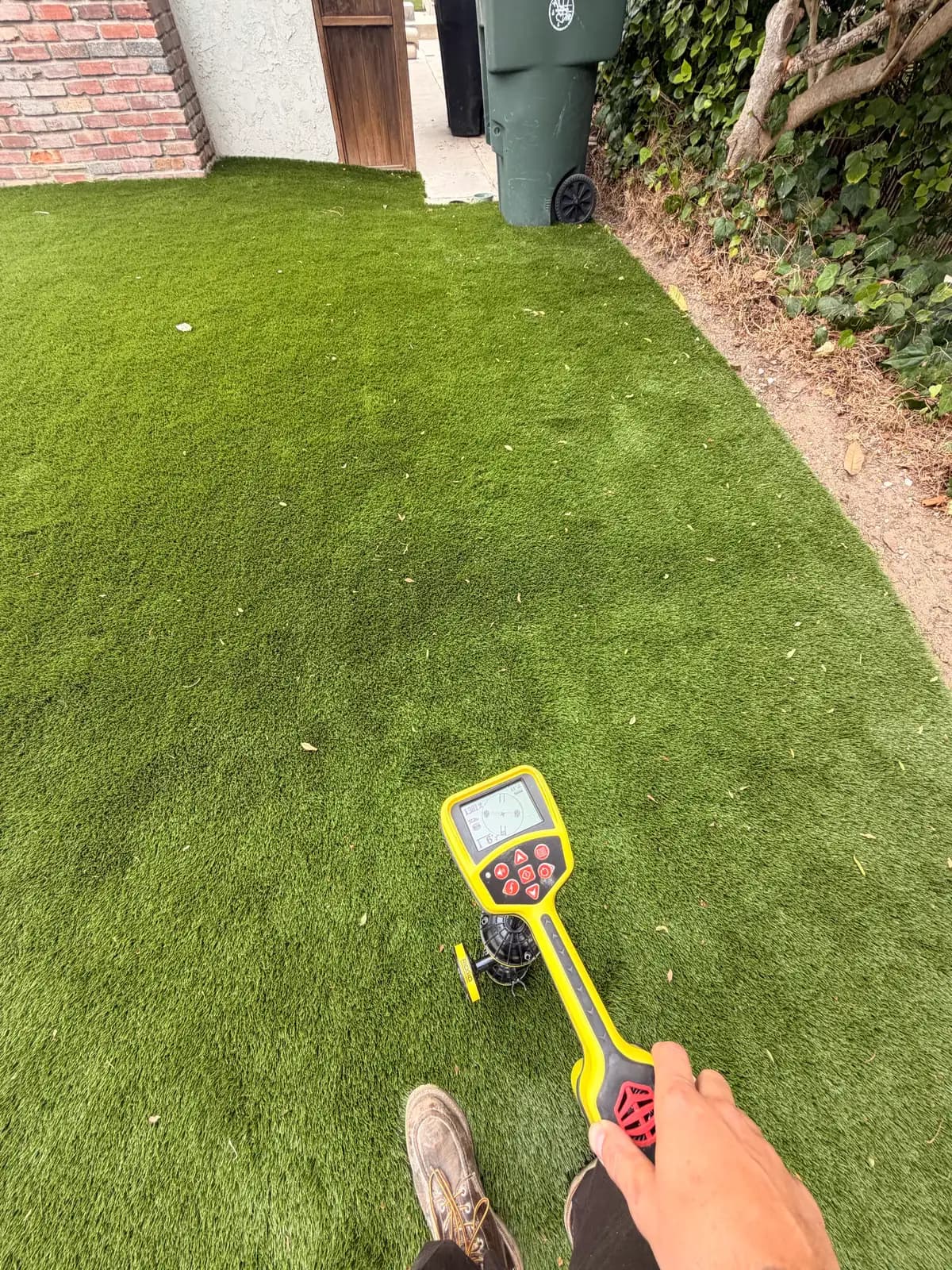
Klondike Canyon presents a specific variant of this problem. Many of the homes there were built on custom lots in the 1960s and 1970s with original clay laterals that have now accumulated 50-plus years of ground movement. If you're in Klondike Canyon and haven't had a camera inspection in the last five years, the lateral has almost certainly moved — the question is whether it's cracked, joint-separated, or fully obstructed. A [camera inspection](/services/trenchless) will tell you which failure mode you're looking at before you're dealing with an active sewage backup.
What a scope actually shows in landslide terrain
Camera inspections in Portuguese Bend and Abalone Cove routinely show features you don't see in stable-soil cities. Joint offsets of 1 to 3 inches are common in clay tile systems — the pipe sections have moved relative to each other but the pipe hasn't yet fractured. Sags and bellies appear where one section of pipe has dropped relative to adjacent sections, creating low points where solids accumulate and sewage pools. You'll also see lateral cracks running perpendicular to the pipe axis, which is the signature failure pattern of bending stress rather than root intrusion or corrosion.
Root intrusion still occurs — there are mature trees throughout Lunada Bay and Malaga Cove — but in the active landslide zones, root intrusion is often a secondary problem. Roots enter through the joint offsets and cracks that movement already created. Clearing the roots with a sewer snake addresses the symptom. It does not address the structural failure, and the pipe will reblock within months.
If a scope shows joint offsets greater than 1.5 inches, bellies with standing water, or transverse cracking, a snake or hydro-jet is not a long-term solution. The pipe needs to be replaced with fusion-welded HDPE. The scope simply tells you how urgently.
Permitting and geological review considerations
Work in the active Palos Verdes landslide zones may require geological review beyond a standard plumbing permit. Both the City of Rancho Palos Verdes and the Palos Verdes Estates building departments have specific requirements for work in designated Landslide Moratorium and Geologic Hazard areas. The scope of review depends on excavation depth and whether the work is classified as a repair or a full replacement.
Trenchless pipe bursting generally reduces the permitting friction compared to open-trench excavation because the soil disruption footprint is minimal — typically two access pits rather than a continuous trench. This matters in areas like Portuguese Bend where large-scale soil disturbance can trigger additional geological and CEQA review thresholds.
We navigate this process on every job in the active zones. The permit application, geological documentation requirements, and inspector coordination are part of the project scope — not something we hand back to the homeowner to figure out independently. If you're not sure which zone your parcel sits in, the RPV Planning Department's online geological hazards map is the starting point.
What to do next
If you're in Portuguese Bend, Abalone Cove, or Klondike Canyon and haven't had your lateral scoped in the last five years — especially following the wet winters the Peninsula has seen recently — that's the first step. A camera inspection gives you factual information about what's actually happening under your yard, not an assumption based on the pipe's age or the last time someone snaked it.
If you already know your lateral has joint offsets, bellies, or a history of recurring blockages, the next conversation is about pipe bursting with HDPE. That's a project we can scope, permit, and complete without trenching across your hillside property. Our [trenchless work across the Palos Verdes Peninsula](/service-areas/palos-verdes/trenchless) is licensed under C-36 #901735, and we work in this terrain regularly enough to understand what the ground does to pipe — and what pipe survives it.
Call us at (310) 808-7343. We dispatch 24 hours a day, seven days a week, and our target response to the Peninsula is 30 minutes. If you're dealing with an active backup or a sewage smell at ground level, that's an emergency scope — don't wait for a scheduled appointment.
Tags
Related Services