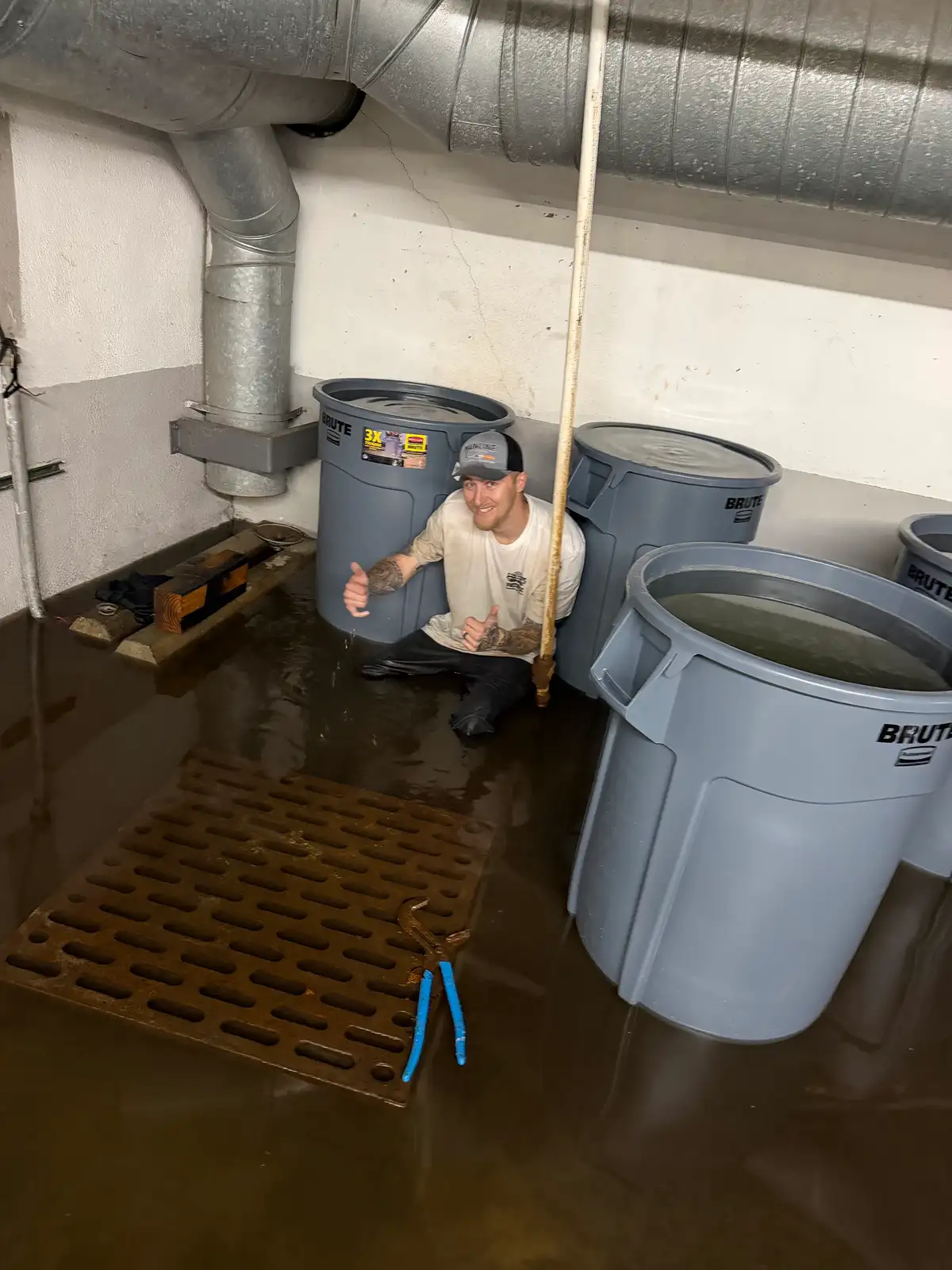
Not every Torrance home needs a sump pump — but the ones that do really need one. If your home sits near the Madrona Marsh basin, in a low-lying pocket of Walteria, or at the base of a Hollywood Riviera slope where hillside runoff concentrates, a failed or absent sump pump during an atmospheric river event means water in your crawl space or garage, not just a wet yard.
Torrance's clay-heavy soil doesn't drain. When saturation hits, water finds the lowest point on your lot and holds there. Homes built in the 1948–1965 post-war tract boom — many in Walteria and South Torrance — were often built without sump systems because seasonal flooding wasn't factored into original site grading. Decades of soil settlement and hardscape additions have made that worse, not better.
Why Torrance soil creates a different drainage problem
Expansive clay soil is the core issue. Unlike sandy loam or decomposed granite, clay absorbs water slowly and releases it even more slowly. After a multi-day rain event, clay near the Madrona Marsh corridor stays saturated for days — sometimes weeks — after the storm passes. That sustained ground saturation is what pushes water laterally into crawl spaces and subgrade areas.
Hillside neighborhoods like Hollywood Riviera and parts of Madrona direct sheet-flow runoff downhill during heavy rain. Homes at the bottom of these grades receive not just vertical rainfall but collected runoff from upslope lots. A French drain or surface swale can help at the perimeter, but once water reaches the foundation, a sump pit is often the only mechanical solution that keeps pace.
Old Torrance, closer to the original 1912–1935 development grid, has a different problem: lots that were graded flat in an era before modern drainage code, with original downspout and surface drainage that now terminates next to the foundation rather than away from it.
How to tell if your Torrance home actually needs a sump pump
The clearest indicator is prior water intrusion — efflorescence (white salt deposits) on crawl space walls, rusted base plates on wood framing, or a musty odor that appears every winter. These are signs that water has been entering repeatedly, even if it's never visibly pooled.
Check your lot grading relative to neighbors. If the adjacent driveway or yard drains toward your foundation, or if your home sits 6 or more inches lower than the street, you're in a passive collection zone. Similarly, homes with concrete slabs poured directly over clay without a moisture barrier are candidates — you may not see water, but vapor intrusion is still happening.
If you've never had a camera inspection on your perimeter drains, that's a useful starting point. We run a [camera inspection](/services/trenchless/camera-inspection) to identify whether existing drainage infrastructure is broken, blocked, or simply undersized before recommending a pump install. A sump pump on a lot with a collapsed French drain just moves water faster into a system that can't handle it.
A pump is not a substitute for correcting gutters, surface grading, or a broken irrigation line. We identify the inflow source before sizing replacement equipment so the pump is treating groundwater, not masking a preventable surface-water problem.
Surface water looks different from groundwater: overflow directly beneath a downspout, ponding against the foundation, or water that appears only during sprinkler cycles. Those get fixed with gutters, grading, or a repaired irrigation line — a pump should not become the permanent answer to water that could leave by gravity.
What a sump pump replacement actually involves
A standard submersible sump pump replacement means pulling the old unit from the pit, inspecting the pit liner and intake screen, testing the float switch independently from the pump, replacing the check valve on the discharge line if it hasn't been changed in the last 5–7 years, and installing the new pump at the correct depth for the pit diameter.
The check valve is the most commonly skipped component. Its job is to prevent discharge water from flowing back into the pit when the pump cycles off. A failing check valve causes the pump to short-cycle — running every few minutes to handle water it just pumped out — which burns out the motor faster than continuous operation would. If a quote doesn't include check valve inspection, ask why.
Discharge line routing matters as much as the pump itself. Water needs to exit the property at a point where it won't re-enter — typically 10 feet or more from the foundation and directed toward a street, alley, or municipal storm drain. In Torrance's denser neighborhoods, where lots are narrower and fencing limits options, this sometimes requires creative routing through a garage wall or under a walkway.
Sizing a replacement pump is more than horsepower
Pump capacity depends on inflow rate and total head—the vertical lift plus discharge resistance. An oversized unit can short-cycle and fail early; an undersized unit can run continuously while the basin rises.
We measure the pit, lift, route, check valve, power, and observed inflow, then test the installed system with a simulated basin fill. The [sump pump installation process](/services/sump-pump) should end with verified discharge, not only a plugged-in motor.
Basin dimensions matter because a small pit gives the pump little storage between cycles. Discharge diameter and elbows affect capacity, while a poorly placed check valve can hammer or send water back into the basin. We also inspect the outlet: dumping beside the foundation simply recirculates the same water. The best pump cannot compensate for a restricted line, failed power source, blocked outlet, or basin too small for the measured inflow.
Pre-storm testing: float switch, check valve, discharge
A sump pump that sits unused 10 months of the year is exactly the kind of equipment that fails when you need it. The float switch — a mechanical or electronic trigger that activates the pump when water reaches a set level — can seize in the down position if it hasn't moved in months. The fix takes 30 seconds when it's dry. It's a real problem at 2 a.m. during a storm.
Test the float switch manually: pour a 5-gallon bucket of water into the pit fast enough to raise the float. The pump should activate within 2–3 seconds. If it doesn't, the switch is the first thing to check — not the pump motor. Float switches on submersible units cost $15–$40 in parts and are straightforward to replace, but only if you catch the failure before the storm. If the motor hums without moving water, the float sticks, or water runs back into the pit, schedule [Torrance sump pump service](/service-areas/torrance/sump-pump) before the next storm.
Check the discharge line for obstructions at the exterior termination point. Insects, small rodents, and sediment build-up can block the outlet. Most manufacturers recommend a mesh guard over the discharge opening; most contractors skip it. Before rain season, pull the guard off, clear any obstruction, and confirm water flows freely when you run the manual test.
Battery backup: when it's worth adding
Power outages and heavy rainstorms arrive together more often than separately. The utility infrastructure that serves low-lying parts of Walteria and South Torrance isn't immune to weather-related outages. A primary pump with no backup means the pit fills the moment power drops — which is typically when it's raining hardest.
A battery backup system runs a secondary pump on a 12V or 24V deep-cycle battery when the primary loses power. Most battery backup units provide 5–12 hours of run time depending on how actively they're cycling. That's enough to cover most South Bay storm events, but not a multi-day outage. For homes with chronic water issues, a combination primary-plus-backup unit is more reliable than two separate systems sharing one pit.
Combination units cost $400–$900 in equipment depending on pump capacity; installation adds labor, permit if required, and discharge routing. The alternative — a flooded crawl space with structural framing sitting in water — costs significantly more. We can assess whether your pit is sized to accept a combination unit or whether a second pit is needed.
Battery age, charger status, alarm function, and expected intermittent run time should be checked before winter. A backup that has never been load-tested can provide false confidence.
Record the installation and battery dates near the equipment. If the pump cycles during dry weather, find the source rather than accepting it as normal — a broken irrigation line, a leaking water service, or a stuck check valve adds duty and shortens the motor's life long before the next storm.
Torrance sump pump questions we hear most
**My home is on a slab — can I still have drainage problems?** Yes. Slab homes can accumulate water in attached garages, side yards, or subgrade planters that weren't graded correctly. The water doesn't enter the home through a crawl space, but it can damage the foundation perimeter, corrode anchor bolts, and enter through garage door thresholds. A sump system in a garage corner pit is a common fix.
**How long should a sump pump last?** A cast iron submersible pump (Zoeller and similar) lasts 5–10 years in normal service; the plastic pumps sold off the shelf at big-box stores often last only 1–2. Pumps that run frequently due to chronic drainage issues wear faster. The check valve and float switch typically need replacement before the pump motor fails — both are under $50 in parts and should be checked every 3 years.
**Do I need a permit to replace a sump pump in Torrance?** A direct replacement — same location, same discharge routing — generally doesn't require a permit. New pit excavation, new electrical circuit, or new discharge line routing to a storm drain often does. We determine permit requirements at the time of scope and pull what's needed.
**Who do I call if the pump fails during a storm?** Mainline dispatches 24/7 with a 60-minute target response for [emergency plumbing repairs](/services/emergency-repair) — no overtime fees regardless of when the call comes in. For Torrance specifically, response time from our Lomita headquarters is typically 25 minutes or less. Reach us at (310) 808-7343.
**Is Mainline licensed for this work?** Yes. We hold California C-36 plumbing license #901735. You can verify the license and its current status directly through the CSLB's online lookup at cslb.ca.gov.
**Can you inspect my existing system without replacing it?** Yes. We'll test the float, check valve, discharge, and pit condition and give you a written assessment. If the pump is performing within spec, we'll tell you that — replacement isn't the default recommendation.
What to do before the next storm
If your Torrance home is in Walteria, near Madrona, or at the base of a Hollywood Riviera slope — and you've never had your sump pump or drainage inspected — this is the window to do it. Atmospheric river events in the South Bay don't give much lead time, and a pump that hasn't been tested since last winter may not perform when it matters.
Mainline serves [Torrance](/service-areas/torrance) from our Lomita headquarters and can typically reach most neighborhoods within 25 minutes. We handle assessment, replacement, battery backup installation, and discharge routing as a single scope of work. No need to coordinate separate contractors.
Call us at (310) 808-7343 to schedule an inspection or get a replacement quote. We answer 24/7.
Frequently Asked Questions
My home is on a slab — can I still have drainage problems?
Yes. Slab homes can accumulate water in attached garages, side yards, or subgrade planters that weren't graded correctly. Water doesn't enter through a crawl space, but it can damage the foundation perimeter, corrode anchor bolts, and enter through garage door thresholds. A sump system in a garage corner pit is a common solution.
How long should a sump pump last?
A cast iron submersible pump (Zoeller and similar) lasts 5–10 years in normal service; the plastic pumps sold off the shelf at big-box stores often last only 1–2. Pumps that run frequently due to chronic drainage issues wear faster. The check valve and float switch typically need replacement before the motor fails — both are under $50 in parts and should be inspected every 3 years.
Do I need a permit to replace a sump pump in Torrance?
A direct replacement in the same location with the same discharge routing generally doesn't require a permit. New pit excavation, a new electrical circuit, or new discharge routing to a storm drain often does. We determine permit requirements at the time of scope and pull what's needed.
Who do I call if the pump fails during a storm?
Mainline dispatches 24/7 with a 60-minute target response for emergency repairs — no overtime fees regardless of when the call comes in. For Torrance, response time from our Lomita headquarters is typically 25 minutes or less. Call (310) 808-7343.
Is Mainline licensed for sump pump work?
Yes. We hold California C-36 plumbing license #901735. You can verify the license and its current status directly through the CSLB's online lookup at cslb.ca.gov.
Can you inspect my existing sump pump without replacing it?
Yes. We'll test the float switch, check valve, discharge line, and pit condition and give you a written assessment. If the pump is performing within spec, we'll tell you — replacement isn't the default recommendation.
Tags
Related Services