Trenchless sewer repair in the South Bay runs roughly $4,200 to $18,000, and most standard residential laterals on a flat lot land between $5,000 and $11,000. Pipe lining (CIPP) runs about $125–$200 per linear foot; pipe bursting runs about $100–$175. The spread comes from pipe length, access, pipe material, and what the camera finds before the crew shows up.
Where a job lands depends mostly on the lot. The flat post-war tract cities — Lomita, Lawndale, Hawthorne, Gardena, El Segundo — sit at the bottom of the range because laterals are short, straight, and shallow. The jobs at the top involve access obstacles: a tight lot in the Hill Section of Manhattan Beach, a steep drop on a Rolling Hills Estates hillside, or a slab over part of the line.
What trenchless sewer repair costs by South Bay city
Cost tracks the city more closely than homeowners expect, and not for the reason most people assume. It isn't that we price by ZIP code. It's that lot geometry, lateral length, hardscape density, and permit load differ systematically between the flat tract cities and the peninsula.
Torrance $4,500–$9,500 · Redondo Beach $5,000–$10,500 · Hermosa Beach $5,500–$11,000 · Manhattan Beach $5,500–$12,000 · El Segundo $4,500–$9,500 · Hawthorne $4,500–$8,500 · Gardena $4,500–$8,800 · Carson $4,800–$9,000 · Lomita $4,200–$8,500 · Rolling Hills Estates $7,000–$15,000 · Palos Verdes $7,500–$18,000 · San Pedro $5,000–$11,500 · Lawndale $4,200–$8,200 · Inglewood $4,800–$9,200 · Culver City $4,800–$9,800 · Long Beach $5,000–$10,500.
The peninsula runs highest. Palos Verdes and Rolling Hills Estates laterals are longer, deeper, frequently routed across grade, and often cross mature landscaping or equestrian easements that constrain where equipment can sit. Coastal cities land in between: Manhattan Beach and Hermosa Beach lots are small but walk-street access and dense hardscape drive labor time up.
For a line-by-line breakdown of a single city — access pits, method, permits, and who owns the lateral — see our guide to [trenchless sewer repair costs in Torrance](/blog/torrance-trenchless-sewer-repair-cost-breakdown).
CIPP lining vs. pipe bursting: which costs more and why
Cured-in-place pipe lining (CIPP) involves pulling a resin-saturated liner through the existing pipe and curing it in place, forming a new pipe inside the old one. No soil removal. The host pipe stays in the ground and becomes the mold. CIPP is the right call when the existing pipe still has structural integrity — enough wall left to hold the liner — but has cracks, root intrusion, or joint failures along its length.
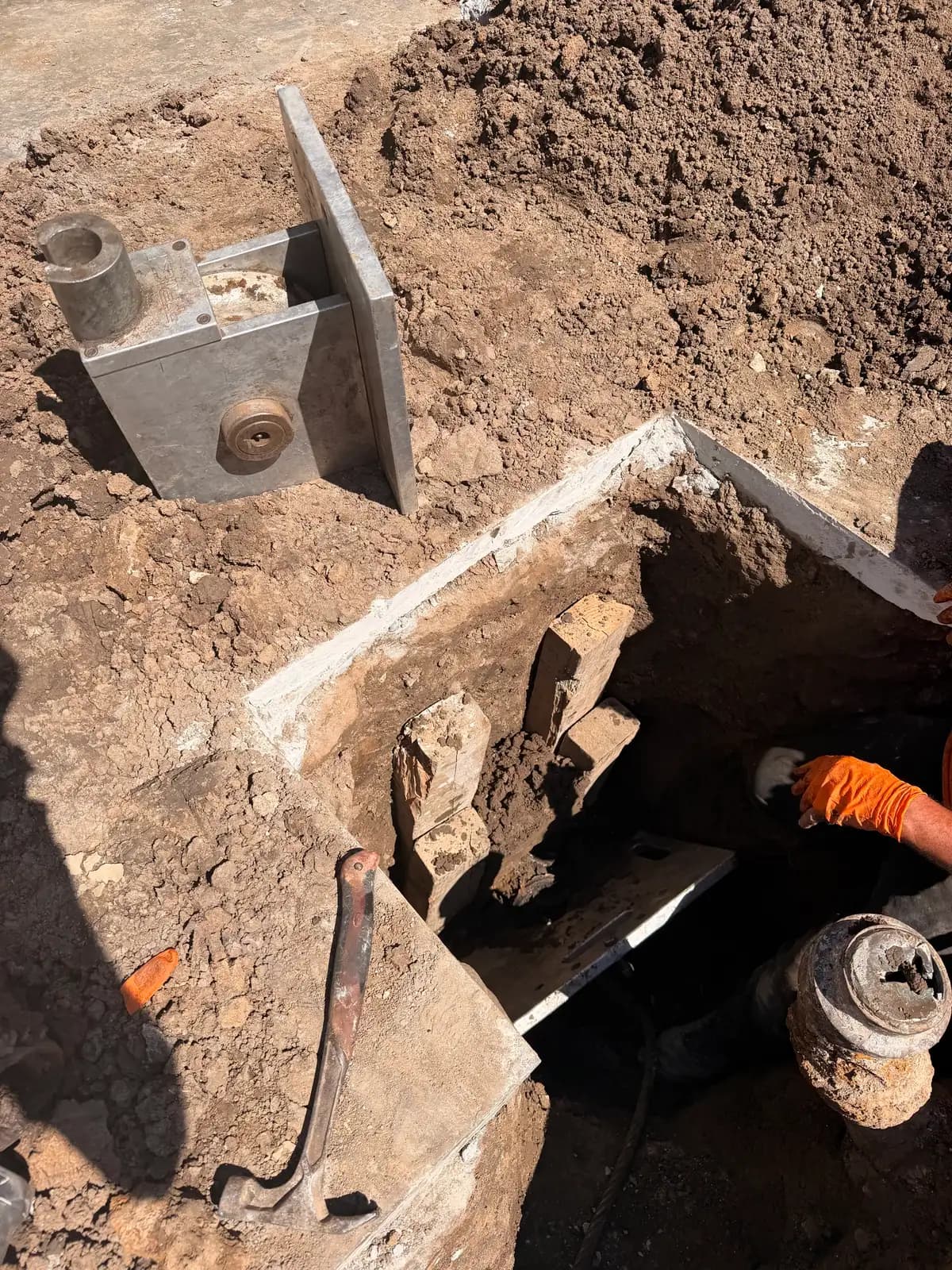
Pipe bursting fractures the existing pipe outward while simultaneously pulling a new HDPE pipe through the same path. It's the right call when the host pipe is too deteriorated to line — collapsed sections, severe offset joints, or Orangeburg that's gone soft. Bursting is also what we use on the steep-grade runs common in [Rolling Hills Estates trenchless work](/service-areas/rolling-hills-estates/trenchless), where sewer drops of 50 feet vertical are routine and the old pipe is often compromised at every low point.
Per-foot, pipe bursting can run slightly less than lining because there's no liner material cost — but the access requirements are different. Bursting needs a pit at the entry point and clear path for the new pipe. Lining needs only two small access points. Which method is cheaper on your specific job depends on the pipe condition and site geometry, not a blanket rule.
What actually moves the number up or down
Pipe length is the dominant cost driver. A 40-foot lateral from the house to the city connection costs less than half of an 80-foot run — the math is almost linear because labor and material both scale with footage. Most South Bay single-family homes sit on laterals between 40 and 75 feet depending on lot depth and where the municipal main runs.
Access is the second driver. A lateral running under an unobstructed backyard is straightforward. One running under a driveway, through a planter with mature root systems, or beneath a deck introduces mobilization complexity that adds $500–$2,000 depending on what has to move. Narrow lots — the 30-foot lots that are standard in Hermosa Beach's Sand Section — compress the work zone and slow every step.
Pipe material and condition affect method selection, which affects cost. Clay tile and cast iron — both common in pre-1940 housing stock in neighborhoods like Old San Pedro, Vinegar Hill, and Old Torrance — are often candidates for lining if they haven't collapsed. Orangeburg, a fiber-tar pipe installed widely in the 1940s–1960s, typically can't be lined because the wall is too soft to anchor the liner. Those jobs go to pipe bursting, which adds cost if the soil conditions require a larger entry pit.
Pipe diameter matters at the margins. Most South Bay residential laterals are 4-inch, with some older 6-inch lines and rare 3-inch runs. Larger diameters cost more per foot in materials and equipment time. If you're upsizing from 4-inch to 6-inch during a pipe bursting job (common on major remodels), expect to add 10–20% to the base quote.
Permit fees are real and variable. Most South Bay cities require a permit for sewer lateral work, and costs range from roughly $200 to $600 depending on the city. [Torrance](/service-areas/torrance/trenchless) is a case worth understanding: repairs on private property pull an "Alter Building Sewer" plumbing permit, but because the city holds the owner responsible all the way to the connection at the public main, any work past the property line also needs a Construction and Excavation permit for the right-of-way. Two permits on one job is a real cost line, not a surprise fee.
Camera inspection comes first — and it should be free
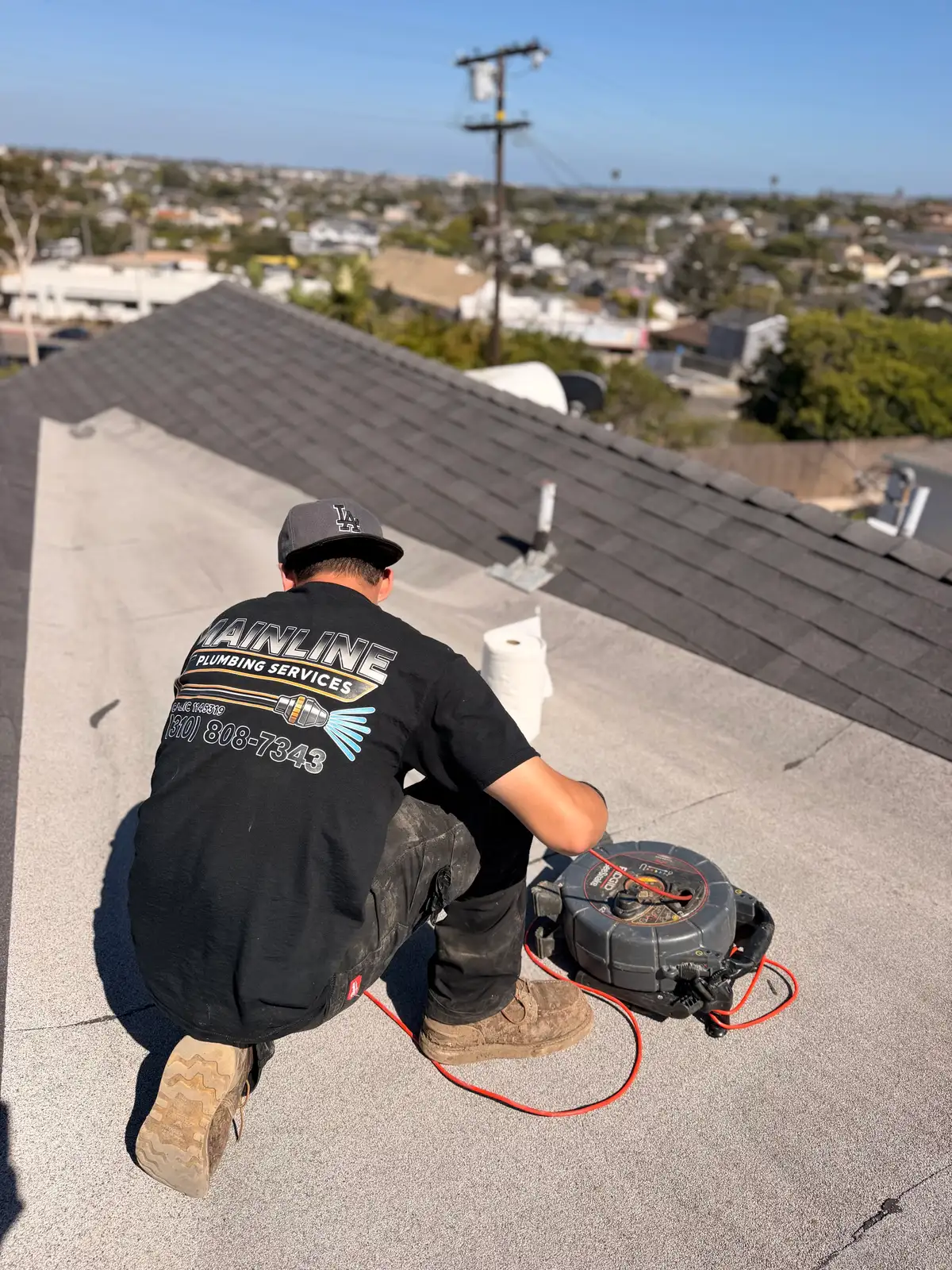
No credible trenchless estimate is given without a camera inspection first. Anyone quoting you a firm price over the phone without running a camera is guessing — and you'll pay for that guess in change orders later. The camera tells us pipe material, wall condition, location and severity of failures, root intrusion density, and whether the pipe has bellies (low spots where waste pools) that lining alone won't fix.
Camera inspection is free with any service call and with any trenchless or repair quote. The inspection runs a high-resolution camera through the lateral from the house cleanout, and we review the footage with you directly — you see what we see. If the pipe is in good shape, we'll tell you that too. The inspection isn't a sales tool; it's the only way to give you a number that holds.
One thing the camera can reveal: partial failures. Not every lateral needs full replacement. A single root intrusion point or a cracked joint near the house connection can sometimes be addressed with a spot repair — a localized liner patch — rather than a full-length treatment. Spot repairs on a 2-foot to 4-foot section can run $1,200–$2,500, substantially less than a full-line treatment.
When trenchless isn't the answer — and the comparison that usually decides it
Trenchless methods work on most residential laterals, but not all. A completely collapsed pipe with no remaining bore has no path for a liner or a bursting head. Similarly, if the pipe has severe vertical misalignment — multiple offset joints where the pipe has shifted out of plane — bursting can't pull a straight new pipe through a crooked path without additional access points, which erodes the cost advantage.
In those cases, open-cut becomes the comparison. Our detailed breakdown of [trenchless vs. traditional sewer replacement costs](/blog/trenchless-vs-traditional-sewer-replacement-cost-comparison) covers that comparison at length, including the restoration costs — concrete, landscaping, pavement — that traditional excavation adds to the base line price. Those costs are real and often not quoted upfront by contractors who focus on pipe-only pricing.
For most homeowners the real comparison isn't trenchless against cheaper trenchless — it's trenchless against open-cut once restoration is counted. Excavation sometimes quotes lower on the plumbing line itself. Then the restoration lands: sod, irrigation, hardscape, and often a driveway apron that has to be cut and repoured. Trenchless removes most of that category, and the gap widens the more landscaping and concrete sit above the line.
The math gets more lopsided as lot value rises. A Manhattan Beach Tree Section property with custom hardscape and a protected street tree can face restoration costs that exceed the entire trenchless quote several times over. That's why the peninsula and coastal cities show higher trenchless numbers and still represent the larger savings.
What to watch for in quotes — and when the bill actually lands
No camera inspection behind the number. This is the single biggest tell. If nobody has put a camera down the line, the repair method is a guess. We've reviewed competitor quotes proposing pipe bursting on lines that only needed lining, and lining quotes on pipe that had already collapsed and could never have held a liner. Camera first, then quote — and you should be given the footage.
Permits missing from the line items. Sewer lateral permits in South Bay cities run roughly $200 to $600 depending on the city. A quote that comes in meaningfully under the others and never mentions permits is usually a quote that will find that money later.
Pipe material left unspecified. A trenchless quote should name what's going in the ground — HDPE grade for bursting, liner thickness and resin type for CIPP. Vague specs are how the lowest quote becomes the most expensive job.
If you're selling and a scope comes back bad, you have two paths: complete the repair before close, or credit the buyer and let them handle it. Completing it yourself is almost always cheaper, because a buyer's credit demand is anchored to their contractor's quote rather than yours, and buyers price in risk you already know the size of. Either way, the documented video and the closed permit become part of the closing package.
If you're not under deadline, get the camera inspection done on a normal week and sit with the result. A lateral with root intrusion and no structural failure is not an emergency — it's a job you can schedule, quote competitively, and price against two or three bids. The homeowners who pay the top of the range are almost always the ones deciding at 9pm with sewage in a bathtub.
South Bay trenchless sewer repair questions we hear most
**Does the price include the permit?** It should, and ours does. Some contractors separate permit fees as a line item. We include the permit cost in the quoted price so you're not surprised at close.
**How long does the job take?** A standard 50-foot CIPP lining job is typically a one-day job — camera in the morning, liner installed and cured by afternoon, flow test before we leave. Pipe bursting on the same length runs similarly. Complex jobs with difficult access, multiple access pits, or required concrete cutting can extend to two days.
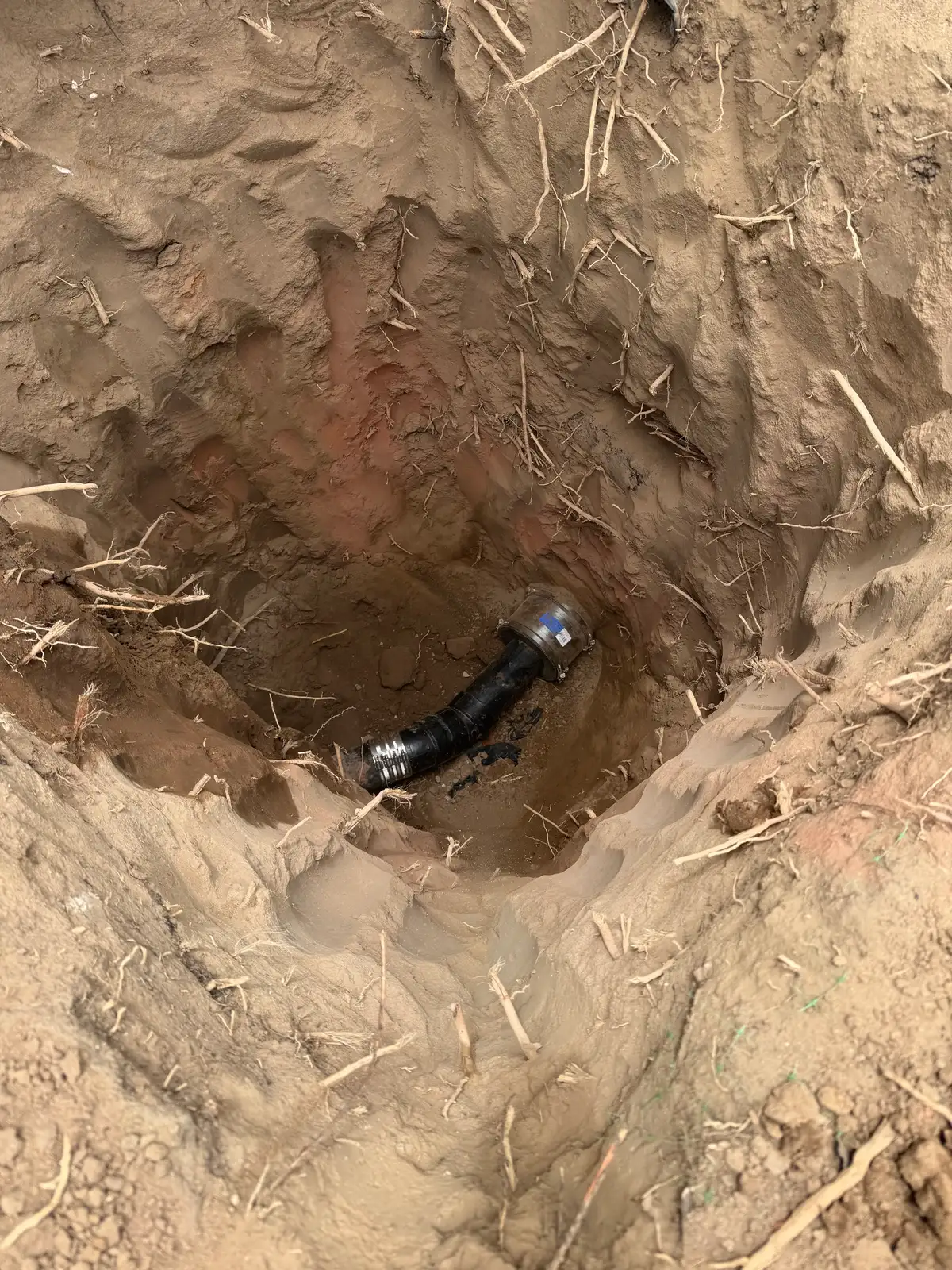
**Will my yard be torn up?** Trenchless means minimal surface disruption. CIPP requires only two small access points — usually at the cleanout and the connection point. Pipe bursting requires a launch pit, typically 3 feet by 3 feet, and a receiving pit at the connection. We backfill and restore both. You won't have a trench across your lawn.
**Does trenchless work on a slab foundation?** Yes, in most cases. If the lateral runs under the slab, we access it from the cleanout outside the footprint and work toward the main. If the failure is under the slab and there's no external access, we assess whether core drilling is needed or whether a different approach is warranted — but slab situations are not automatic exclusions from trenchless methods.
**How do I verify you're licensed?** We hold C-36 plumbing contractor license #901735, issued by the California State License Board. You can verify it directly at the CSLB license check at https://www.cslb.ca.gov.
**What happens if the pipe fails again after lining?** Every CIPP liner we install carries a 25-year warranty. HDPE pipe installed via pipe bursting has an expected service life of 50+ years under normal conditions. We'll cover the warranty terms in writing before the job starts, not after.
What to do next
If you're seeing slow drains, sewage odor, wet spots in the yard, or you've been told you need a sewer replacement, the first step is a camera inspection — not a replacement quote. The inspection is the diagnostic that determines which method applies and what the actual scope looks like.
Mainline No-Dig Trenchless Plumbing dispatches across 16 South Bay cities, seven days a week. Call us at (310) 808-7343 to schedule your free camera inspection. We'll walk you through what the footage shows, explain the method that fits your pipe's condition, and give you a written estimate with no pressure to sign on the same day.
Frequently Asked Questions
How much does trenchless sewer repair cost in the South Bay?
Roughly $4,200 to $18,000 depending on the city. Most flat-lot jobs in Torrance, Lomita, Gardena, and Lawndale land between $4,200 and $9,500. Palos Verdes and Rolling Hills Estates run to $18,000 because laterals are longer, deeper, and harder to access.
Is trenchless cheaper than traditional dig-and-replace?
Almost always, once restoration is counted. Open-cut sometimes quotes lower on the plumbing line, then adds the cost of replacing landscaping, irrigation, and driveway concrete. Trenchless needs a small access pit or two, so most of that category disappears.
What's the cost difference between CIPP lining and pipe bursting?
Lining generally prices a little higher per foot because of liner material but needs less excavation — typically the existing cleanout and a small access point at the connection. Bursting is the option when the host pipe has collapsed, is badly offset, or the line needs upsizing. The camera decides which one is viable, not preference.
Why do trenchless quotes vary so much between contractors?
Usually it's a scope disagreement rather than a pricing one. A quote based on a camera inspection prices the actual defect; a quote without one prices a guess. Ask whether the line was scoped, ask to see the footage, and check that permits and pipe material appear as line items.
Tags