Trenchless sewer replacement typically costs $4,500–$12,000 for a standard South Bay residential lateral, while traditional open-cut replacement runs $3,500–$8,000 for the pipe work alone — before restoration. Once you add concrete, asphalt, landscaping, and hardscape repair, open-cut routinely lands $8,000–$20,000 or more depending on what's in the ground above the line.
That gap is the core of the comparison. Trenchless methods — pipe bursting and CIPP lining — cost more per linear foot of pipe. But they eliminate most of the restoration bill. For homeowners in Palos Verdes with mature landscaping, Hollywood Riviera properties with decorative concrete, or Hermosa Beach lots where access is already constrained, trenchless often comes out cheaper on the final invoice.
What open-cut sewer replacement actually costs
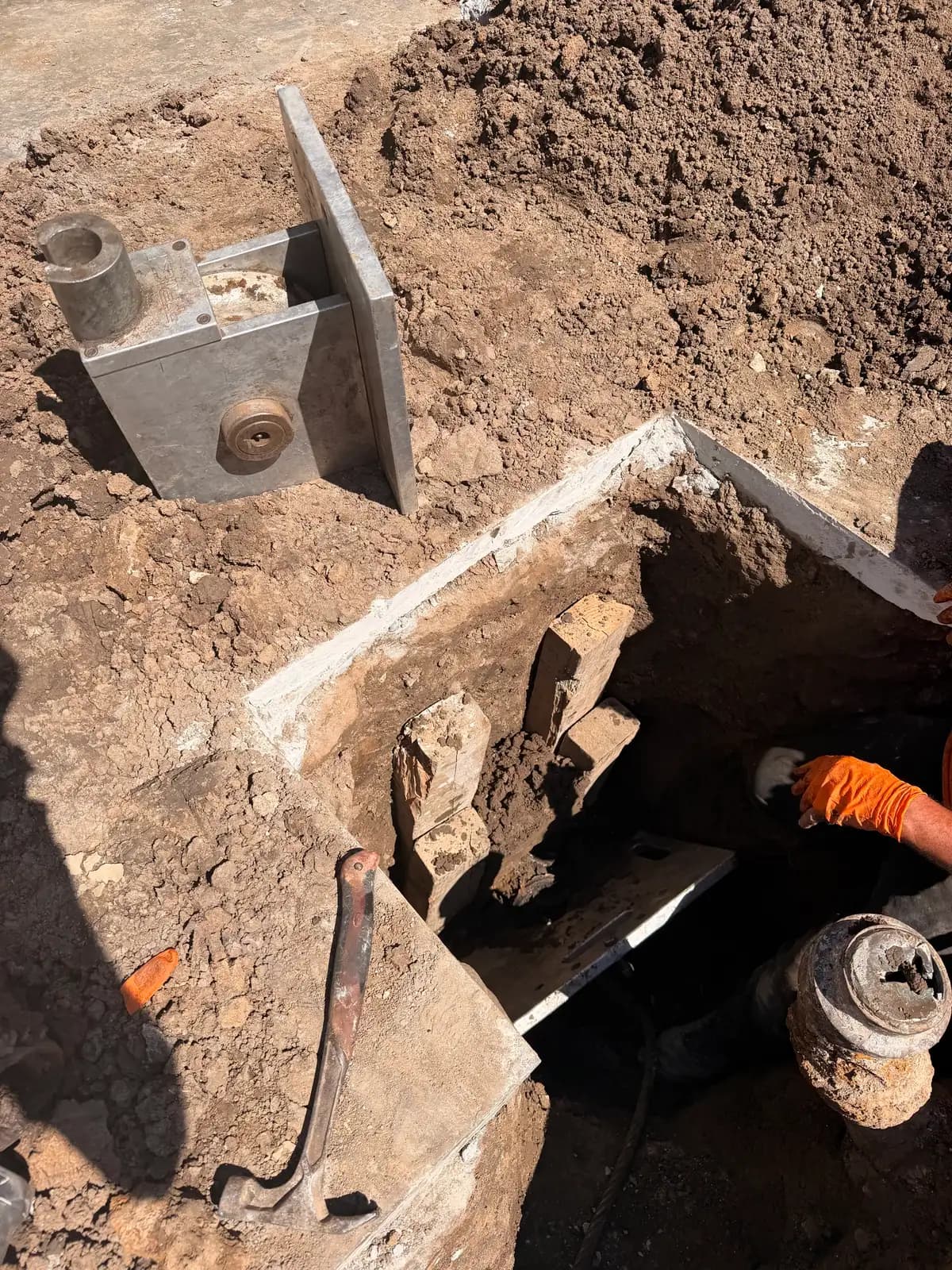
The pipe itself is the smallest line item in an open-cut job. Excavating a typical 40–60 foot residential lateral in the South Bay requires a mini-excavator, a crew of at least two, haul-off for spoils, and a permit in every city we work in. That work runs $3,500–$8,000 depending on depth, soil conditions, and lateral length.
Restoration is where the number climbs. A single driveway cut in Torrance or Carson — especially one involving a full concrete apron — costs $1,500–$4,500 to patch or replace. Landscaping restoration (sod, irrigation laterals, mature shrubs) adds another $1,000–$5,000 depending on what gets removed. If the city requires a street cut or sidewalk repair, you can add $800–$3,000 in municipal restoration requirements on top of that.
The realistic all-in range for open-cut on a typical South Bay property is $8,000–$20,000. Jobs on older Walteria or South Torrance lots with concrete hardscape from the original 1950s–1960s build-out frequently hit the higher end, because the slabs are often continuous and can't be cut and patched — they have to be replaced in full panels.
What trenchless sewer replacement actually costs
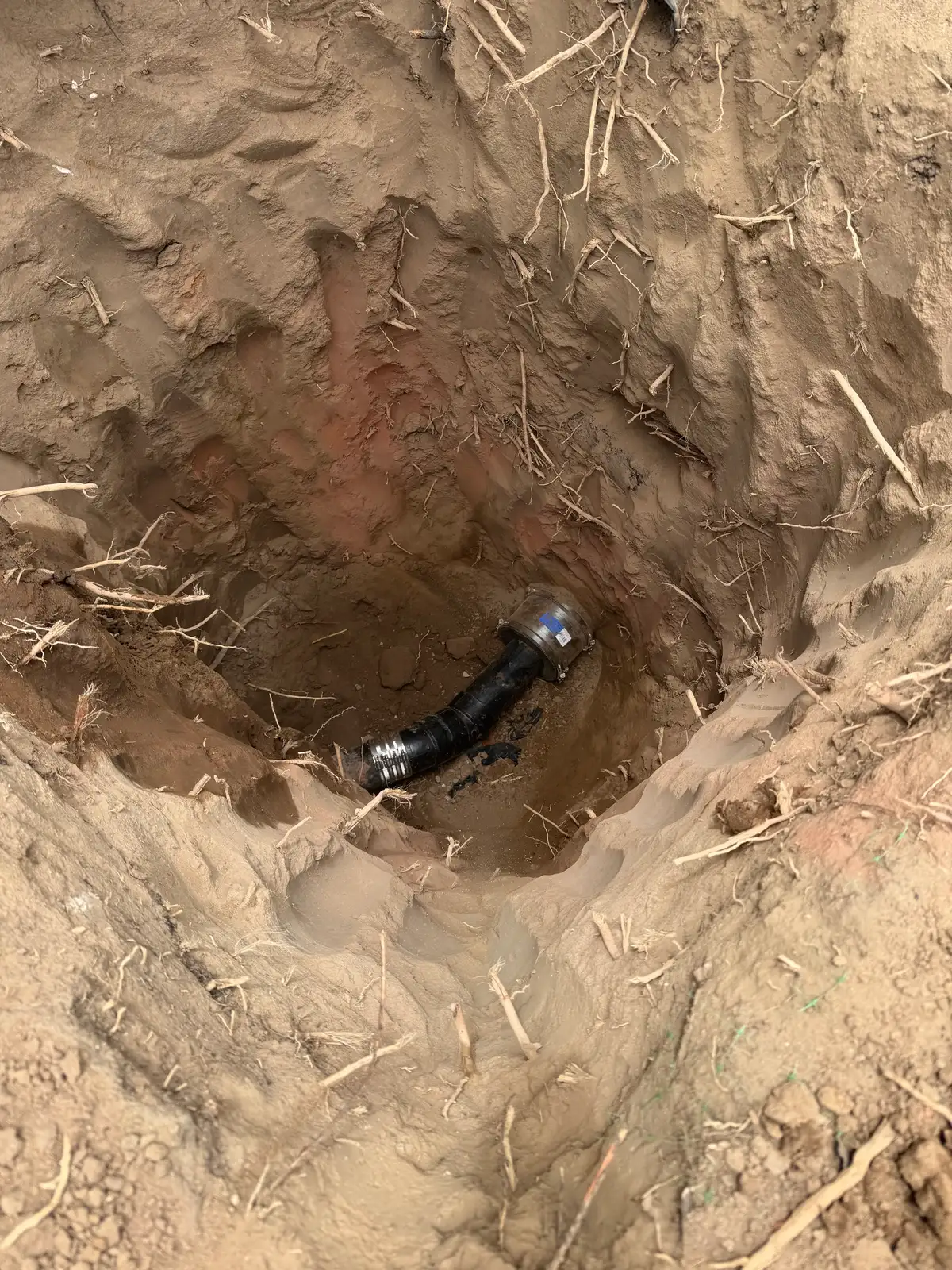
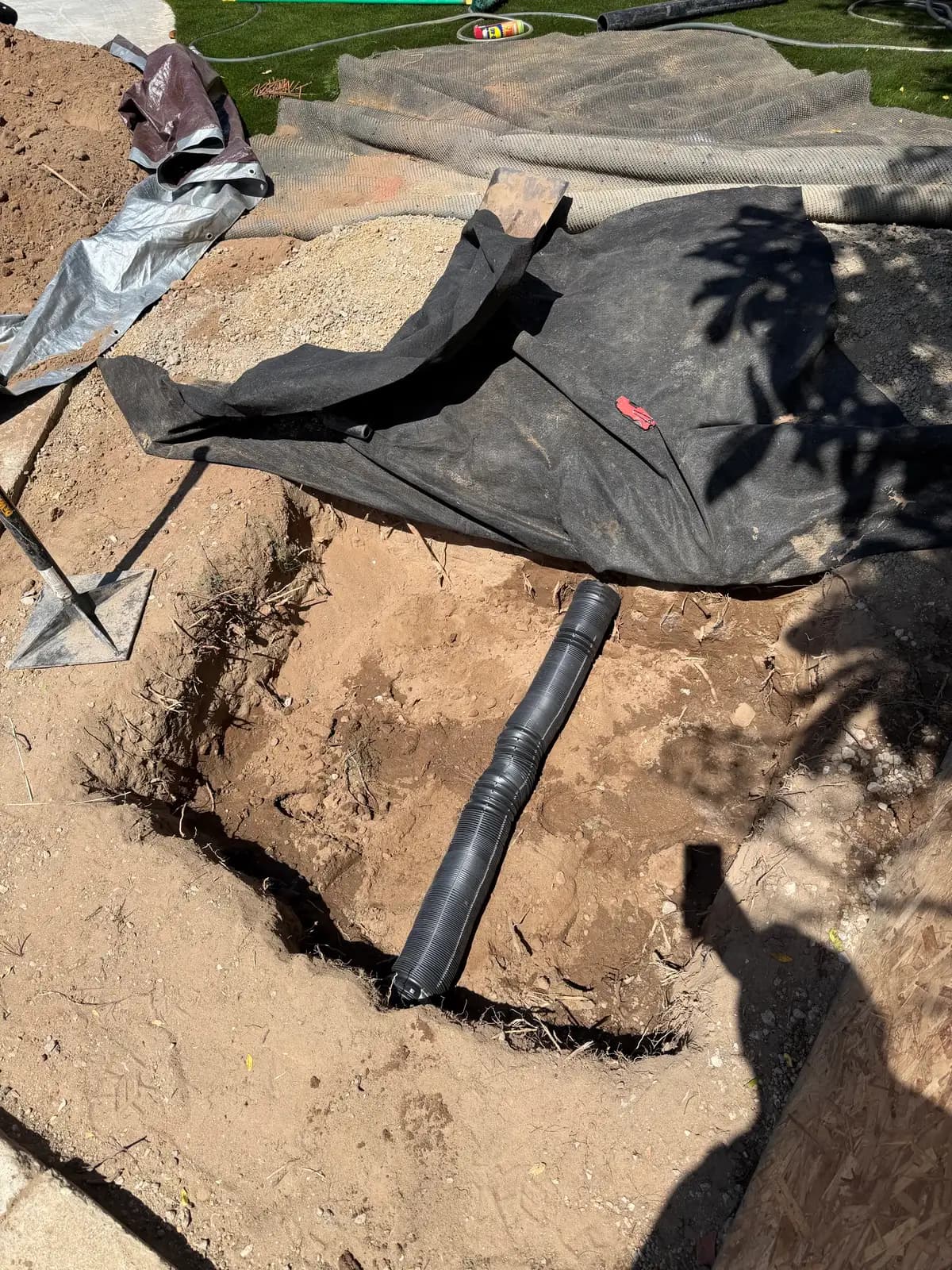
[Trenchless sewer repair](/services/trenchless) — whether pipe bursting or CIPP lining — requires two small access pits rather than a trench the length of the run. On a 50-foot lateral, that typically means two holes, each roughly 2–3 feet across. Labor and equipment run higher per linear foot than open-cut, which is why the base price of $4,500–$12,000 looks more expensive before restoration costs enter the picture.
Pipe bursting is the method we use most in the South Bay for full lateral replacement. The old pipe is fractured outward as a new HDPE pipe is pulled through. It works in clay, cast iron, and Orangeburg — the three materials that dominate pre-1975 South Bay homes. CIPP lining is better suited for partial repairs or situations where the existing pipe alignment is needed.
Restoration on a trenchless job is minimal: two pit fills, typically concrete or compacted base with an asphalt patch. That runs $300–$800 versus the $3,000–$8,000 restoration bill on a comparable open-cut job. On a Rolling Hills Estates property with a 60-foot vertical drop and established native planting, trenchless isn't just the property-friendly option — it's the only practical one.
Side-by-side: what the numbers look like
Here's how the two methods compare on a typical 50-foot residential lateral in the South Bay, assuming average soil conditions, no street cut required, and moderate landscaping above the line:
**Open-cut:** Excavation and pipe $4,500–$8,000. Concrete or asphalt restoration $1,500–$4,500. Landscaping and irrigation repair $1,000–$3,500. Permit and inspection $300–$600. Total range: $7,300–$16,600. **Trenchless (pipe bursting):** Equipment, pipe, and labor $5,500–$12,000. Pit restoration $300–$800. Permit and inspection $300–$600. Total range: $6,100–$13,400.
On straightforward jobs with no hardscape, open-cut can be cheaper. On any job with concrete, pavers, mature trees, or tight lot access — which describes the majority of South Bay properties built before 1975 — trenchless saves money on the total bill. We've done [trenchless sewer jobs in Torrance](/service-areas/torrance/trenchless) where the restoration quote alone exceeded the trenchless labor cost.
One cost that doesn't appear in either column: a [sewer camera inspection](/services/trenchless/camera-inspection) before the work starts. That runs $250–$450 and tells you the pipe condition, material, depth, and any offsets or belly sections that affect method selection. Skipping it is how homeowners end up mid-job discovering their Orangeburg lateral has collapsed in two spots instead of one.
When open-cut actually makes more sense
Trenchless isn't always the right call. If the lateral runs through open dirt with no hardscape, no mature landscaping, and easy equipment access — common on newer Carson or Hawthorne lots with rear setbacks — open-cut can be faster and less expensive when restoration is minimal.
Severely collapsed pipe with offset joints or major root-induced displacement can also limit trenchless options. Pipe bursting requires enough of the original pipe to remain in-ground as a guide path. If a section has fully collapsed and the surrounding soil has shifted into the void, excavating that segment first is sometimes necessary before pulling through the new line.
Depth matters too. Most South Bay residential laterals run 2–6 feet deep. Below 8 feet, open-cut shoring requirements increase labor costs significantly, which pushes the economics back toward trenchless. In Old San Pedro neighborhoods where laterals serve hillside foundations and run deep before connecting to the main, pipe bursting at depth is almost always the right method.
The restoration costs contractors don't always quote upfront
The single biggest source of sticker shock after an open-cut job is restoration work that wasn't in the original bid. Some contractors quote pipe and labor only, leaving landscaping, concrete, and asphalt as 'homeowner responsibility' line items that appear after the trench is already open. Get any open-cut quote with restoration fully itemized — not as an allowance, but as a specific scope.
Concrete is the most variable item. A 10-foot section of damaged driveway can be patched for $400–$800, but if the existing slab is older and the patch won't match, or if the driveway is stamped concrete or tile-set pavers, replacement costs per square foot increase by 3–5x. Homeowners in the Hollywood Riviera area of Redondo Beach and Manhattan Beach's Tree Section regularly discover this after the fact.
Irrigation is frequently overlooked. A lateral running under a lawn will cross poly supply lines and drip emitter runs. Replacing those isn't difficult, but it adds time and material. On properties with automated systems, a controller reprogramming and head replacement can add $200–$600 to an open-cut job that wasn't scoped for it.
South Bay trenchless vs. traditional sewer questions we hear most
**Is trenchless always more expensive than open-cut?** Per linear foot of pipe, yes — trenchless equipment and materials cost more. But total project cost including restoration favors trenchless on most South Bay properties with any hardscape, concrete, or established landscaping above the sewer line.
**Does trenchless work on all pipe materials?** Pipe bursting works on clay, cast iron, Orangeburg, and PVC. CIPP lining works on any structurally sound host pipe that can be cleaned and holds its shape. The only material that routinely limits trenchless options is completely collapsed pipe with displaced soil — in those sections, partial open-cut may be needed.
**How long does each method take?** A typical open-cut lateral replacement takes 2–3 days including trench, pipe, backfill, and compaction — plus separate restoration days after. A trenchless pipe bursting job on the same lateral typically completes in 6–10 hours of work, with pit restoration finishing the same day.
**Is Mainline No-Dig Trenchless licensed to do this work?** Yes. We hold C-36 plumbing contractor license #901735, which you can verify on the CSLB website at cslb.ca.gov. We've operated under that license in the South Bay for 18+ years.
**Does the method choice affect the permit or inspection process?** No — both open-cut and trenchless sewer replacements require a plumbing permit and city inspection in every South Bay city we work in. The pipe material installed (typically HDPE for trenchless) must meet municipal standards, which HDPE does in all 16 cities we serve.
**What if my sewer was already inspected but I don't know the method yet?** Camera footage determines method. If you have a recent inspection report, send it to us before scheduling — we can review the footage and give you a method recommendation before anyone visits the property. Call (310) 808-7343 to discuss.
What to do next
If you're getting sewer replacement quotes in the South Bay, ask every contractor to give you a total project cost — pipe, labor, permit, and full restoration — before you sign anything. The gap between a partial quote and the final invoice is where most of the frustration comes from.
We scope every sewer job with a camera inspection first, quote both the pipe work and restoration in the same line, and carry C-36 license #901735. Dispatch is 24/7 with a 60-minute target response for emergencies. For scheduled work, call (310) 808-7343 or use the contact form to request a scoped estimate.
Tags