
Expert Plumbing Services
Water Pressure Regulator Replacement.
A water pressure regulator, or pressure-reducing valve (PRV), sits where the main enters the house and holds household pressure below street pressure. California code requires one above 80 psi. When it fails, pipes bang, toilets run and water heater relief valves drip. Mainline tests, replaces and sets the valve, then verifies with a gauge.
About This Service
Pressure-reducing valve testing, adjustment and replacement for South Bay homes and buildings. We find the pressure, fix the valve, and check what high pressure has already damaged downstream.
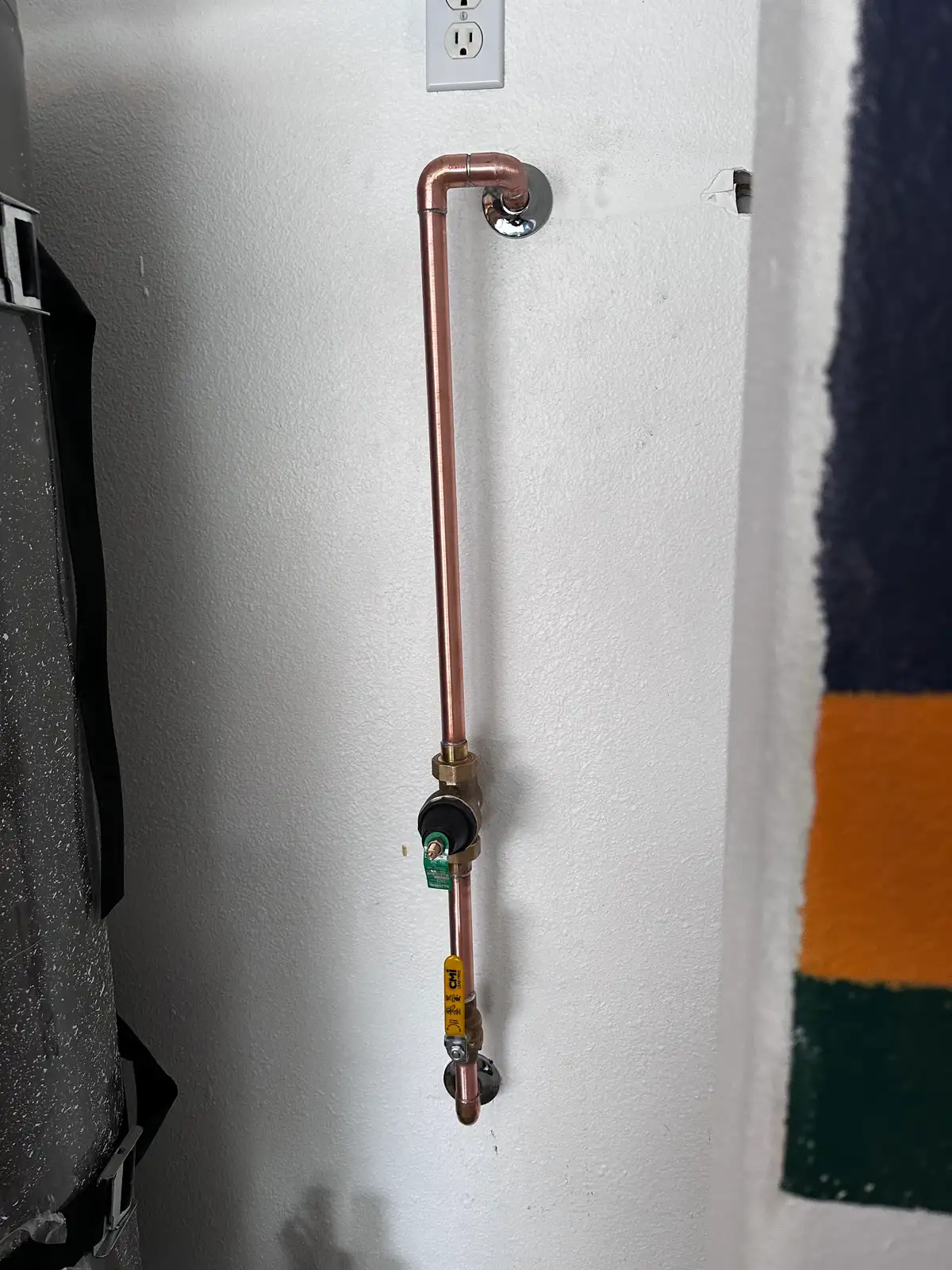
A pressure regulator is the bell-shaped brass valve on the water line where it enters the house, usually on an outside wall near the hose bib, sometimes in a crawlspace or a box at the meter. Inside is a spring and a diaphragm that throttle street pressure down to a set point, adjustable with a screw on top. It makes no noise and needs no attention for years, which is exactly why a failed one goes unnoticed while it wears out everything downstream.
The California Plumbing Code requires a regulator wherever static pressure runs above 80 psi, and across the South Bay that depends heavily on elevation. Homes low on a slope below the supply zone, on the lower hillsides of San Pedro, the Palos Verdes Peninsula and parts of Rolling Hills Estates, can see pressure well beyond what fixtures are rated for. A reading at your own hose bib is the only number that counts.
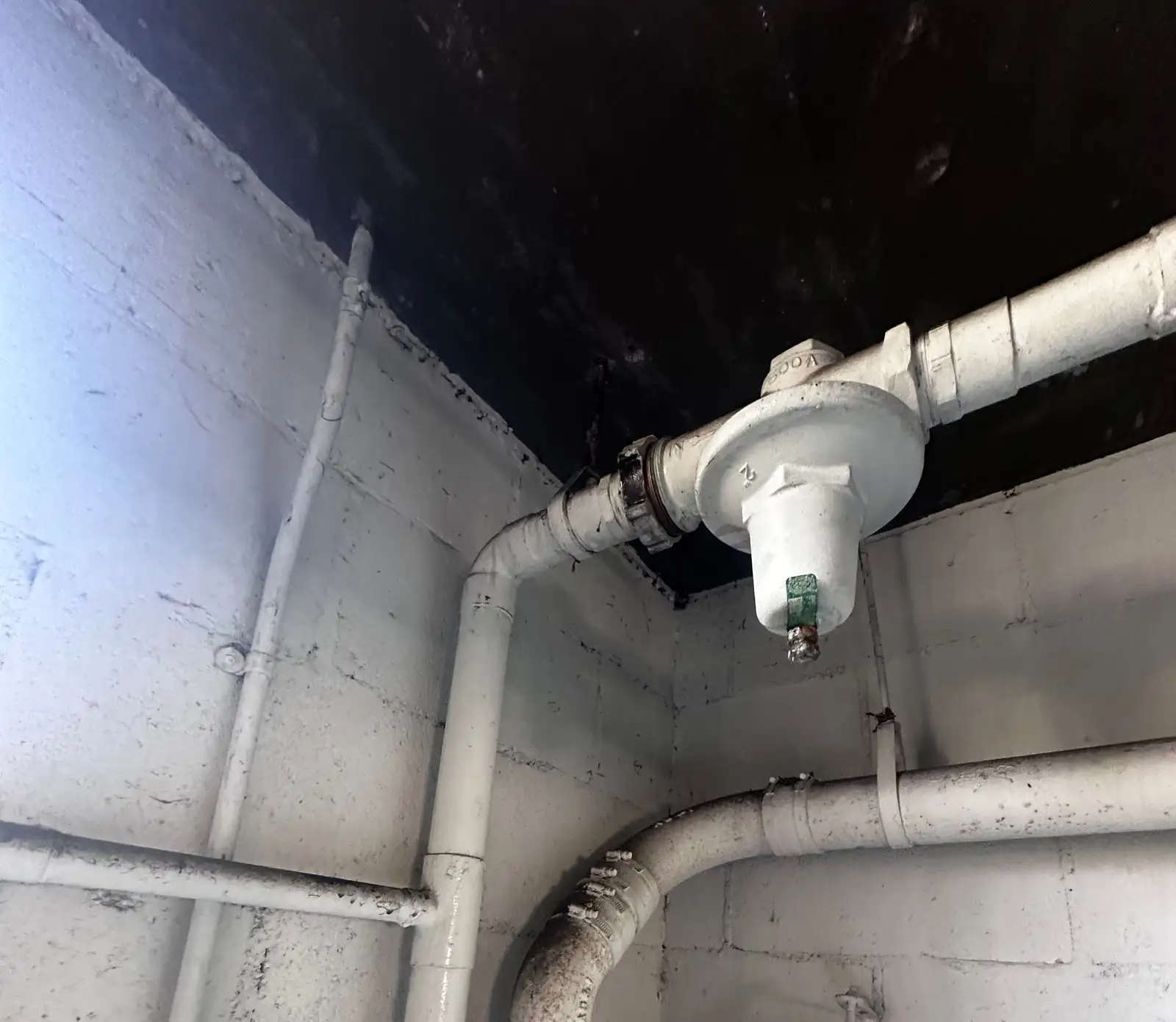
A regulator nobody had looked at in years
- 2-inch building main
- Painted over in place
- Before replacement
Painted over along with the pipes and the wall, a regulator stops being a part anyone checks. By the time the call comes, pressure downstream has usually been creeping up for a while and the fixtures have been paying for it.
Failure rarely looks like one problem. Regulators usually fail open, letting street pressure straight through, and the symptoms arrive together: pipes that bang when a valve shuts, toilets that refill on their own, faucets dripping at more than one fixture, a relief valve weeping at the water heater, supply hoses and cartridges that fail years early. They can also fail closed, and then the whole house goes weak at once. Two or more of those at the same time is a pressure question before it is a fixture question.
Testing takes ten minutes. Thread an inexpensive gauge onto an outdoor hose bib with every tap in the house closed and read it. If you can, read it again late at night, when street demand drops and a failing regulator lets pressure climb. Anything above 80 psi needs attention. Our guide to water pressure regulator failure walks through the readings and what each one means.
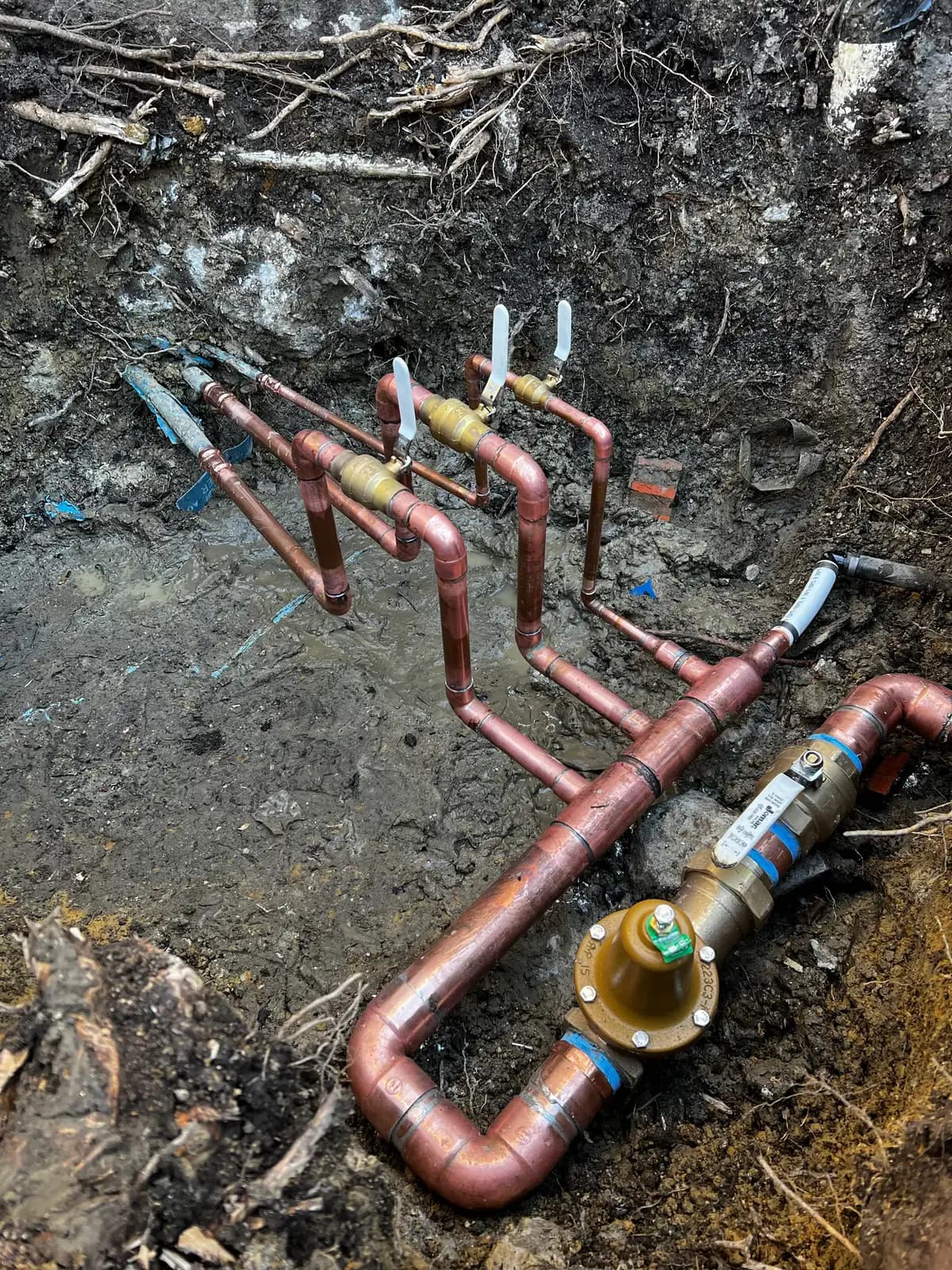
The regulator goes in with the main
- New copper main
- Regulator at the entry
- Ball valve shutoffs
When the main itself is replaced, the regulator and shutoffs go in with it, so the new line starts out protected instead of inheriting an old valve.
Replacing the regulator changes how the whole system behaves. With a working PRV the house becomes a closed system, and water that expands as the water heater heats has nowhere to go. That is what a thermal expansion tank absorbs, so a regulator replacement is the time to confirm one is there and charged to match the new set point. Skip it and the relief valve at the heater does the job instead, one drip at a time.
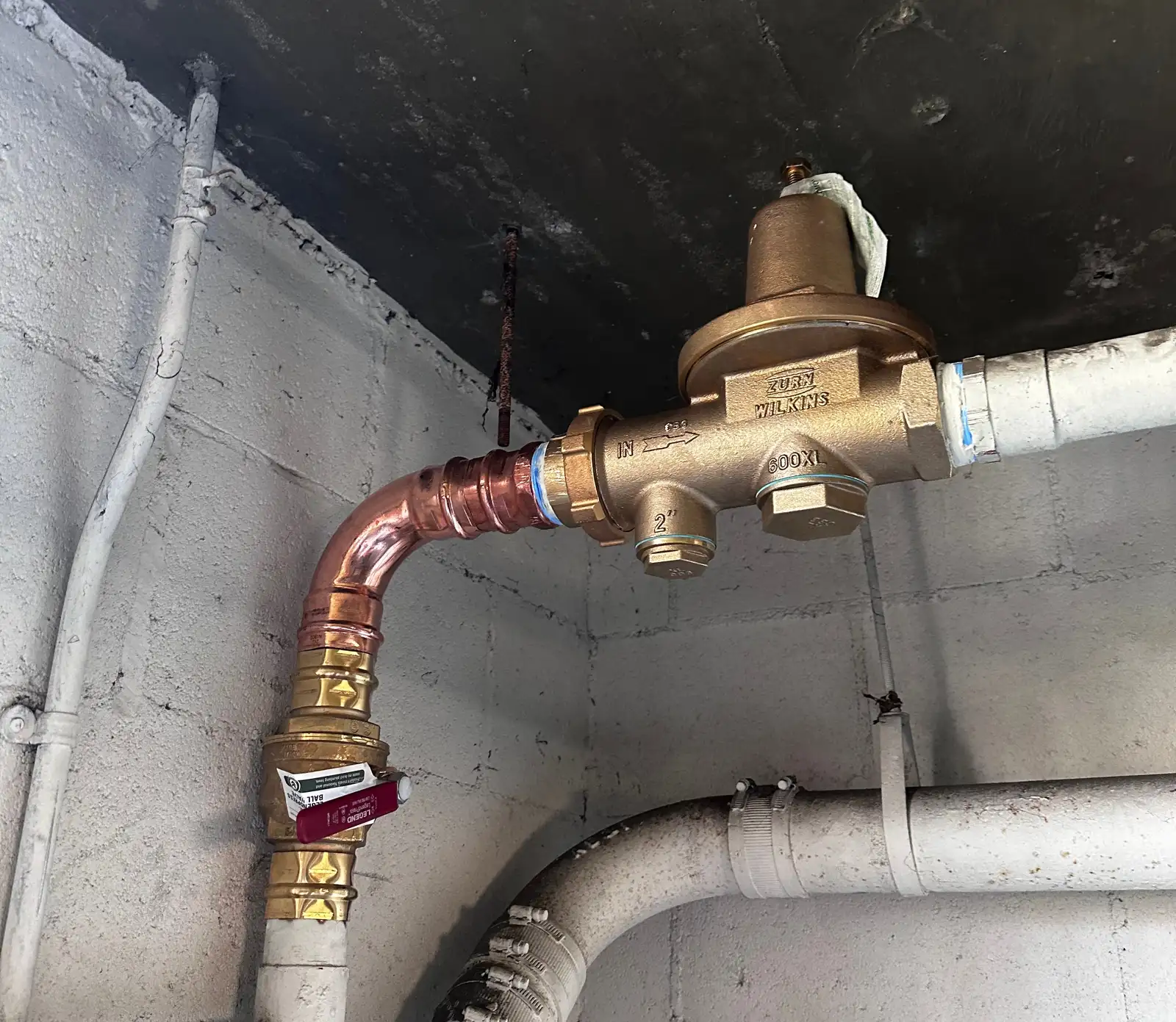
Same main, new 2-inch regulator
- 2-inch Zurn Wilkins 600XL
- New copper
- Ball valve upstream
The replacement for the painted-over valve above. A shutoff directly upstream means the next adjustment or rebuild does not mean shutting the water off at the street.
The job itself is straightforward. The water goes off at the meter, the old valve comes out, and the new one goes in with a shutoff ahead of it. We set the pressure, verify it with a gauge at a hose bib rather than trusting the adjustment screw, and check what years of high pressure may already have done: braided supply lines under sinks and toilets, the water heater relief valve, and the condition of the shutoffs. We do this for single-family homes and for 2-inch mains on apartment and commercial buildings. Estimates are free.
If the valve is fine but the pipe feeding it is not, the regulator is the wrong fix. Galvanized service lines from pre-1970 construction rust closed from the inside, and a new regulator on a failing main only moves the problem. That is a job for water main repair, and we will tell you which one you need before quoting either.
The Property-Friendly Difference: 18+ Years of Subterranean Infrastructure Mastery in the South Bay. Fully Licensed, Bonded, Insured, and Factory-Certified.
Step by Step
How It Works
Measure the pressure
A gauge at the hose bib with every fixture closed, and where the symptoms point to night-time spikes, a second reading when demand is low. We quote after we know the number, not before.
Replace and set
The old valve comes out, a new regulator goes in with a shutoff upstream, and the set point is dialed in for your house rather than left at the factory setting.
Verify and protect
We confirm the pressure with a gauge, check the thermal expansion tank, and look at the supply lines and water heater relief valve that high pressure wears out first.
The Difference
Traditional vs. Property-Friendly
- Destructive excavation of your property
- Days or weeks of disruption
- Expensive landscape restoration
- Mess and debris left behind
- Minimal to no excavation needed
- Completed in hours, not days
- Your landscaping stays intact
- Clean, professional worksite
Where We Serve
Water Pressure Regulator Replacement in the South Bay
We provide water pressure regulator replacement services across the South Bay of Los Angeles and surrounding communities.
Common Questions
Frequently Asked Questions
SERVICE AREA
Water Pressure Regulator Replacement Across the South Bay
We provide water pressure regulator replacement to every neighborhood in these South Bay cities.
Ready to Get Started?
Our Property-Friendly technicians specialize in water pressure regulator replacement. Call now or dispatch online.