Atmospheric rivers don't give the South Bay much warning. When 3–5 inches fall in 24 hours — which has happened in Redondo Beach, Carson, and Long Beach in consecutive winters — the plumbing systems that quietly fail are the ones homeowners assumed were fine. The checklist below focuses on what to inspect and test before the storm, not after water is already on your floor.
Low-lying coastal neighborhoods carry the most exposure: Belmont Shore in Long Beach, The Avenues in Redondo Beach, Avalon Village in Carson, and Old Lomita all sit at or near grades where stormwater and sewer surcharges can interact. But even hillside homes in Rancho Palos Verdes or Rolling Hills Estates face a different set of risks — saturated soil on steep grades puts lateral sewer lines under stress they don't see in dry years. The prep steps differ, but the urgency doesn't.
Test your sump pump before the first storm, not during it
A sump pump that runs once a year is exactly the kind of equipment that fails silently. The float switch seizes. The discharge check valve sticks. The basin fills with sediment that the pump can't push through. None of this is visible until water is already rising.
The test takes five minutes. Pour a five-gallon bucket of water into the basin slowly. The float should rise, the pump should engage within a few seconds, and the discharge should run water outside and away from the foundation. If the pump doesn't kick on, or if it runs but water backs up rather than discharging, that's a failed system — not a marginal one.
Check the discharge line termination point while you're at it. Discharge that terminates within 6 feet of the foundation re-infiltrates during prolonged rain events and defeats the purpose of the pump. The line should terminate at least 10 feet from the structure, sloped away, and clear of any obstruction. If your pit has a battery backup unit, test it on battery power independently — the main power is likely to brown out during heavy storms.
Clear every floor drain and exterior drain before rain arrives
Floor drains in garages, utility rooms, and exterior patios connect to the sanitary or storm system — and they're the first place debris, paint residue, and years of sediment accumulate. Lift the cover on each one. The trap should hold water. A dry trap means sewer gas is already venting into the space, and during a storm surge it also means no hydraulic seal against backflow.
Pour a quart of water into any dry trap to restore the seal. If the drain is slow, a [sewer snake service](/services/trenchless/sewer-snake) on that line before storm season is a cheap insurance policy — a clogged floor drain during peak flow is not a plunger situation.
Gutters and downspouts matter to your plumbing system more than most homeowners realize. A blocked downspout that backs up and overshoots the foundation concentrates 600–1,200 gallons per hour against your stem wall during a heavy event. That load finds the path of least resistance — usually a floor crack, a crawlspace vent, or a cleanout that wasn't sealed. Clean gutters and verify that each downspout extension moves water at least 4 feet from the building.
Know where your main shutoff is — before you need it
This sounds basic. In our experience across 16 South Bay cities, a meaningful percentage of homeowners can't locate their main shutoff under pressure. It's at the meter box near the street, or at a secondary valve inside near the water heater — often both exist and only one fully closes the supply. Knowing which one you have, and whether it turns off completely, is pre-storm knowledge, not mid-flood knowledge.
Turn the shutoff to the closed position and confirm that a faucet inside runs dry within 20–30 seconds. If water keeps flowing, the valve is partially failed — a common condition in older ball valves or gate valves that haven't been operated in years. A failed shutoff valve in a storm is the difference between a wet floor and a flooded interior.
Homes in Old San Pedro, Old Gardena, and Old Torrance built before 1950 frequently have original gate valves at the main that are corroded partially open. These need to be serviced or replaced before they're called on in an emergency. Our [plumbing services for Gardena](/service-areas/gardena) crews see this regularly on pre-war stock.
Backwater valves: what they do and whether you have one
A backwater valve — sometimes called a backflow preventer or sewage check valve — is installed on the main sewer lateral below grade. Its job is mechanical: if municipal sewer pressure reverses during a storm surge, the flap closes and blocks sewage from entering your home through floor drains, toilets, and tub drains. Without one, you're relying on the city's system to not surcharge, which is not a reliable assumption during a major atmospheric river event.
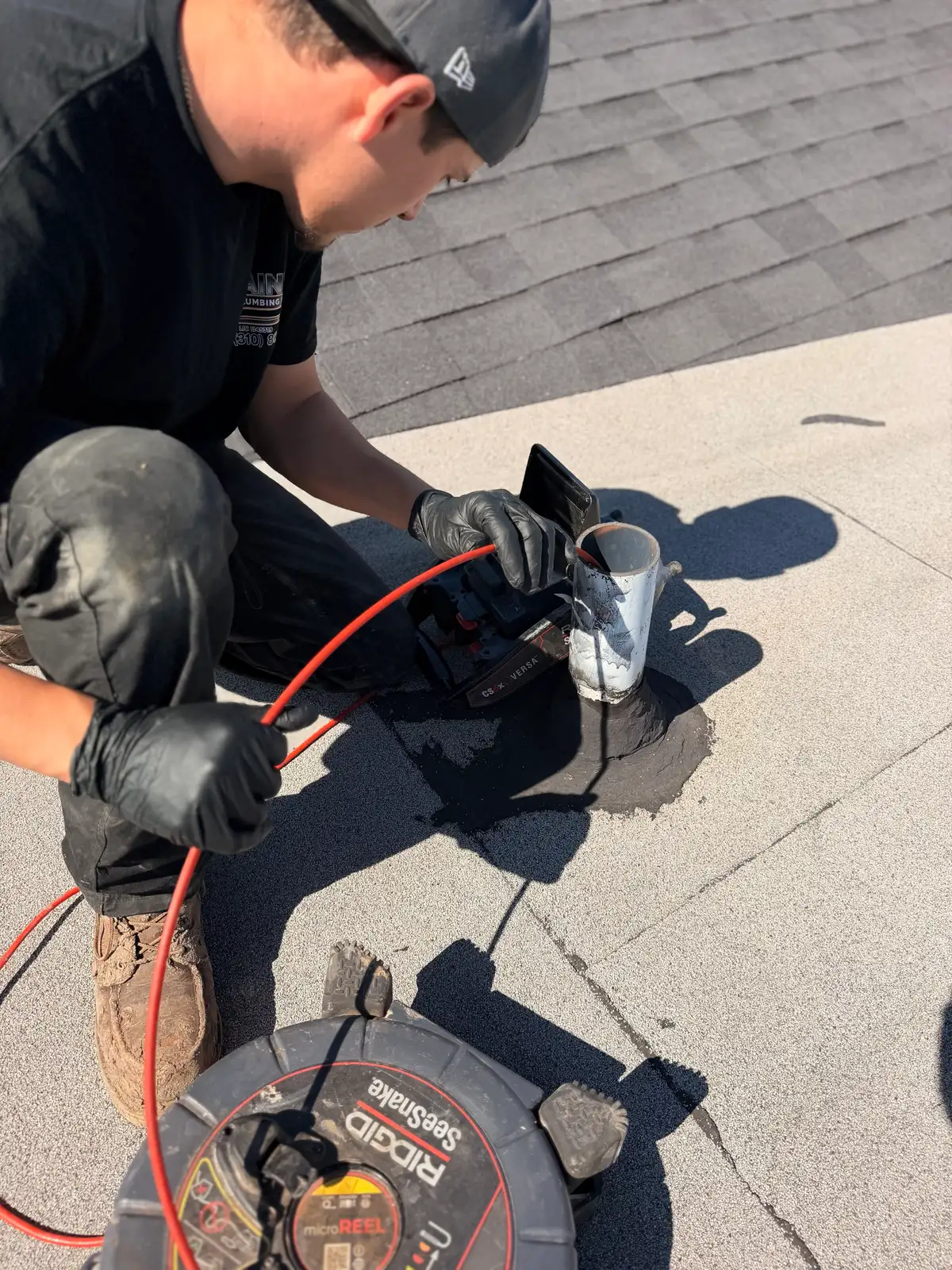
Most South Bay homes built before 1990 were not required to have one. If your home is in a low-lying block — think Belmont Shore, North Redondo, or Avalon Village in Carson — and you've never confirmed whether one exists, the time to check is before storm season. A [camera inspection](/services/trenchless/camera-inspection) of the sewer lateral is the definitive way to locate a backwater valve or confirm its absence.
If yours is missing and the risk profile of your neighborhood warrants it, installation is typically done by opening a small access point in the basement or sub-slab — in many cases trenchlessly. If one exists, pull the cleanout cover on the valve housing and verify the flap moves freely. A stuck-open flap provides no protection. A stuck-closed flap will cause your drains to back up under normal flow — either failure mode needs to be caught before a storm.
Lateral and cleanout inspection: what to look for yourself
Your sewer cleanout is the threaded cap at grade level — typically near the foundation or close to the street — that provides direct access to the main lateral. During atmospheric river events, sewer systems across the South Bay get loaded with infiltrating groundwater through pipe cracks. If your lateral already has root intrusion, offset joints, or partial collapse, a wet-weather surge is what finally backs it up.
Walk your property and locate the cleanout. If the cap is missing, cracked, or recessed below grade, debris enters the line continuously — and so does groundwater. A missing cap is a 30-minute fix under normal conditions. In the middle of a storm, it becomes an emergency call.
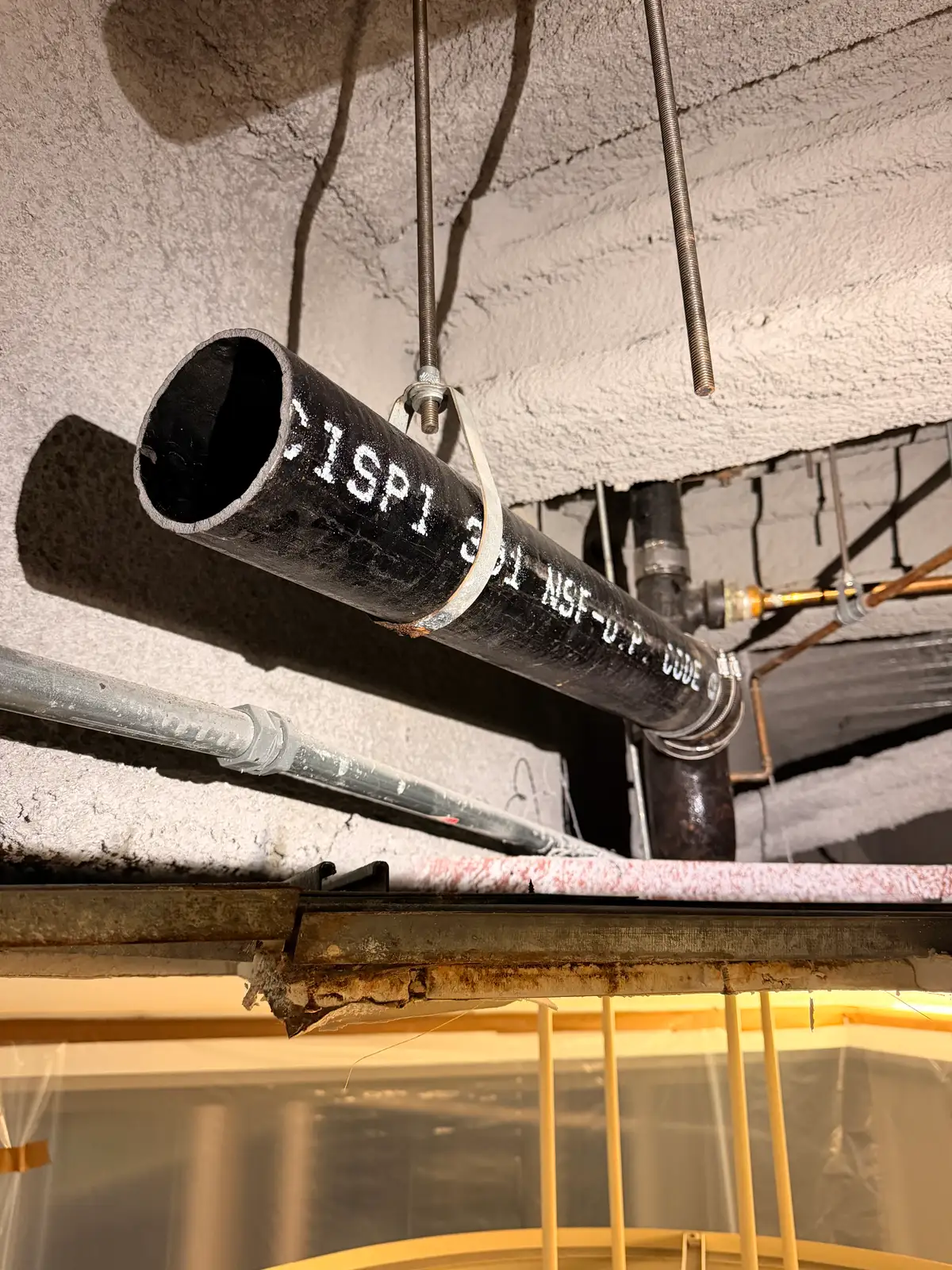
Older clay and orangeburg laterals in Moneta and Strawberry Park in Gardena, or in Holy Trinity and Vinegar Hill in San Pedro, have documented histories of collapse under soil saturation. If your home has original sewer pipe and you haven't had a camera inspection in the last 3–5 years, consider scheduling one before the first major storm. We cover [trenchless sewer repair and inspection](/services/trenchless) across the full South Bay footprint.
South Bay atmospheric river plumbing questions we hear most
**How do I know if my sump pump basin is large enough?** Residential sump basins typically range from 18 to 24 inches in diameter and hold 15–25 gallons. Size isn't the primary constraint — pump capacity and discharge rate are. A 1/3-horsepower pump moves roughly 35 gallons per minute at 10 feet of head. If your basement or crawlspace historically floods faster than that, you need a higher-capacity unit or a dual-pump setup, not a bigger basin.
**Can a toilet back up during a storm even if I don't flush it?** Yes. If the municipal sewer main surcharges — meaning the upstream pressure exceeds the gravity drain elevation of your lateral — sewage can enter any floor-level fixture that isn't protected by a backwater valve. Lowest fixtures fail first. Toilets and floor drains are typically the first points of entry. Putting a toilet lid down does nothing to prevent this.
**My garage floor drain is dry and has been for years. Is that a problem?** A dry floor drain trap means the water seal has evaporated. That's both a sewer-gas issue under normal conditions and a backflow path during a surcharge event. Pouring water into it restores the trap temporarily, but if that drain has no functional connection to the building's drainage system — which happens when floor drains get abandoned or improperly capped — a camera inspection will tell you what it's actually connected to.
**How fast can Mainline respond during a storm?** We run 24/7 dispatch with a 25–45-minute target response window. During high-demand storm periods, actual arrival times can stretch — but we prioritize active flooding situations over non-urgent calls. Call (310) 808-7343 and describe what's happening; dispatch will give you a realistic window.
**Is Mainline a licensed contractor?** Yes. Mainline No-Dig Trenchless Plumbing holds C-36 plumbing contractor license #901735. You can verify this directly on the CSLB website at cslb.ca.gov using the license number.
**Should I shut off my water main before a storm?** Not as a default. Shutting the main stops supply but doesn't protect against sewer backflow, which is the primary storm-related threat for most South Bay homes. The main shutoff is relevant if a supply line fails — a hose bib blows off, a washing machine hose pulls loose, or a pipe joint fails under pressure. Know where the shutoff is and confirm it closes fully. Use it reactively, not preemptively.
What to do before the rain arrives
Run through the sump pump test, clear your floor drains and gutters, confirm your main shutoff closes fully, and locate your sewer cleanout before the next storm forecast. None of these checks require a plumber — but if any of them surface a problem, that's the time to call, not when water is already in the house.
If you're in a low-lying neighborhood, haven't confirmed a backwater valve, or have original clay or cast iron sewer pipe, a pre-season camera inspection is worth scheduling now. We serve 16 South Bay cities from our Lomita headquarters with 24/7 dispatch. Call (310) 808-7343 to schedule an inspection or to reach dispatch during a storm event.
Tags
Related Services