Carson sits on top of what was once one of the most active oil-producing landscapes in Southern California. The Dominguez Oil Field, portions of Rancho Dominguez, and the wider Carson basin have decades of subsurface petroleum extraction behind them. That history doesn't disappear when tracts of single-family homes get built over it — it just becomes someone else's problem to manage.
Most plumbing work in Carson has nothing to do with methane. A water heater swap, a toilet rebuild, a drain replacement — these don't touch the soil at meaningful depth and don't enter methane review territory. But some projects do. Understanding which ones, and why, is the difference between a permit that clears in two weeks and a job that stalls for months waiting on a geological hazards assessment.
This post draws a clear line between natural gas service work (the pipes that bring combustion fuel into your home) and methane soil-gas mitigation (the environmental layer that applies to certain excavation work in former oil-field zones). They involve completely different regulatory tracks, and confusing the two causes real project delays.
What Carson's soil-gas risk actually means
Methane soil gas in Carson is biogenic and thermogenic — it migrates upward from legacy hydrocarbon deposits and from decomposing organic material in fill soils. In active methane zones, this gas can accumulate under slabs, in crawl spaces, and in utility trenches if construction disturbs the capillary layer that keeps it contained.
The City of Carson and Los Angeles County have mapped methane zones across the city. Neighborhoods near the Carson Park and Scottsdale areas, and properties along the Wilmington-Carson corridor, fall within or adjacent to documented methane buffer zones. The Cal State Dominguez Hills area also sits near former extraction activity. The boundaries aren't perfectly obvious from street level — the city's methane map is the authoritative reference, and the permit counter will check it before issuing excavation permits.
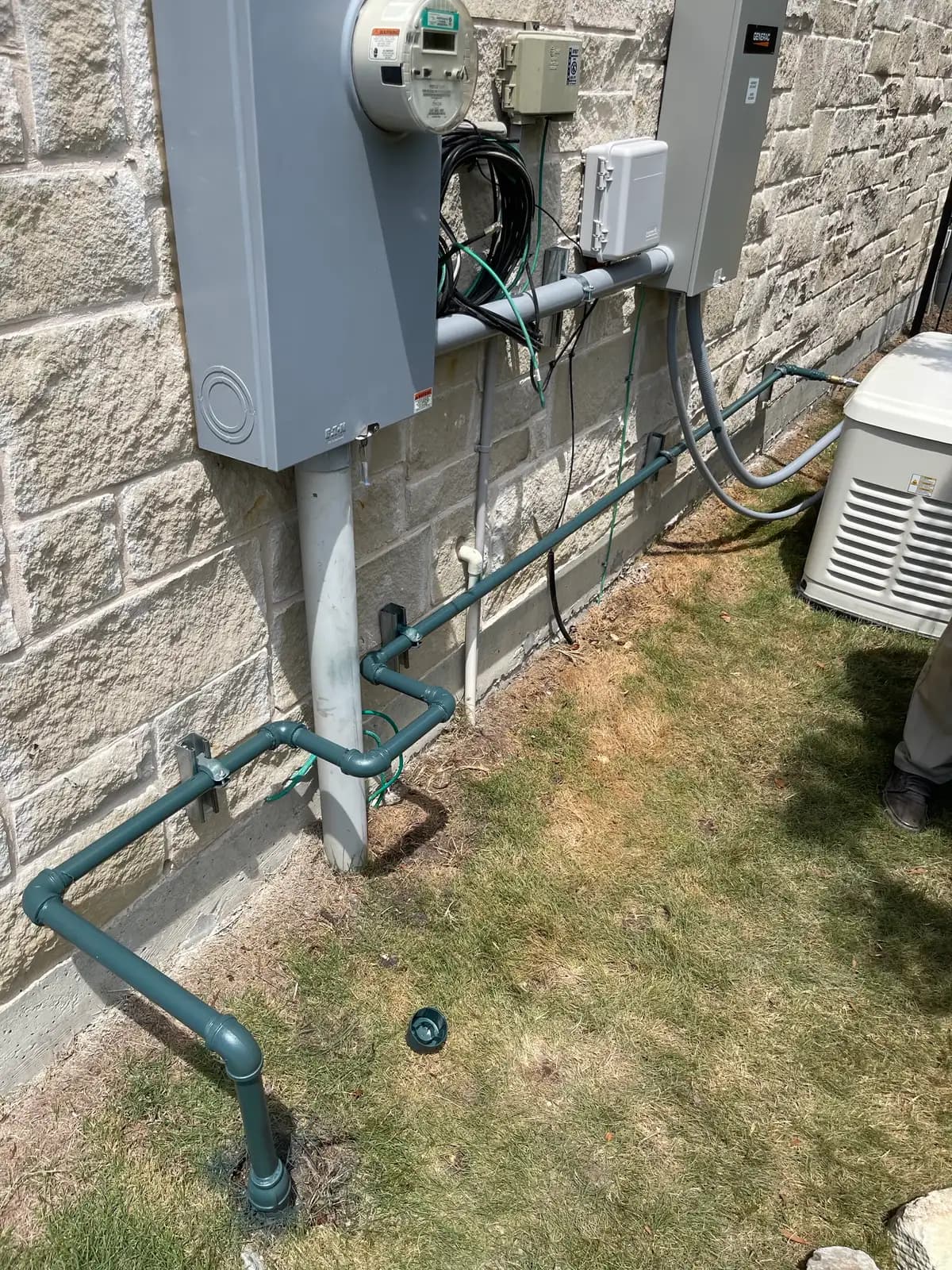
Methane soil gas is not the same as your gas utility's supply line. SoCalGas delivers pressurized natural gas through a metered service line to your house. That line is regulated, maintained, and tested. Methane soil gas is subsurface, uncontrolled, and tied to geological conditions — it's managed through passive venting systems, barrier membranes, and in some cases active mitigation. Two separate issues, two separate regulatory tracks.
When plumbing work triggers methane review
The key variable is excavation depth. Most jurisdictions in the Carson area apply methane zone requirements when excavation exceeds 18 to 24 inches within a designated zone — but the local standard can vary by parcel, so the permit application is always where this gets resolved, not assumptions made at the job site.
Projects that typically trigger review in methane zones: sewer lateral replacement with open-cut trenching, water main repairs that require deep trench excavation, foundation work adjacent to plumbing runs, and any new underground utility installation in a mapped zone. If the scope of work requires pulling an excavation or grading permit and the parcel sits in a methane zone, the building department will attach a soils or geological review condition.
Trenchless methods change this calculus significantly. [Pipe bursting](/services/trenchless/pipe-bursting) and CIPP lining access the existing pipe path through small entry and exit pits — typically 18 to 24 inches wide — rather than continuous open-cut trenches. In many cases, this keeps the project below the threshold that triggers full geological hazards review. It's one practical reason trenchless approaches get used more often in Carson than in cities where soil conditions are simpler.
Camera inspections don't involve excavation at all. A [sewer camera inspection](/services/trenchless/camera-inspection) is the right first step before any lateral replacement project in Carson — it tells you exactly what you're dealing with before anyone starts discussing permits, trench depth, or mitigation requirements.
Natural gas line work: a separate track entirely
Replacing or extending a natural gas service line on the homeowner's side of the meter follows a standard permit-and-inspection path through the city's building department. The permit requires a licensed C-36 or C-34 contractor, a pressure test at completion, and a final inspection before the gas is turned on. This is the same process in Carson as it is in Torrance or Gardena.
Where Carson adds a wrinkle is when a gas line project also involves excavation in a mapped methane zone. If you're running a new gas line to an outdoor BBQ, a fire pit, or a detached ADU in Scottsdale or the Avalon Village area, and that trench runs through a methane-mapped parcel at more than 18 inches depth, the permit application may generate a geological review condition. The gas line permit itself isn't the issue — the excavation permit layered on top of it is.
For [Carson gas line work](/services/gas-lines), the practical approach is to pull the permit first and let the building department flag any methane conditions before scheduling the trench. Trying to determine methane zone status informally — by asking a neighbor or eyeballing a city map — is not reliable. The official parcel-level determination comes from the permit counter.
What a geological hazards review actually involves
If a project does trigger methane review, the city typically requires a soil-gas study prepared by a licensed geologist or geotechnical engineer. That report evaluates subsurface conditions on the specific parcel, documents methane concentrations if present, and recommends a mitigation approach — passive sub-slab venting, vapor barriers, or active depressurization depending on risk level.
The review adds time and cost. A soil-gas study can run $1,500 to $4,000 depending on scope, and the turnaround from a qualified geotechnical firm is typically three to six weeks. That timeline needs to be factored into project scheduling. A plumbing contractor who hands you a bid without flagging this possibility on a Carson excavation job is not giving you a complete picture of the project.
Mitigation systems, when required, are integrated into the construction phase — not added at the end. Passive venting pipes, granular gravel beds below the slab, and polyethylene barrier membranes are installed while the trench or foundation work is in progress. This coordination matters: the geotechnical report specifies the system, the plumber installs the plumbing scope, and the general or specialty contractor installs the methane mitigation layer — all in sequence.
When you can proceed without a methane review
A large share of residential plumbing in Carson proceeds without any methane review at all. Interior plumbing work — water heater replacements, drain reroutes inside the slab via tunneling rather than open-cut, repipes, fixture replacements — doesn't involve the kind of surface excavation that triggers review conditions. Shallow service work at six to twelve inches depth, like replacing a cleanout or making a lateral connection at the curb, may also clear without a geological review depending on zone status.
Homeowners in Old Carson near the 405 corridor, and in areas developed later in the 1970s and 1980s on infill parcels, often find their specific parcels are outside the mapped methane buffer zones. Proximity to former extraction doesn't automatically place a parcel inside a review zone — the maps are parcel-specific. The only way to know for certain is to check at the permit counter before work starts.
Sewer work using trenchless access is the most consistent way to reduce methane review exposure on lateral replacement jobs. If the existing pipe path is serviceable as a guide channel, [trenchless sewer repair](/services/trenchless/sewer-repair) keeps excavation minimal and often keeps the project below the depth thresholds that generate review conditions.
Our response in Carson
We dispatch from Lomita headquarters and reach most of Carson in about 25 minutes. We run 24/7 dispatch with no overtime fees, so an evening call on a gas line issue or a drain emergency doesn't cost more than a daytime call.
Before we quote any Carson project that involves excavation, we check the parcel against the city's methane zone mapping. We don't hand out bids that ignore this step. If the project will require a geotechnical review, we tell you up front so you can build that timeline and cost into your planning — not discover it after the permit gets conditioned.
Licensed C-36 #901735. We've been doing this work in the South Bay for 18+ years. Methane zone conditions aren't new to us — they come up on jobs in the Scottsdale and Wilmington-Carson corridor often enough that we have a checklist for them.
What to do next
If you're planning a gas line extension, sewer lateral replacement, or any excavation-heavy plumbing project on a Carson property, the first move is a permit-readiness conversation — not a shovel in the ground. We scope the job, check the methane map, and give you a realistic picture of what the permit path looks like before you commit to a timeline.
For emergency plumbing situations in Carson — gas odors, sewer backups, water main breaks — call (310) 808-7343 directly. We respond 24/7 with a 60-minute target response time. For planned project estimates, use the same number to schedule a scoped estimate visit.
Tags