
Mid-century modern homes in Culver City are not difficult to repipe because the plumbing is unusual. The supply lines, drain stacks, and fixture connections are standard. What makes the job harder is the architecture around them — radiant slab ceilings, exposed post-and-beam framing, open floor plans with no interior wall chases, and flat or shallow-pitch rooflines that eliminate attic routing. The routes that work in a 1960s Ranch in Lawndale don't exist in a 1952 Cliff May in Carlson Park.
Culver City's mid-century residential stock concentrated in Carlson Park, Sunkist Park, and Studio Village between roughly 1917 and 1965. The older bungalows in Sunkist Park predate World War II. The more architecturally distinctive MCM homes — the ones with the wide overhangs, clerestory windows, and open-plan living — came in the late 1940s through the early 1960s. The copper supply lines in these homes are now 60 to 75 years old. That's past the design life for copper in most Los Angeles soil conditions, and well past it in homes where original galvanized was replaced with copper in the 1970s and 1980s as an incomplete fix.
Why original copper fails in this era of Culver City housing
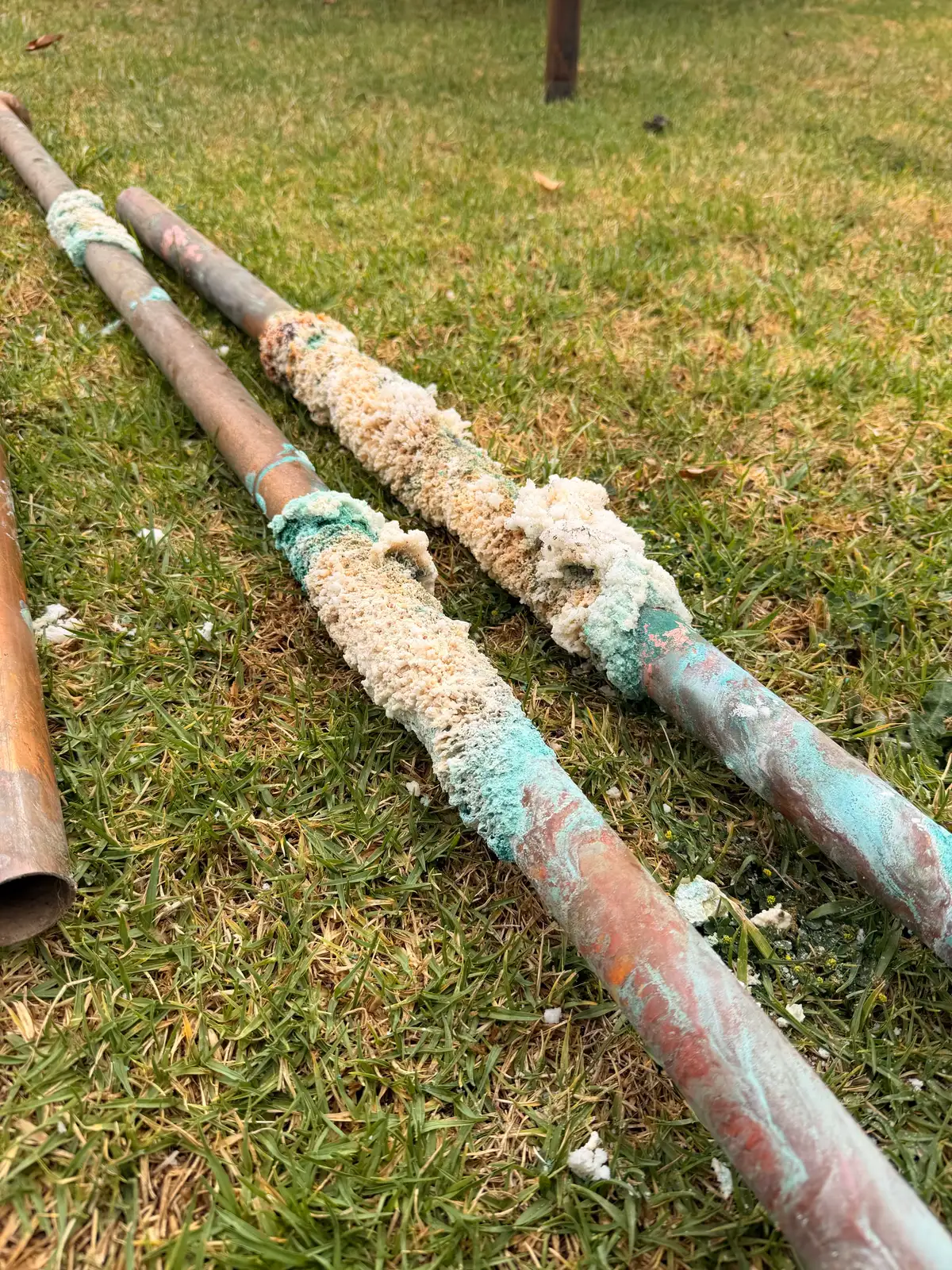
Type M copper — the thinner-wall residential grade common in 1950s and 1960s California construction — has a typical service life of 50 to 70 years. In Culver City's soil conditions, which range from sandy fill in lower Fox Hills to heavier clay profiles in Carlson Park and Studio Village, pipe movement over decades causes fitting stress and pinhole corrosion at elbows. The result isn't always a visible leak. It often starts as a slow weep behind drywall or under a slab, detectable only after the damage is already done.
In MCM homes specifically, the problem compounds when slab leaks go undetected longer than they would in a standard tract home. Concrete slab floors, polished terrazzo, or original hardwood over concrete are common in these homes — all surfaces that mask slow moisture intrusion until the damage is significant. A [slab leak repair](/services/slab-leak-repair) call in Studio Village is rarely just a pipe repair. It's usually the beginning of a broader conversation about whether the remaining supply system warrants repair or full replacement.
Homes with original galvanized supply that was never updated are in worse shape. Galvanized steel corrodes from the inside out. By the time you see the water pressure drop or the rust color at the tap, the interior of the pipe has been restricting flow for years. A 1950s galvanized system in Culver City is not a candidate for partial repair — it's a whole-house repipe on a timeline.
The routing problem: where you can't run pipe in an MCM home
In a standard post-war tract home, a plumber has options: attic above, crawlspace or slab below, interior wall cavities in between. MCM design eliminates most of these. Flat and low-pitch rooflines mean shallow or nonexistent attic space — often less than 14 inches at the ridge, not enough to route 3/4-inch supply lines with proper clearance. Exposed post-and-beam ceilings, common in Cliff May-influenced ranches in Carlson Park, mean no ceiling chase at all. You're looking at the structure from below.
Open floor plans reduce interior wall count. Where a 1950s tract home might have six or eight interior partition walls to run pipe through, a true MCM open plan might have two or three. The walls that do exist are often load-bearing, which means cutting into them for pipe chases requires engineering sign-off and careful restoration. In Sunkist Park originals with original plaster walls, that restoration work is not trivial.
The slab is frequently the only viable path, and routing through slab on an MCM home requires more planning than a standard job. Radiant heat systems — not common but present in some Culver City MCM homes — put tubing in the slab that can't be cut through. Even without radiant heat, original slab penetrations may have been core-drilled at non-standard locations, which means a camera inspection of the existing drain system is a prerequisite before any repipe layout is drawn.
PEX versus copper in an MCM home: what actually matters
PEX-A is the material most crews default to on repipes today because it's flexible, fast to install, and requires fewer fittings — which means fewer potential failure points. In a standard tract home, that flexibility is mainly a labor efficiency argument. In an MCM home, it's structural. PEX can navigate around load-bearing walls, make tighter bends through slab penetrations, and run longer continuous runs through tight spaces without the soldered joint count that copper requires.
That said, there are MCM owners who want copper retained for material consistency, resale disclosure, or personal preference. That's a legitimate choice and we work with it. The tradeoff is more fitting points in constrained routes, higher material cost, and longer install time when the routing is complex. On a Carlson Park or Studio Village repipe, the routing complexity is almost always present.
What shouldn't drive the material decision is aesthetics alone. In most MCM homes, the supply lines are not visible — they're in walls, under slabs, or in the few interior chases that exist. The decision should be based on routing geometry, access constraints, and long-term maintenance access. For [repipes in Culver City MCM homes](/services/repipes), we scope the routing before recommending the material, not after.
Protecting original finishes during the work
This is where the Property-Friendly Plumber™ approach is most relevant on MCM jobs. Original terrazzo floors, board-formed concrete walls, exposed aggregate, and post-and-beam ceiling systems are not replaceable at the same quality level they were built. A chip in a terrazzo floor or a cracked exposed-beam connection isn't a handyman patch — it's a restoration project. The opening strategy for a repipe has to account for this from the first cut.
Where we need to open walls, we score cleanly, open minimum necessary widths, and document the opening dimensions before work begins. Plaster walls in Sunkist Park originals require a different opening approach than modern drywall — plaster patches are visible even when done well, which means routing to avoid plaster walls entirely is worth extra planning time. Where a slab penetration is needed, core drilling is slower than jackhammering but it's the right tool when you're working next to a polished concrete surface or original tile.
We also coordinate with the homeowner before the scope is finalized on any finish surfaces that are borderline. If there's a route that avoids a terrazzo section by adding 15 feet of pipe run and one extra access panel in a closet, that's almost always the right call. The homeowner needs to make that decision with full information, not discover it mid-job.
Camera inspection as a prerequisite, not an add-on
Before we quote a repipe on any Culver City MCM home, we want a camera in the drain system and a mapped view of the existing supply layout. The drain system in a 1950s MCM home often has cast iron stacks and ABS branch lines added during 1970s or 1980s updates — the connection points between them are where failures concentrate. A [camera inspection](/services/trenchless/camera-inspection) shows us where those connections are, whether the cast iron is scaling or cracking, and whether the drain work needs to be coordinated with the repipe or scoped separately.
Supply layout mapping matters because original construction drawings for Culver City MCM homes are rarely available. The city's building department may have records for permitted work done after 1980, but original 1950s permits for these homes often show minimal detail on the plumbing layout. We locate the main shut-off, trace the supply branches, and identify any previous repair points before the scope is written. A repipe quoted without that information is an estimate. A repipe quoted with it is a fixed scope.
Permitting and inspection in Culver City
Culver City's Building and Safety Division requires a permit for whole-house repipes, and inspections are scheduled through the city's online portal. The inspection sequence typically covers rough-in before walls are closed and final after pressure testing. On MCM homes where wall opens are minimized by design, coordinating the rough-in inspection timing is critical — you need the inspector to sign off before you close surfaces that took significant effort to open cleanly.
Our crew handles permit pulls as part of the job scope. Licensed C-36 #901735 work in Culver City is permitted and inspected by default, not as an option. We target 45-minute response to Culver City jobs from our Lomita headquarters, which means we're not a remote contractor trying to schedule around a long drive to the inspection site.
What to do next
If you own a mid-century modern home in Carlson Park, Studio Village, Sunkist Park, or anywhere else in Culver City and the supply system is original or has visible signs of failure — reduced pressure, rust-colored water, pinhole patches, or a prior slab leak — the right first step is a site visit and routing assessment. Not a phone quote, not an estimate based on square footage. A walk-through where the routing constraints are actually evaluated.
We serve Culver City as part of our 16-city South Bay coverage area. Call (310) 808-7343 to schedule an assessment. We'll map what exists, identify the failure points, and give you a scope that accounts for the architecture — not one that treats your MCM home like a 1960s tract house that happens to have clerestory windows.
Tags
Related Services