Hard water cuts 3–5 years off a standard tank water heater's 10–12 year lifespan. The mechanism is straightforward: dissolved calcium and magnesium carbonate precipitate out of solution when water heats up, forming a mineral crust on the tank's bottom and on the heating element. That crust insulates the burner from the water, makes the unit work harder, and eventually cracks the glass lining. The heater fails early, and most homeowners have no idea why.
Across the South Bay, municipal water hardness typically runs between 250 and 425 parts per million depending on your city and which water district supplies your block. That range puts most South Bay homes in the 'hard' to 'very hard' classification. It is not a minor inconvenience — it is a measurable factor in how fast your equipment degrades.
What the hardness numbers actually look like by area
Water hardness varies meaningfully within the South Bay, and the source matters. Cities drawing primarily from the Metropolitan Water District blends — which mix Colorado River water with State Water Project water — tend to run harder, often in the 300–425 ppm range. Cities with a heavier mix of local groundwater can be softer or harder depending on the aquifer.
Inland cities like Gardena and Carson generally see harder water than beachside cities like Hermosa Beach or Manhattan Beach. That said, coastal proximity does not mean soft water. Redondo Beach homeowners in the Avenues and Hollywood Riviera neighborhoods often see 300+ ppm readings, and salt air simultaneously attacks the tank exterior and anode rod from the outside while scale attacks from the inside.
The practical upshot: if your home is anywhere from Old Lomita to Bixby Knolls in Long Beach, assume hard water unless you have a recent water quality report showing otherwise. You can request that report from your water utility — it is public record.
How scale builds and why it matters
When cold water enters a tank set to 120°F, the dissolved minerals come out of suspension as insoluble calcium carbonate crystals. Those crystals sink and accumulate at the bottom of the tank where the gas burner or electric element applies the most heat. In the first year, the layer is thin enough that the efficiency loss is negligible. By year three in hard-water conditions, it is common to find a half-inch to full inch of sediment.
That sediment layer acts as a thermal barrier. The burner has to run longer cycles to push the same amount of heat through the crust into the water. Longer cycles mean more gas or electricity consumed, more thermal stress on the tank bottom, and more opportunity for the glass liner to crack from repeated expansion and contraction cycles. Once the glass liner fails, the steel beneath it rusts and the tank's countdown clock is essentially reset to zero — except it can't be reset, only replaced.
The rumbling or popping sound you may hear from an older tank water heater is water trapped beneath or within the sediment layer flashing to steam. It is not dangerous in itself, but it is a direct symptom of significant scale accumulation. By the time you hear that noise consistently, you have already absorbed a meaningful efficiency loss — typically 10–15% in gas units, higher in electric.
Tankless water heaters are not immune
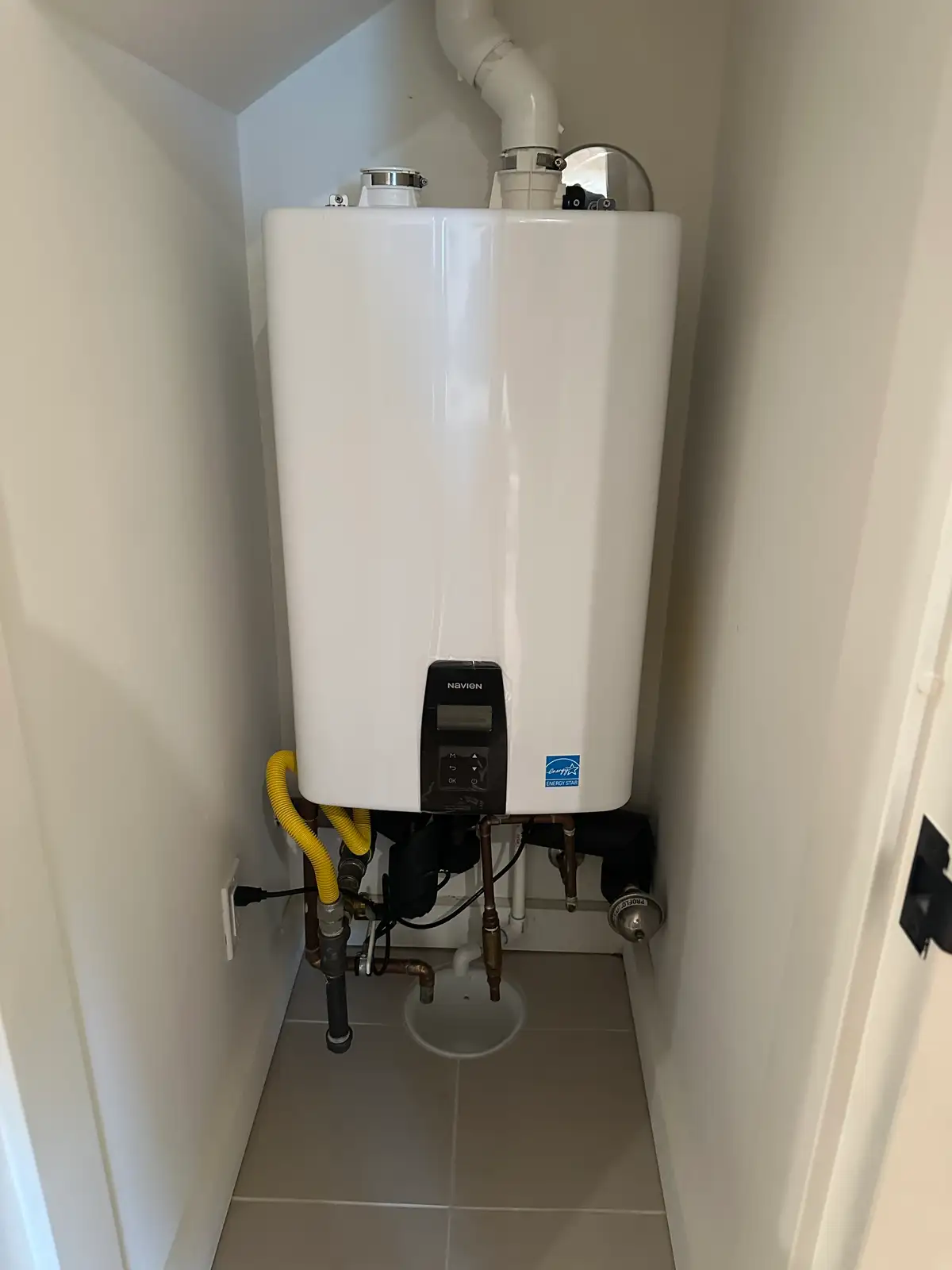
Tankless units avoid the sediment-at-the-bottom problem because there is no standing water to accumulate scale. What they do have is a heat exchanger — a coiled or finned metal component through which water flows under high heat. In hard-water conditions, that heat exchanger scales up on the inside over time, restricting flow and forcing the unit to run at higher temperatures to compensate.
Descaling a tankless unit requires circulating a diluted white vinegar or citric acid solution through the heat exchanger using a small pump kit. Most manufacturers call for this annually in hard-water regions. Skipping it voids warranties on most major brands and can lead to heat exchanger failure — a repair that often runs $400–$700 in parts alone.
If you are comparing tank versus tankless in a South Bay home, factor in this maintenance requirement. A [tankless water heater](/services/water-heaters) in Gardena or Carson — both cities with significant hard-water exposure — needs an annual descale. That is a real operating cost, not an optional step.
Flushing cadence for South Bay conditions
Standard manufacturer guidance says flush your tank water heater once a year. In South Bay water conditions, that cadence is the minimum, not the standard. For homes in high-hardness areas — Gardena's Moneta neighborhood, Carson Park, or the Post-War Tract streets in Hawthorne's Hollyglen — we recommend flushing every six months during the first few years of the tank's life to monitor how fast sediment is actually accumulating.
The flushing process itself is straightforward: connect a garden hose to the drain valve at the tank's base, run it to a floor drain or outside, open the valve, and let the tank drain until the water runs clear. On a tank that has gone years without flushing, the sediment may be partially solidified and will not fully drain. At that point, flushing helps but does not undo the damage already done.
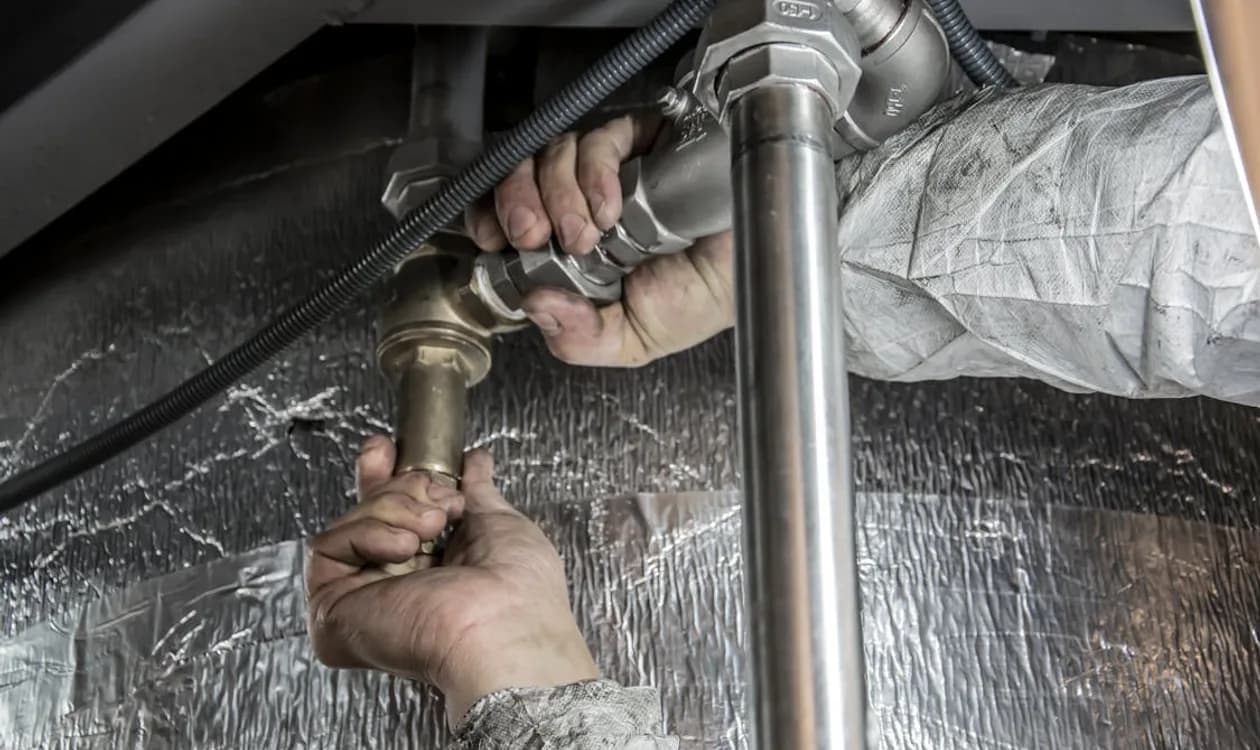
If your drain valve has never been opened and the tank is more than five years old, have a plumber open it the first time. Drain valves on older tanks frequently seize or drip after being operated for the first time in years, and replacing a failed drain valve on a full tank requires a controlled shutdown. It is a minor job but not one to improvise at 9 p.m.
Pairing a softener or filter with your water heater
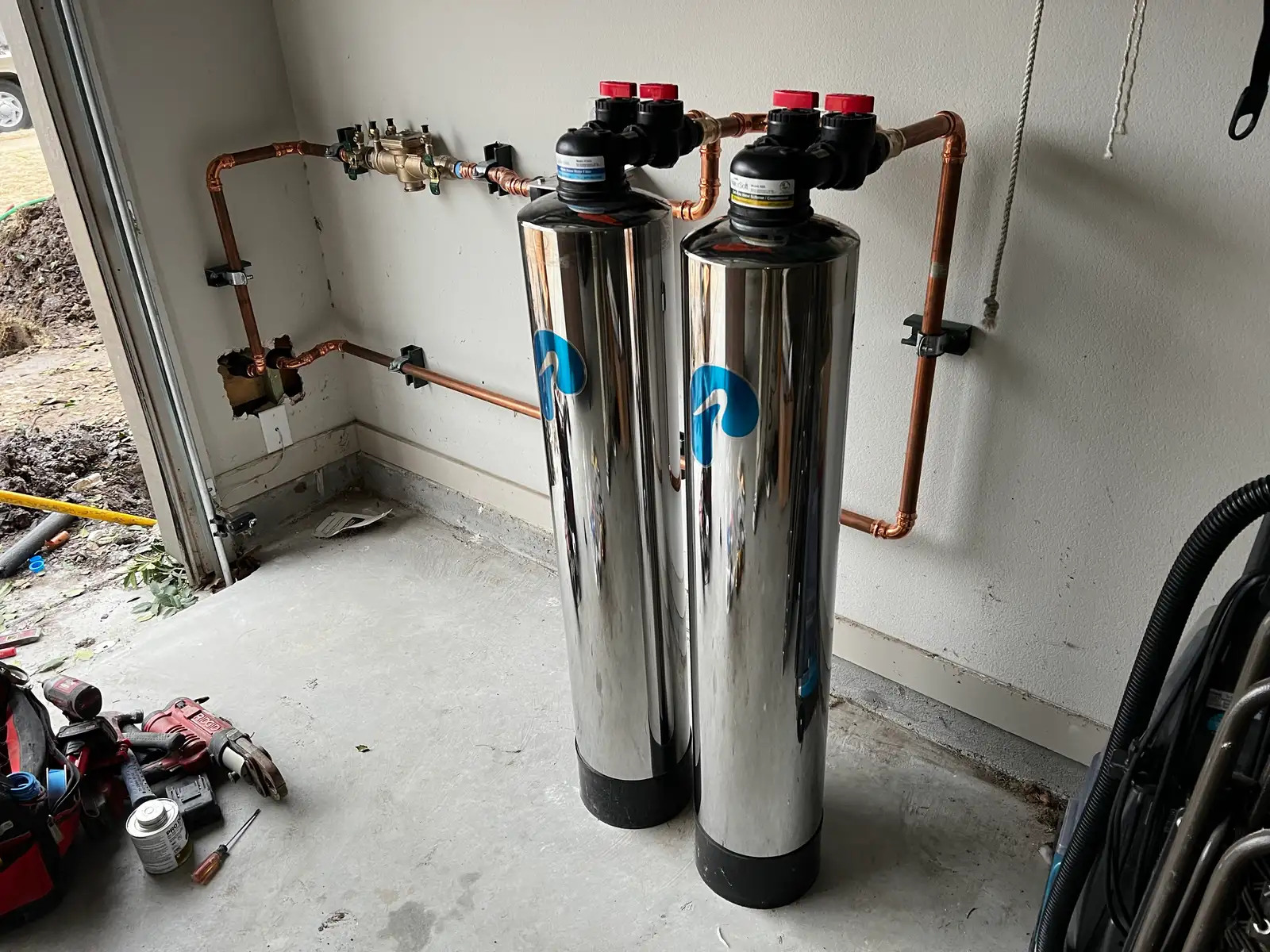
A water softener installed upstream of your water heater is the most direct intervention. Salt-based ion exchange softeners swap calcium and magnesium ions for sodium ions, eliminating the scale-forming minerals before they ever reach the tank. In Gardena and Hawthorne — where 1950s tract homes frequently have both original galvanized supply lines and hard incoming water — softeners extend both the supply pipe lifespan and the water heater lifespan simultaneously.
Salt-free conditioners (also called template-assisted crystallization or TAC systems) take a different approach: they do not remove hardness minerals but alter their crystal structure so they are less likely to adhere to surfaces. They require no salt, no backwash cycle, and no regeneration water. They are a reasonable fit for smaller households or properties where drain access for a softener discharge line is difficult. They are not as effective as ion exchange in very high hardness conditions above 400 ppm.
A [whole-home water filtration system](/services/water-filtration) can incorporate hardness treatment alongside sediment and chloramine reduction. For a homeowner in South Redondo or the Hill Section in Manhattan Beach who is already considering filtration for drinking water quality, combining that with a softening component makes sense both economically and in terms of minimizing the equipment footprint under the sink or in the garage.
One note on softened water and anode rods: softened water is slightly more aggressive toward the tank's sacrificial anode rod because sodium is more conductive than the calcium it replaced. If you add a softener, inspect your anode rod every two years rather than every three. It will likely need replacement on a shorter cycle.
South Bay hard water and water heater questions we hear most
How do I know if scale is already a problem in my current tank? The most direct way is a combination of symptoms and age. If your tank is more than six years old, has never been flushed, and you are on South Bay municipal water, assume meaningful scale accumulation. Audible rumbling during heating cycles and longer-than-normal recovery times after heavy use are the two most common indicators. A technician can also inspect the anode rod — if it is heavily depleted, scale accumulation is typically present as well.
Does hard water affect my water heater warranty? Yes, in some cases. Several manufacturers include language in their limited warranties excluding damage caused by scale buildup or failure to maintain the unit per installation instructions, which typically include annual flushing. Documenting your maintenance — even just a photo of the drain valve with a date — creates a record if you ever need to make a warranty claim.
Is Torrance water harder than the beach cities? Generally yes, though it varies by district. Torrance draws from multiple sources including MWD imports, and hardness can differ by neighborhood. If you are in Walteria or South Torrance and your [water heater in Torrance](/service-areas/torrance/water-heaters) has not been serviced in several years, a flush and anode inspection is overdue regardless of the precise ppm reading.
Can I just buy a cheaper tank and replace it more often instead of treating the water? The math rarely works. A mid-grade 50-gallon gas tank runs $900–$1,400 installed. Hard water knocking 4 years off a 12-year lifespan means you are replacing it roughly 33% more often. Over 20 years that is one full additional replacement. Water treatment equipment typically costs less than one replacement cycle and protects every other water-using appliance in the house simultaneously.
Do tankless units come with better scale resistance than tank units? Not inherently — they just fail in a different way. A tank accumulates sediment at the bottom. A tankless unit scales its heat exchanger. Both need maintenance. Tankless units do offer the advantage that descaling is a routine service rather than a terminal failure, but only if it is actually performed on schedule.
Is Mainline licensed for this type of work? Yes. We hold California C-36 plumbing license #901735, which covers water heater installation, replacement, and the associated filtration and water treatment work. You can verify that license number on the CSLB website at cslb.ca.gov.
What to do next
If your tank water heater is more than five years old and has not been flushed or had an anode rod inspection, schedule that service before sediment accumulation becomes a replacement conversation. If your water heater is already showing symptoms — rumbling, slow recovery, visible mineral deposits at the pressure relief valve — a camera look at the anode rod condition and a drain-valve flush will tell you whether you are looking at a maintenance interval or an early replacement.
For homeowners weighing a softener or filtration system alongside their next water heater decision, those two choices interact. The right treatment system depends on your current water hardness reading, household size, and whether you prefer salt-based or salt-free conditioning. We can walk through the options with you on-site.
Call the Mainline crew at (310) 808-7343 — 24/7 dispatch, no overtime fees, and a 25–45-minute target response for emergencies across all 16 South Bay cities we serve. For non-urgent service scheduling, the contact form on this site works just as well.
Tags