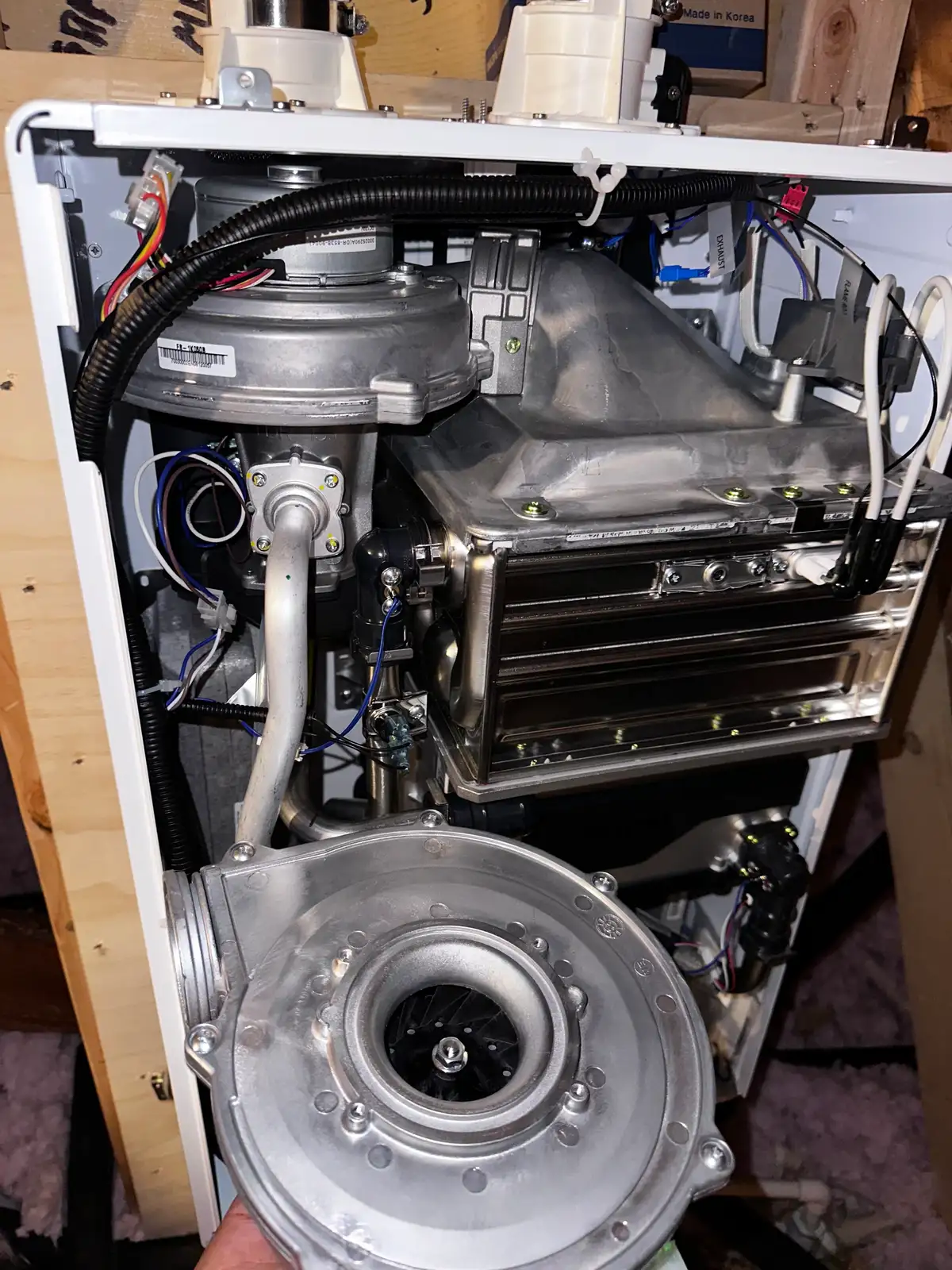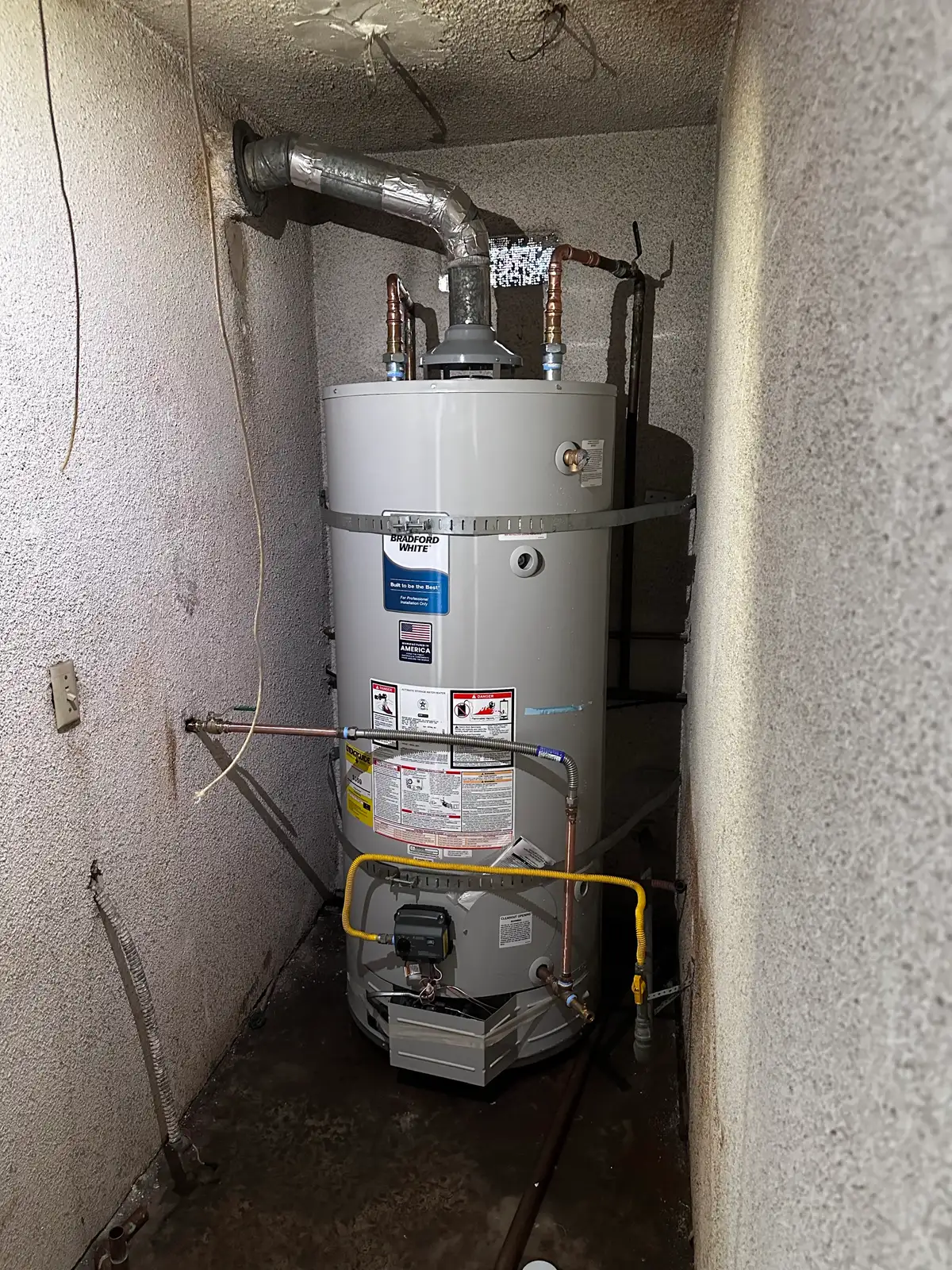
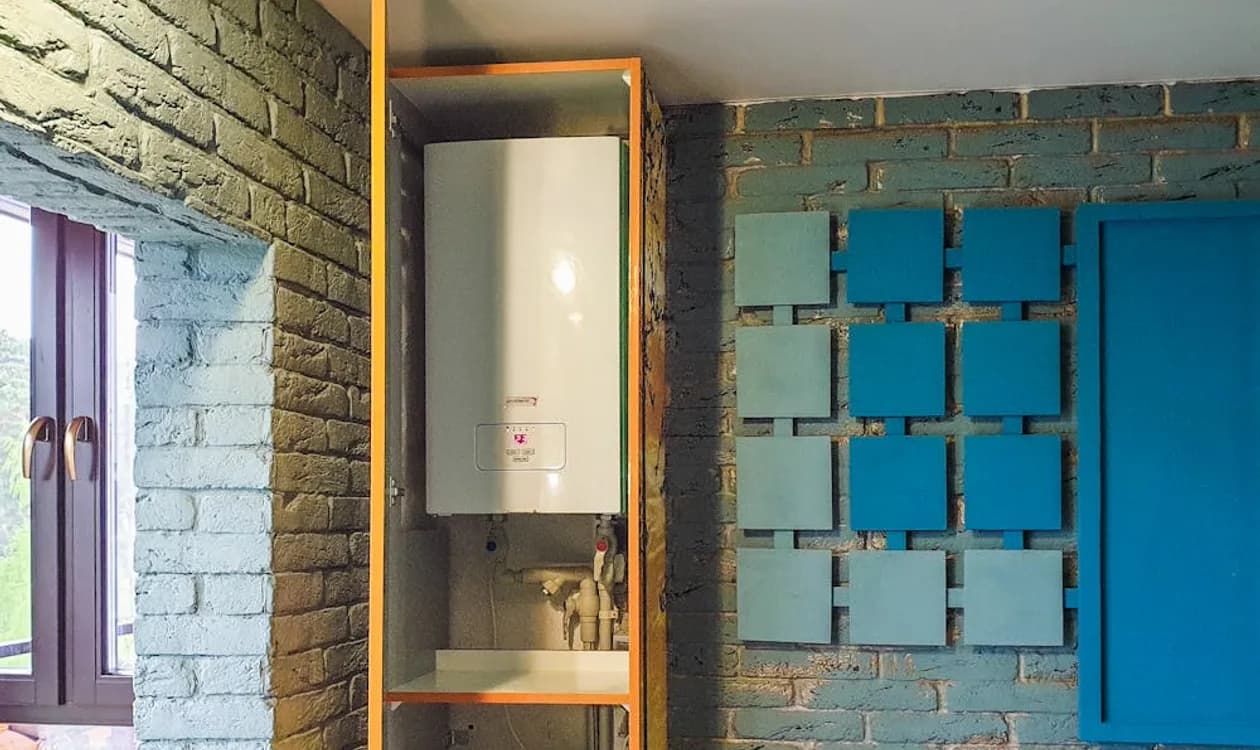
A tankless water heater can replace a 40- or 50-gallon tank in an El Segundo bungalow and free 10–14 square feet of floor space — but the retrofit involves more than swapping hardware. Gas line sizing, vent configuration, and combustion air requirements all have to be resolved before the new unit goes on the wall.
Old Town El Segundo and the Smoky Hollow adjacent residential blocks were built primarily between 1911 and 1940, when a 30- or 40-gallon tank in a dedicated closet or detached laundry room was the standard. Those utility spaces were sized for that era's equipment, not for the direct-vent or power-vent systems that modern tankless units require. Understanding those differences up front prevents mid-project surprises.
Why tankless makes sense in a small-lot El Segundo home
El Segundo residential lots in Old Town and the Eastside neighborhood typically run 5,000–6,000 square feet — modest by South Bay standards. Interior square footage follows suit. When a utility closet or garage corner holds a 50-gallon tank, that footprint often displaces laundry, storage, or a half-bath expansion that the homeowner has been planning for years.
A wall-mounted tankless unit occupies roughly the footprint of a large suitcase. The floor space it returns isn't trivial in a 900- or 1,100-square-foot bungalow. For homeowners doing partial renovations — opening a wall, adding a bathroom, reorganizing a rear utility room — the tankless conversion is often the first trade scheduled, not an afterthought.
Tankless units also eliminate standby heat loss, which is the energy a conventional tank burns keeping stored water hot around the clock. In a home with a single gas meter and high baseline usage, that reduction shows up on the bill. The efficiency gain is real, though its size depends on the home's actual hot water demand pattern.
The gas line is usually the first constraint
Standard Oil-era bungalows in El Segundo were built before dishwashers, gas dryers, and high-demand appliances were typical. The original gas supply infrastructure — meter size, service line diameter, interior branch sizing — was engineered for a range, a water heater, and sometimes a floor furnace. That load profile is meaningfully different from what a modern household runs.
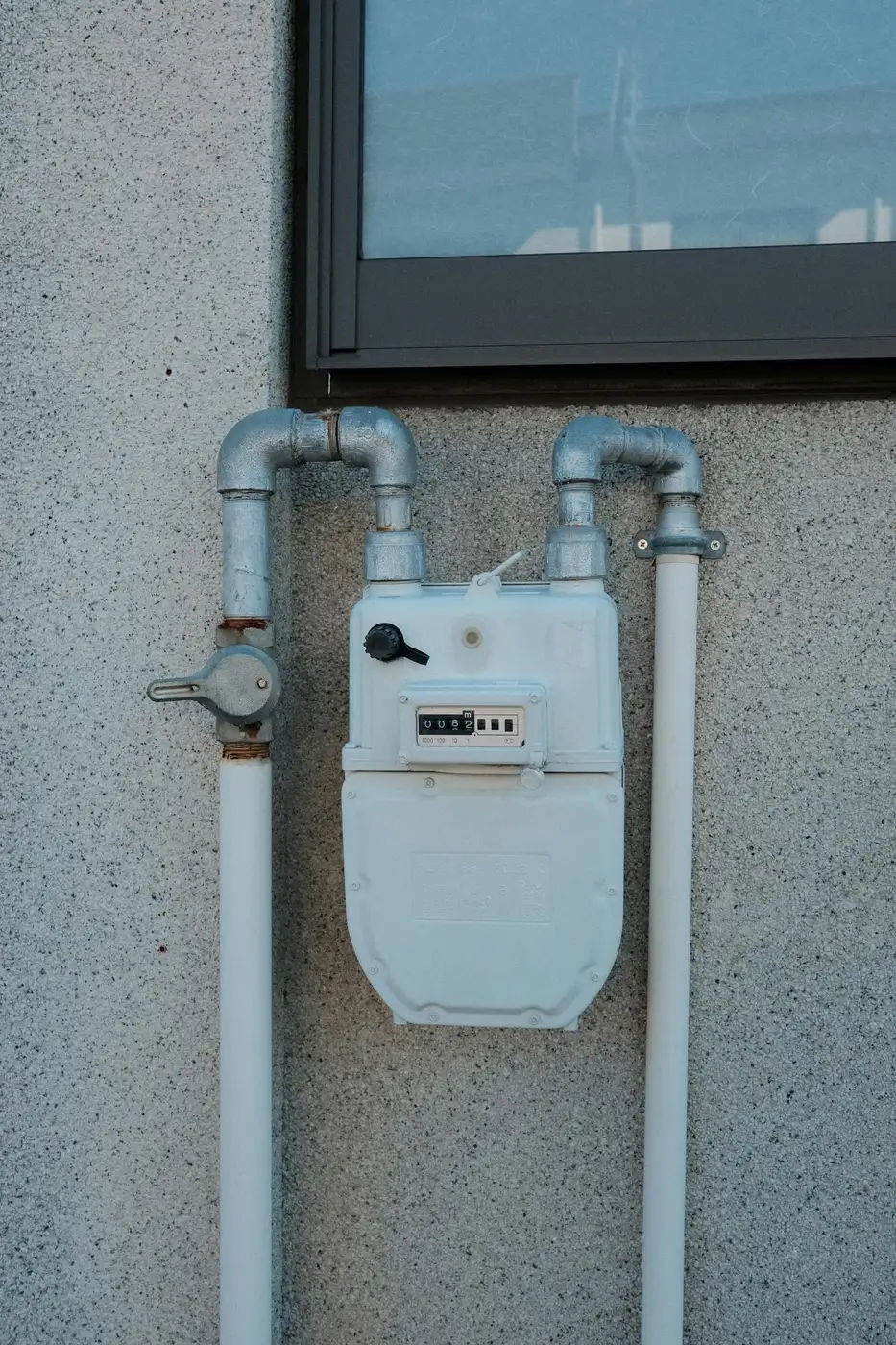
A standard tankless water heater draws 150,000–200,000 BTU at full demand. If the existing gas branch feeding the water heater is undersized for that load, the unit will short-cycle, throw error codes, and deliver inconsistent hot water. Before any unit is quoted, the gas supply at the appliance location has to be measured against the manufacturer's inlet pressure spec. If the branch needs upsizing — or if the meter itself is undersized — that work gets scoped and priced separately.
We handle [gas line repair and resizing](/services/gas-lines) as part of tankless retrofits when the existing supply can't support the new unit's demand. In Old Town bungalows, that's not an edge case — it's something we check on nearly every job.
Venting: the configuration that most homeowners don't anticipate
A tank water heater with a draft hood relies on natural convection to exhaust combustion gases up a B-vent flue. Many Old Town and Eastside El Segundo bungalows have existing B-vent runs that go straight up through a utility closet ceiling and exit at the roofline. A direct-vent tankless unit cannot use that flue — it requires concentric or two-pipe PVC or stainless venting, either through an exterior wall or through the roof with an appropriate termination kit.
Power-vent tankless units use a blower to push exhaust horizontally through an exterior wall, which is often the simpler retrofit in a single-story bungalow where the exterior wall is close. Direct-vent units pull combustion air from outside through a second pipe, which eliminates the combustion air requirement inside the utility space — an important consideration when the closet is small or interior air supply is restricted.
The choice between power-vent and direct-vent affects where the unit can physically mount, what penetrations need to be made, and how the new vent terminates relative to windows, eaves, and adjacent structures. In a bungalow with close neighbors and minimal setbacks, vent termination clearances matter. We scope this before committing to a unit type.
What combustion air rules mean for tight utility closets
California code requires that atmospherically vented appliances have sufficient combustion air supply — typically from two louvered openings or one high and one low opening in the closet door or wall. In a small bungalow utility space, especially one that's been tightened up with weatherstripping or drywall modifications, those requirements are often not met for existing equipment, let alone for a new unit.
Direct-vent tankless units sidestep this entirely because they pull combustion air from outside rather than from the room. That's one reason direct-vent configurations are frequently the right answer in retrofits where the utility space is enclosed, undersized, or adjacent to living area. The unit doesn't compete with interior air — it sources its own.
For homeowners in El Segundo's Smoky Hollow corridor or on the Eastside where bungalows have been tightened over decades of weatherization, this detail is worth understanding before assuming any tankless unit will fit in an existing closet without modification.
Cost and timeline for a typical El Segundo retrofit
A tankless water heater retrofit in an El Segundo Old Town bungalow typically runs $2,800–$4,500 installed, depending on unit size, gas line work required, and vent configuration. That range assumes a standard natural gas condensing unit, a new vent penetration through an exterior wall, and no major panel or meter work. If the gas service line requires upsizing or the meter needs upgrading, add $500–$1,200 depending on scope.
Most installs take one full day on-site. When gas line modifications are required, a second visit for inspection may be needed. Permit pull and inspection are part of the job — work performed under C-36 license #901735 requires permit documentation for gas appliance installations in Los Angeles County, and we handle that process.
For El Segundo homeowners weighing this decision, the [El Segundo water heater service page](/service-areas/el-segundo/water-heaters) covers both tankless and standard replacement options with local context, including response times and what to expect during a site assessment.
El Segundo tankless water heater questions we hear most
**Can the existing vent flue in my Old Town bungalow be reused for the new tankless unit?** In most cases, no. Standard B-vent flues are not compatible with direct-vent or power-vent tankless systems. A new vent penetration — typically through an exterior wall — is part of the installation. We assess the existing flue condition and route options during the initial site visit.
**My gas bill is already high. Will tankless actually save money?** Tankless eliminates standby heat loss, which is measurable but varies. Homes where hot water runs frequently throughout the day see stronger efficiency gains than homes with concentrated morning-only usage. The honest answer is: it depends on your usage pattern. We don't quote efficiency savings as a fixed number because they aren't fixed.
**How do I know if my gas meter is large enough?** Meter capacity is listed on the meter face as a CFH (cubic feet per hour) rating. A licensed plumber can check the total BTU load of all connected appliances against that rating. If the combined load approaches or exceeds the meter's rated capacity, the gas utility may need to upsize the meter before the new unit is installed.
**Is El Segundo subject to any local environmental review for this kind of work?** El Segundo has contamination history near the eastern industrial corridor. For standard interior utility work — swapping a water heater, rerouting a vent — environmental review typically doesn't apply. Deep excavation near the industrial eastern edge is a different situation. If your job involves any below-grade work near that corridor, ask about it before digging.
**How do I verify your license?** Licensed C-36 plumbing contractor #901735. You can verify this directly at the California State License Board at cslb.ca.gov — search by license number.
**How fast can you reach Old Town or the Eastside in El Segundo?** We target a 35-minute response for emergency calls in El Segundo, dispatched 24/7 with no overtime fees for nights or weekends. Scheduled water heater installs are typically booked within a few business days.
What to do next
If you're planning a tankless conversion in an El Segundo bungalow, the gas line and vent route are the two variables that most affect cost and feasibility. Both require a look at the actual space — not a phone estimate. A site visit takes 30–45 minutes and gives you a firm scope and number before any commitment.
Call the Mainline crew at (310) 808-7343 to schedule an assessment. We serve El Segundo 24/7 for emergencies and offer scheduled appointments for planned upgrades. No overtime fees, and no pressure to decide on-site.
Tags