A dedicated gas line to a fire pit or built-in BBQ is one of the most practical backyard upgrades you can make — no propane tanks to swap, consistent BTU output, and a cleaner installation overall. But it's also a project that gets underestimated constantly. Homeowners assume it's a short trench and a couple of fittings. In practice, it involves a load calculation against your existing gas system, a permit from your city's building department, a pressure test, and a final inspection before the line can be used.
This post walks through every phase of the process in the order it actually happens: from sizing the line at the meter to the day the inspector signs off. It also covers what it costs and why California law prohibits unlicensed gas work — not as a formality, but as a practical explanation of what goes wrong when that rule gets ignored.
Start at the meter: the load calculation
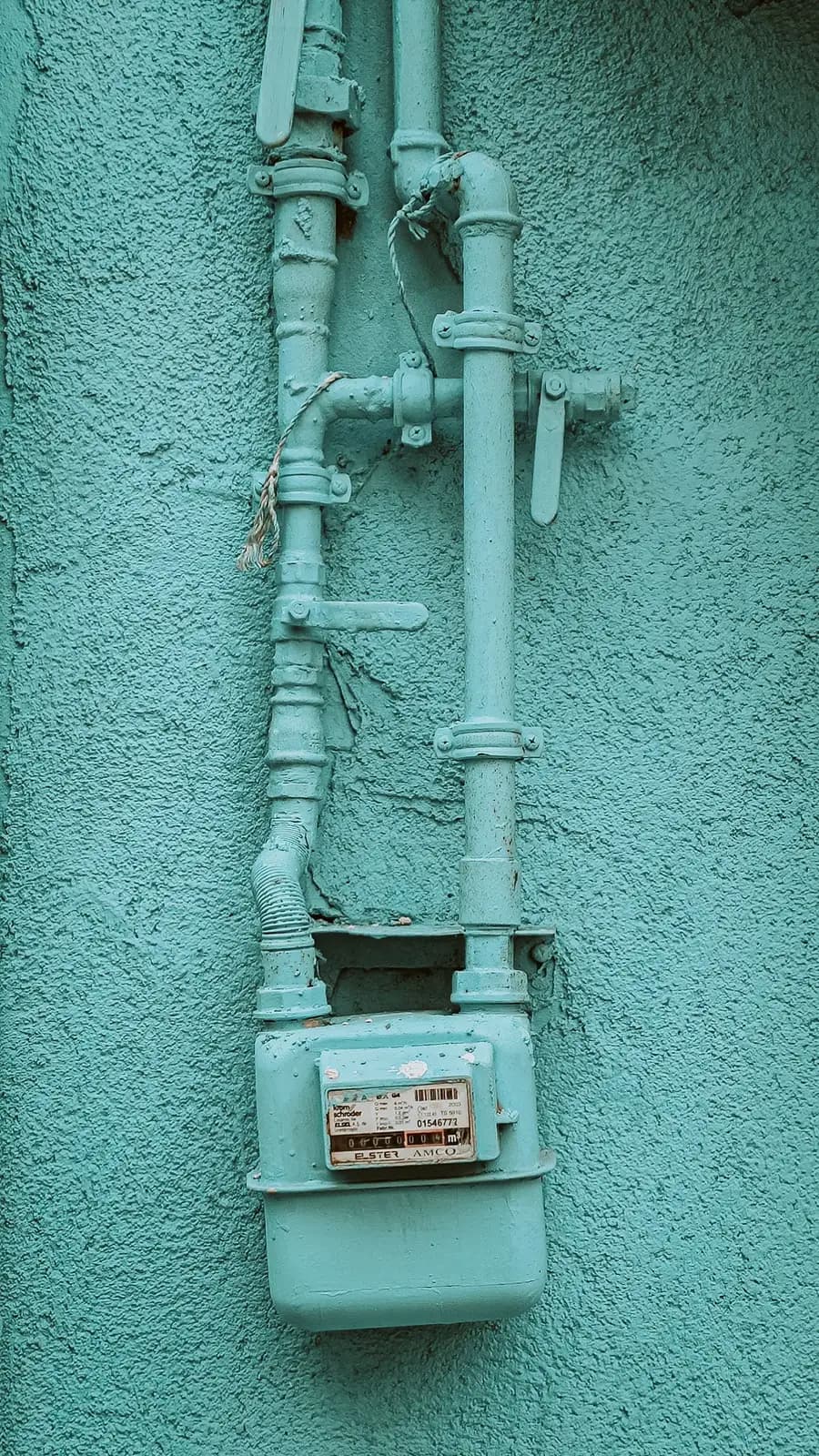
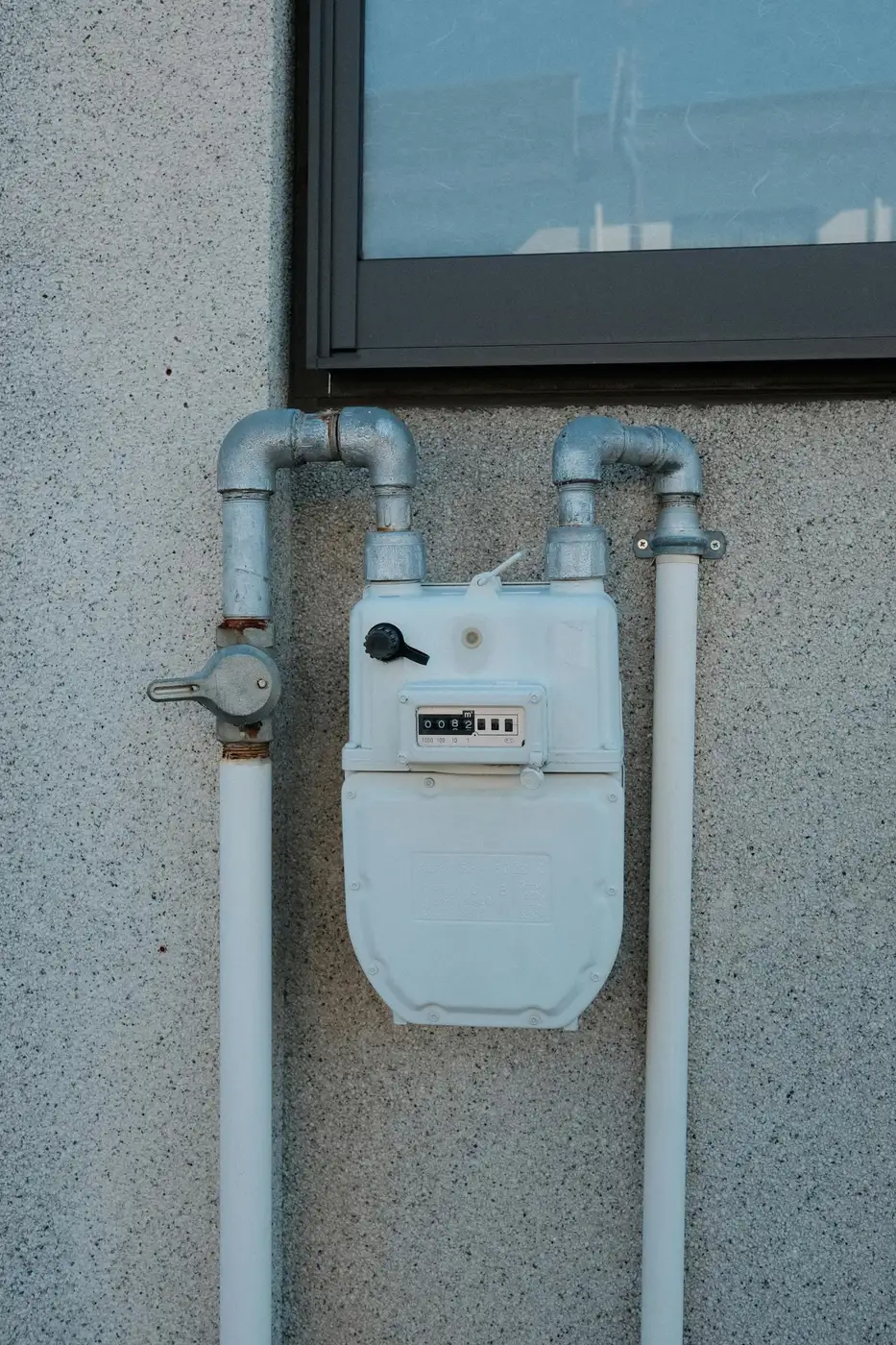
Before anyone pulls a permit or starts a trench, the first question is whether your existing gas system can handle the new appliance. A standard residential gas meter in the South Bay is typically rated at 250 or 400 cubic feet per hour (CFH). Your existing appliances — furnace, water heater, dryer, range — are already drawing against that capacity.
A fire pit ring can pull anywhere from 60,000 to 200,000 BTU/hr depending on size. A built-in BBQ burner is usually 30,000 to 60,000 BTU/hr per burner. Convert those to CFH (divide BTU/hr by 1,020 for natural gas), add them to your existing connected load, and compare against meter capacity and the sizing of every pipe segment from the meter to the new appliance.
If the existing supply line from the meter is undersized — common in older Gardena and Hawthorne homes where the original 1/2-inch or 3/4-inch iron was only sized for the original appliance set — the load calculation will catch it before you've spent money on anything else. Undersized supply means pressure drop at the burner, which causes incomplete combustion and pilot outage problems.
Pipe sizing and material selection
The branch line running to your outdoor appliance is sized from the load calculation using the AGA pipe sizing tables in the California Plumbing Code. The variables are: total BTU demand, pipe material, and the length of the run from the supply point to the appliance. A longer run requires a larger diameter pipe to hold pressure at the appliance end.
For underground outdoor runs, corrugated stainless steel tubing (CSST) or Schedule 40 black iron pipe are the two standard options. CSST is flexible, which makes directional changes easier in tight spaces — relevant in Sand Section lots in Manhattan Beach or on narrow side yards in Hermosa Beach's Hill Section where a rigid pipe run would require multiple fittings. Black iron is more rigid but well-suited for straight runs in open backyards.
CSST bonding is a code requirement in California. Every CSST installation must include an equipotential bond connecting the tubing to the home's grounding electrode system. This is not optional and is routinely flagged during inspections when unlicensed work gets discovered.
Permits: who requires them and what the process looks like
Every city in the South Bay requires a permit for new gas line work. This includes Torrance, Redondo Beach, Carson, El Segundo, and every other city we serve. The permit is pulled by the licensed contractor — a C-36 plumbing license or C-34 pipeline contractor license is required in California to perform gas line work. Homeowners cannot legally pull a permit for gas work on their own property under the owner-builder exemption the way they can for some other trades.
The permit process typically takes 5 to 15 business days for over-the-counter or online approval in most South Bay cities. Some cities, including Long Beach, route permits through a digital portal that can move faster. The permit fee itself is usually $150 to $400 depending on jurisdiction and project valuation. It's a line item in any honest estimate.
Once the permit is issued, the work can be scheduled. The line must be left exposed — not backfilled — until the inspector performs a pressure test observation and signs off. Burying a line before inspection is a code violation and creates a situation where the line has to be excavated again if there's a question about the installation.
Trenching, sleeving, and tracer wire
California code requires a minimum 12-inch burial depth for gas lines in residential applications, and 18 inches in areas subject to physical damage or vehicle traffic. In practice, most crews dig to 18–24 inches to provide margin and protect against future yard work. Before any trench opens, an 811 call (California's DigAlert) is required by law — utility locates must be completed before excavation.
Where the gas line passes under a concrete slab, driveway, or patio, it must be sleeved in a conduit — typically a Schedule 80 PVC sleeve — so the gas line can be withdrawn and replaced without demolishing the hardscape. This is a detail that gets skipped on shoddy installations and causes expensive problems later. The sleeve needs to be sealed at both ends to prevent soil gas infiltration.
Tracer wire is required alongside plastic or CSST gas lines so the line can be located non-destructively in the future. A metallic detection wire runs the length of the trench alongside the pipe. This matters a lot in older neighborhoods like Old Torrance or Walteria where there's already a tangle of utilities at various depths from decades of piecemeal work.
Pressure testing and final inspection
Before backfill and before the inspector arrives, the new gas line segment is pressure tested. The standard test for residential gas lines is 1.5 times the operating pressure, held for a minimum of 15 minutes with no observed drop. We use a calibrated gauge — not a visual check, not a soap test at this stage. If the line holds, it's documented. If it drops, the leak gets located and corrected before anything moves forward.
The city inspector verifies the installation against the permit drawings, checks burial depth if the trench is still open, confirms the CSST bond connection, and witnesses or reviews the pressure test documentation. In Torrance and Carson, inspectors are generally familiar with residential gas extensions and the inspection process moves efficiently when the permit packet is complete. Incomplete documentation — missing bond continuity, no tracer wire, wrong pipe depth — results in a correction notice and a re-inspection fee.
After final inspection sign-off, the trench is backfilled and compacted, the appliance connection is made, and the line is commissioned with the gas utility. This is also when the gas company's meter set is verified to confirm adequate supply pressure at the meter.
Why DIY gas line work is illegal — and what actually goes wrong
California Business and Professions Code Section 7028 prohibits unlicensed persons from performing gas line work for which a permit is required. This isn't a technicality — it's backed by enforcement. Unpermitted gas work discovered during a home sale can stall or kill escrow, and the seller is typically required to disclose it. Across the South Bay, buyers' agents increasingly pull permit history on all utility work rather than taking a seller's description of past improvements at face value.
The failure modes on DIY gas installations are predictable: wrong pipe material underground, missing CSST bond, insufficient burial depth, no tracer wire, no pressure test. None of these cause an immediate explosion — they create conditions for slower, harder-to-detect problems. A gas leak at 6 inches of burial depth, underneath a patio, with no tracer wire to locate it, is a genuinely dangerous situation that costs far more to remediate than the original installation would have cost if done correctly.
Our [gas line installation and repair service](/services/gas-lines) covers new outdoor appliance connections across all 16 South Bay cities. If you're in Torrance or the Hollywood Riviera and want to understand what's involved for your specific yard layout, the [Torrance gas line service page](/services/gas-lines) has city-specific information including permit processing notes.
What a professional installation actually costs
A straightforward outdoor gas line run — 20 to 40 linear feet of CSST, one permit, standard soil conditions, no hardscape crossings — typically runs $1,200 to $2,200 installed in the South Bay. That range includes the permit fee, materials, trench, pressure test, and inspection coordination.
Add a concrete driveway crossing with a sleeve and the number moves up $300 to $600 depending on the slab thickness and whether saw-cutting or boring is used. If the existing meter supply line is undersized and needs to be upsized — a common finding in 1950s–1960s homes in Gardena, Lawndale, or Hawthorne — that scope expands significantly and should be quoted separately after the load calculation is complete.
Jobs on difficult terrain cost more. Rolling Hills Estates properties with steep grades and sewer drops exceeding 50 vertical feet present similar access challenges for gas trench work — more excavation time, more compaction work on backfill. The estimate accounts for those conditions; a flat number given over the phone without a site visit is not a reliable budget for those properties.
What to do next
If you're planning a fire pit, built-in BBQ, or any outdoor gas appliance in the South Bay, the right first step is a site visit to assess your existing gas load and lay out the most practical route for the new branch. We bring the load calculation, not a guess.
Mainline No-Dig Trenchless Plumbing is licensed C-36 #901735, based in Lomita, and has been doing gas line work across 16 South Bay cities for 18+ years. We pull permits, coordinate inspections, and don't leave until the line is signed off. No overtime fees on evening or weekend scheduling.
Call (310) 808-7343 to schedule a site assessment or to get a scoped estimate. We dispatch 24/7 for emergencies and keep the same rate regardless of when you call.
Tags
Related Services