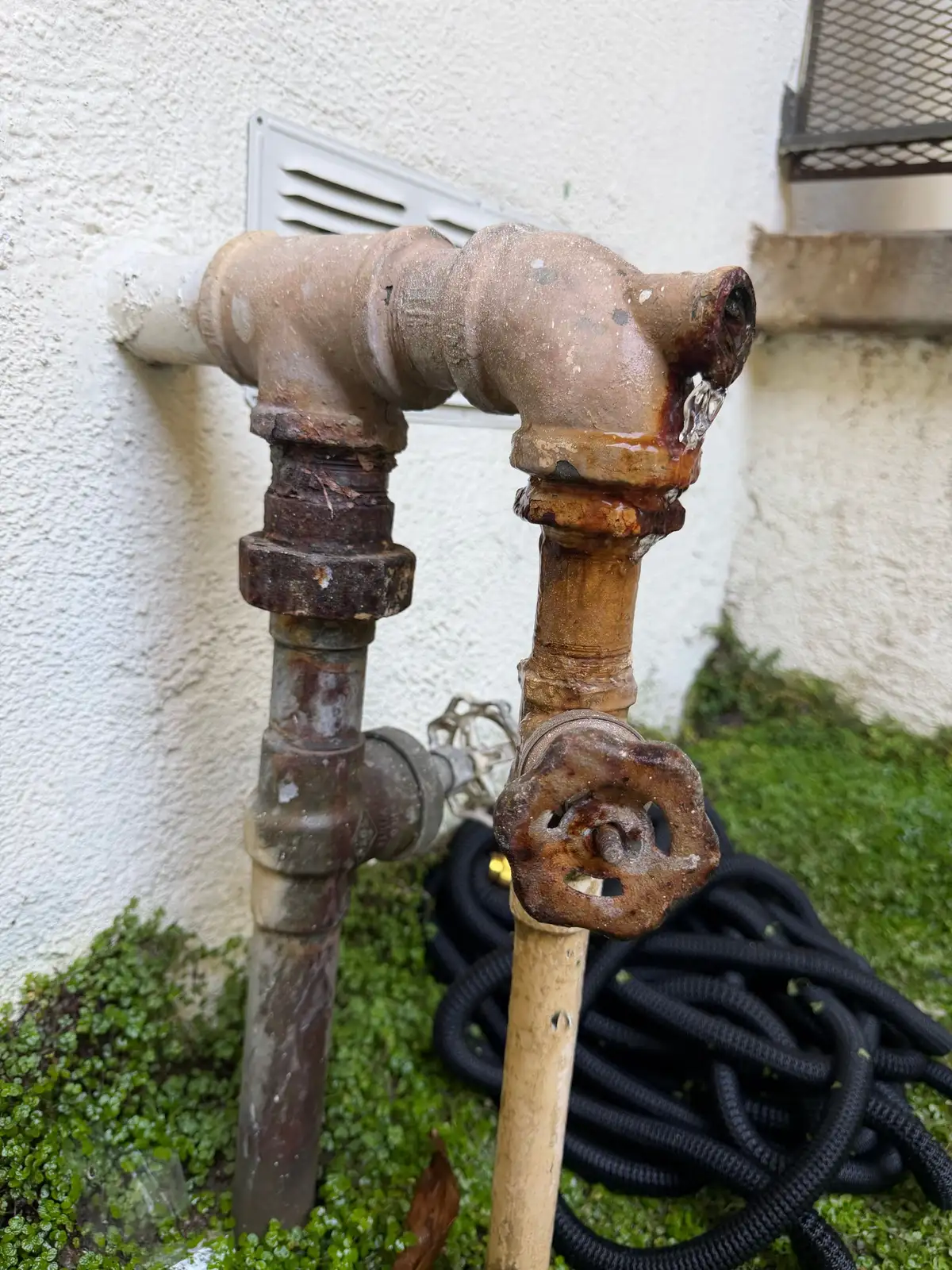
Galvanized steel supply pipe has a service life of 40–50 years. That's not a pessimistic estimate — it's a material reality based on how zinc coating degrades inside a pipe carrying municipal water. When the zinc is gone, the steel corrodes from the inside out, building rust scale that narrows the bore and eventually fractures the pipe wall entirely. In the South Bay, where much of the housing stock was built between 1948 and 1970, that math has already played out for a lot of homes.
The frustrating part is that galvanized pipe doesn't fail all at once. It delivers a slow sequence of symptoms that most homeowners attribute to other causes — a weak showerhead, occasional rust color, a recurring slow drain — until the repair bills start stacking up or a pipe bursts behind a wall. Recognizing the pattern early gives you the choice of planning a repipe on your schedule rather than reacting to one on the pipe's schedule.
What follows are five specific, observable signs that galvanized supply pipe is at or past end-of-life. Each one has a mechanical explanation, not just a description. If you're seeing more than two of these in combination, the pipe isn't recovering — it's deteriorating at a rate that accelerates as more scale accumulates.
Sign 1: Rust-colored water on the first draw
If you open a cold tap after the house has sat idle overnight and the first few seconds run orange, brown, or slightly red before clearing up, that discoloration is iron oxide — rust — that has flaked off the interior pipe wall while water sat still. The key word is 'clearing up.' Water that clears within 5–10 seconds is still a failure indicator, not a reassurance.
The mechanism is straightforward: corroding galvanized pipe develops pitting along the interior bore. Rust particles accumulate in those pits during low-flow or no-flow periods. When flow resumes, the turbulence dislodges them. As the corrosion advances, the particles get larger and the clearing time gets longer. Eventually the discoloration doesn't clear at all.
This symptom is particularly common in Gardena and Lawndale, where a dense concentration of 1950s and 1960s tract homes means a lot of galvanized pipe is in the same corrosion window simultaneously. If your neighbor just replaced their supply lines, your pipe is almost certainly the same vintage.
Sign 2: Pressure drops at the farthest fixture
Rust scale doesn't just discolor water — it physically reduces the interior diameter of the pipe. A ¾-inch galvanized main that started life with a 0.824-inch bore can lose 30–50% of that opening to scale buildup over 50 years. That restriction translates directly into pressure loss, and the loss is worst at the fixture farthest from the meter because the water has traveled through the most scaled pipe to get there.
The diagnostic test is simple: compare pressure at a hose bib near the meter versus the showerhead at the far end of the house. If the difference is significant — more than a few PSI — and your pressure regulator is functioning normally, scale restriction inside the supply lines is the most likely cause. A plumber can confirm with a gauge test at multiple points.
In larger homes on the Palos Verdes Peninsula or in the estate sections of Rolling Hills Estates, where supply runs can exceed 100 feet from the meter to the master bath, this symptom shows up years before it would in a smaller house. The longer the run, the more scale surface area the water has to fight through.
Sign 3: Persistent aerator and fixture clogs
Faucet aerators are fine-mesh screens. They catch what's in your water. If you're unscrewing aerators every few months to knock out orange-brown grit, the source is almost never the municipal supply — it's your own pipe. The same grit that clogs aerators also clogs washing machine inlet screens, ice maker filters, and angle stops under sinks.
The failure mode accelerates once you start clearing aerators, because disturbing the deposits inside the faucet body causes more scale to break loose upstream. Homeowners often describe this as the problem 'spreading' to more fixtures over time. It's not spreading — the mechanical disturbance from clearing one fixture is sending debris toward the next one.
Replacing individual aerators or even fixtures doesn't address the source. As long as the galvanized supply lines are in place, the pipe interior continues to shed material. A [whole-house repipe](/services/repipes) is the only repair that eliminates the source rather than temporarily clearing the symptom.
Sign 4: Recurring slab leaks in the same area
A slab leak at a galvanized supply line is rarely an isolated event. The corrosion that caused one pin-hole failure is active throughout the entire pipe run — you can repair the leaking section and face another failure 18 months later, a few feet away. This is one of the most expensive patterns we see, because each localized repair ($1,800–$3,500) buys only a temporary fix on a pipe system that is failing as a whole.
In Old Torrance and the older Walteria blocks, where homes date to the 1920s–1940s, we find galvanized supply under slabs that has corroded so thoroughly the pipe wall is less than half its original thickness. At that point, the question is not whether more leaks will occur — it's which section fails next. The math on patch-repair-versus-repipe stops being close once you've had two slab leaks from the same supply system.
If you've already paid for slab leak detection and repair once and are now seeing evidence of another leak — warm spots on the floor, unexplained jumps in your water bill, the faint sound of running water when everything is off — the right diagnostic step is a full supply-line evaluation, not another localized repair quote. You can read more about how we approach [repipes in Torrance](/services/repipes) for homes in exactly this situation.
Sign 5: Low cold pressure with full hot pressure
This asymmetry is one of the most diagnostic signals a galvanized system produces, and it's one homeowners frequently miss because they test hot and cold separately rather than simultaneously. Here's the mechanism: in most South Bay homes built before 1975, the hot supply runs through copper (installed at or after original construction when a water heater was added), while the cold supply remained original galvanized. Copper doesn't scale the way galvanized does.
The result is that a house can have full, strong hot water pressure at every fixture while the cold supply runs at a noticeably weaker flow. If you turn on your kitchen faucet full cold versus full hot and the difference is obvious, that's not a fixture problem — it's a material difference between your cold galvanized and your hot copper runs.
This symptom also appears in a second scenario: homes where both supplies are galvanized but the hot side was replaced with copper during a water heater replacement 15–20 years ago, leaving the original cold lines in place. In Hawthorne's Hollyglen and Holly Park neighborhoods, where 1950s–1960s aerospace-era tract homes are common, this split-material scenario shows up regularly. A [camera inspection](/services/trenchless/camera-inspection) of the supply system can map exactly which sections are galvanized and how heavily they're scaled before a repipe scope is finalized.
What the 40–50 year figure actually means
The 40–50 year service life for galvanized pipe isn't a warranty — it's an average based on water chemistry, pipe wall thickness, and flow velocity. Municipal water in the South Bay runs moderately hard (roughly 9–12 grains per gallon depending on the blend from the Metropolitan Water District), which accelerates zinc depletion. A pipe installed in 1965 that has been carrying this water continuously is operating on borrowed time in 2025.
Some galvanized systems make it to 55 or 60 years. Others fail at 35. The variables are pipe gauge, original installation quality, and whether the house had any water softening that inadvertently stripped zinc faster. But these are reasons a specific pipe might deviate from the average — not reasons to assume your 1963 house is fine. The baseline expectation for a 60-year-old galvanized system is that it is at or past end-of-life.
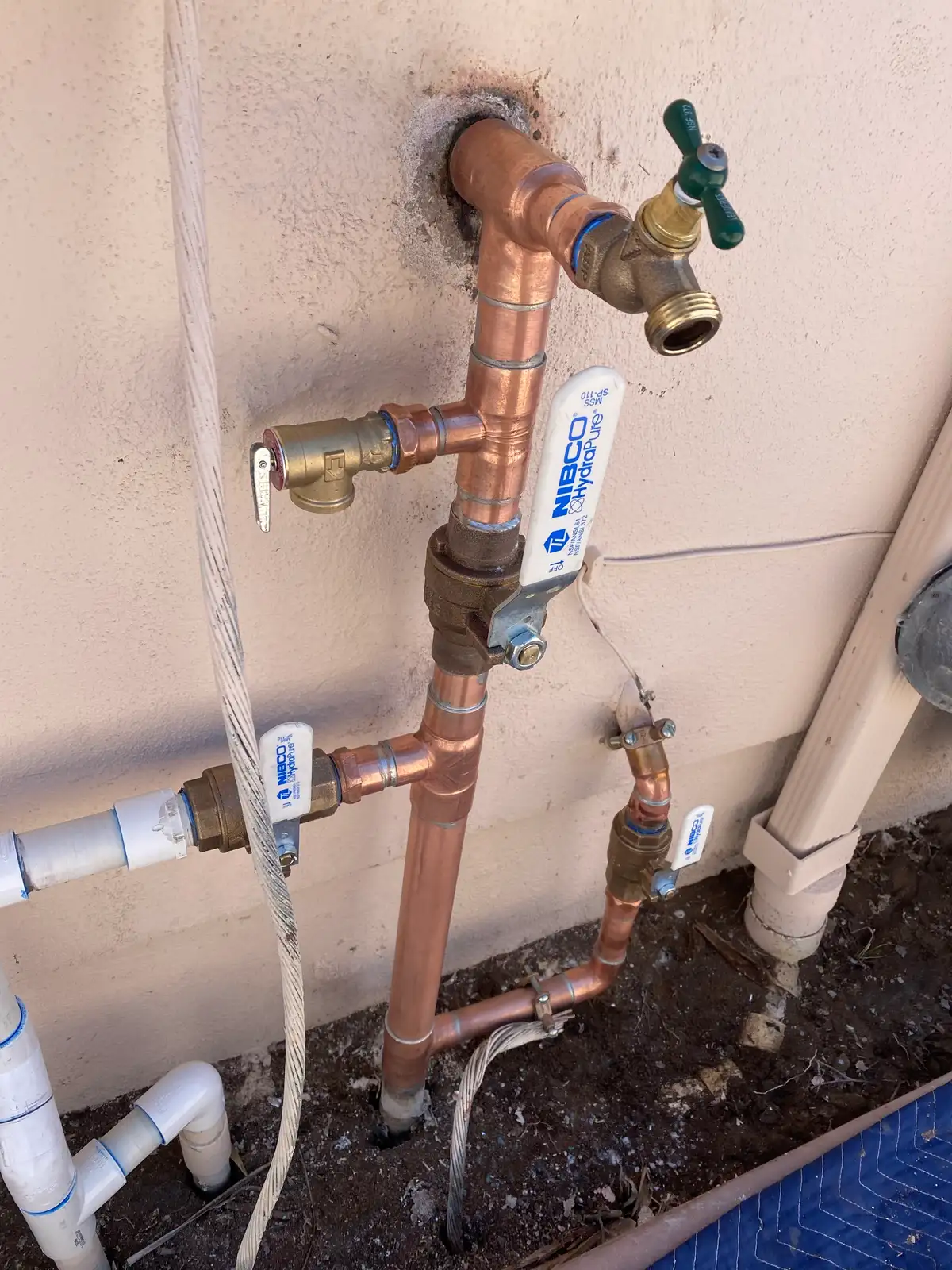
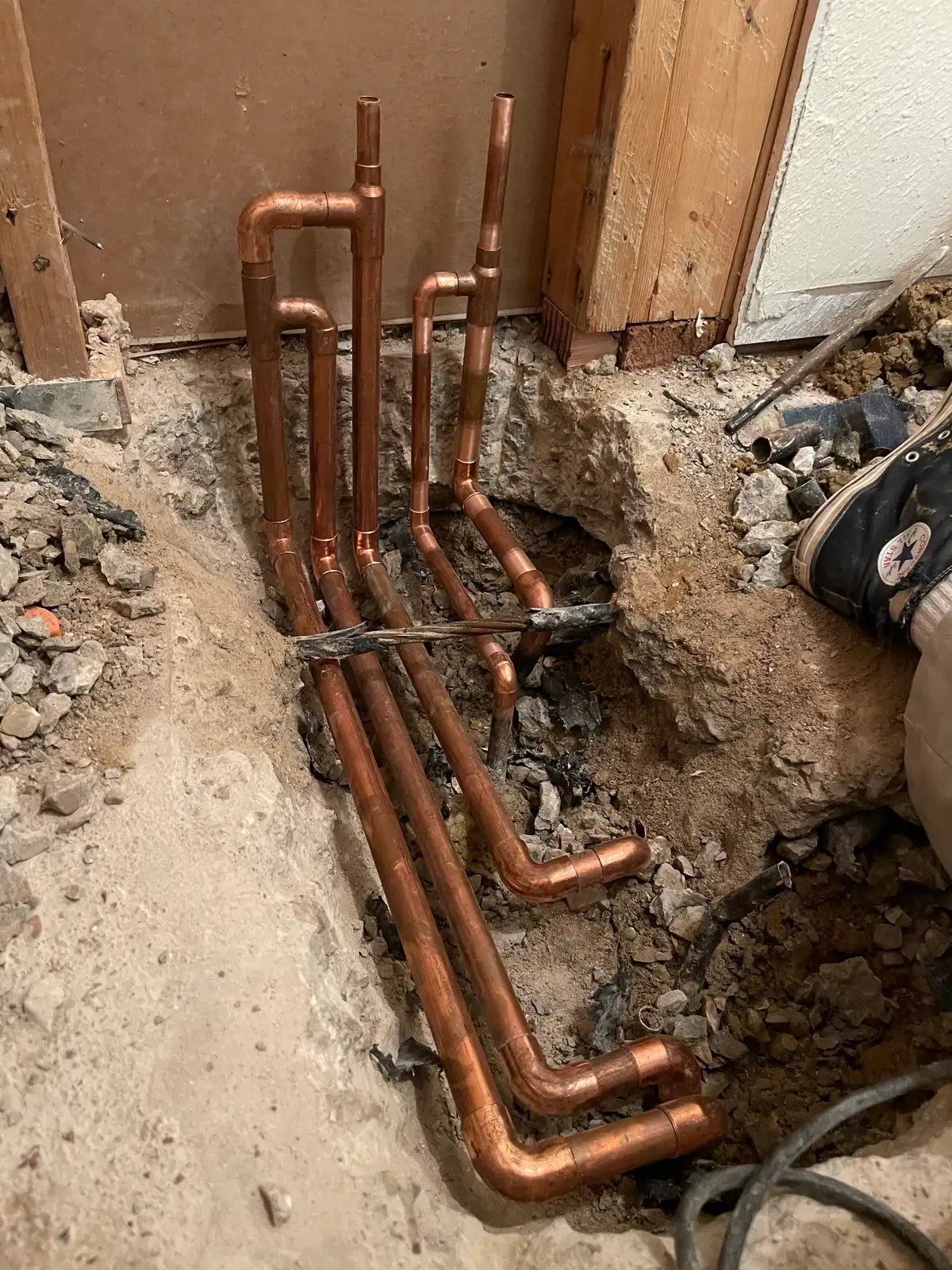
A repipe with copper or PEX-A typically runs $7,000–$13,000 for a single-family home in the South Bay, depending on square footage, the number of fixtures, and access conditions. That number is fixed and the problem is solved. The alternative — sequential localized repairs on a failing system — can exceed that figure over 5–7 years without resolving the underlying condition.
What to do next
If you're seeing two or more of these signs, the next step is a supply-line evaluation, not a repair quote on the most recent symptom. Our crew can assess pipe condition, map the distribution of galvanized versus copper throughout the house, and give you a repipe scope with real numbers — not a range that triples between the estimate and the invoice.
Mainline No-Dig Trenchless Plumbing is a licensed C-36 contractor (#901735) based in Lomita, serving 16 South Bay cities. We carry no overtime fees for after-hours calls, and dispatch is 24/7 with a 60-minute target response for emergencies. For a supply-line evaluation or to discuss whether a repipe makes sense for your house, call us at (310) 808-7343 or use the contact form on the site.
Tags
Related Services