Copper pipe fails earlier near the Redondo Beach coast because salt-laden air and persistent moisture accelerate localized pitting at exposed runs, slab penetrations, valves, and fittings. A pressure assessment can separate one repairable pinhole from system-wide corrosion, helping homeowners choose targeted replacement or a full repipe before the next leak damages finishes.
The cause is not the pipe. It's the air. Coastal marine layer deposits chloride ions and moisture on every exterior and semi-exposed surface 365 days a year. Those ions don't just attack paint and fasteners — they attack the copper tubing feeding your fixtures, the brass valves on your shut-offs, and the steel fittings connecting them. The chemistry is straightforward, but most homeowners don't realize it applies to what's inside the walls until a pinhole leak announces itself through the ceiling drywall.
Understanding the mechanism helps you make better repair decisions. A single pinhole patch buys maybe two years before the next one appears. A targeted replacement strategy — focused on the sections most exposed to corrosion — buys a decade. The difference between those two paths is knowing which pipe runs are actually failing and why.
The chemistry behind coastal copper failure
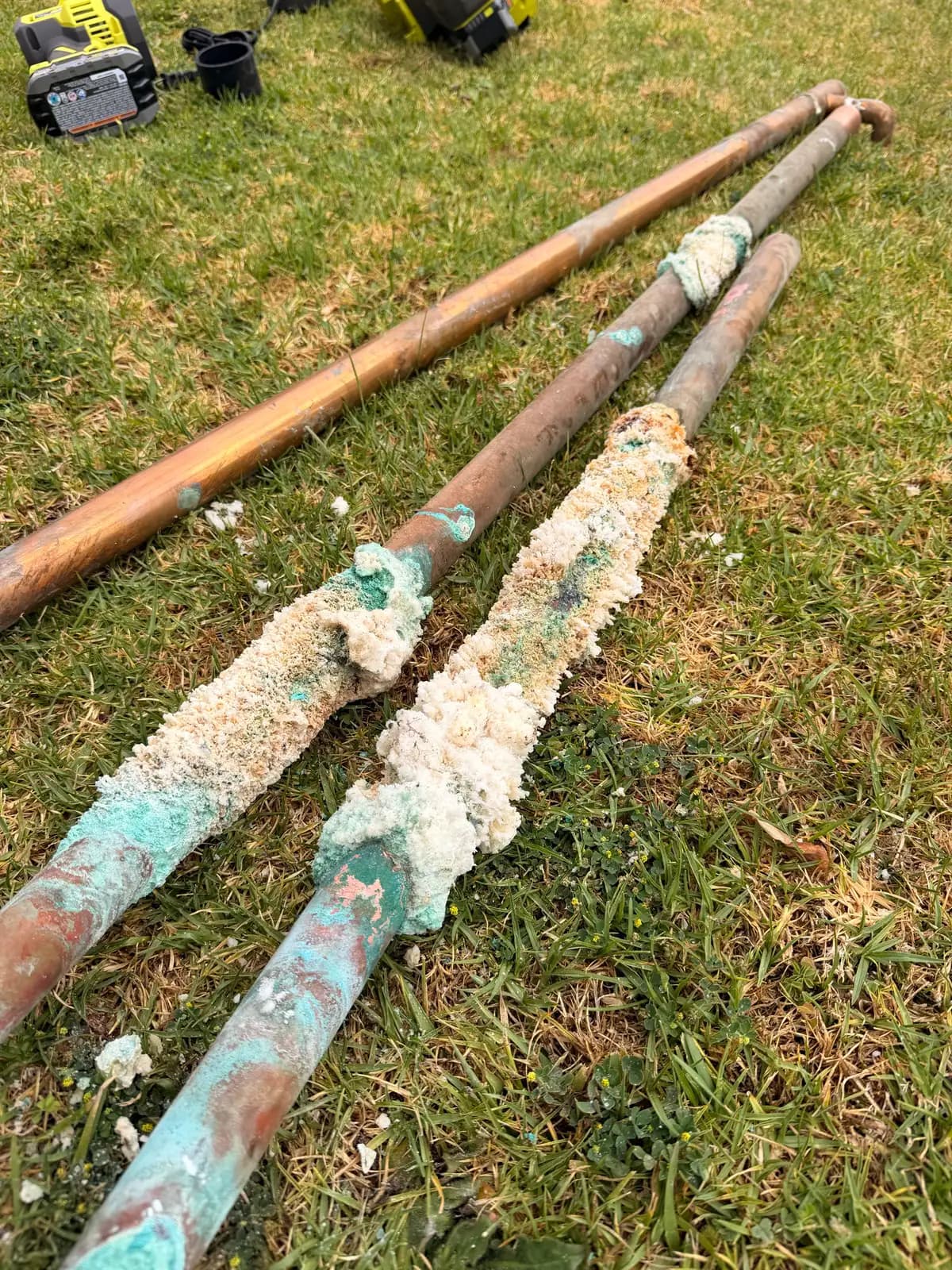
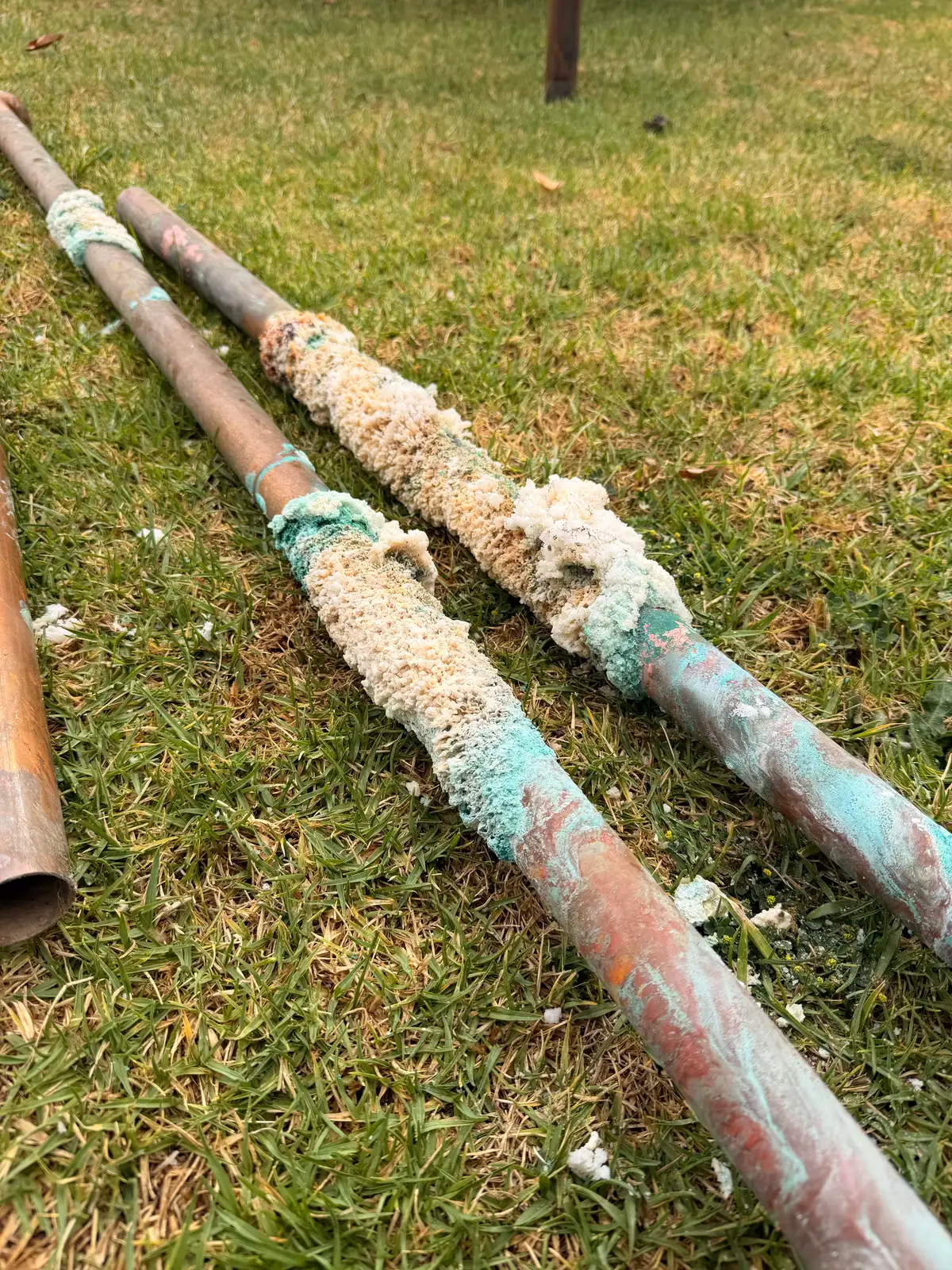
Copper corrodes through a process called pitting corrosion, which is distinct from the uniform oxidation that simply turns copper green. Pitting is localized and aggressive. Chloride ions from ocean air penetrate the thin protective oxide layer on copper's surface and attack specific points, creating deep pits that eventually perforate the pipe wall. The pit starts microscopically small but grows faster than surface oxidation would suggest — a pit that takes 10 years to develop can perforate in the following 3–5 years.
The density of chloride ions in the air increases sharply within about 1,000 feet of the ocean and remains elevated up to roughly a mile inland depending on prevailing wind patterns. In Redondo Beach, the marine layer pushes consistently onshore from the southwest. Properties in the Esplanade and South Redondo neighborhoods, where lots often sit 200–400 feet from the water, are in the highest-exposure band. The Hollywood Riviera sits slightly further east and at elevation, which reduces — but does not eliminate — the exposure.
pH and water chemistry compound the problem. L.A. County water runs mildly alkaline, which normally helps copper resist corrosion. But when chloride-laden condensation forms on pipe surfaces in crawl spaces, under slabs, or in wall cavities, it creates a localized microenvironment that overrides the bulk water chemistry. That's why slab penetrations and under-floor runs often show the earliest pitting — those surfaces collect moisture and hold it.
Where the damage actually shows up first
Not all copper in a coastal home fails at the same rate. The sections most exposed to temperature cycling, humidity fluctuation, and direct airflow corrode fastest. In Redondo Beach homes, the first failures we see are almost always at slab penetrations, at the hot water outlet on the water heater, at branch tee fittings in exterior wall cavities, and at any horizontal run that passes through an uninsulated crawl space or sub-floor zone with ventilation gaps.
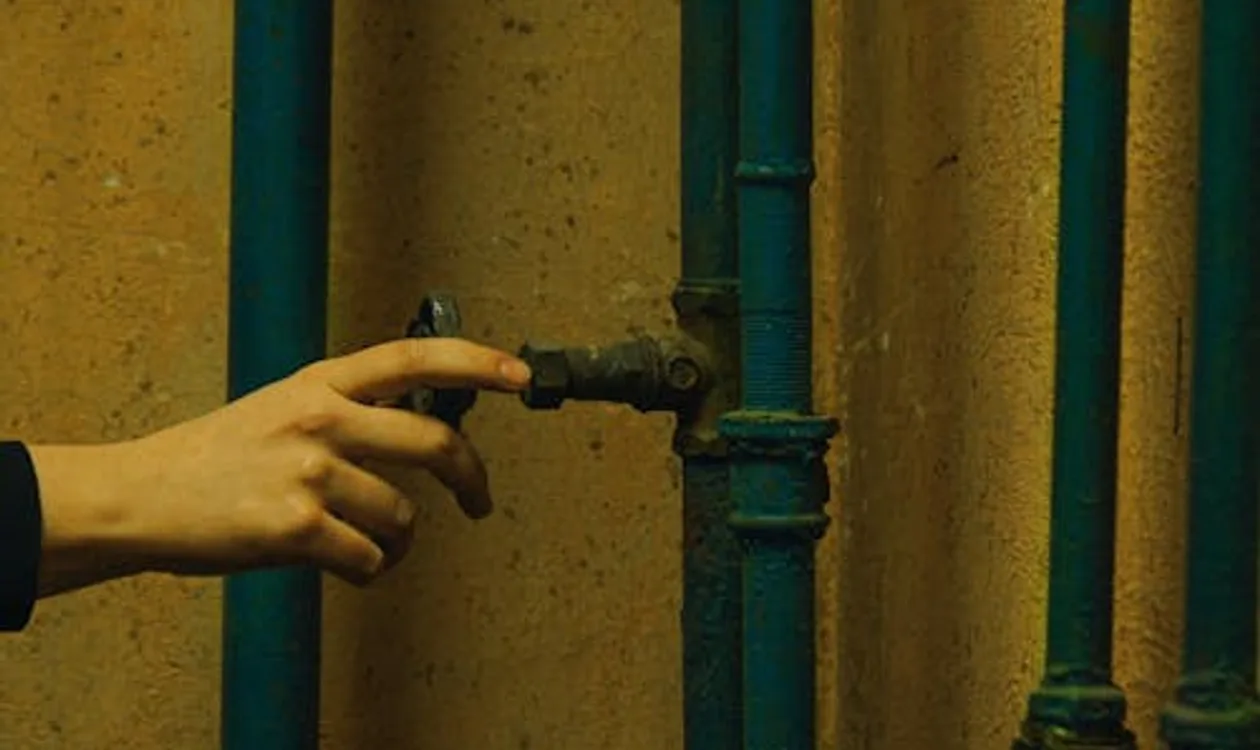
Brass components fail alongside the copper. The shut-off valves behind toilets, the angle stops under sinks, the pressure-reducing valve on your main — all of these use brass bodies with chrome or nickel plating. Salt air strips that plating within 10–15 years in high-exposure locations, and the underlying brass begins to dezincify: zinc leaches out, leaving a porous copper matrix that looks intact but crumbles under wrench pressure. We've had calls from North Redondo homeowners near The Avenues who cracked a shut-off valve simply by trying to close it during a repair — the valve was 22 years old and looked fine until it didn't.
Steel components — flexible supply lines, water heater connectors, and older galvanized sections — corrode even faster than copper in salt air. If your home still has any galvanized supply, coastal proximity compresses the replacement timeline from the standard 40–50 year estimate down to 25–35 years depending on location. That's assuming the galvanized was installed in the 1970s or 1980s; if it's original 1950s pipe, corrosion is almost certainly already restricting flow.
Why the 18–25 year window matters in South Redondo
Copper installed during the 1990s and early 2000s — a common era for South Redondo remodels, condo conversions, and new construction on teardown lots — is now sitting squarely in the failure window for coastal exposure. Inland, Type L copper from the same period still has substantial life. At this proximity to the water, it does not. The pitting that started in the mid-2000s has had 15+ years to propagate, and the pipes that haven't pinholed yet are typically within a few years of doing so.
This doesn't mean every copper run needs immediate replacement. It means the pipe needs to be evaluated, not assumed. A [camera inspection](/services/trenchless/camera-inspection) of accessible runs combined with a pressure decay test gives you a factual picture of where the corrosion has progressed furthest. We use that data to prioritize which sections to replace first — usually the slab penetrations and hot-side runs, which see the most thermal stress — and which sections can be monitored for another cycle.
For homeowners in the Esplanade and South Redondo who are planning a remodel anyway, replacing the supply in the affected areas during wall-open construction is the lowest-cost window. Retrofit repiping on an occupied home costs more in labor because walls have to be opened and patched. When studs are already exposed, the pipe cost is the only real variable.
The targeted replacement strategy vs. whole-house repipe
Whole-house repiping runs $7,000–$13,000 for a typical 1,500–2,200 sq ft Redondo Beach home, depending on access, the number of fixtures, and whether the job uses PEX-A or Type L copper. That's not always the right first move, especially if half the house has already been repiped during a previous renovation or if the exterior walls have been recently finished.
A targeted strategy focuses replacement on the sections with demonstrated or high-probability failure: the 12–18 feet of pipe around the water heater, all slab penetrations, the cold-side runs to exterior hose bibs, and any section that has already been patched once. Replacing these sections with PEX-A — which is immune to pitting corrosion and more flexible under thermal cycling — stabilizes the system for 10+ years without touching the interior runs that are still healthy. For a [Redondo Beach repipe](/services/repipes) job scoped this way, the cost typically lands in the $2,800–$5,500 range depending on the number of problem sections.
The tradeoff is that targeted replacement requires an accurate diagnosis upfront. If the inspection reveals that more than 60–70% of the copper shows active pitting, the incremental cost of going to a full repipe is usually worth it — you're already paying for mobilization, patching, and permits. We give homeowners the actual inspection data and let them make that call with real numbers, not a sales pitch.
What slows corrosion between now and replacement
You can't reverse pitting that's already occurred, but you can reduce the rate of new pit formation. The most impactful step in coastal homes is controlling moisture in the spaces where pipe runs are exposed — crawl spaces, utility closets, and the area around the water heater. A vapor barrier under the sub-floor and a functional exhaust vent in the crawl space reduces the humidity that accelerates chloride-driven pitting on the underside of floor runs.
On the water heater specifically, the Redondo Beach city data highlights a 3-year anode rod inspection cycle rather than the standard 5-year interval — coastal salt air increases tank and fitting corrosion enough that waiting 5 years often means replacing a rod that's been depleted for 18 months. Check the flexible connectors at the same time. If they're braided stainless over a rubber core and older than 8–10 years in this environment, replace them as a precaution — the failure mode is sudden, not gradual.
Pipe insulation on hot-water runs in unconditioned spaces also reduces thermal cycling, which is the mechanical stress that opens existing pits and propagates cracks in already-compromised pipe walls. This is not a fix for corroded pipe, but it extends the service window on runs that are borderline and buys time to plan the replacement properly.
Redondo Beach copper pipe questions we hear most
Why does coastal copper fail early? Chloride-bearing moisture attacks local weak points, especially where pipe is exposed to airflow, condensation, concrete contact, and temperature cycling.
Does one pinhole require a full repipe? Not always. Pressure results, pipe age, prior repairs, and how broadly pitting appears determine whether targeted replacement is reasonable.
How do I verify your license? Mainline holds California C-36 plumbing license 901735, which homeowners can confirm on the official CSLB website.
Which material works near the coast? Type-L copper and properly specified PEX-A can both perform well; routing, fittings, water chemistry, exposure, and installation quality matter as much as the material name.
What to do next
If your Redondo Beach home was built or last repiped between 1990 and 2005 and you haven't had a plumbing inspection since, schedule one before the next pinhole leak decides the timeline for you. A reactive repair after water damage costs 3–5x what a planned replacement costs — the drywall, insulation, and mold remediation alone typically exceed the plumbing work.
Mainline No-Dig Trenchless Plumbing is a licensed C-36 plumbing contractor based in Lomita with a 25-minute target response to Redondo Beach. We serve the full city including South Redondo, North Redondo, The Avenues, and Golden Hills. Our [repipe services](/services/repipes) cover both targeted section replacement and full whole-house repiping, and we scope every job with a camera inspection so the recommendation is based on what's actually in your walls.
Call (310) 808-7343 to schedule a diagnostic visit or to get a scoped estimate on a repipe. We dispatch 24/7 and don't charge overtime fees for evening or weekend calls.
Tags
Related Services