Hawthorne's post-war tract homes were built fast, built cheap, and built on expansive clay soil. From the late 1940s through the 1960s, developers pushed thousands of slab-on-grade houses through neighborhoods like Hollyglen, Holly Park, and Bodger Park. The supply lines embedded in those slabs are now 60 to 75 years old — and they're failing on a predictable schedule.
A single slab leak isn't necessarily a crisis. Two slab leaks within five years is a pattern. Three is a system telling you the era of patching individual failures is over. Understanding why these leaks happen — and why they happen repeatedly in the same homes — is the difference between a $1,500 spot repair and a $12,000 flood claim you could have avoided.
This post breaks down the specific conditions driving slab leak frequency in Hawthorne's 1950s and 1960s tracts, how we locate them without demolishing your floor, and why the attic-reroute repipe is the permanent answer for homes that keep coming back with the same problem.
What's actually underneath a 1950s Hawthorne slab
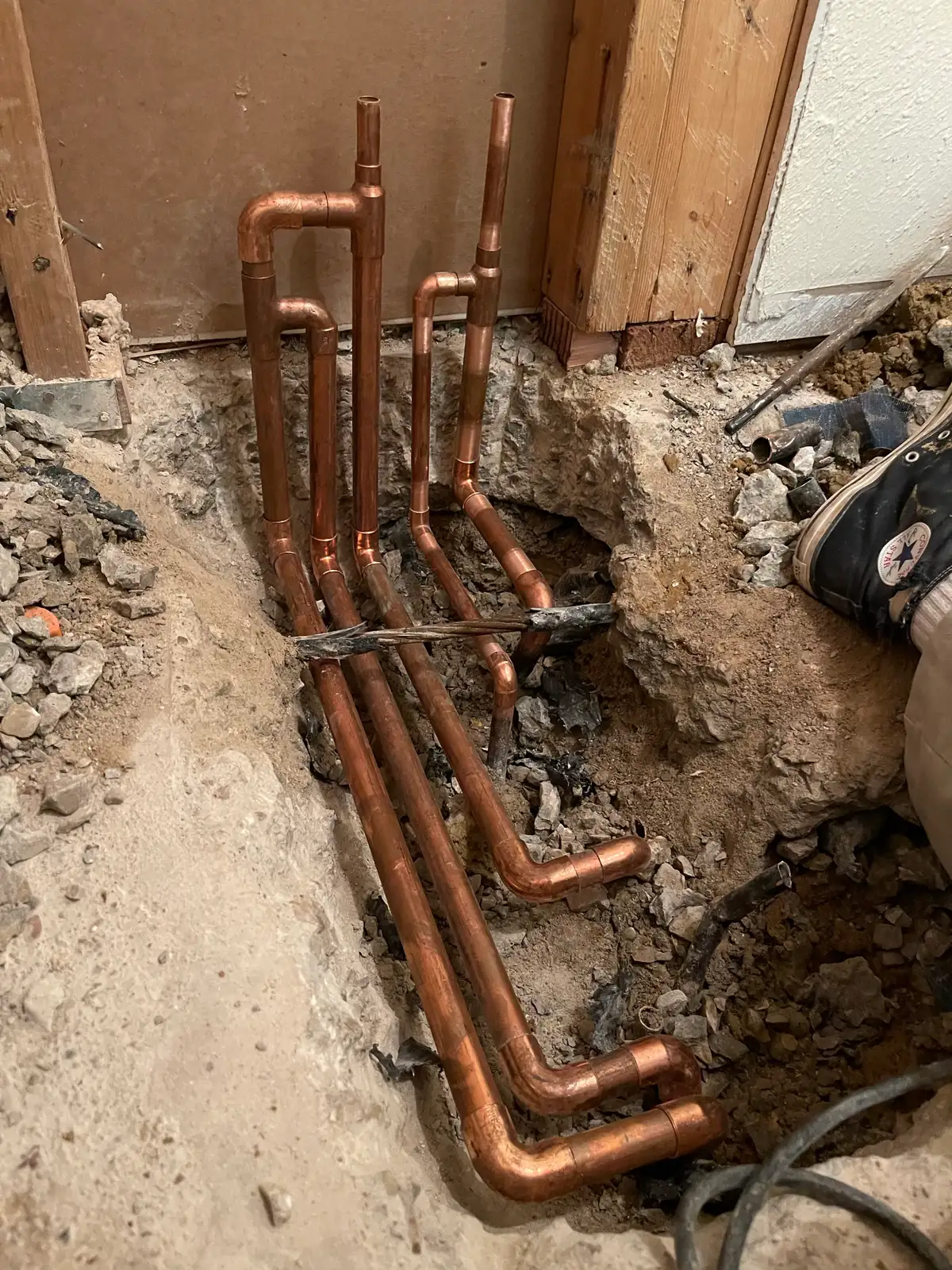
Post-war tract construction in Hawthorne followed a cost-efficient template: pour a concrete slab directly on compacted native soil, embed the hot and cold supply lines in or just below that slab, and frame up the house on top. The pipes — typically soft copper type L or type M — were laid in direct contact with the soil before the concrete was poured.
That direct soil contact is the first problem. Soft copper corrodes when it sits against alkaline concrete and reactive soil. In Hawthorne's ZIP 90250, the native soil has measurable clay content, which means it expands when it gets wet and contracts when it dries. That movement is subtle — fractions of an inch — but applied repeatedly over decades, it's enough to abrade a pipe wall and open a pinhole.
The second problem is age. Copper supply lines in a slab installation have a realistic service life of 50 to 70 years under normal conditions. Normal conditions in Hawthorne include soil movement, municipal water chemistry that runs slightly hard, and thermal cycling from the concrete itself. At 65 years, the math on remaining useful life is not favorable.
Expansive clay soil: the mechanism nobody explains
Clay soil in the Hawthorne flats doesn't stay put. During dry summers, it shrinks. During wet winters — and during the slow drip from an undetected slab leak — it swells. The slab moves with it, even if that movement is measured in millimeters. The embedded pipe doesn't move with the same flexibility.
This differential movement creates stress concentration points, typically at joints, fittings, and anywhere the pipe changes direction under the slab. A pinhole opens. Water migrates through the concrete substrate before surfacing as a warm spot on the floor, a damp patch on drywall, or an unexplained spike on a water bill.
The corrosive feedback loop is the part that accelerates failure: a slow slab leak increases soil moisture locally, which increases clay expansion, which increases pipe stress, which opens additional failure points. Homes that have had one slab leak repaired without addressing the underlying pipe condition are positioned for the next one — usually within two to five years, often at a different location on the same supply run.
How we locate the leak without tearing up flooring
Electronic leak detection — acoustic amplification combined with ground microphones and correlation equipment — lets us pinpoint the failure location to within inches before any concrete is cut. We walk the slab, map the pipe runs from building permits or as-built drawings when available, and identify the pressure differential that confirms an active leak. The process takes two to four hours on a typical Hawthorne tract home. You can learn more about what that process involves on our [slab leak detection](/services/trenchless/leak-detection) service page.
Once we have a confirmed location, the decision tree branches. If this is the first documented slab leak in a home with otherwise serviceable pipe, a targeted spot repair — cutting the slab, replacing the damaged section, patching the concrete — is a legitimate option. If we're looking at a second or third event, or if the pipe wall shows generalized thinning on a pressure test, the spot repair conversation needs to shift to a repipe conversation.
A camera inspection of accessible drain lines at the same visit often reveals whether the lateral and drain system are in comparable condition. If the supply lines are failing, the drain lines laid in the same era are worth scoping. Addressing both systems in a single mobilization is significantly more cost-effective than returning for a drain failure two years later.
The attic reroute: why it's the right call for repeat-leak homes
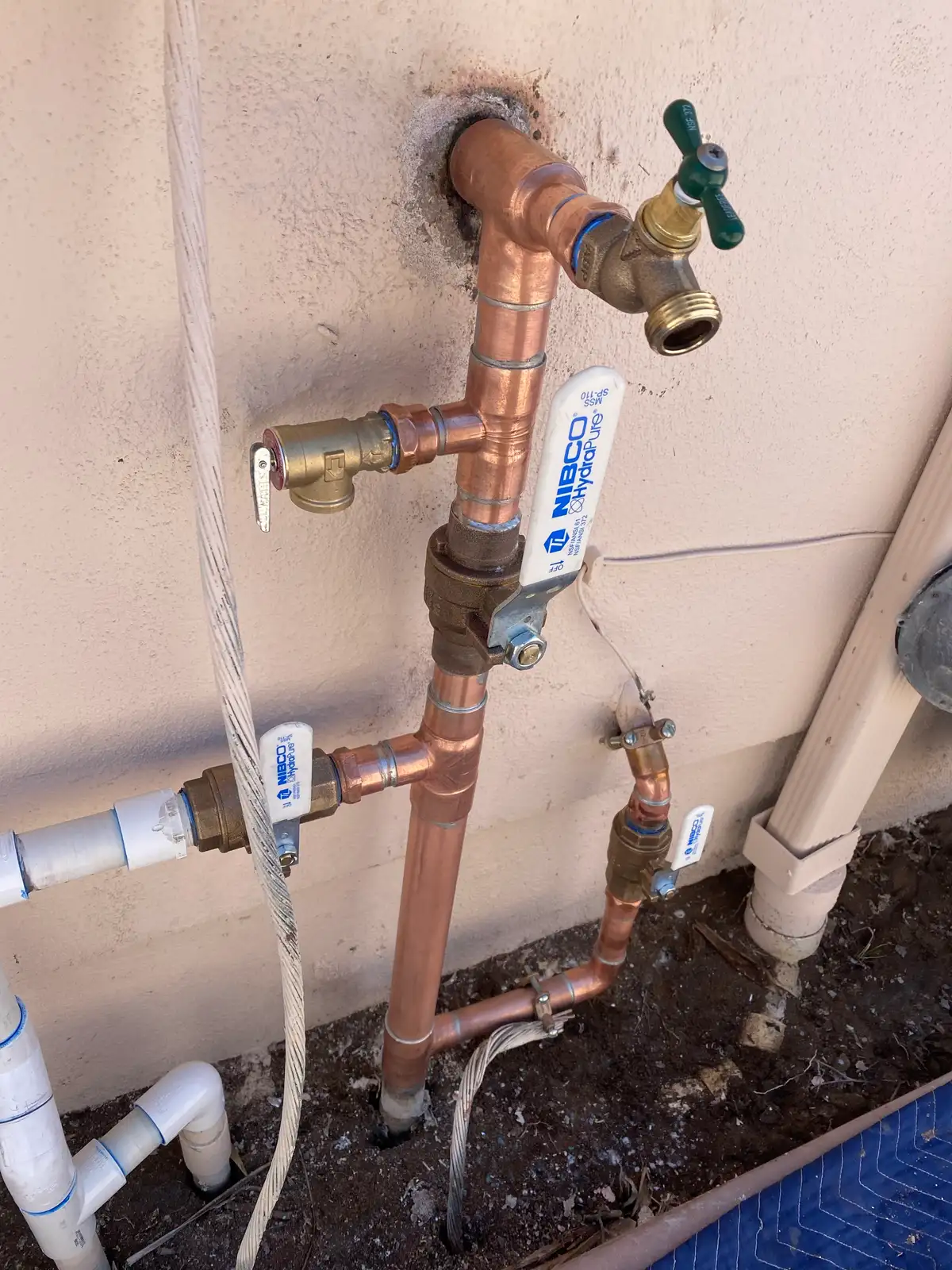
An attic reroute repipe abandons the embedded slab lines entirely and runs new PEX supply lines through the attic framing and down interior walls. The failed pipes are left in place — capped and inert — and the new system runs overhead instead of underfoot. No slab cutting beyond the initial repair, no ongoing exposure to reactive soil, and a material — cross-linked polyethylene — that's rated for 50-plus years of service and is immune to the electrochemical corrosion that kills copper in alkaline environments.
In Hollyglen and Holly Park specifically, attic access is generally adequate for this approach. Single-story construction, standard truss or rafter framing, and clear ridge lines make the routing straightforward on most lots. The crew works from the attic and through interior wall cavities. In most cases, drywall repairs are limited to small access points at drop locations rather than full wall openings.
The total project scope for a 1,200 to 1,500 square foot Hawthorne tract home — the dominant footprint in the 90250 ZIP — typically runs two to three days. That includes permit, inspection, and restore. The permit matters: [slab leak repair and repipe work](/services/trenchless) in California requires a licensed C-36 contractor pulling the appropriate building permit. Any contractor offering to skip that step is creating a liability that transfers to you at resale.
Galvanized supply vs. copper: which failure mode applies to your home
Not every Hawthorne tract home has copper under the slab. Some 1950s builds — particularly earlier ones in the western tracts near the Hawthorne Boulevard Corridor — used galvanized steel supply lines, which fail differently. Galvanized corrodes from the inside out, progressively reducing interior diameter until flow restriction becomes noticeable at fixtures. Slab leaks from galvanized are less common; the primary failure mode is chronic low pressure and eventual pinhole failure at fittings.
If you're seeing reduced flow at multiple fixtures simultaneously — not just one bathroom, but throughout the house — galvanized corrosion is a more likely explanation than a slab leak. A pressure test and flow measurement at the meter versus a downstream fixture will tell us what we're dealing with. Both conditions resolve with the same end solution: a full repipe. The diagnostic work determines which problem you're actually solving.
Homes built after 1960 in the Ramona and 360 District neighborhoods more often have copper supply, which makes slab leak the more probable failure mode as those pipes age past the 60-year mark. The diagnostic approach is the same regardless of neighborhood — pressure test first, then electronic detection if pressure loss confirms an active leak.
What to do next
If your Hawthorne home is a 1950s or 1960s slab-on-grade build and you're seeing warm floor spots, unexplained water bill increases, or damp drywall at the base of an interior wall, don't wait for a second opinion from a water damage contractor. Get the plumbing diagnosed first. A leak that runs undetected for three weeks causes far more structural damage than one caught in the first 48 hours.
Mainline No-Dig Trenchless Plumbing — Licensed C-36 #901735 — runs a 30-minute response target to Hawthorne from our Lomita headquarters. We dispatch 24 hours a day, seven days a week, with no overtime fees on evenings or weekends. If you want to understand your options before committing to any scope of work, we'll walk you through the diagnostic findings and the cost comparison between spot repair and full reroute before any work begins.
Call us at (310) 808-7343 or use the contact form on our site. If the leak is active, call — don't form-submit.
Tags
Related Services