Water heater replacement in Hermosa Beach is a logistics problem first and a plumbing problem second. On a 30-foot-wide lot with no alley, no driveway, and a multi-level townhome stacked above, getting a 50-gallon tank in or out can take longer than the actual install. That's the reality on most Sand Section and Hill Section jobs.
Hermosa Beach lots are among the narrowest in the South Bay. Walk streets like those running parallel to The Strand eliminate vehicle access entirely — equipment, materials, and the old unit all move by hand. If you're planning a replacement, the access route deserves as much thought as the unit you're buying.
Why Hermosa Beach access is different from every other South Bay city
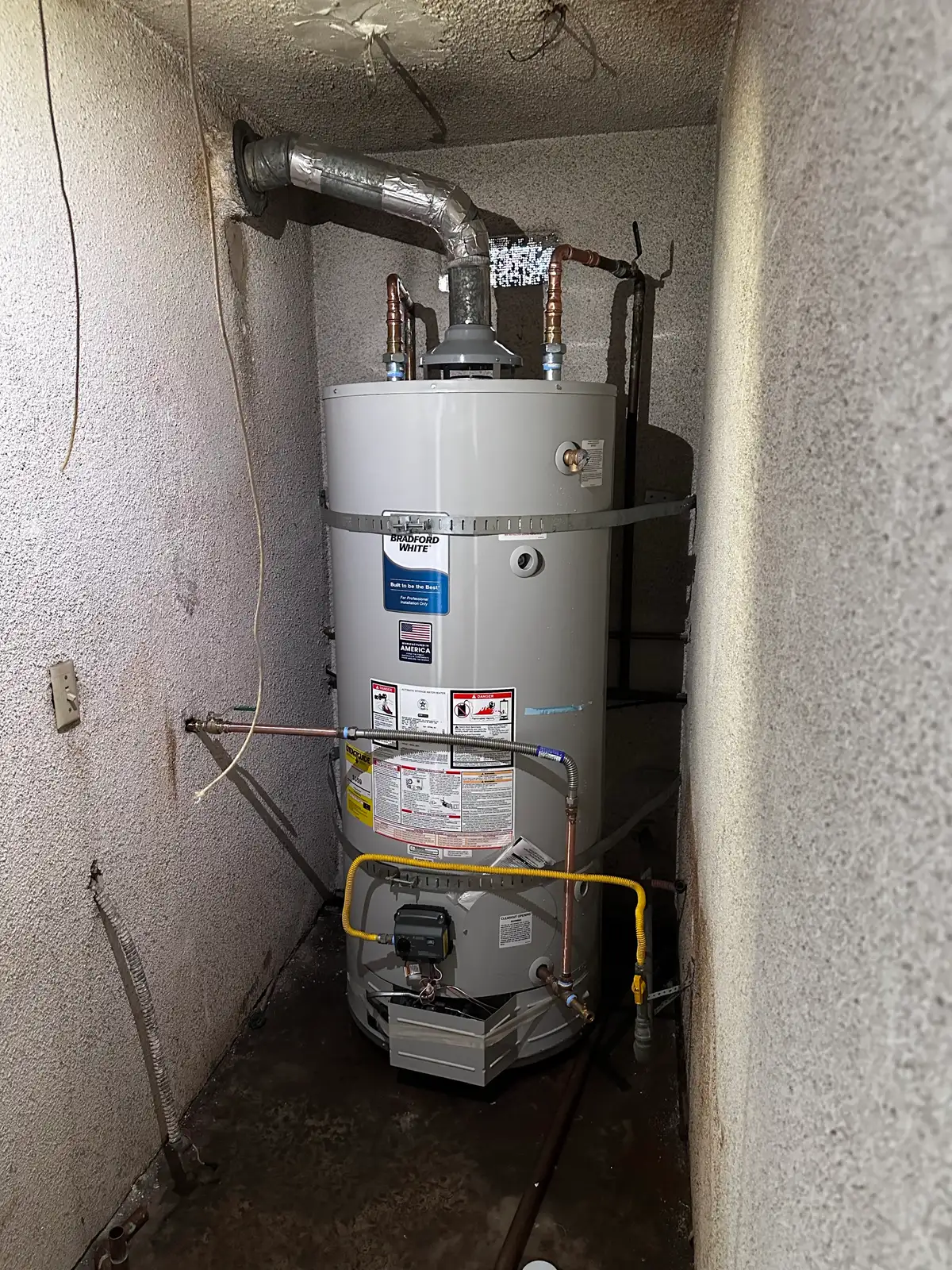
Most South Bay cities have at least a side gate or a driveway to work with. In Hermosa Beach's Sand Section and along the Pier Avenue Corridor, the front door of the townhome is often the only path to the mechanical closet. That means a 140-pound tank goes through the living room, up or down a stairwell, and into a utility space built to minimum clearances.
Walk streets amplify the problem. There's no truck staging — materials get hand-carried from the nearest cross street, sometimes 100 to 200 feet away. We plan for that on every Hermosa Beach job before we schedule it, not after we arrive.
The Hill Section has different constraints. Homes there often have more outdoor space, but the grade is steep enough that hauling equipment up a narrow side passage is its own challenge. The plumbing problem is consistent across zones; the access problem changes block by block.
Tank vs. tankless: how the access problem changes the math
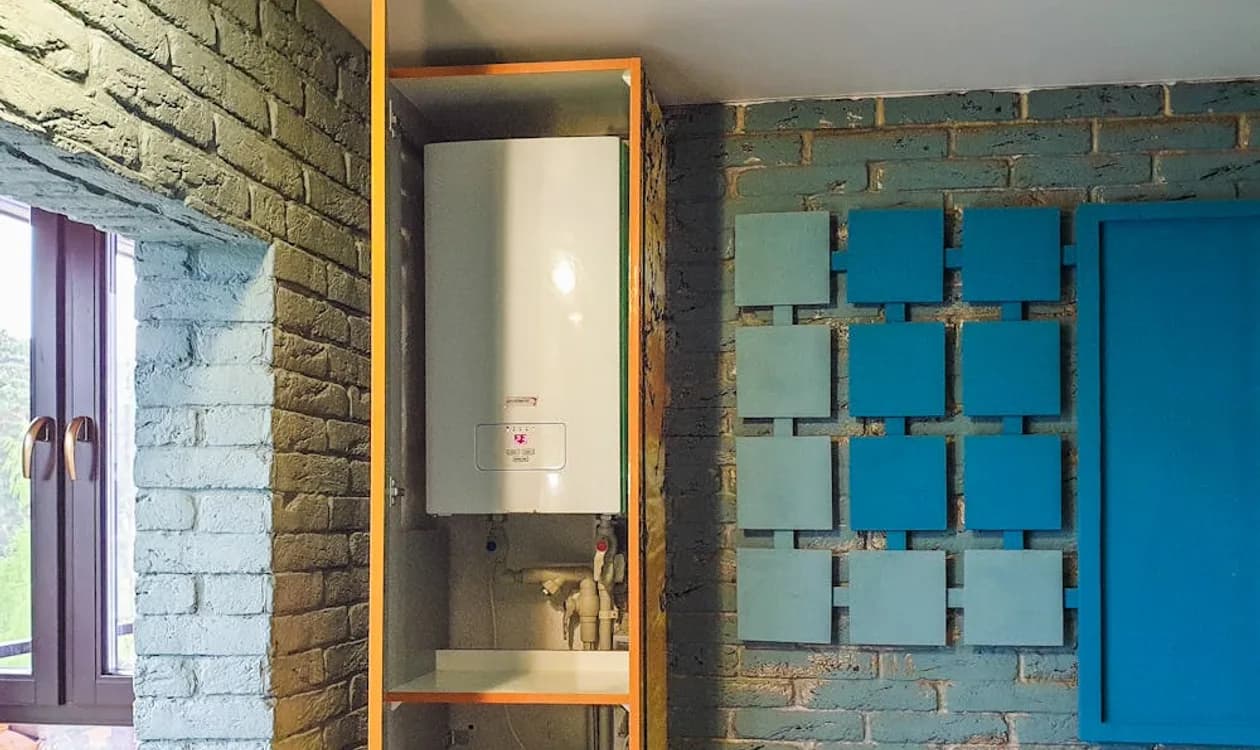
A standard 40- or 50-gallon tank water heater is bulky and heavy enough that navigating a narrow townhome stairwell requires two people and careful planning. A tankless unit — typically wall-mounted and under 40 pounds — is easier to move through a tight space. On [Hermosa Beach water heater jobs](/service-areas/hermosa-beach/water-heaters) where access is the binding constraint, that physical difference matters.
Tankless also reclaims the closet. Many Hermosa Beach townhomes have a utility closet that does double duty as storage. Replacing a tank with a wall-mounted tankless unit frees 10 to 15 square feet of floor space — meaningful in a home where every square foot is priced at a premium.
The trade-off is upfront cost and gas line capacity. A tankless unit needs a 3/4-inch gas supply line at adequate pressure, and many Hermosa Beach townhomes were plumbed with 1/2-inch lines. If the existing gas line can't support the demand, the line needs to be upgraded — add that to the project scope before you commit to a unit.
What the permit process looks like
Water heater replacement in Hermosa Beach requires a City of Hermosa Beach building permit. The permit covers the appliance installation, the gas connection, and the venting configuration. An inspection is required before the job is closed out — the inspector needs to verify that the flue or PVC exhaust terminates correctly and that the T&P relief valve drains to a safe location.
Tankless installations that require a gas line upgrade or a new venting penetration through an exterior wall are typically classified as a larger scope and may require a more detailed permit set. We handle permit submittal as part of the job on [water heater installations](/services/water-heaters) where a permit is required — it's not an add-on you have to chase separately.
One detail that catches homeowners off guard: if the new unit vents through a side wall rather than an existing flue, the termination location has to meet clearance requirements from windows, doors, and property lines. On a 30-foot lot where the neighbor is close, that clearance requirement can constrain where the unit goes.
Salt air and the coastal maintenance factor
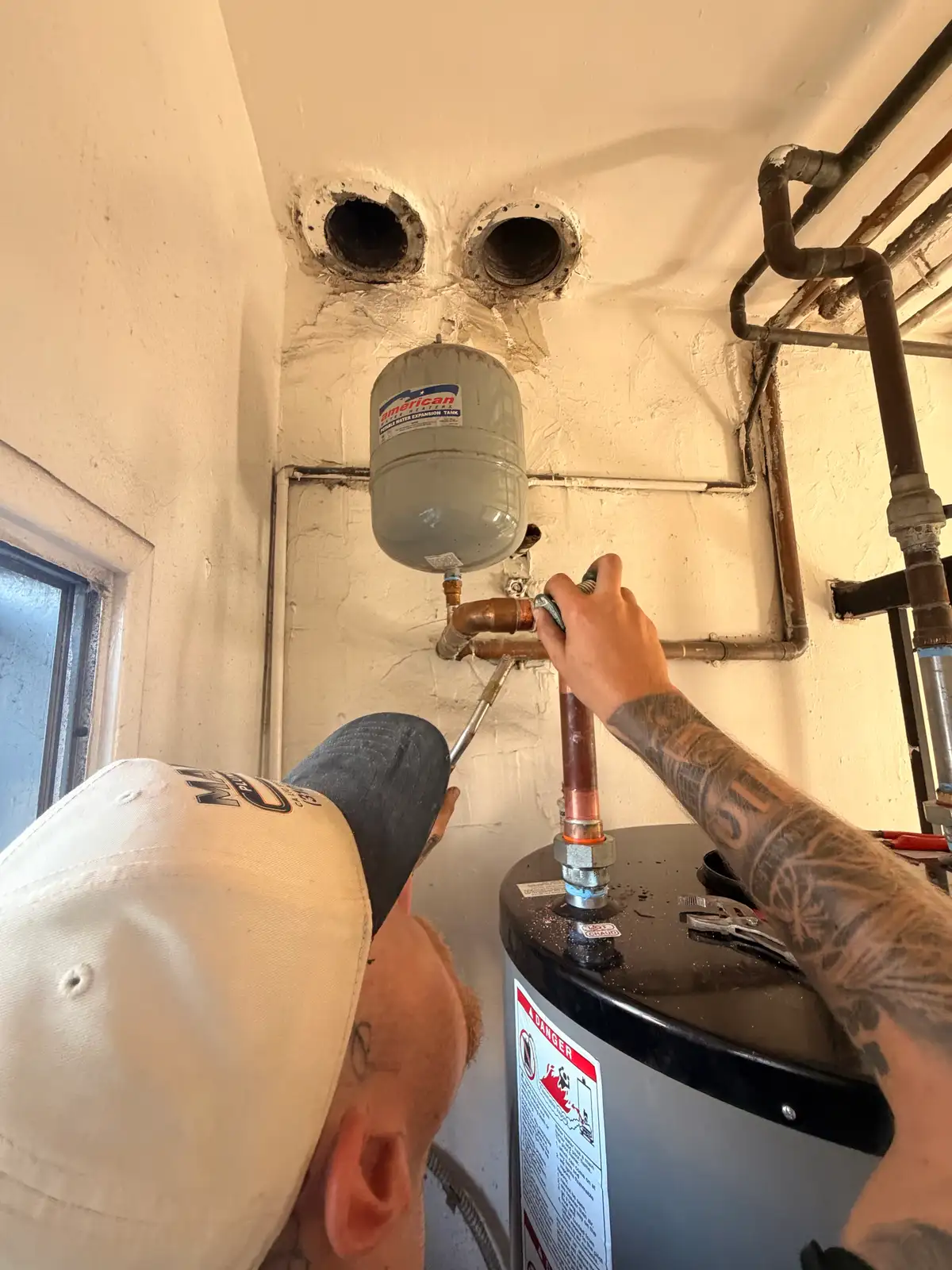
Hermosa Beach sits on the water. Salt air attacks anode rods, fittings, and the tank exterior faster than it would in an inland city. Anode rod inspection on a coastal tank unit should happen every 3 years, not the 5-year interval common in manufacturer documentation. A depleted anode rod means the tank sacrificial protection is gone — corrosion moves to the tank lining itself.
On a tankless unit, the salt air exposure hits the exterior cabinet and the gas valve components. Stainless cabinet units hold up better than painted steel in this environment. This is worth verifying before you buy, not after the cabinet starts rusting within two years of installation.
East Hermosa and the Valley Drive area are slightly farther from the water and see less aggressive corrosion than homes on or near The Strand. The difference is real but not dramatic — both zones still warrant the 3-year inspection cadence, not 5.
Staging a replacement on a walk street: what the day looks like
On a walk-street job, we stage the truck on the nearest accessible street and carry everything by hand. The old unit gets drained down, disconnected, and moved out the same path the new unit comes in. On a 200-foot walk, that's a meaningful amount of labor that's built into the job — it's not a surprise on the invoice.
We confirm the interior path before the job date. Stairwell width, door clearances, any low overhead obstacles — those get noted when we scope the job, not discovered at 8 a.m. on installation day. If a tank unit physically won't navigate the route, that's when the tankless option becomes a practical necessity rather than a preference.
Utility shutoffs also need to be verified in advance. Gas shut-off location, water supply to the heater, and electrical disconnect if the unit has an ignition circuit — these should all be located and confirmed accessible before work starts. In a multi-level townhome with shared walls, the shutoffs aren't always where you'd expect them.
Hermosa Beach water heater installation questions we hear most
Do I need a permit for a straight tank-for-tank swap? Yes. The City of Hermosa Beach requires a permit for water heater replacements regardless of whether it's a like-for-like swap. The inspection confirms venting, seismic strapping, and T&P relief drain configuration — all of which are code requirements in California.
Can a tankless unit really fit where my tank is now? Usually yes, with the right bracket configuration. A tankless unit mounts to the wall and clears the floor entirely. The existing gas and water connections may need to be repositioned slightly, but in most Hermosa Beach utility closets the footprint works.
How long does a walk-street installation take compared to a normal job? Add 45 to 90 minutes for equipment transport on a typical walk-street job. The plumbing work itself takes the same amount of time — it's the staging and carry that extends the day.
Is Mainline licensed to do this work? Yes. Mainline No-Dig Trenchless Plumbing holds C-36 license #901735, which you can verify directly on the CSLB website at cslb.ca.gov. We pull permits under that license.
What's your response time for a water heater emergency in Hermosa Beach? Our target is 28 minutes for Hermosa Beach. We dispatch 24 hours a day, 7 days a week, with no overtime surcharge for evenings or weekends.
What size tankless unit do I need for a two-bedroom Hermosa Beach townhome? Sizing depends on the number of simultaneous fixtures and the incoming cold water temperature. For most two- to three-bedroom townhomes, a 6 to 8 GPM unit covers typical demand. We size based on your actual fixture load, not a general rule of thumb.
What to do next
If you're planning a water heater replacement in a Hermosa Beach walk-street home or multi-level townhome, the access route and gas line capacity need to be confirmed before you choose a unit. Getting that wrong adds cost and delays.
Call Mainline at (310) 808-7343 to schedule a scope visit. We'll confirm the access path, check the gas line size, and give you a straight answer on whether a tank or tankless unit makes more sense for your specific property — before you're committed to a choice.
Tags