Rolling Hills Estates is not a typical South Bay plumbing job. Bedrock sits within 18 inches of grade on a significant share of lots, sewer laterals drop more than 50 feet vertically before reaching the main, and high-elevation homes on streets like Highridge and Rolling Vista often need booster pumps to maintain usable water pressure. A plumber who works Hawthorne tract homes all week will hit problems here that their standard toolkit doesn't solve.
We've been serving [Rolling Hills Estates homeowners](/service-areas/rolling-hills-estates) from our Lomita headquarters — about 15 minutes away — for years. The neighborhoods we cover most are Dapplegray, The Terraces, Chandler Ranch, Ranchero, Highridge, and Rolling Vista. Every one of them has its own soil profile, slope, and access challenge.
What bedrock actually means for your plumbing job
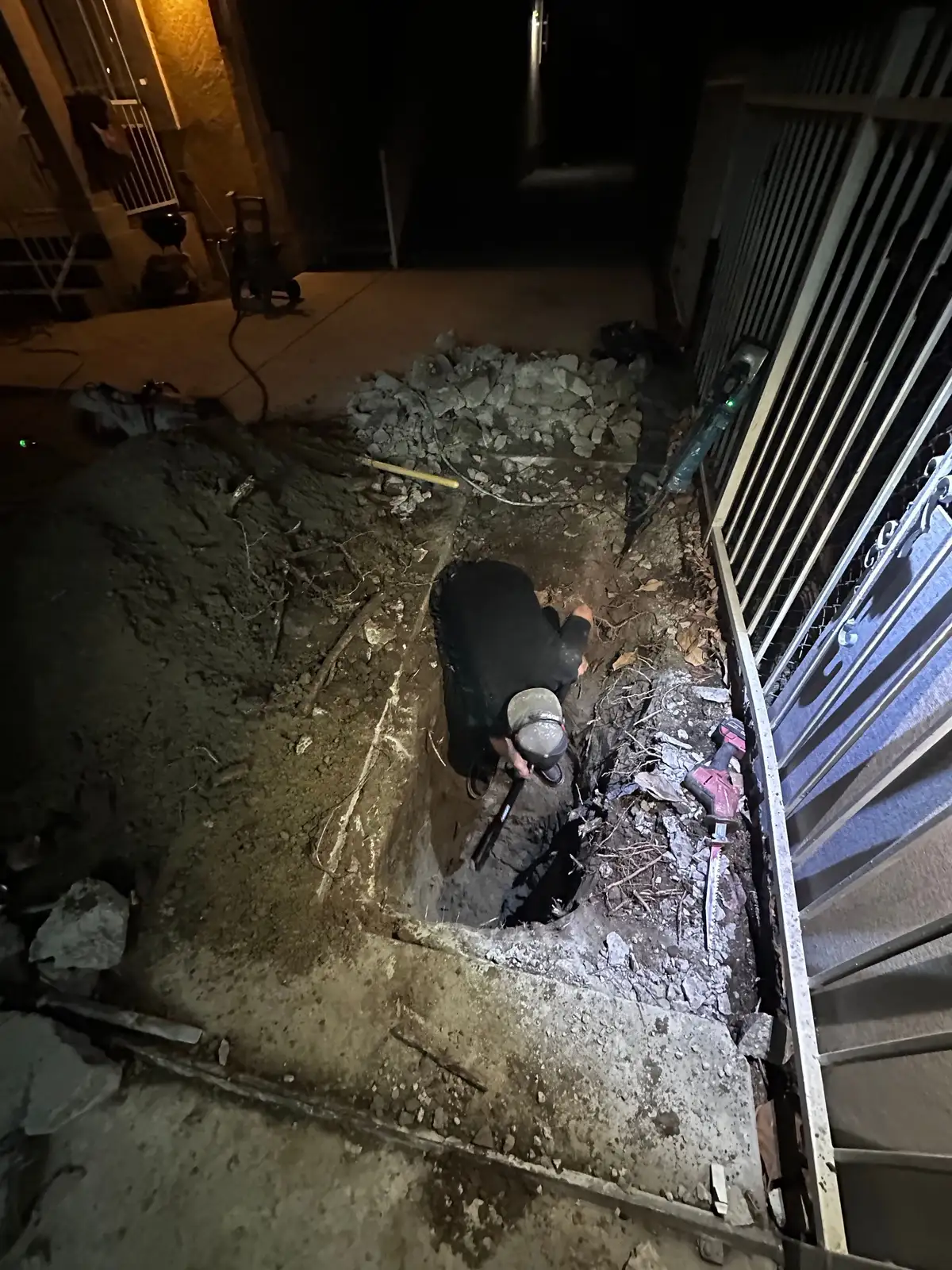
On a flat South Bay lot, excavating a trench for a sewer repair is straightforward: a mini-excavator, a few hours, backfill, done. On a Rolling Hills Estates lot, you can hit consolidated rock at 12 to 18 inches. That's not digging anymore — that's breaking, which requires pneumatic or hydraulic rock-breaking equipment and adds real time and cost to any open-trench scope.
This is one reason [trenchless sewer repair](/services/trenchless) has become the default approach here rather than a premium option. Pipe bursting and CIPP lining work inside the existing pipe path — you're not creating a new trench through fractured rock. For a lateral that runs 80 linear feet with a 50-foot elevation drop, the math on trenchless almost always wins over open excavation once you price in the rock-breaking day rate.
When a plumber quotes you an open-trench repair in RHE without mentioning bedrock contingency, ask them directly: what happens if we hit rock? The answer tells you whether they've actually worked up here before.
50-foot vertical sewer drops: what they do to pipe and flow
Steep terrain creates steep sewer grades, and steep grades produce high-velocity flow. Pipe that sits at grade angles beyond normal design parameters experiences erosion at the invert — the bottom of the pipe — over decades. By the time a 1960s estate property gets to its second or third owner, that original clay or cast iron lateral may be eroded thin on the bottom and thick with buildup on the sides.
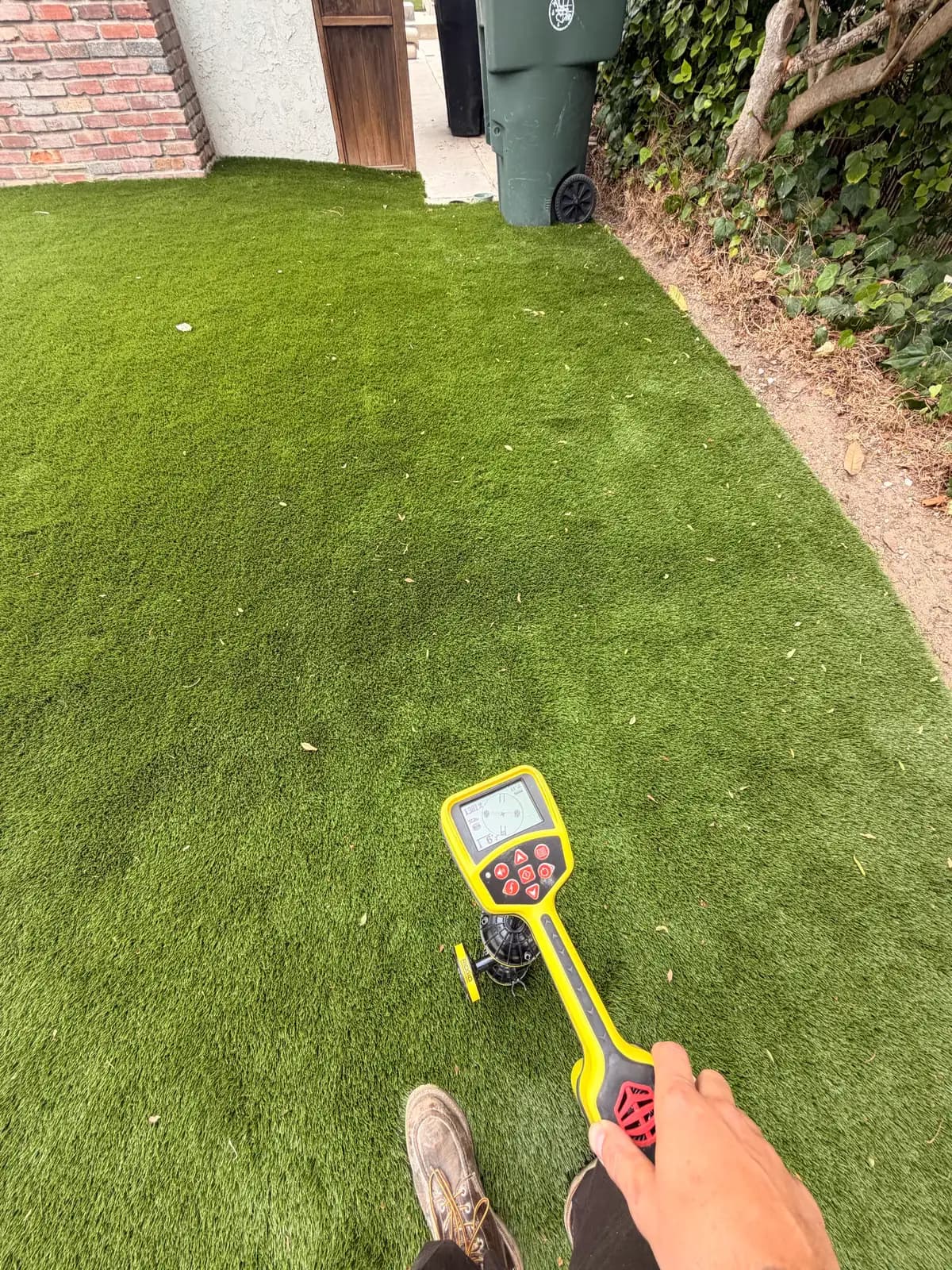
The other issue is that steep-grade laterals tend to develop offset joints where the soil shifts downhill slightly each wet season. Roots don't cause most of the failures we see on RHE slopes — soil movement does. A camera inspection shows this clearly: you'll see a stair-step joint pattern rather than the smooth continuous bore you want.
Pipe bursting is the standard fix for these conditions. We feed a bursting head through the existing pipe, fracture it outward, and pull HDPE behind it — all in one pass. HDPE handles the slope, flexes slightly with future soil movement, and has a smooth interior that doesn't accumulate the same scaling that old clay does.
Booster pumps, pressure regulators, and elevation math
Water pressure at the meter is set assuming a street-level delivery elevation. Every 2.31 feet of vertical rise above that reference point costs you roughly 1 PSI of delivered pressure. A home sitting 80 feet above the street connection — common on Highridge Road and the upper Terraces — arrives at the fixture with pressure well below the 40 PSI minimum that fixtures are designed to handle.
The fix is a booster pump system, typically installed at the pressure tank or at a point close to the meter. The pump senses a pressure drop, runs until pressure is restored, and shuts off. These systems require periodic inspection: the pressure tank's captive air charge needs to be checked, and the pump motor bearings will eventually need service. If your pressure was fine when you moved in five years ago and it isn't now, a failing booster pump is the first thing to check before assuming the utility reduced supply pressure.
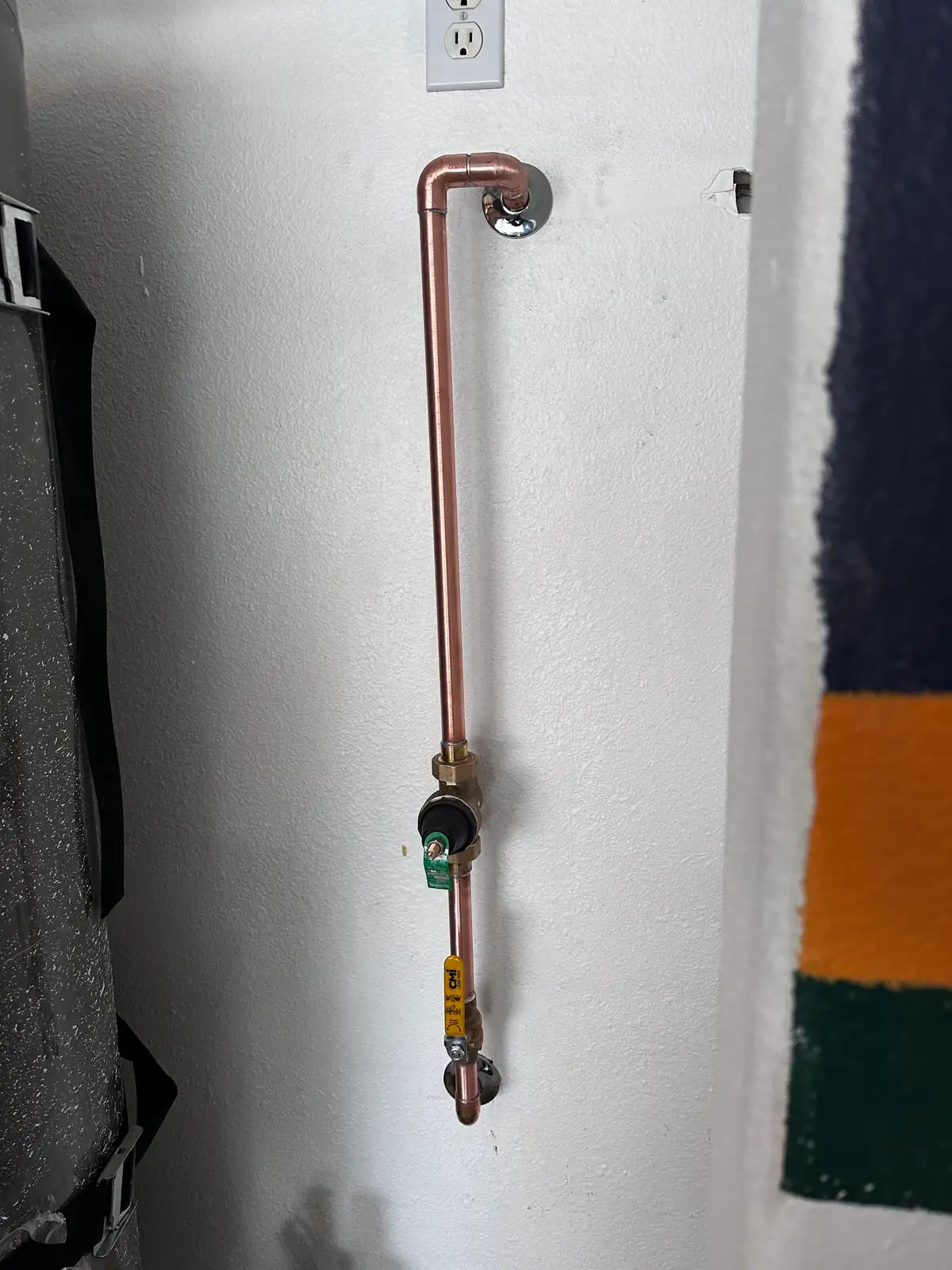
On the opposite end, some lower-elevation RHE lots — particularly on the Chandler Ranch side — can receive excess pressure from the main. A [pressure regulating valve](/services/water-pressure-regulator) (PRV) keeps that in check. PRVs last 10 to 15 years on average. A failed PRV that's stuck open can push 120 PSI or more into your supply lines, which explains sudden fixture failures and supply line ruptures on otherwise well-maintained properties.
Equestrian properties: separate water, separate waste, separate problems
Dapplegray in particular has working equestrian lots with barn structures, wash racks, and sometimes secondary dwelling units sharing a single water service lateral. The problem we see most is that barn water lines were never properly winterized or protected from UV, and the pipe material — often polyethylene or PVC installed in the 1970s and 1980s — has gone brittle or corroded at fittings.
Wash rack drains are another category. They're not connected to the sanitary sewer on most RHE equestrian properties — they drain to a sand/grease trap or to a dedicated dry well. When those dry wells fill with sediment and stop percolating, you get standing water at the wash rack. That's a drain cleaning or excavation job, not a sewer job, and misidentifying it costs homeowners money when the wrong contractor shows up.
If your property has a guest house, barn, or ADU added after the original construction, it's worth having someone trace where each structure's water supply and waste lines actually go. On properties built across the 1957–1975 original estate development era and then expanded in the 1980s and 1990s, we regularly find that the secondary structures were piped into systems not designed to handle the added load.
The city inspection process and what it means for your timeline
Rolling Hills Estates runs a thorough inspection process for permitted plumbing work. Permits are required for sewer lateral replacement, repipes, water heater replacements over certain thresholds, and gas line work. The inspection sequence — rough, pressure test, final — is standard, but scheduling windows in a small city with a limited inspector availability can add days to a job that would close out in 24 hours in a larger municipality.
A plumber who skips the permit process to save you time is creating a larger problem: unpermitted work on a RHE property is a disclosure issue at resale, and the city can require corrective work if it's discovered during a sale or refinance inspection. The permit cost is a minor line item. The cost of re-opening finished work for a retroactive inspection is not.
Rolling Hills Estates plumbing questions we hear most
**Why does my water pressure drop when I run more than one fixture at once?** On high-elevation lots, this usually points to a booster pump that's undersized or starting to fail. It can also mean a partially closed pressure regulator or a supply line with significant scale buildup restricting flow. A pressure test at the meter versus at an interior fixture will isolate where the loss is occurring.
**Can you do a trenchless repair on a lateral that drops 50 feet across the yard?** Yes. Steep-grade laterals are well within the pipe bursting envelope. We've done laterals with greater vertical drops on RHE properties. The key is confirming that the existing pipe path is intact enough to guide a bursting head — which the camera inspection establishes before we quote the job.
**How do I know if my barn water line is safe to use?** The fastest check is a visual inspection of exposed pipe and fittings for cracking, UV degradation, or corrosion at joints. If the line is buried, a pressure test will reveal whether it's holding. Lines from the 1970s and 1980s in equestrian structures are often at or past end-of-life.
**Do I really need a permit for a water heater replacement up here?** In Rolling Hills Estates, yes. Water heater replacements require a permit and a final inspection. The inspection verifies seismic strapping, T&P valve discharge routing, and proper gas or electrical connection. We pull the permit as part of every [water heater installation](/services/water-heaters) we do.
**How do I verify your license?** We operate under C-36 license #901735. You can verify it directly on the California State License Board website at cslb.ca.gov — search by license number and you'll see the license class, status, and insurance on file.
**What's your response time to Rolling Hills Estates for an emergency?** We target 25 minutes from dispatch for emergency calls to RHE. Our headquarters is in Lomita, which puts us closer to the Peninsula than most South Bay plumbers. We dispatch 24/7 with no overtime fees.
What to do next
If you're dealing with low pressure, a slow lateral, a failing booster pump, or a plumbing issue on an equestrian lot, the fastest path is a diagnostic call. We'll tell you within the first 30 minutes what category of problem you have and whether it needs a permit, a camera, or just a repair.
Call us at (310) 808-7343 — 24/7, no overtime fees. Or use the contact form on our [Rolling Hills Estates service area page](/service-areas/rolling-hills-estates) to describe what you're seeing. We'll get back to you the same day.
Frequently Asked Questions
Why does my water pressure drop when I run more than one fixture at once?
On high-elevation lots in Rolling Hills Estates, simultaneous pressure drop usually points to a booster pump that's undersized or starting to fail. It can also mean a partially closed pressure regulator or a supply line with significant scale buildup. A pressure test at the meter versus at an interior fixture will isolate where the loss is occurring.
Can you do a trenchless sewer repair on a lateral that drops 50 feet across the yard?
Yes. Steep-grade laterals are well within the pipe bursting envelope. The key is confirming the existing pipe path is intact enough to guide a bursting head — which a camera inspection establishes before we quote the job. We've handled laterals with greater vertical drops on RHE properties.
How do I know if my barn water line is safe to use?
Start with a visual inspection of exposed pipe and fittings for cracking, UV degradation, or corrosion at joints. If the line is buried, a pressure test will reveal whether it's holding. Lines from the 1970s and 1980s in equestrian structures are often at or past end-of-life and should be evaluated before continued use.
Do I need a permit for a water heater replacement in Rolling Hills Estates?
Yes. Water heater replacements in Rolling Hills Estates require a permit and a final inspection covering seismic strapping, T&P valve discharge routing, and gas or electrical connection. We pull the permit as part of every installation — skipping it creates a disclosure problem at resale.
How do I verify Mainline's plumbing license?
We hold C-36 license #901735. You can verify the license class, status, and insurance on file at cslb.ca.gov by searching the license number directly.
What's your response time for emergency plumbing calls in Rolling Hills Estates?
We target a 25-minute response for emergency calls to Rolling Hills Estates. Our Lomita headquarters puts us closer to the Peninsula than most South Bay plumbers. Dispatch runs 24/7 with no overtime fees.
Tags