Trenchless sewer repair is the correct method for Naples Island and canal-adjacent lots in Long Beach — not a premium upgrade option, but a practical necessity. Open-cut excavation in soil that's saturated within 18 to 36 inches of grade requires continuous dewatering, shoring, and a trench that can destabilize the surrounding ground. Pipe bursting or CIPP lining gets the job done without opening the yard at all.
Long Beach has the most varied housing stock of the 16 South Bay cities we serve, and the stretch from Naples to Belmont Shore concentrates the most challenging sewer conditions. Pre-war bungalows on narrow lots, original clay tile laterals, and a water table that climbs seasonally — those three factors together are why we get more calls from this part of Long Beach than anywhere else in the city.
Why the water table changes everything on canal lots
Naples Island is built on filled land surrounded by tidal canals. The water table beneath most of the island sits between 2 and 4 feet below grade, and after a wet winter or a high-tide series, that margin shrinks further. A sewer lateral typically runs at 4 to 8 feet of depth — which puts it either at or below the seasonal water table on a significant portion of canal-facing lots.
When you excavate into saturated soil, the trench walls want to collapse. Shoring is required, a dewatering pump has to run continuously, and spoils pulled from the hole are mud, not dirt. That adds equipment, time, and cost that trenchless methods simply don't incur. On a 30-foot Naples lot with a fence line two feet from the house and a canal easement at the back, there often isn't physical room to run the operation safely.
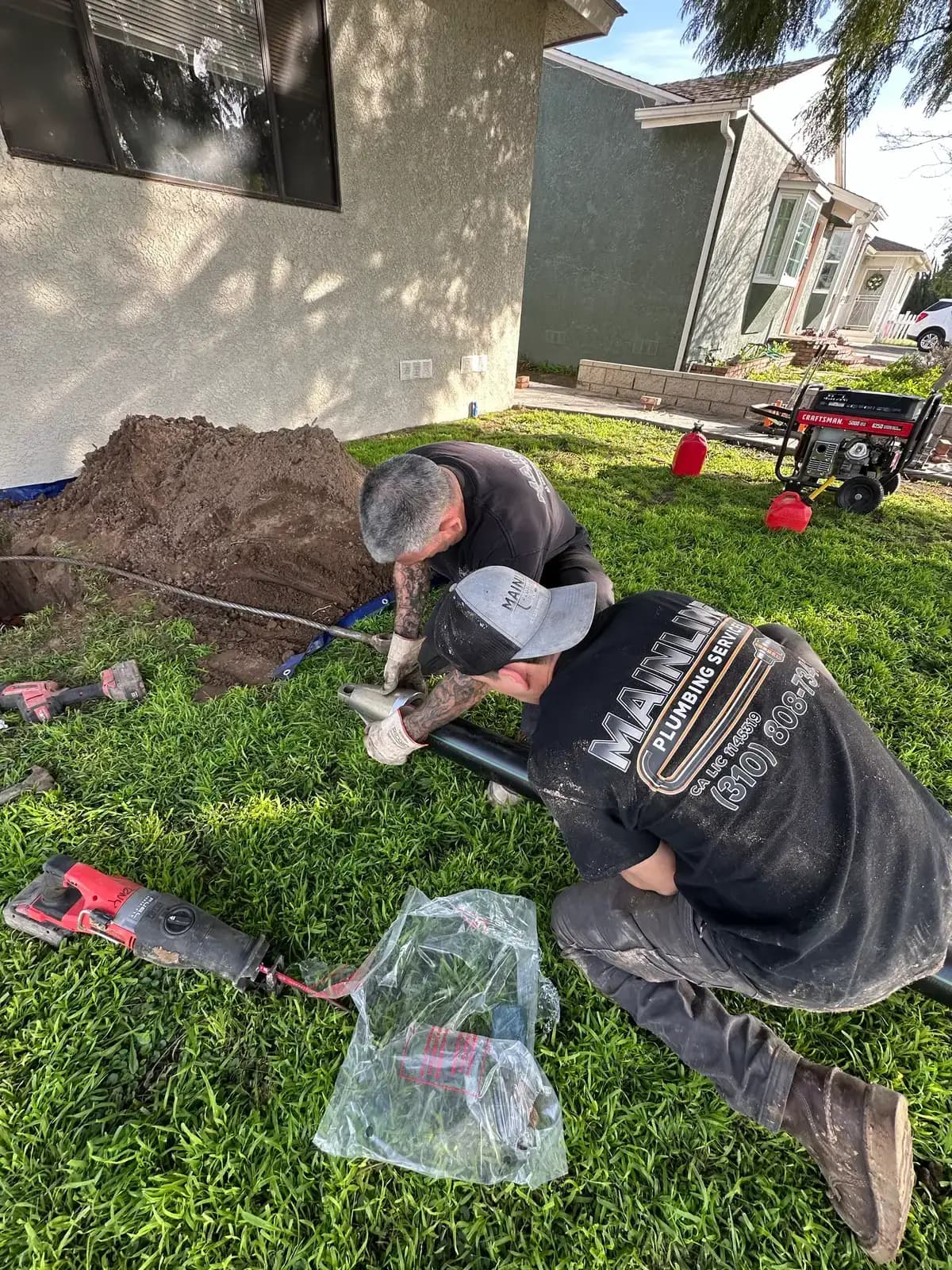
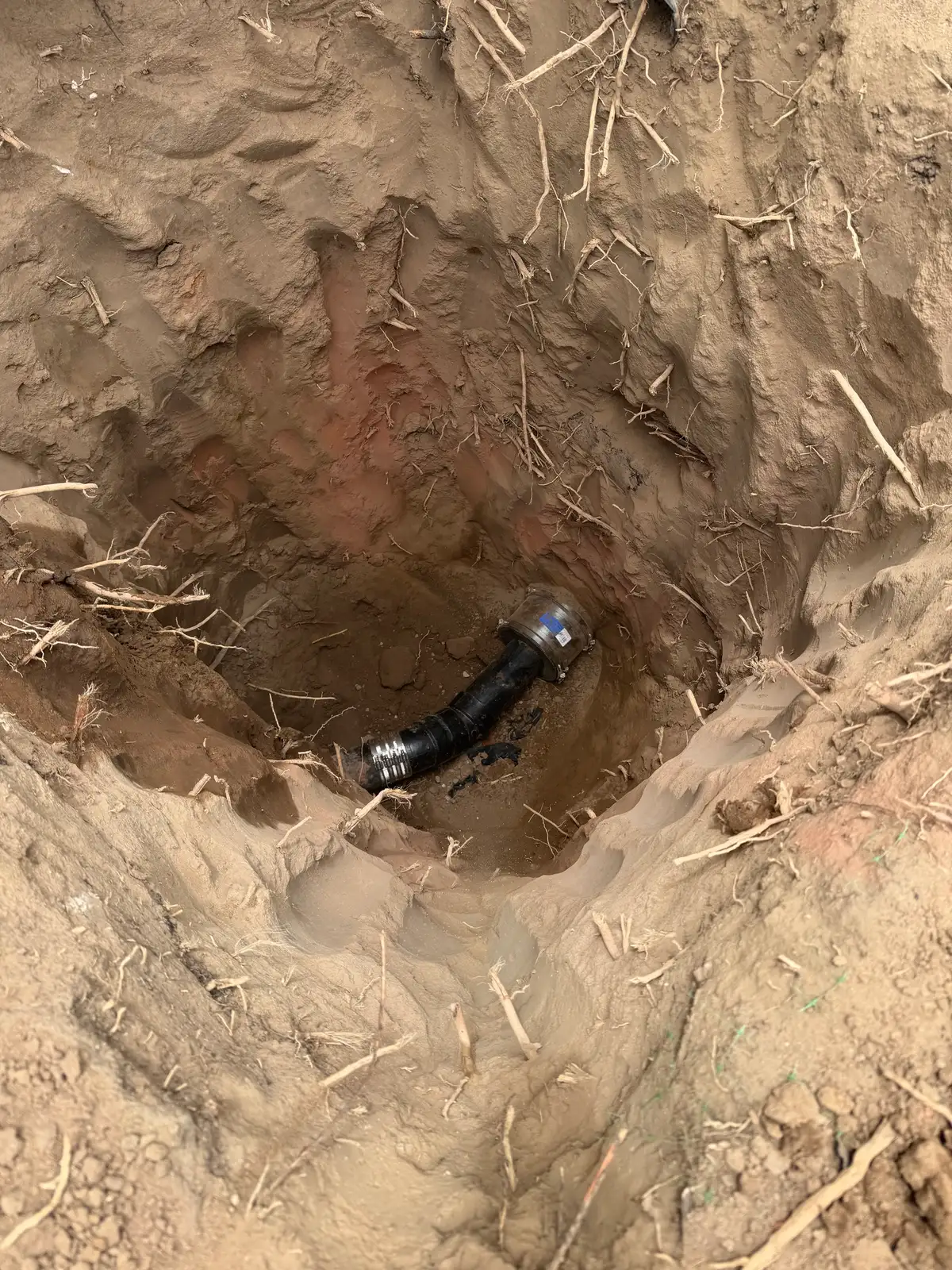
Pipe bursting and CIPP lining work from access pits at each end of the failed run — typically 24 to 36 inches across. Those pits still encounter groundwater, but the lateral itself is replaced or rehabilitated without opening the ground above it. The structural problem gets solved; the soil stays in place.
What's actually failing under Naples and Belmont Shore
The original housing stock in Naples and Belmont Shore dates from the 1910s through the 1940s. Sewer laterals installed during that era were vitrified clay tile — sections of pipe with bell-and-spigot joints, no rubber seals, set in compacted fill that has settled and shifted over eight decades. The joints are the weak point. Root intrusion, joint separation, and longitudinal cracking are the failure modes we see most in [camera inspection](/services/trenchless/camera-inspection) footage from this area.
Belmont Heights and Bluff Park, set back from the water, have similar vintage pipe but less groundwater pressure. The failure pattern there is more often root-infiltrated clay with partial collapses — still trenchless-appropriate, but the urgency is different than a canal lot where a broken lateral is sitting in standing water.
Clay tile also has essentially zero remaining structural strength once it cracks longitudinally. A spot repair can address a joint gap, but a lateral with multiple crack points across its run needs full replacement or a CIPP liner that bonds to the pipe wall and bridges the damaged sections.
Pipe bursting vs. CIPP: which applies where
Pipe bursting fractures the existing pipe outward and simultaneously pulls a new HDPE pipe into the cavity. It's the right call when the existing host pipe has enough structural integrity to guide the burst head — clay tile and cast iron both work — and when you need to upsize the diameter. A 4-inch original lateral going to 6 inches is a standard pipe-burst upgrade for older Long Beach homes that have added bathrooms or ADUs.
CIPP lining pulls a resin-saturated liner into the existing pipe and cures it in place, creating a smooth, jointless inner pipe inside the host. It's better suited when the host pipe is intact enough to support the liner during cure, when root damage is the primary issue rather than structural collapse, and when the access geometry makes pulling a burst head impractical. Both methods require the line to be cleaned and camera-verified before work begins.
On canal-facing Naples lots where we've confirmed joint separation rather than full collapse, CIPP is typically faster. On a run where the clay is fractured in multiple locations or the homeowner wants a diameter increase, pipe bursting is the cleaner long-term fix. [Trenchless sewer repair in Long Beach](/service-areas/long-beach/trenchless) always starts with a camera inspection — the footage determines the method, not the other way around.
Access and permit logistics on Naples Island
Naples lots are small. Many have alley access, decorative landscaping, or paver surfaces that homeowners understandably don't want torn apart. Trenchless work limits surface disruption to the two access pits — one at the house cleanout and one near the connection at the city main. Pavers can be lifted and reset over a pit that size; they cannot be reset over a 40-foot open trench.
Permits are required for sewer lateral work in Long Beach regardless of method. The city inspects before work begins and after completion. Our crew pulls the permit as part of every job — it's not an add-on. On Naples Island, the inspection also verifies the lateral terminates correctly at the city sewer main rather than at an older private line segment, which some pre-1950 properties still have.
If the property is near a canal easement, LA County Public Works may have a separate review step for any excavation within their setback distance. Trenchless methods with minimal pit size generally clear that threshold without issue; open-cut typically doesn't.
What a complete lateral replacement costs and what affects that number
A full pipe-burst or CIPP replacement of a sewer lateral in Long Beach — from the house cleanout to the city main connection — typically runs $4,500 to $9,500 depending on lateral length, pipe diameter, access conditions, and whether any spot repairs at the connection point are needed. Naples and Belmont Shore jobs at the higher end of that range usually involve longer runs, paver surfaces, or the additional dewatering work at the access pits.
Camera inspection before the project is free with a trenchless or repair quote, and it is not optional on a lateral with unknown failure history. The footage determines whether you're lining, bursting, or doing a targeted spot repair — skipping it means guessing at method and potentially pricing a job that doesn't match what's actually there.
Emergency trenchless calls — active sewage backing into the house — are dispatched 24 hours a day with a 40-minute target response for Long Beach. We don't charge overtime rates on nights or weekends. The [trenchless sewer repair](/services/trenchless) scope is the same regardless of when you call.
Long Beach trenchless sewer repair questions we hear most
**Can I tell if my lateral is clay tile without a camera?** Rarely with certainty. If the house was built before 1945 and hasn't had documented sewer work, clay tile is likely. But the only way to confirm pipe material, joint condition, and failure location is a camera run. Age alone doesn't tell you whether a lateral needs full replacement or just a liner.
**Will the city replace the lateral if it fails at the main connection?** No. Long Beach homeowners are responsible for the lateral from the house all the way to where it connects at the city main — even the section under the sidewalk or parkway. The city maintains the main line itself.
**Does pipe bursting increase the pipe diameter?** Yes. Standard residential bursting goes from 4-inch clay to 4-inch or 6-inch HDPE. Upsizing to 6 inches makes sense when a home has added a bathroom or laundry room since original construction and the original lateral was undersized for the new load.
**How long does the work take on a Naples lot?** A standard lateral replacement — pipe burst or CIPP — runs one to two days from permit-in-hand. Most of that time is setup, access pit excavation, and the cure or pull operation. The actual pipe installation is a fraction of the total time.
**Is the new pipe covered by a warranty?** HDPE pipe used in pipe bursting carries a manufacturer's material warranty. Our workmanship warranty covers the installation. We'll provide those terms in writing before any work begins.
**How do I verify your license?** We hold California C-36 plumbing license #901735, issued to Mainline No-Dig Trenchless Plumbing. You can verify that number directly on the CSLB website at cslb.ca.gov — search by license number and confirm the status is active.
What to do next
If you're on Naples Island, Belmont Shore, or anywhere in Long Beach with a slow drain, sewage smell, or a real estate transaction requiring a sewer inspection, the first step is a camera run. That footage tells you exactly what's failing, where, and what method fixes it. There's no reason to speculate when the answer is 40 minutes away.
Call Mainline No-Dig Trenchless Plumbing at (310) 808-7343. We dispatch 24 hours a day, seven days a week, with no overtime fees. Licensed C-36 contractor #901735, headquartered in Lomita, serving Long Beach and 15 other South Bay cities.
Tags
Related Services