The bungalows along Gramercy Avenue and El Prado Avenue in Old Town Torrance are some of the most intact pre-war housing stock in the South Bay. Built mostly between 1912 and 1935, they have original hardwood floors, decorative tile, and in many cases original plumbing. That last part is not a selling point.
Galvanized steel supply pipe installed in 1928 has a design life of roughly 40–50 years. At 90+ years past that threshold, what remains inside those pipes is a narrowed, partially obstructed channel coated in iron oxide scale — and in the worst cases, sections that have fully closed off. The drain side is no better. Original cast iron stacks in this era are often at or past terminal corrosion, and Orangeburg sewer laterals — a fiber-tar composite pipe common in 1940s–1950s Torrance — were never designed to last past 50 years.
This post covers what we find when we scope pre-war homes in Old Town and Walteria, why the failure profile is predictable, and how we approach repipes in houses where the goal is to fix the plumbing without destroying the original finishes.
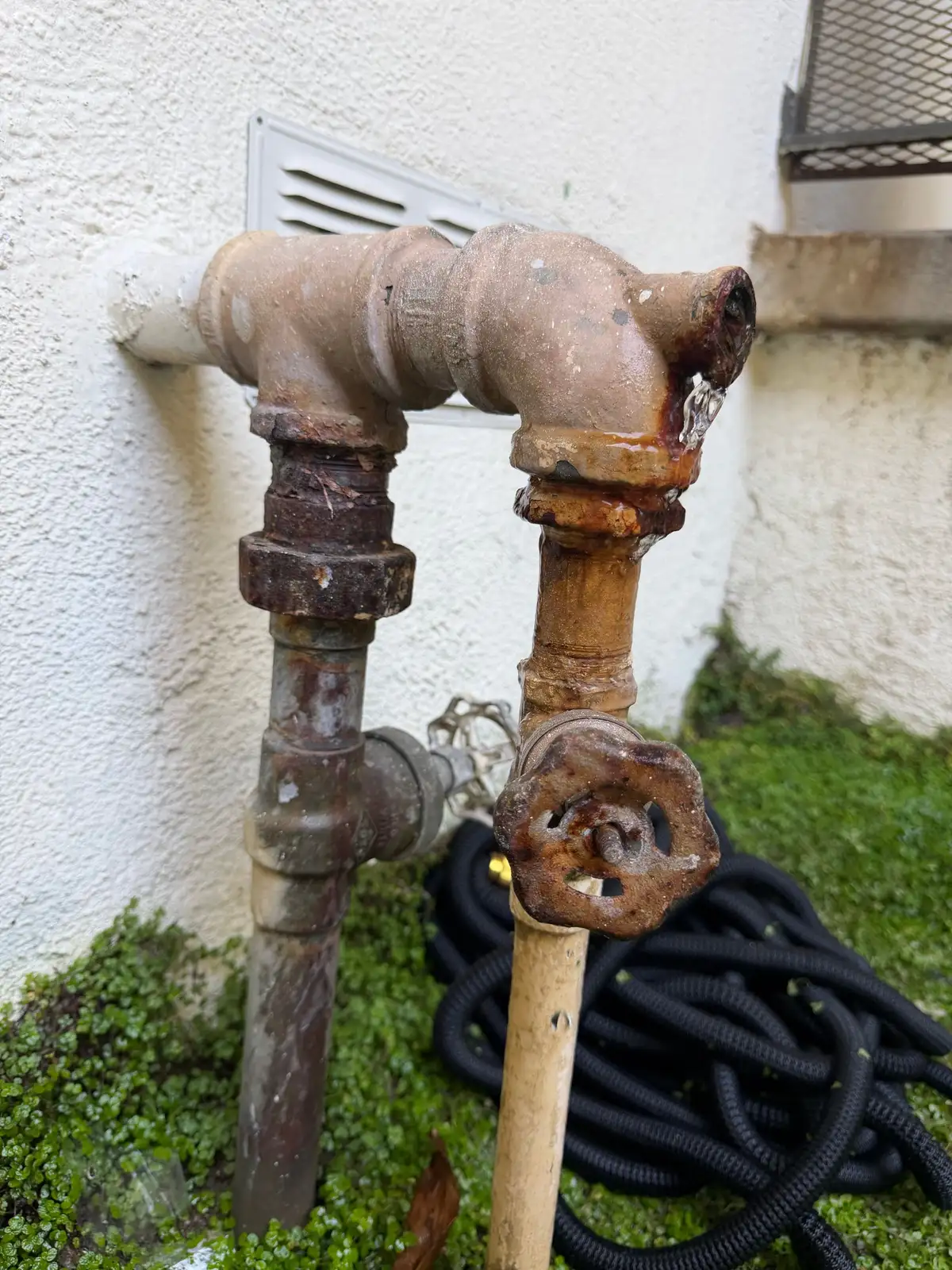
What galvanized supply pipe looks like at 90 years
Galvanized pipe corrodes from the inside out. The zinc coating applied to the steel corrodes first, then the iron beneath it oxidizes and builds up on the interior wall. Over decades, the effective bore diameter shrinks. A 3/4-inch supply line that once delivered 8–10 GPM may be delivering 2–3 GPM by year 80. Homeowners usually notice this as low pressure at showers and fixtures furthest from the meter — particularly on the second floor if the home has one, or at the back of longer ranch-style layouts.
The corrosion is not uniform. Long horizontal runs in crawl spaces corrode faster at the bottom where condensation pools. Sections near original strap hangers corrode faster at the contact point. When we camera a galvanized supply line in a pre-war Torrance bungalow, we typically see a mix of heavy scaling, pinhole perforations with dried mineral deposits on the exterior, and in older sections, full-thickness breach. The pipe looks intact from the outside until it doesn't.
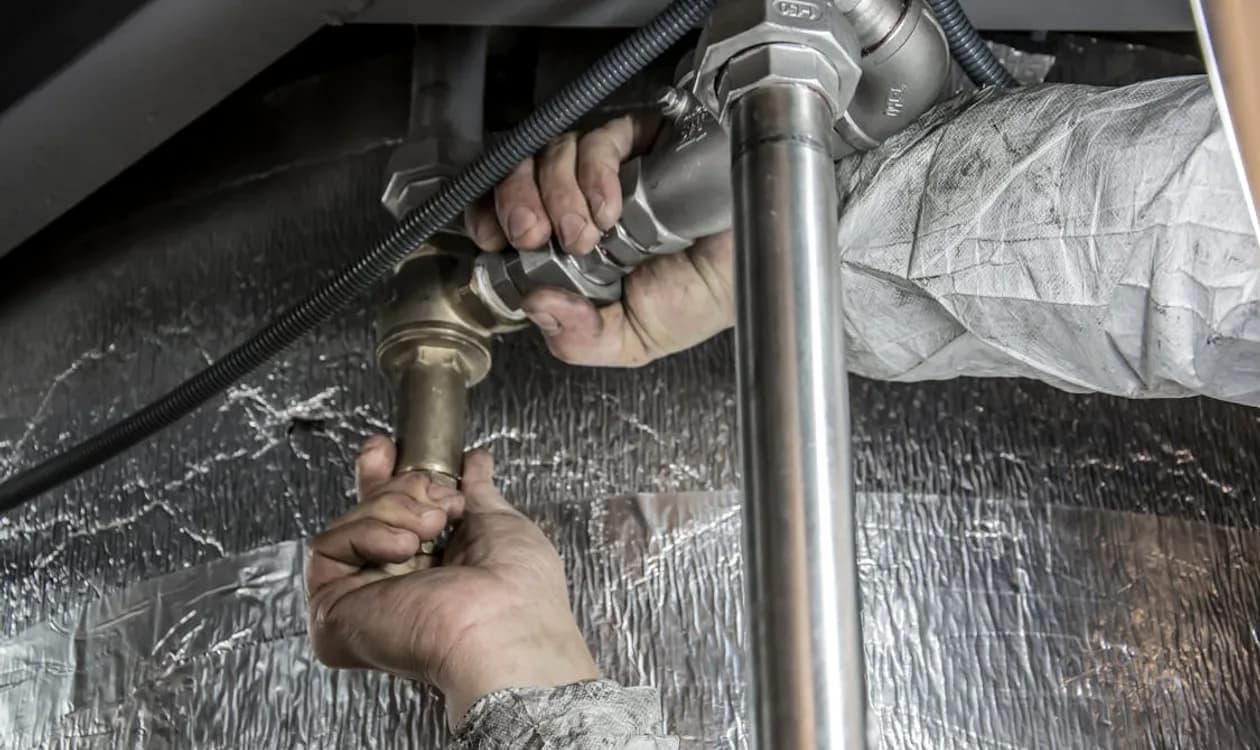
At 90-plus years, patching individual sections is not a viable strategy. Every section is compromised to some degree. A repair at one pinhole doesn't change the condition of the adjacent 40 feet of pipe. When we assess [whole-house repiping in Torrance](/services/repipes) on homes from this era, the answer is almost always full replacement — supply and shutoff valves both.
Cast iron drain stacks: terminal corrosion vs. functional corrosion
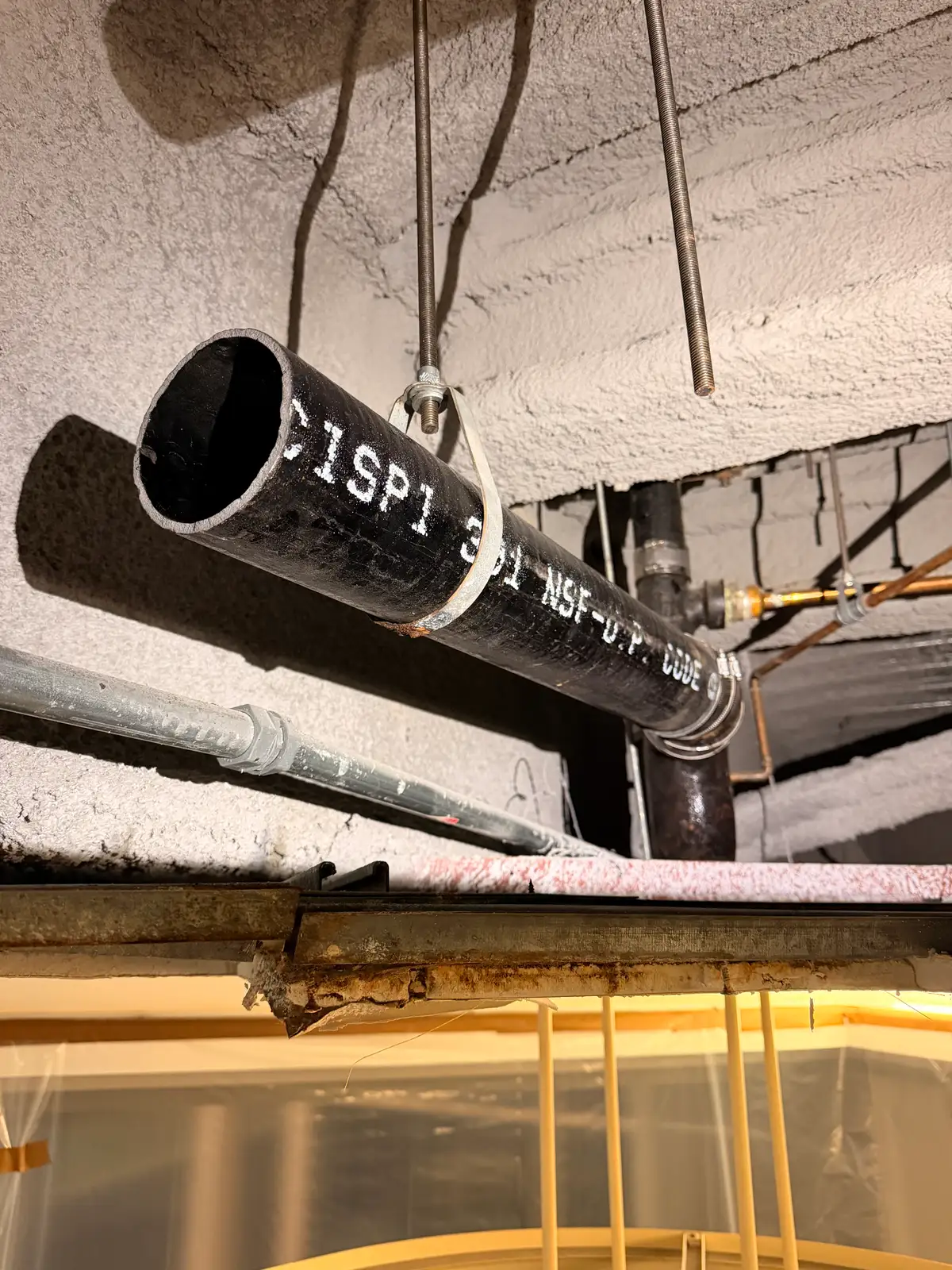
Not all corroded cast iron is at end-of-life. Cast iron manufactured before 1960 was often heavier wall than modern alternatives, and a drain stack that has been in continuous use without backups or failures may still have functional wall thickness — even with visible surface rust. The question is whether corrosion is cosmetic or has breached the pipe wall.
What we call terminal corrosion is when the pipe wall has thinned to the point where it no longer holds hydrostatic load under drain flow. You can see it on a camera inspection as a flaking, layered interior surface where sections of the pipe wall are separating. At that stage, the pipe is structurally failing — not just corroding. In pre-war Old Town Torrance homes, the drain stack from the second-floor bathroom down through the floor system is the most common failure point. The stack gets wet-dry cycling and oxygen exposure that accelerates deterioration.
We use a [camera inspection](/services/trenchless/camera-inspection) before recommending cast iron replacement. A scope tells us actual wall condition — not just age. Some stacks we find in 1930s Torrance bungalows still have functional wall thickness and can run another decade with proper maintenance. Others are at terminal stage and need to come out. We won't tell you to replace something that doesn't need replacing, and we won't patch something that's past the point of repair.
Orangeburg laterals: the failure that runs on schedule
Orangeburg pipe is a pressed fiber and tar composite that was widely used for sewer laterals in Southern California from the late 1940s through the early 1960s. It was a wartime-materials-era substitute for cast iron that was never intended to be a permanent installation. The design life was roughly 50 years under ideal conditions. Most South Bay Orangeburg is now 60–75 years old.
The failure mode is deformation. Orangeburg absorbs moisture over time, and under the pressure of soil load, it begins to flatten. A circular 4-inch drain opening collapses to an oval, then to a slot. Solids catch at the restriction, and backups become frequent before the pipe finally closes entirely. On a camera, it looks like the pipe is breathing — the walls have a soft, compressed appearance instead of the rigid profile of clay tile or modern PVC.
In the Walteria and Hollywood Riviera neighborhoods of Torrance, Orangeburg laterals are common on homes built in the late 1940s and 1950s — which overlaps with the post-war expansion that followed the original pre-war Old Town core. If your home dates from that period and you haven't had the lateral scoped, the condition is unknown. That's a liability going into escrow — not because Torrance requires an inspection at sale, it doesn't, but because the city holds you responsible for the entire lateral including the tie-in at the public main, and a buyer's scope will find what yours didn't.
The ceiling-access strategy for protecting original finishes
The hardest part of repiping a pre-war bungalow isn't the plumbing. It's the access. Homes in Old Town Torrance often have original Douglas fir hardwood floors, period tile in bathrooms, and in some cases original plaster walls that are irreplaceable. Opening the floor to run new supply lines is not a neutral act. You're cutting through finish material that may have been in place for 90 years.
The ceiling-access approach inverts the conventional method. Instead of running supply through the floor from below, we route new PEX supply lines through the ceiling space and drop down inside wall cavities to each fixture. This requires small ceiling patches instead of floor cuts. Ceiling drywall is patchable without the aesthetic consequence of cutting original hardwood. Tile is avoided entirely in most configurations.
The tradeoffs are real. Ceiling routing requires longer pipe runs in some layouts, and it demands detailed pre-planning to identify where drops align with wall stud bays. Not every layout is compatible — some require hybrid approaches where one wing routes through the ceiling and another uses a crawl space corridor. We scope the structure before committing to an access strategy, not during the job.
PEX vs. copper in a pre-war repipe
Both PEX and copper are legitimate supply materials in a full repipe. The choice in a pre-war bungalow comes down to three factors: routing complexity, budget, and long-term maintenance preference.
PEX is flexible, which makes it significantly easier to route through ceiling cavities and down inside wall bays without rigid offsets at every turn. A single PEX run can snake through a ceiling joist bay, down a stud cavity, and out to a fixture without a fitting at every direction change. That flexibility directly reduces the number of access holes required — which matters when you're trying to preserve original plaster or drywall. Copper requires a fitting at every bend, which means more solder joints, more access points, and longer install time in a complex routing scenario.
Copper has better UV tolerance if any runs are exposed, and some homeowners prefer it for resale optics. In a completely concealed repipe, the performance difference is minimal. Both materials carry lifetime warranties from reputable manufacturers. Our crews have done both in pre-war Torrance homes — the ceiling-access strategy works with either, but PEX is the more practical choice in tight, complex layouts where routing flexibility determines how many walls you open.
What a pre-war plumbing assessment actually covers
When we assess a pre-war Torrance bungalow, we're looking at four systems independently: the supply side (galvanized), the drain-waste-vent side (cast iron), the sewer lateral (clay tile or Orangeburg), and the water heater. Each has its own failure timeline and its own consequence.
Supply is the most urgent in most homes we see because low pressure and pinhole leaks cause active damage — water in wall cavities, subfloor rot, and mold risk. Drain stacks come second because failure there causes sewage exposure. The lateral matters most for property transfer, since a buyer's scope report becomes a repair request and Torrance leaves the whole line — street portion included — on the owner. The water heater is usually the easiest to assess — if it's original or over 15 years old, it gets replaced on a separate line item regardless of what the pipes look like.
We carry 25-minute target response times in Torrance for emergency calls, 24/7, with no overtime fees. But a pre-war home assessment isn't an emergency call — it's a scheduled scope that typically runs 60–90 minutes and gives you a clear picture of what's actually in the walls before anything fails catastrophically.
What to do next
If your home in Old Town Torrance, Walteria, or Hollywood Riviera was built before 1945 and hasn't had a documented plumbing assessment in the past 10 years, the systems described here are worth scoping. You may have functional cast iron that has years of service left, or you may have supply lines that are a wet winter away from a wall failure. The only way to know is a camera inspection and a pressure test — not a visual walkthrough.
Mainline No-Dig Trenchless Plumbing holds a Licensed C-36 #901735 and has been working in pre-war South Bay homes for 18-plus years. Our [Torrance repipe services page](/services/repipes) covers scope and process in more detail. To schedule an assessment or talk through what we typically find in your era of home, call (310) 808-7343.
Tags