Water hammer is a pressure wave. When a valve closes fast — a washing machine solenoid, a dishwasher fill valve, a modern single-lever faucet — moving water has nowhere to go and slams into the closed valve. The result is a concussive bang that travels through the pipe and into your framing. It can loosen joints, crack fittings, and eventually fail valves.
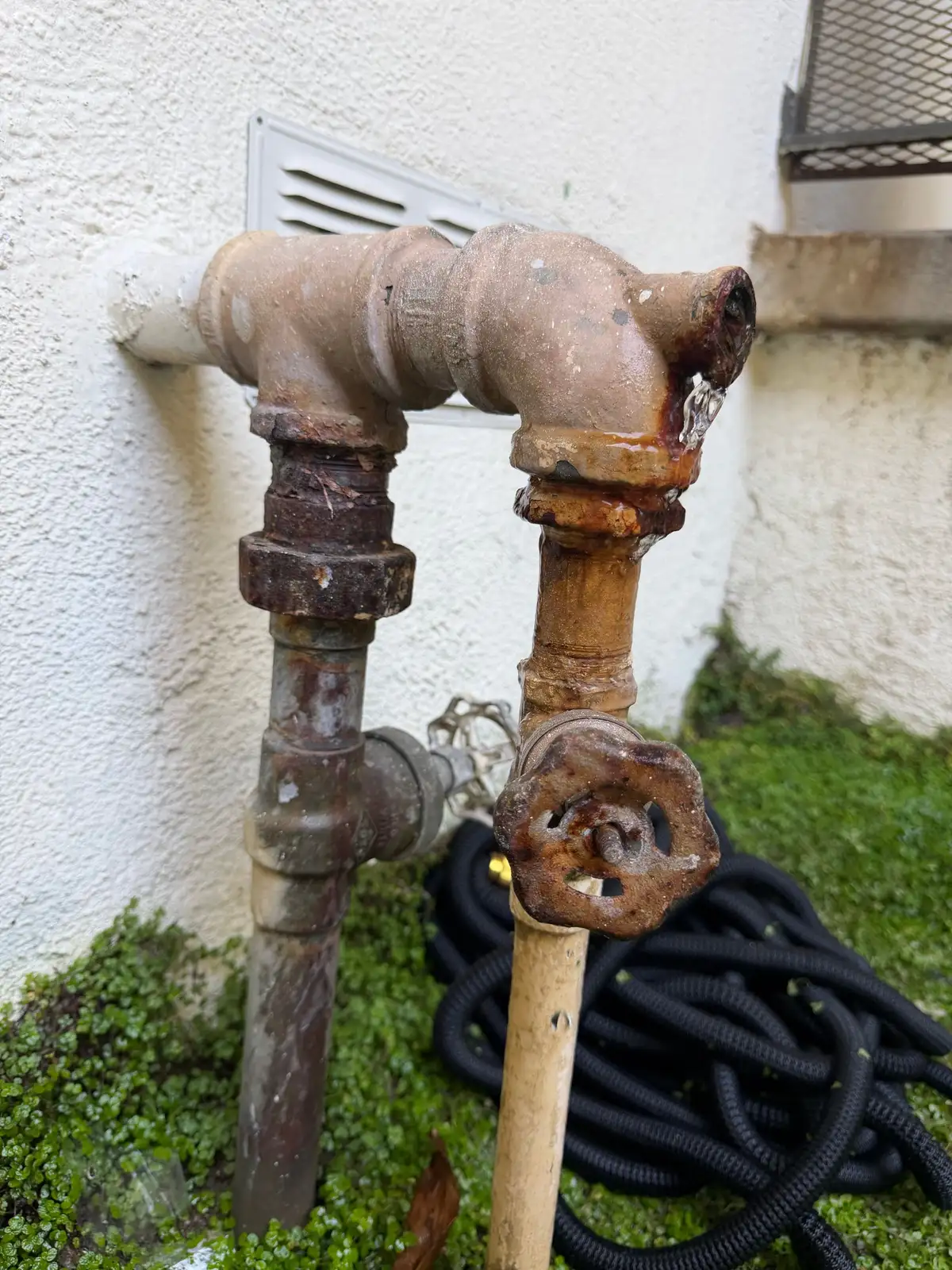
In the South Bay, homes built during the 1948–1965 tract boom in cities like Hawthorne, Gardena, and Lawndale are especially prone. Galvanized supply lines from that era were strapped to framing once every several feet. Decades later, straps rust through or loosen, leaving pipe sections free to move and amplify the impact noise considerably.
What's actually happening inside the pipe
Water is nearly incompressible. When it's moving at normal residential velocity — roughly 4–8 feet per second in a 3/4-inch supply line — and a solenoid valve snaps shut in under 50 milliseconds, the kinetic energy converts instantly to pressure. The spike can reach two to four times your static line pressure for a fraction of a second.
At 80 psi static pressure, a hammer event can briefly push 200–300 psi through fittings that were rated and installed for 80 psi. Repeat that several times a day for ten years and you're looking at work-hardened copper, cracked solder joints, and degraded washing machine hoses. The bang isn't just annoying — it's cumulative mechanical fatigue.
Older homes with air chambers — capped vertical pipes behind the wall near washing machine hookups — originally solved this by trapping a cushion of air. Over time that air absorbs into the water and the chamber fills. What used to work stops working, and the banging returns.
Three root causes — and how to tell them apart
**Velocity-driven hammer** happens when fast-closing valves are the culprit. Washing machines and dishwashers are the primary suspects because their solenoids close in milliseconds rather than the gradual closure of a hand-turned valve. If the bang correlates directly with the end of a fill cycle, this is almost certainly the cause.
**High static water pressure** amplifies everything. The Water Research Foundation puts residential best-practice pressure at 45–65 psi. Many South Bay homes run 80–100 psi off the municipal supply, particularly on lower-elevation streets in Torrance, Carson, and Gardena. At elevated pressure, even a moderately fast valve closure produces a significant hammer event. Check your pressure at a hose bib with a gauge that costs under $15 at any hardware store.
**Loose pipe straps** let the pipe swing and strike framing or adjacent pipes, which converts a small hydraulic event into a loud structural bang. In accessible areas — crawl spaces, exposed garage runs, under-sink cabinet interiors — this is a visual diagnosis. You'll see rust-stained strap holes, missing screws, or straps that pull free by hand.
What a homeowner can do before calling anyone
Start with a pressure reading. Attach a gauge to the hose bib closest to your meter and take a reading first thing in the morning before any fixtures run. Morning pressure is your peak static number. If it's above 80 psi, a failing or absent pressure-reducing valve (PRV) is part of the diagnosis — not just a contributing factor, but likely the primary one.
Walk every accessible pipe run and check straps. In a 1950s Gardena or Lawndale tract home, the original galvanized is often still in place in the garage or under the house. Loose straps can be re-secured with appropriate plumber's tape and screws, or replaced entirely. This is a homeowner-tier repair on exposed pipe. Inside walls is a different matter.
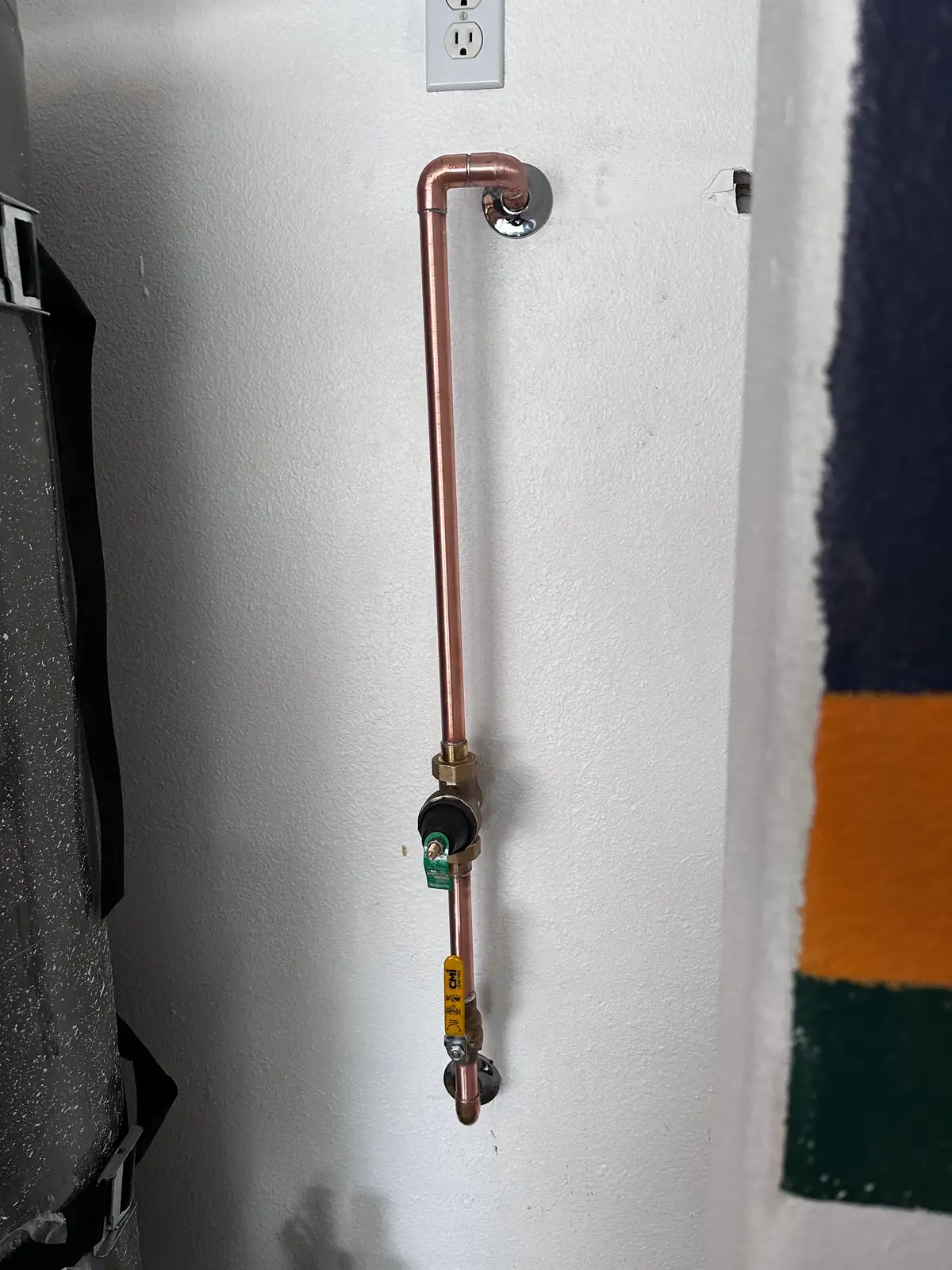
If the bang is isolated to the washing machine or dishwasher connection, a hammer arrestor installs in under ten minutes on an exposed hookup. It's a spring-and-piston device that absorbs the pressure spike. Screw-on arrestors for washing machine hose bibs cost $10–$25 and require no special tools. This fixes velocity-driven hammer at the source without touching anything else.
When a plumber needs to handle it
If your pressure gauge reads above 80 psi and you don't have a functioning PRV — or your PRV is more than 10 years old — that's a plumber call. A [PRV replacement](/services/water-pressure-regulator) on a standard South Bay residential line typically runs $250–$450 installed, depending on meter location and access. The PRV sits on the main supply line, usually near the meter or at the foundation. It's not a DIY repair because it requires shutting the main, working under pressure, and ensuring the downstream pressure is set correctly.
Hammer inside walls — where you can hear the pipe striking framing but can't access it without opening drywall — generally means in-wall strap replacement or a new hammer arrestor installed at the supply stub-out. On a [general plumbing](/services/general-plumbing) service call, a technician can often access the stub-out from inside a cabinet or through a small access panel without opening finished wall.
Persistent hammer combined with visible water stains, damp drywall, or a spiking water bill suggests the repeated pressure events have already damaged a joint or fitting. At that point you're past maintenance and into leak territory. Our crew handles [plumbing repairs in Hawthorne](/service-areas/hawthorne) and across the South Bay, and a camera or pressure test will confirm whether a joint has already started to weep.
Pressure-reducing valves: the one fix that covers everything
A properly set PRV is the single most effective water hammer intervention for South Bay homes. It reduces incoming municipal pressure to a consistent 55–65 psi and keeps it there regardless of street-side fluctuations. Many utilities in the region run trunk mains at 100–150 psi and rely on PRVs at the meter or meter pit to knock it down. If that PRV is missing, undersized, or worn, your interior plumbing is absorbing the full municipal pressure.
PRVs have a working lifespan of roughly 10–15 years under normal conditions. Salt-air environments in Redondo Beach, Hermosa Beach, and Manhattan Beach shorten that — the diaphragm and seat corrode faster. If your home is within a mile of the coast and the PRV is over 7–8 years old, it's worth testing. A plumber can verify set point and flow with a gauge in a few minutes.
After a PRV installation, residual hammer often persists for a few days while trapped air redistributes through the system. If it continues past a week at normal pressure, there's a secondary cause — usually loose straps or a failed air chamber — that needs separate attention.
South Bay water hammer questions we hear most
**My pipes only bang at night. Why?** Municipal supply pressure climbs when demand drops — typically midnight to 6 a.m. What passes for acceptable hammer at 65 psi daytime pressure becomes a loud event at 95 psi at 2 a.m. A PRV set to 60 psi eliminates the nocturnal spike.
**Will a hammer arrestor work on an in-wall washing machine hookup?** Yes, if the hookup box is accessible. The arrestor threads directly onto the hot and cold supply stubs inside the box. If the box is sealed or inaccessible, a plumber can add an access panel — usually a straightforward job that doesn't require patching tile or finished drywall.
**I replaced my washing machine hoses and the banging stopped for a while, then came back.** New braided hoses have slightly more compliance than old rubber hoses and can dampen mild hammer temporarily. But hose compliance isn't a real fix — it masks the pressure spike briefly. The hammer will return as the hoses stiffen. Address the PRV or install a proper arrestor.
**How do I know if my PRV is still working?** Take two pressure readings: one at a hose bib near the meter, one at a hose bib at the far end of the house. If both read above 80 psi, the PRV is either set too high, failing, or absent. If the near-meter reading is significantly higher than the far-end reading under flow, the valve may be restricting flow rather than regulating it.
**Is Mainline licensed for this type of work?** Yes. We hold C-36 plumbing contractor license #901735, which you can verify directly on the CSLB website. PRV replacement, hammer arrestor installation, and repiping all fall within C-36 scope.
**Can water hammer actually break pipes?** Repeated hammer events do cause damage over time — specifically to solder joints on copper, compression fittings, and valve bodies. A single severe event can split a fitting outright, particularly in older galvanized or corroded copper systems. It's not a theoretical risk in a 1960s Hawthorne tract home running at 90 psi.
What to do next
Start with the pressure gauge test — it takes five minutes and tells you whether you have a PRV problem before you do anything else. If pressure is under 65 psi and the bang is localized to the washing machine hookup, a screw-on arrestor is a reasonable first step. If pressure is above 80 psi, or if you're hearing hammer throughout the house, that's a plumber call.
The Mainline crew runs 24/7 dispatch across 16 South Bay cities with a 25–45-minute target response on emergencies and no overtime fees. For non-emergency scheduling or to have a technician verify your PRV and system pressure, call us at (310) 808-7343 or use the contact form on our site.
Tags