The rotten-egg smell from your hot water tap is almost always hydrogen sulfide gas produced by sulfate-reducing bacteria (SRB) reacting with a corroding magnesium anode rod inside your tank. The fix is a targeted anode swap — magnesium out, aluminum/zinc in — combined in some cases with a tank flush and disinfection. It costs less than $150 in most situations and eliminates the odor at the source.
This problem shows up across the South Bay in homes with tank water heaters on well or municipal supply. We see it frequently in Redondo Beach and Hermosa Beach, where salt-air corrosion already accelerates metal degradation, and in Hawthorne and Gardena, where aging 1950s–1960s tanks often have anodes that haven't been touched since installation. The smell is not a sign the water is unsafe to drink in every case, but it does signal your anode rod is failing and your heater needs attention.
The chemistry: why hot water smells and cold water doesn't
Sulfate-reducing bacteria are present in most municipal water systems at low, harmless levels. Inside a tank water heater, they find an ideal environment: warm standing water, low oxygen, and a sacrificial metal rod that gives off electrons as it corrodes. That rod — the anode — is designed to corrode so the steel tank doesn't. The bacteria use the sulfate in the water and the electrons from the corroding magnesium to produce hydrogen sulfide (H₂S). That's the rotten-egg gas.
The reason you smell it only on the hot side is temperature and chemistry. Cold water moves through supply lines without the sustained warmth that accelerates both bacterial growth and anode corrosion. Your hot tank is essentially a sealed bioreactor running at 120°F — warm enough for SRB to thrive, but not hot enough to sterilize them. Tanks set below 120°F are even more susceptible; below 113°F, Legionella becomes an additional concern.
Magnesium anodes are the most reactive and therefore the most prone to feeding this reaction. Aluminum/zinc combination anodes corrode more slowly and release zinc ions, which inhibit SRB activity. That's the core of the fix.
Is it the heater or the supply line?
Run this test before doing anything else. Turn on the cold tap at a kitchen sink and let it run for 30 seconds. Smell the water. Then do the same on the hot tap. If cold water smells and hot water smells, the source is upstream — likely the municipal supply or a softener. If only the hot water smells, the problem is inside the tank.
A whole-house water softener can make this worse. Softeners exchange calcium and magnesium ions for sodium, but they can also boost sulfate concentration and increase bacterial load in ways that feed SRB inside the water heater. If you added a softener in the last year or two and the smell appeared shortly after, that's a likely contributing factor.
If the cold water also smells, contact your water utility to test the supply. LADWP and the smaller districts serving South Bay cities do provide water quality reports and can test on request. If cold tests clean and only hot smells, proceed with the anode swap described below.
The aluminum/zinc anode swap: what actually happens
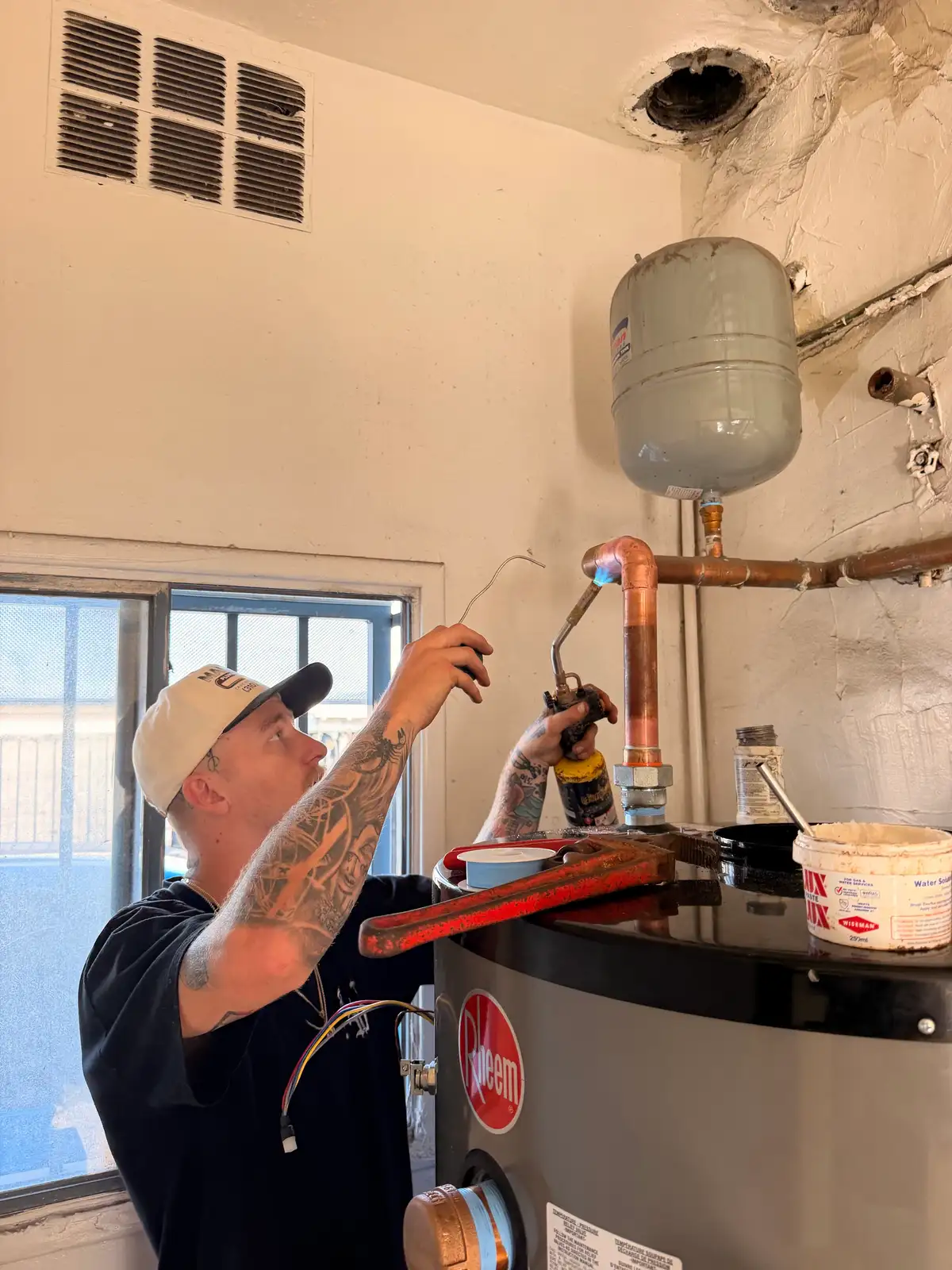
Replacing a magnesium anode with an aluminum/zinc anode is a one-to-two hour job for a licensed plumber. The plumber shuts off the cold supply, connects a hose to the drain valve to relieve pressure, and removes the hex-head anode — typically located under a plastic cap on top of the tank or through the hot outlet. Corroded anodes sometimes seize and require a breaker bar and socket. We allow extra time for tanks older than 8 years.
After the new anode is installed, we recommend flushing the tank fully to clear the sediment layer where bacteria concentrate. Then a disinfection flush — 1–2 pints of 3% hydrogen peroxide introduced through the anode port, circulated for 2 hours, then flushed — kills the remaining SRB colony without chlorinating your entire plumbing system. Chlorine bleach works too but requires a longer flush cycle to clear taste and smell from the hot side.
Tankless water heaters don't use sacrificial anodes and don't develop this problem. If you're on a [tankless system](/services/water-heaters), the rotten-egg smell has a different origin — check the incoming supply and any pre-filter housings for stagnant water pockets.
For homeowners in Redondo Beach on older tank water heaters, we already see accelerated anode depletion from salt-air-influenced corrosion. The standard 5-year anode inspection interval is too long for coastal properties — 3 years is the right cycle. You can read more about [water heater service in Redondo Beach](/service-areas/redondo-beach/water-heaters) and the specific factors that shorten equipment life near the coast.
When the anode swap isn't enough
If the smell returns within 6–8 weeks of a fresh anode and disinfection flush, you have one of three situations: the bacteria colony is unusually entrenched in the tank sediment, your water chemistry has elevated sulfate levels that make SRB particularly active, or the tank itself is at end-of-life and the interior lining is compromised.
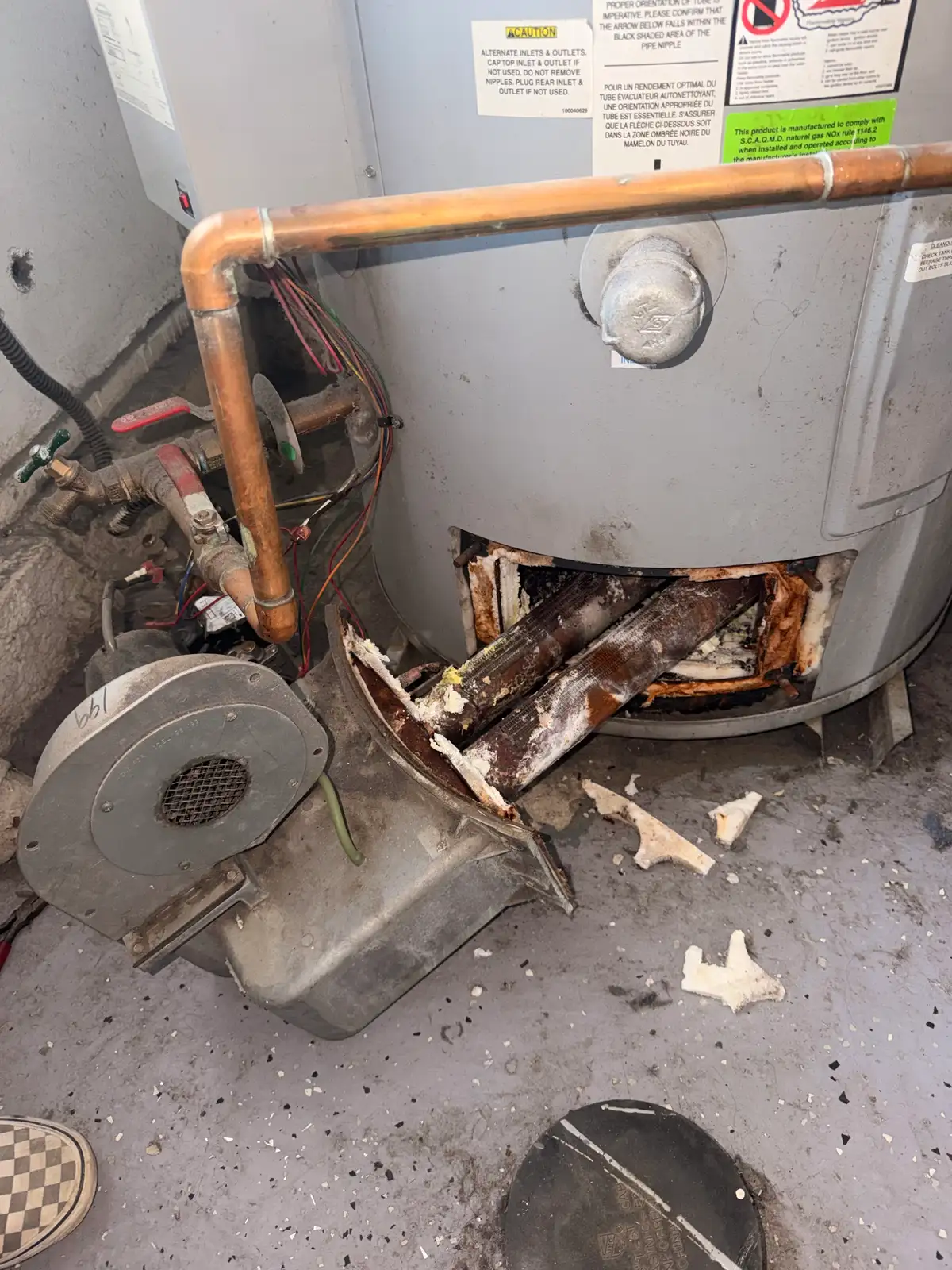
A tank older than 10–12 years with persistent odor is usually a replacement decision, not a repair decision. At that age, the anode is likely fully consumed, the dip tube may be degraded, and sediment buildup is reducing efficiency. Swapping anodes on a tank in this condition buys time at best. A [standard water heater replacement](/services/water-heaters) is the cleaner call.
We also see cases where the problem isn't the tank at all but a stagnant segment of pipe — a dead-end run to a guest bathroom or a seldom-used outdoor shower. Water sitting in an unventilated section of pipe for days can develop SRB on its own. In those situations, we flush the affected branch and evaluate whether a recirculation adjustment is needed.
What this costs and what to expect
An anode rod replacement with a disinfection flush typically runs $120–$200 in labor plus the cost of the aluminum/zinc anode, which is $25–$60 depending on the tank diameter and thread size. Total out-of-pocket is usually $150–$260. If the drain valve is seized or stripped — common on older tanks — add $50–$80 to address that before we can flush.
A full tank replacement if the unit is past its useful life runs $900–$1,400 installed for a standard 40- or 50-gallon gas unit, including permit. Those numbers vary with access, venting configuration, and whether you're converting from electric. We do not charge overtime fees for 24/7 dispatch, so a weekend call for a failed heater costs the same rate as a weekday appointment.
South Bay hot water smell questions we hear most
**Why does the smell only happen in the morning?** Overnight the water sits stationary in the tank and supply lines. SRB produce hydrogen sulfide continuously, and it accumulates in the standing water. The first draw of the morning carries that concentrated gas. After a few gallons run, fresh water enters the tank and the smell drops off. This pattern strongly confirms the source is inside the tank, not the supply.
**Can I add bleach myself to kill the smell?** You can, but it requires care. Turn off the heater, shut the cold supply, connect a garden hose to the drain valve and run it somewhere safe, drain 2–3 gallons, pour 1 cup of unscented household bleach into the cold inlet, restore supply, let the tank fill and sit for 2 hours, then flush fully through every hot tap in the house until the chlorine smell clears. This works as a short-term reset but doesn't address a depleted anode — the smell will return in weeks if you don't also swap the rod.
**Does a tankless water heater fix this permanently?** Yes, in the sense that tankless units don't have an anode rod or a standing reservoir for bacteria to colonize. If your tank water heater is aging and the odor keeps returning, a tankless conversion solves it structurally. That said, the upfront cost is higher — $2,000–$4,500 installed depending on the unit and venting requirements. It's worth evaluating total cost of ownership before committing.
**Is the water safe to drink while this is happening?** Hydrogen sulfide at the concentrations produced by SRB in residential water heaters is not acutely toxic at typical exposure levels, but this is not a health clearance — have your water tested if you're uncertain. The bacteria themselves are generally non-pathogenic, but we always recommend resolving the underlying problem rather than tolerating it.
**How do I verify Mainline No-Dig is a licensed plumber?** We hold California C-36 Plumbing Contractor license #901735. You can verify current status directly at the CSLB license lookup at cslb.ca.gov using that license number.
**Can this problem affect a brand-new water heater?** It can, especially if the new tank is filled with water that already has elevated SRB levels and the magnesium anode begins corroding quickly in high-sulfate water. Some manufacturers ship tanks with magnesium anodes as a cost decision. If you're in an area with known water quality issues, request an aluminum/zinc anode at installation or ask your plumber to swap it at startup.
What to do next
Run the hot-versus-cold smell test first. If only the hot water smells, the fix is an anode swap and tank flush — a straightforward job that eliminates the problem at the source. If the tank is 10 or more years old, get a replacement quote at the same time so you're making an informed decision, not just delaying it.
Mainline No-Dig Trenchless Plumbing (Licensed C-36 #901735) serves 16 South Bay cities with 24/7 dispatch and a 25–45-minute target emergency response. There are no overtime fees. Call **(310) 808-7343** to schedule a water heater inspection or to get a straight quote on an anode replacement or full unit replacement. We'll tell you exactly what you have and what it will cost before any work starts.
Frequently Asked Questions
Why does my hot water smell like rotten eggs?
Sulfate-reducing bacteria living in the tank react with the magnesium anode rod and produce hydrogen sulfide gas. That's the rotten-egg smell. It's a tank chemistry problem, not a water supply problem, which is why the cold tap smells fine.
Is rotten-egg smelling hot water dangerous to shower in?
The bacteria involved are not the kind that make people sick, and the concentrations are far below harmful levels. It's a nuisance rather than a health hazard. That said, a strong sulfur smell on both hot and cold taps points at the supply rather than the heater, and that's worth testing.
How do I get rid of the rotten egg smell in my water heater?
Replace the magnesium anode rod with an aluminum-zinc alloy rod and flush the tank. The zinc suppresses the bacterial reaction that produces the gas. A flush alone usually buys a few weeks; the anode swap is what actually fixes it.
Can I just remove the anode rod to stop the smell?
You can, and it will stop the smell — along with the corrosion protection keeping the tank alive. The anode is sacrificial; without it the tank wall corrodes instead, and you trade a smell for a leak. Swap the rod material rather than removing it.
How much does it cost to fix a rotten-egg smell in hot water?
An aluminum-zinc anode rod swap with a tank flush typically runs a few hundred dollars including labor. If the tank is over ten years old, sediment-heavy, or already showing rust at the fittings, that money is usually better applied to replacement.
Why does the smell come back after flushing the tank?
Because flushing removes sediment but not the bacteria colony or the reactive magnesium anode driving the reaction. Without changing the anode material, the conditions that produced the gas are still there and the smell returns within weeks.
Tags