Polybutylene pipe is a gray flexible plastic supply pipe manufactured and widely installed from approximately 1978 to 1995. It fails from the inside out — oxidants in municipal water degrade the inner wall over time, causing flaking, micro-cracking, and eventually sudden leaks at fittings or mid-run. You can't predict when a specific run will fail, which is why insurers treat it as a material defect rather than a maintenance issue.
The South Bay has meaningful polybutylene exposure. Cities that built out heavily during the 1980s — Hawthorne's 360 District infill, Carson's Scottsdale and Avalon Village tracts, Gardena's El Camino Village, and Inglewood's Hollywood Park area — all saw polybutylene used as a cost-effective alternative to copper during that era. If your home was built or substantially replumbed between 1978 and 1995, the check takes about ten minutes.
How to identify polybutylene in your home
Start at the water heater and the main shutoff — those are the most reliably exposed sections of supply pipe in any house. You're looking at supply lines only, not drain lines. Drain lines are black ABS plastic or cast iron. Supply lines carry pressurized water and are the ones that matter here.
Polybutylene is almost always gray. It's flexible, slightly soft compared to rigid copper or CPVC, and has a dull matte finish. The outside diameter is typically 1/2 inch or 3/4 inch. It may be marked 'PB' followed by a four-digit number — PB2110 is the most common stamp — though the print can be faded after 30 years. Some runs are coiled in the walls and only visible at the connection point to a fitting or manifold.
A few look-alikes create confusion. CPVC (chlorinated PVC) is cream or light yellow, not gray. PEX is red, blue, or white and feels rubbery. Standard gray PVC is rigid and used only in drain/waste/vent applications, not pressurized supply. If the pipe is gray, flexible, and connected to your supply system, treat it as polybutylene until confirmed otherwise. A [camera inspection](/services/trenchless/camera-inspection) can locate buried runs if you can't trace the system manually.
Where the fittings fail first
The majority of polybutylene failures occur at fittings, not mid-pipe. The original acetal plastic fittings (gray or white plastic crimp connectors) are the highest-risk point. Chlorine in treated municipal water attacks the fitting surface, causing hairline fractures that propagate slowly until the joint blows. Copper crimp fittings, sometimes used in later installations, fail at a lower rate but still present long-term risk because the pipe wall itself continues to degrade regardless of fitting material.
Signs of fitting stress visible without tools: discoloration or mineral staining around a crimp ring, slight weeping at a connection, or fittings that look slightly swollen or distorted. None of these will necessarily be obvious — polybutylene often fails suddenly without a visible warning phase. That's the core problem insurers have with the material.
Insurance and disclosure implications
Many homeowners insurance carriers in California either exclude polybutylene pipe outright, charge a significant premium surcharge, or require a repipe as a condition of new or renewed coverage. This is not universal — carrier policies vary — but the trend has been toward stricter treatment since roughly 2018, and some carriers that previously tolerated it have revised their underwriting guidelines since then.
On the real estate side, polybutylene is a material defect that requires disclosure in California under Civil Code 1102. Sellers who know the pipe material is present and don't disclose it are exposed to post-sale liability. Buyers who discover it during inspection routinely use it as a basis for price renegotiation or a repair credit. We've seen this slow or derail escrow on properties across the South Bay, including [Torrance](/service-areas/torrance), where buyers' agents routinely order a supply-line walkthrough alongside the sewer scope. Polybutylene on the supply side compounds that scrutiny.
If you're buying or selling a home built between 1978 and 1995, get the pipe material confirmed before listing or before your inspection contingency expires. A licensed plumber can verify the material in a single visit — this is not a gray area you want to discover at the final walkthrough.
Why a visual inspection alone is not enough
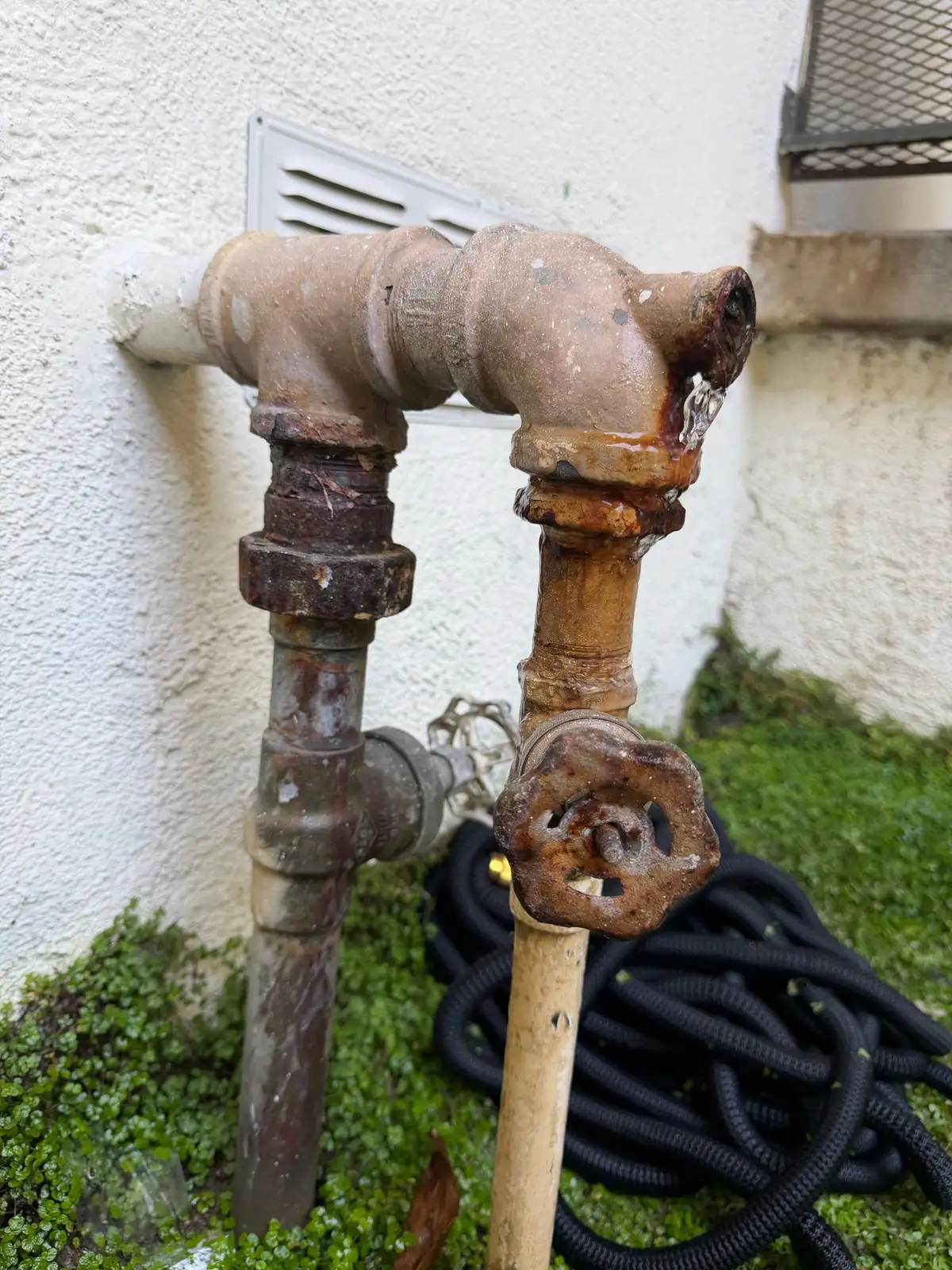
Homes that used polybutylene often have it hidden inside walls, under slabs, or in ceiling cavities. What's visible at the water heater or under a sink may be the last few feet of a run that extends 60 feet through a wall. Partial identification based only on exposed sections can give a false sense of the scope.
A pressure test can reveal active leaks but won't show a pipe that's degraded but not yet leaking. The most reliable approach for a complete assessment is a combination of visual inspection at all accessible points — water heater, main shutoff, under all sinks, behind toilets, in the garage — plus a review of any original building permits or plumbing records if the home changed hands multiple times. We do this kind of walkthrough as part of a [repipe evaluation](/services/repipes) before quoting any replacement work.
Repipe options when polybutylene is confirmed
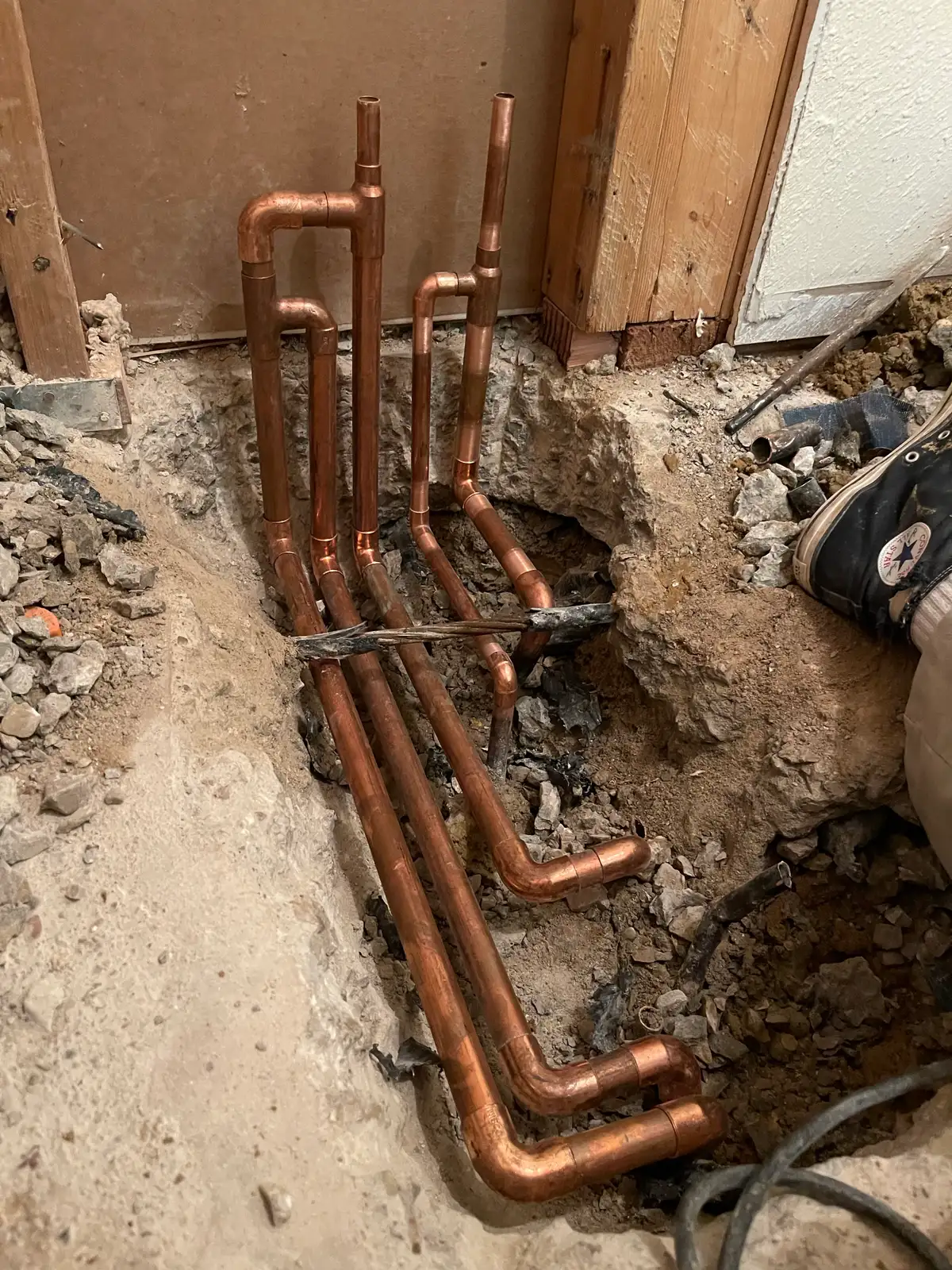
The two primary replacement materials in California residential work are PEX and copper. PEX (cross-linked polyethylene) is flexible, freeze-resistant, and installs faster through existing wall cavities with fewer fittings. Copper is rigid, has a long track record, and is preferred by some homeowners and buyers for its perceived durability. Both are fully code-compliant under California Plumbing Code. The right choice depends on your home's layout, wall access, and your own preferences — we lay out both options with honest tradeoffs before you commit.
A full repipe on a typical South Bay single-family home — 1,200 to 1,800 square feet, two baths, slab foundation — typically takes one to two days for the pipe work itself. Drywall patching follows as a separate phase. The scope varies significantly depending on how the home was built: a post-war Carson tract home with an accessible attic routes differently than a Hawthorne slab home with no crawl space access.
Partial repiping — replacing only the runs most at risk — is sometimes proposed as a lower-cost alternative. It can make sense in specific circumstances, but if the pipe is polybutylene throughout, you're managing failure probability rather than eliminating it. Insurers typically require full removal to reinstate standard coverage. We'll tell you honestly when a partial approach is defensible and when it isn't.
South Bay polybutylene pipe questions we hear most
**My house was built in 1987 and I've never had a leak — does that mean the pipe is fine?** No. Polybutylene can sit undisturbed for decades and then fail at a fitting without warning. The absence of leaks to date is not evidence of structural integrity. Degradation is chemical and internal; it doesn't announce itself before failure.
**Can I just replace the fittings and leave the pipe?** Fitting replacement extends the timeline in some cases, but the pipe wall itself continues to degrade regardless of fitting material. Insurance carriers that have a position on polybutylene are typically evaluating the pipe material, not just the fittings. Replacing fittings alone is unlikely to satisfy an underwriter who has flagged the system.
**Does the city require a permit for a repipe?** Yes, in every city we serve. A repipe is a permitted plumbing alteration under California Plumbing Code, and it requires inspection before walls are closed. We pull the permit and schedule inspections as part of the job — this is not optional and it's not an add-on fee.
**How do I know if you're licensed to do this work?** We're a licensed C-36 plumbing contractor, license #901735, issued by the California State License Board. You can verify that license number at CSLB.ca.gov before calling us.
**Does homeowners insurance actually drop you for polybutylene?** Policies vary. Some carriers exclude water damage caused by polybutylene failure. Others flag it during underwriting and require documentation of replacement. We've seen carriers in the South Bay require written confirmation of a completed repipe before reinstating full water-damage coverage. Check your policy's pipe material exclusions and call your agent directly — we can't advise on your specific policy terms.
**How long does a full repipe take?** For a typical 3-bedroom slab home in Hawthorne, Gardena, or Carson, the pipe work runs one to two days. Drywall patching is a separate trade and depends on how many access points were opened. We schedule the plumbing inspection before any drywall is closed so there's no backtracking.
What to do next
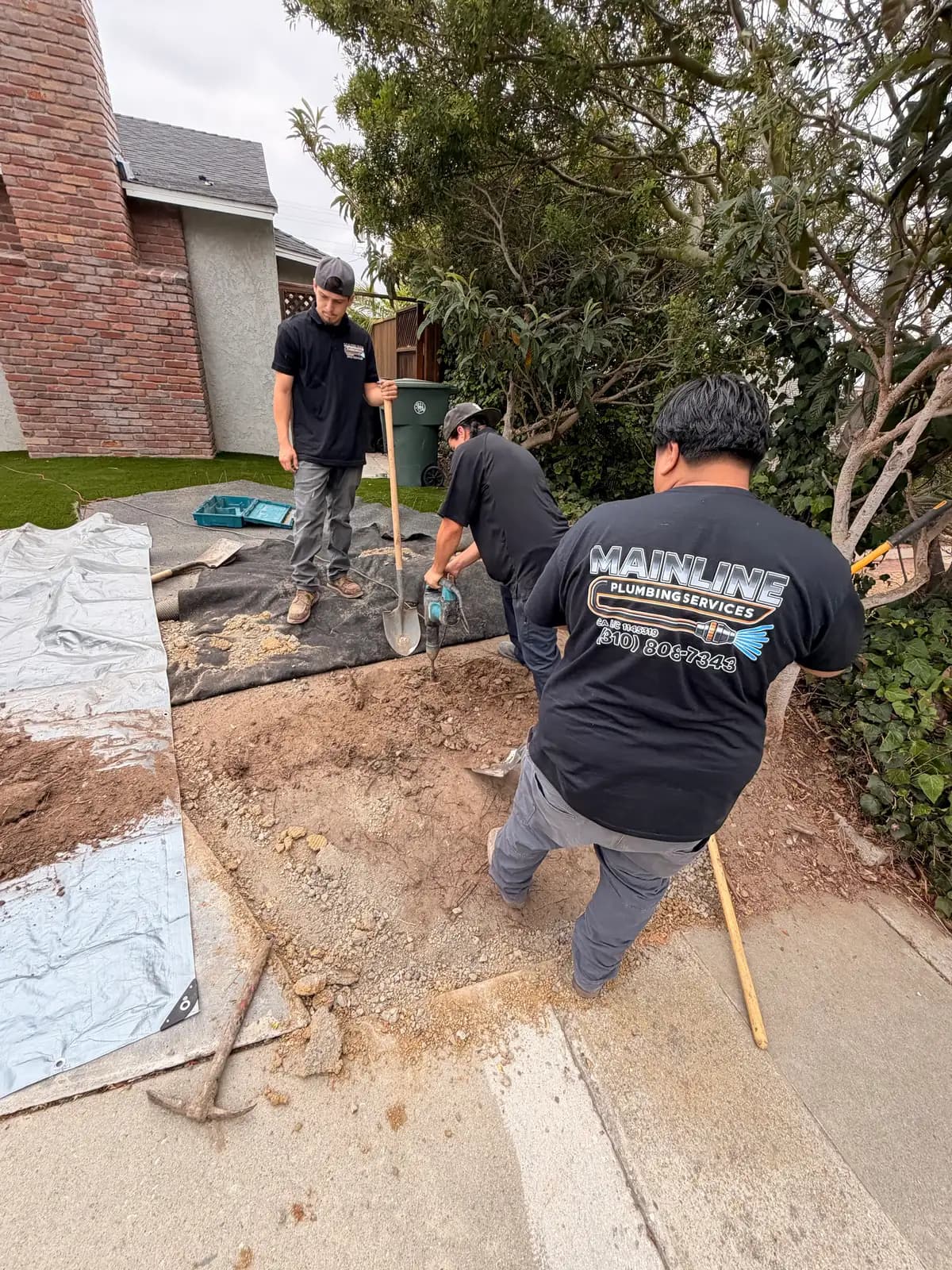
If you know or suspect your home has polybutylene supply pipe, the right first step is a walkthrough to confirm the material, map the scope, and understand your options. We serve 16 cities across the South Bay from our Lomita headquarters, and we carry C-36 license #901735 — every repipe we do is permitted and inspected.
Call Mainline No-Dig Trenchless Plumbing at (310) 808-7343 to schedule an assessment. We answer 24/7 and our standard response target is 60 minutes for emergencies — though a pipe identification visit is a scheduled call, not a dispatch. If you've already had a failure or a slow leak, call immediately rather than waiting.
Tags
Related Services