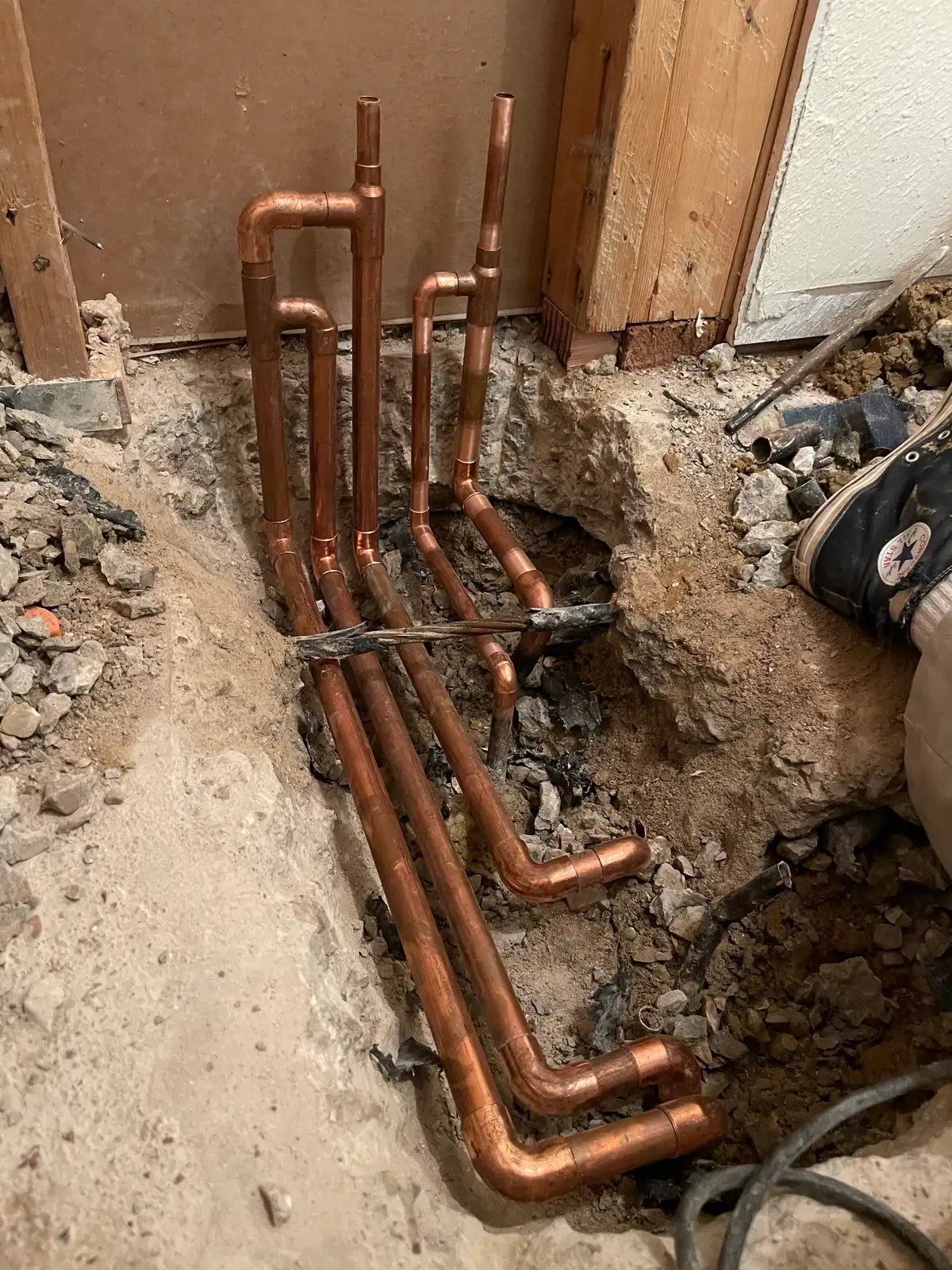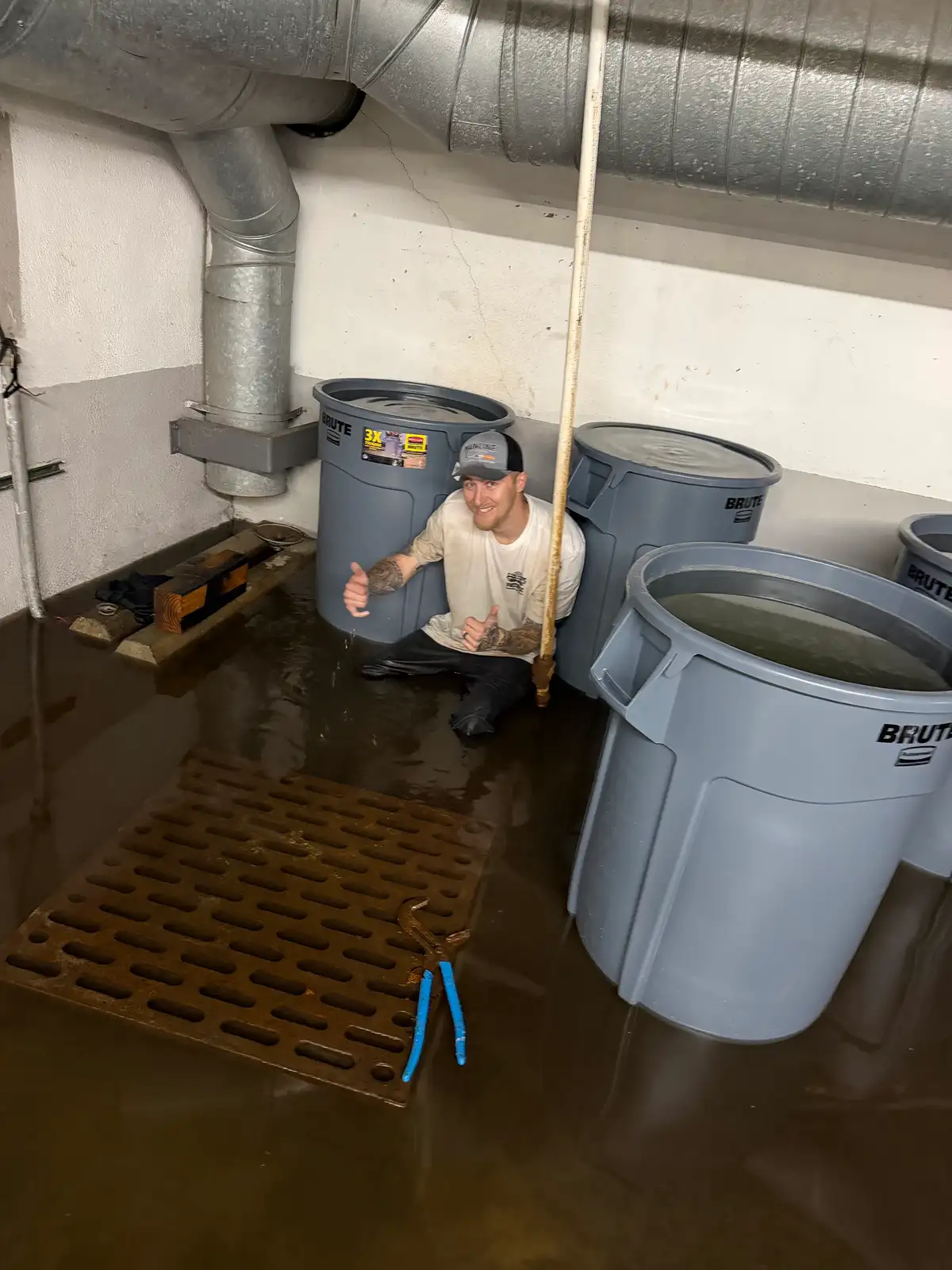

Electronic leak detection on a Palos Verdes slab home pinpoints the exact leak location — typically within 6 to 12 inches — without opening the floor. Acoustic amplification and thermal imaging work together to read the slab surface, so the only demolition is a targeted access point at the confirmed leak, not a trench across the room.
Palos Verdes homes sit on hillside terrain with elevation changes that complicate both access and water pressure regulation. In neighborhoods like Lunada Bay and Portuguese Bend, the combination of steep grades, custom finishes, and landslide-sensitive soil makes non-invasive detection the default approach — not an upgrade.
Why slab leaks are common on PV hillside properties
Most Palos Verdes Estates and Rancho Palos Verdes homes built between 1923 and 1985 have copper supply lines embedded in the slab. Copper under concrete is exposed to soil chemistry, shifting terrain, and pressure fluctuations that above-grade piping never sees.
Hillside properties add a pressure variable that flat-lot homes don't have. If the pressure-reducing valve upstream is undersized or failing, line pressure at the slab can spike well above 80 PSI — accelerating pinhole corrosion from inside the pipe. We see this frequently in the Malaga Cove area, where grade changes are significant and older PRVs are common.
Soil movement compounds the problem. Portuguese Bend and Abalone Cove sit in active landslide zones. Even minor ground creep puts lateral stress on embedded copper, cracking fittings or pinching the pipe wall. These aren't catastrophic breaks — they're slow leaks that run for months before the water bill spikes enough to prompt a call.
What electronic detection actually involves
Acoustic leak detection uses a ground microphone and amplifier to listen through the concrete. Water escaping a pressurized pipe under the slab generates a distinct frequency signature. A trained technician sweeps the floor in a grid pattern, and the signal peaks directly over the leak. On a quiet PV hillside property, this method resolves location to within about 6 inches.
Thermal imaging adds a second data layer. A pressurized hot water leak warms the slab surface above it — infrared cameras read that temperature gradient as a heat map. Cold water leaks show the inverse pattern. Neither method works perfectly in isolation; together they eliminate false positives before any concrete is touched.
We also run a pressure isolation test at the start of every job. Shutting valves to the hot and cold lines separately confirms which system is leaking and rules out a supply-side issue above the slab. That 15-minute test determines whether the slab is even involved — sometimes it isn't, and the job is resolved without any detection equipment at all.
Protecting custom finishes during the access cut
Once the leak is confirmed and located, access is a single cut — typically 12 to 18 inches in diameter — directly over the pinpointed spot. For homes in Rolling Hills with travertine or large-format tile, we document the surface before cutting, score the grout lines precisely, and preserve any tile that can be reset. The goal is a patch that doesn't require full floor replacement.
Hardwood over slab is a different situation. Engineered hardwood can sometimes be pulled and re-laid; solid hardwood typically can't without visible seams. If the detection is accurate and the access cut is tight, a flooring contractor can usually blend the repair rather than replace an entire field. Imprecise detection — meaning a wider search trench — eliminates that option.
This is exactly where the investment in proper electronic detection pays off. A wide exploratory trench to find a leak that acoustic tools could have pinpointed in two hours costs far more in flooring replacement than the detection fee.
Landslide zone considerations for Palos Verdes slab work
Portuguese Bend, Abalone Cove, and Klondike Canyon are active landslide zones. Subsurface water — including slow slab leaks left unrepaired — can saturate clay-bearing soil layers and reduce the friction that keeps hillside ground stable. This is not a hypothetical; it's one reason Rancho Palos Verdes has historically tracked moisture intrusion in those zones.
For properties inside or adjacent to these areas, slab leak repair is not optional maintenance — it's an active ground-stability concern. We recommend confirming with your geotechnical report whether your lot has movement restrictions that affect the repair method. In some cases, [trenchless rerouting](/services/trenchless) above the slab is preferable to an in-slab copper repair, because it eliminates the embedded pipe from the equation entirely.
When we work in these zones, we coordinate access to minimize ground disturbance. Jackhammer work stays precisely bounded to the confirmed access point. Spoils are removed the same day rather than staged on the slope.
Repair options after the leak is found
Spot repair replaces the damaged section of pipe at the access point. It's the fastest and lowest-cost resolution when the pipe is otherwise in good condition and only one section has failed. On copper lines in a 1960s Rancho Palos Verdes home, spot repair is reasonable if a camera or pressure test confirms the rest of the line is sound.
Rerouting runs a new line above the slab — through interior walls, the attic, or a crawl space if accessible — and abandons the embedded pipe. This adds labor but eliminates the embedded copper from future risk. It's the better choice when the pipe is showing corrosion along its length or when a second leak has already occurred.
Full repiping replaces all embedded supply lines. On a PV hillside home with original copper that has already produced one slab leak, [repiping the hot and cold supply](/services/repipes) through accessible pathways is often the most cost-effective long-term answer — especially if you're planning any renovation that opens walls.
Palos Verdes leak detection questions we hear most
How do I know the leak is in the slab and not somewhere else? A pressure isolation test is the first step. We shut valves to isolate hot and cold supply lines and monitor whether pressure drops. If both lines hold pressure, the slab isn't involved. If one drops, acoustic detection starts there. Most homeowners report noticing a high water bill, a warm spot on the floor, or the sound of running water when all fixtures are off — any of those signs warrants an isolation test.
Will I need to move out during the repair? For a single spot repair, no. Access work is localized, dust is managed with containment sheeting, and water is off for the repair window — typically 4 to 6 hours. Rerouting or repiping may require a longer shutoff window but rarely requires vacating the home.
Does a slab leak affect my homeowner's insurance claim? Typically, the resulting water damage to floors and walls is covered, but the repair to the pipe itself is not. Document everything before work begins: photos of the floor surface, the water meter reading, and any visible damage. Your insurer will want a written report from the detecting contractor. We can provide that documentation.
Is leak detection affected by landslide-zone restrictions on my property? Acoustic and thermal detection are non-invasive and don't affect soil conditions. The restriction question applies to the repair method — specifically whether in-slab excavation is allowable on your lot. Check your geotechnical report or contact the city's geology division before scheduling repair work if your property is in Portuguese Bend or Abalone Cove.
Are you licensed for this work in Palos Verdes? Yes. Mainline No-Dig Trenchless Plumbing holds California C-36 contractor license #901735, verifiable through the CSLB at cslb.ca.gov. We serve [Palos Verdes and the surrounding South Bay](/service-areas/palos-verdes) with a 30-minute target response to Lunada Bay, Malaga Cove, and the Rancho Palos Verdes planned communities.
How long does detection take before any cutting starts? For a standard single-story slab home, acoustic and thermal detection takes 1 to 2 hours. The pressure isolation test that precedes it adds 15 to 30 minutes. We don't cut concrete until location is confirmed to our standard — a single confirmed point, not a suspected zone.
What to do next
If your water bill has increased without explanation, your floor has a warm or damp spot, or you hear running water when nothing is on, those are the three clearest indicators of a pressurized slab leak. Each day a leak runs undetected adds water damage to the concrete substrate, saturates the soil below, and — on a PV hillside — contributes moisture to ground that shouldn't have it.
Mainline No-Dig Trenchless Plumbing (Licensed C-36 #901735) dispatches to Palos Verdes 24/7 with a 30-minute target response. We bring acoustic amplification and thermal imaging on every leak detection call — no secondary trip required. Call (310) 808-7343 to schedule a pressure isolation test and detection appointment, or use the contact form to describe what you're seeing and we'll follow up the same day.
Tags
Related Services