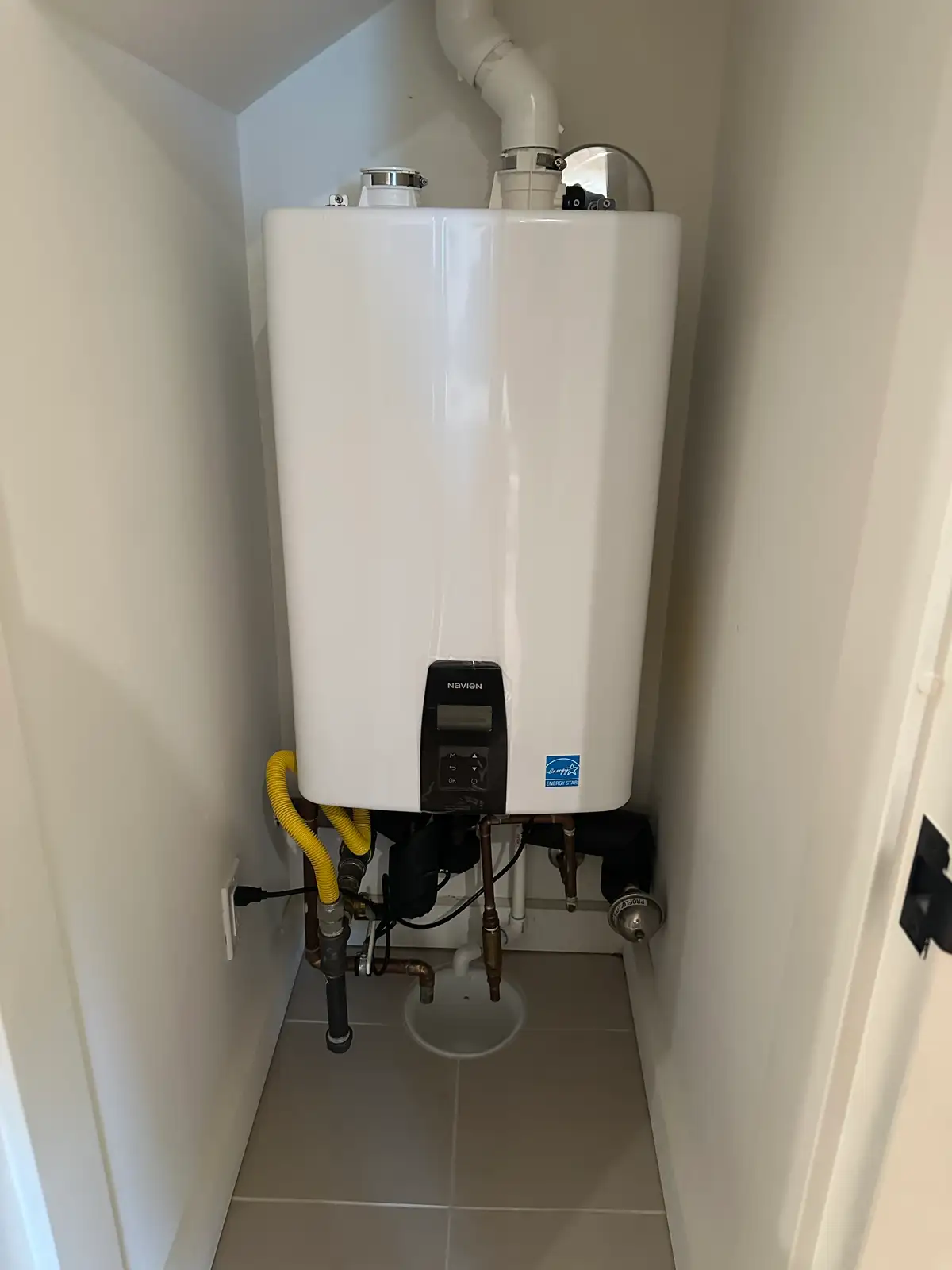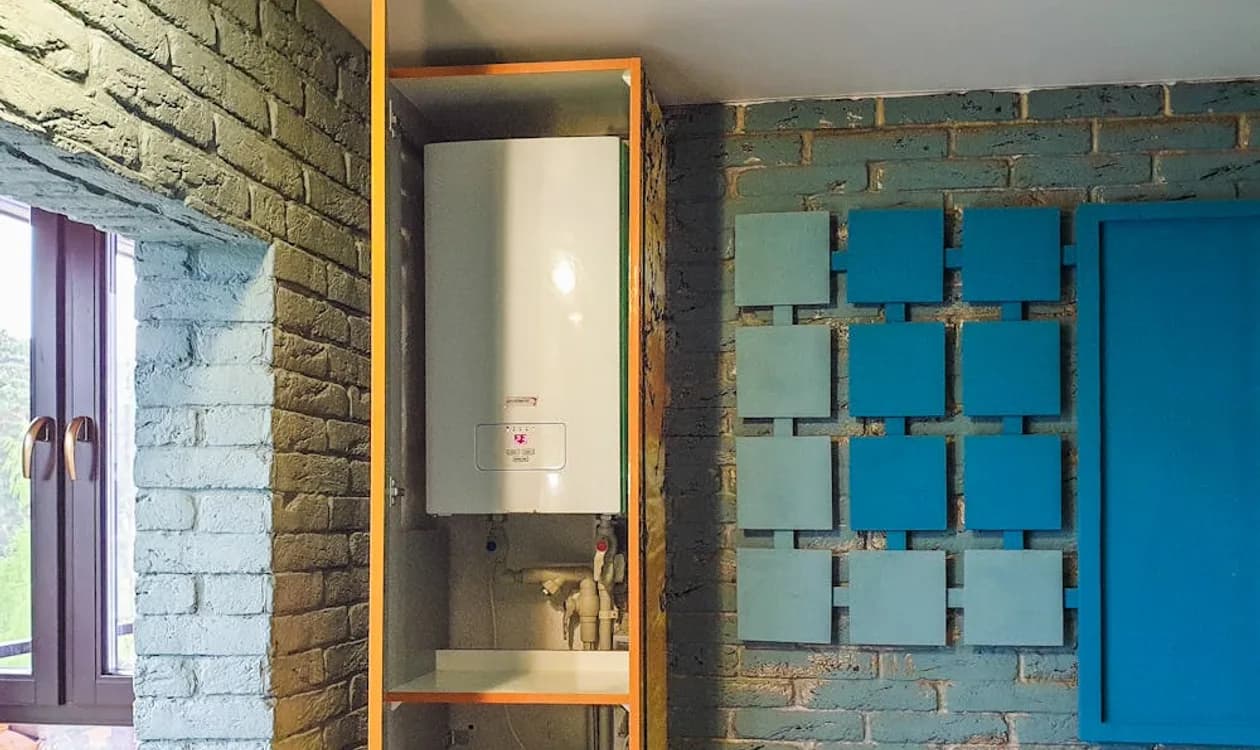
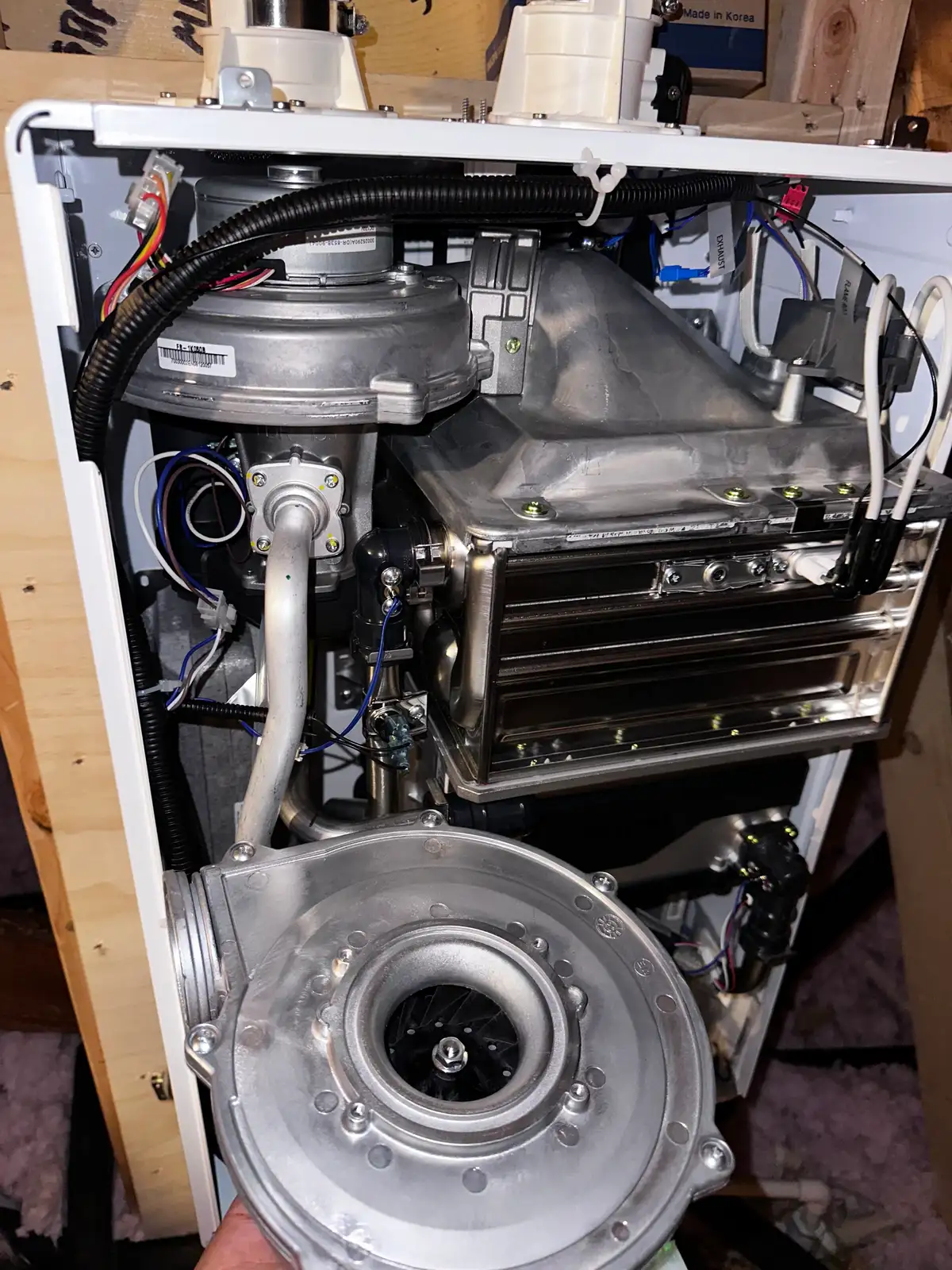
A gas tankless water heater in California now pays back faster than it did a year ago, and for an unintuitive reason: the federal tax credit disappeared, but the SoCalGas rebate got much bigger. A condensing unit at UEF .95 or above returns $1,100 to $1,500 in 2026, which for many South Bay households closes most of the premium over a tank replacement on day one rather than over a decade of gas savings.
That's a real change from the math that circulated through 2025, and it cuts both ways. Anyone still quoting you a $600 federal credit is working from rules that expired December 31, 2025. Anyone quoting a $150 SoCalGas rebate is working from an old tier table. This guide walks the current numbers, where they come from, and the scenarios where a high-recovery tank is still the smarter buy.
What drives the upfront cost gap
A standard 40-gallon natural gas tank water heater installed in a South Bay home runs $900–$1,400 all-in, including labor and permit. A whole-home gas tankless unit — correctly sized for 3–4 simultaneous fixtures — runs $2,200–$3,500 installed. That gap, roughly $1,000–$2,100 depending on complexity, is what you're recovering through energy savings.
The gap widens when the retrofit requires additional work: upsizing a ¾-inch gas line to 1 inch, adding Category III stainless exhaust venting, or cutting a new exterior penetration. In older Hawthorne or Lawndale slab homes with the original ½-inch gas stub to the water heater closet, that gas line upgrade alone adds $300–$600 to the job. It's a real cost, and it has to go into your payback math.
Installation labor is not the same across cities. A straightforward garage swap in Carson with an accessible gas line and exterior wall is faster than threading new venting through a Hermosa Beach townhome with zero crawl space and a 30-foot lot. Labor complexity is why getting a site-specific quote — not a ballpark — matters before you run any payback estimate.
The energy savings: what the numbers actually look like
The U.S. Department of Energy estimates gas tankless units are 24–34% more efficient than storage tanks for homes using 41 gallons or less per day, and 8–14% more efficient for high-usage households. At SoCalGas rates around $1.50 to $1.75 per therm, a South Bay household spending $250 to $350 a year on water heating saves roughly $50 to $120 annually after switching.
On its own that's a slow return — $80 a year against a $1,500 premium is nearly two decades. This is where the rebate does the heavy lifting. A $1,500 premium against a $1,100 rebate leaves $400 of real premium, and at $80 to $120 a year the payback lands inside four or five years. That's the honest 2026 number, and it's a genuinely different conclusion than the same calculation produced in 2025.
Standby loss is the underlying efficiency advantage. A tank keeps 40 to 50 gallons hot around the clock; a tankless unit heats only when a tap opens. Worth noting as a limitation: in the South Bay, where garage temperatures rarely drop below 50°F even in January, standby loss is smaller than in colder climates, which modestly narrows the efficiency gap. The California math is real but less dramatic than national figures suggest.
Current California and SoCalGas rebates
The federal picture first, because it changed and the change is not widely known. Section 70505 of the One Big Beautiful Bill Act, signed July 4, 2025, terminated the 25C Energy Efficient Home Improvement Credit for property placed in service after December 31, 2025. The IRS keys on the installation date, not the purchase date, so equipment bought in 2025 but installed in 2026 does not qualify. There is no federal tax credit for a gas tankless water heater in 2026.
The SoCalGas residential rebate more than fills the gap, and it's tiered strictly by Uniform Energy Factor. As published in the utility's 2026 Home Energy Efficiency Rebate application: $80 for a UEF of .82 to .86, $900 for .87 to .94, $1,100 at .95, $1,300 for .96 to .97, and $1,500 for .98 or above. Qualifying units must be ENERGY STAR certified and must replace a conventional natural gas tank-type water heater in a single-family detached home.
Read those tiers carefully, because the steps are not evenly spaced. Moving from a .86 unit to a .87 unit is worth $820 in rebate. Moving from .94 to .95 is worth another $200. Those jumps routinely exceed the equipment price difference between adjacent models, which means the cheapest unit on the shelf is frequently the most expensive one after rebate. Check any model's UEF against the ENERGY STAR product list before approving it.
Rebate programs are budget-funded, tiers get revised, and applications have submission windows tied to the installation date. Keep the permit, the final inspection sign-off, and the invoice, submit promptly, and confirm current amounts at socalgas.com rather than relying on any figure — including this one — that was accurate when written.
Gas vs. electric: two very different payback pictures
Electric heat pump water heaters (HPWHs) have their own rebate ecosystem under the IRA and the California Energy Commission — rebates up to $1,750 for income-qualified households, and $500–$800 for market-rate under TECH Clean California. Their energy efficiency is genuinely high: a heat pump unit uses roughly 60–70% less electricity than a resistance electric tank. But electric tankless — not heat pump, just resistance-based electric tankless — has almost no payback case in Southern California.
Resistance electric tankless units draw 150–200 amps at peak load. Most South Bay homes have 100–200 amp service. A whole-home electric tankless install commonly requires a panel upgrade, which adds $2,000–$4,000 to the project cost. The energy savings over a standard electric tank are marginal. Unless you have excess panel capacity and a specific point-of-use application — like a remote garage bathroom — resistance electric tankless rarely makes financial sense here.
For most South Bay homeowners on natural gas service, the comparison that matters is: gas tankless vs. gas high-recovery tank. The next section covers when the tank wins.
When a high-recovery tank is the smarter buy
A high-recovery 50-gallon gas tank with a 0.70+ energy factor — roughly $1,100–$1,600 installed — closes most of the efficiency gap with tankless at a fraction of the retrofit cost. For a household that isn't running simultaneous high-demand fixtures, the annual energy difference may be $40–$70. At that savings rate, the payback on a tankless premium exceeds 20 years. That's not a good investment.
The high-recovery tank also makes sense when the existing gas line is undersized and the homeowner isn't planning other gas work. Upsizing a gas line to serve tankless correctly costs $300–$600 and has no other benefit to the property. Rolling that cost into a tankless payback calculation makes the break-even worse. In [Rolling Hills Estates water heater service](/service-areas/rolling-hills-estates/water-heaters), where homes often have multiple gas appliances competing on shared lines, we frequently recommend confirming gas capacity before committing to tankless.
Large households — five or more people, multiple simultaneous showers, steam shower or soaking tub on the same system — can push the limits of a single tankless unit. A properly sized high-recovery tank or a tankless system with two units in parallel may both be on the table. The right answer depends on your peak simultaneous flow rate, not just your daily volume.
South Bay tankless payback questions we hear most
**How long does a gas tankless unit actually last in the South Bay?** Well-maintained condensing units reliably reach 18–22 years; non-condensing units run 14–18. Given coastal salt air in Redondo Beach and Hermosa Beach, exterior-mounted units should have stainless or powder-coated enclosures. Factor a 20-year life against 10–13 on a tank when comparing total cost of ownership.
**Is the federal tax credit still available in 2026?** No. The One Big Beautiful Bill Act ended the 25C credit for property placed in service after December 31, 2025, and the IRS uses the installation date. If someone includes a $600 federal credit in a 2026 quote, the quote is wrong and the net cost is $600 higher than presented.
**Are the SoCalGas rebates still active?** Yes, and they are substantially larger than they were — up to $1,500 for a UEF .98 or above unit replacing a gas tank in a single-family detached home. They are budget-funded, so apply as soon as the installation is complete rather than sitting on the paperwork.
**Does the permit add to my payback timeline?** A water heater permit in Los Angeles County runs $150–$300 depending on jurisdiction. It isn't optional, and it isn't wasted money here: the rebate application asks for the final inspection sign-off, so skipping the permit costs you the rebate. Our [tankless water heater installations](/services/water-heaters) include permit costs in the quoted price.
**Is Mainline licensed to do this work?** Yes. We hold C-36 Plumbing Contractor license #901735 from the California State License Board, verifiable at cslb.ca.gov. We've been doing this work in the South Bay for 18+ years.
**What if my house has original galvanized gas lines?** Galvanized gas lines corrode internally, restrict flow, and can fail to deliver the BTU capacity a tankless unit needs. We check gas line condition before any tankless proposal — if the line needs replacing, that cost goes in the quote upfront rather than appearing after demo.
What to do next
If your current tank is 8 years or older and you're weighing a replacement decision, now is the right time to run the numbers — not after it fails on a Sunday morning. Tankless can make strong financial sense for the right household and the right setup. It doesn't make sense for every South Bay home, and we'll tell you which category you're in before any work begins.
Mainline No-Dig Trenchless Plumbing serves 16 South Bay cities from our Lomita headquarters, with a 60-minute target response for emergency calls and no overtime fees. Call us at (310) 808-7343 or use the contact form to schedule a water heater assessment. We'll scope the job, confirm gas line capacity, and give you a fixed quote that includes permit and rebate guidance.
Frequently Asked Questions
What is the payback period on a tankless water heater in California?
In 2026, roughly four to six years for a condensing gas unit that qualifies for the higher SoCalGas rebate tiers. Energy savings alone run $50–$120 a year, which wouldn't justify the premium on its own — the rebate, now up to $1,500, is what compresses the timeline.
Is there a federal tax credit for tankless water heaters in 2026?
No. The One Big Beautiful Bill Act terminated the 25C Energy Efficient Home Improvement Credit for property placed in service after December 31, 2025. The IRS uses the installation date, so a unit bought in 2025 and installed in 2026 does not qualify.
How much is the SoCalGas rebate for a tankless water heater?
The 2026 tiers pay $80 for a UEF of .82–.86, $900 for .87–.94, $1,100 at .95, $1,300 for .96–.97, and $1,500 for .98 or above. Units must be ENERGY STAR certified and replace a conventional gas tank-type heater in a single-family detached home.
Does a higher-efficiency tankless model actually cost more overall?
Often it costs less. The rebate tiers step sharply — moving from a .86 unit to a .87 unit is worth $820 — and those jumps frequently exceed the equipment price difference between adjacent models. The cheapest unit on the shelf is regularly the most expensive one after rebate.
When is a high-recovery tank the better choice than tankless?
When the gas line and venting would need major reworking, when the household draw is low and steady, or when the existing tank location can't accommodate tankless venting without significant construction. In those cases the retrofit cost outruns any efficiency benefit.
Does electric tankless make sense in Southern California?
Rarely. Resistance electric tankless units draw 150–200 amps at peak, and most South Bay homes have 100–200 amp service, so a whole-home install typically forces a $2,000–$4,000 panel upgrade. Heat pump water heaters are a different and much better electric option.
Tags
Related Services