Gas line repair in San Pedro typically runs $400–$1,800 for a section repair and $3,500–$9,000 for a full lateral replacement, depending on pipe length, access, and whether the existing line is original black iron or has already been partially updated. Those numbers shift when LADBS is your permitting authority — not a small-city counter that turns permits in two days.
San Pedro sits inside the City of Los Angeles, which means all gas work goes through the Los Angeles Department of Building and Safety. That's a different process than what plumbers navigate in Torrance or Carson — LADBS has its own inspection scheduling system, and permit lead times depend on current department workload. For homeowners in Old San Pedro, Vinegar Hill, and Point Fermin, there's a second variable: the housing stock. Pre-1940 construction is common on many blocks, and original black iron gas piping is still in service in more of those homes than most owners realize.
If you smell gas right now
Leave the house before you do anything else. Don't hunt for the leak, don't close a valve in a confined space, don't start a car in an attached garage, and don't flip a light switch or a breaker — including the one you'd use to turn something off. Take people and pets outside and make the calls from there. Call 911 first if the odor is strong, you hear hissing, or anyone feels dizzy or nauseated; otherwise call SoCalGas, who control the meter and will shut service off.
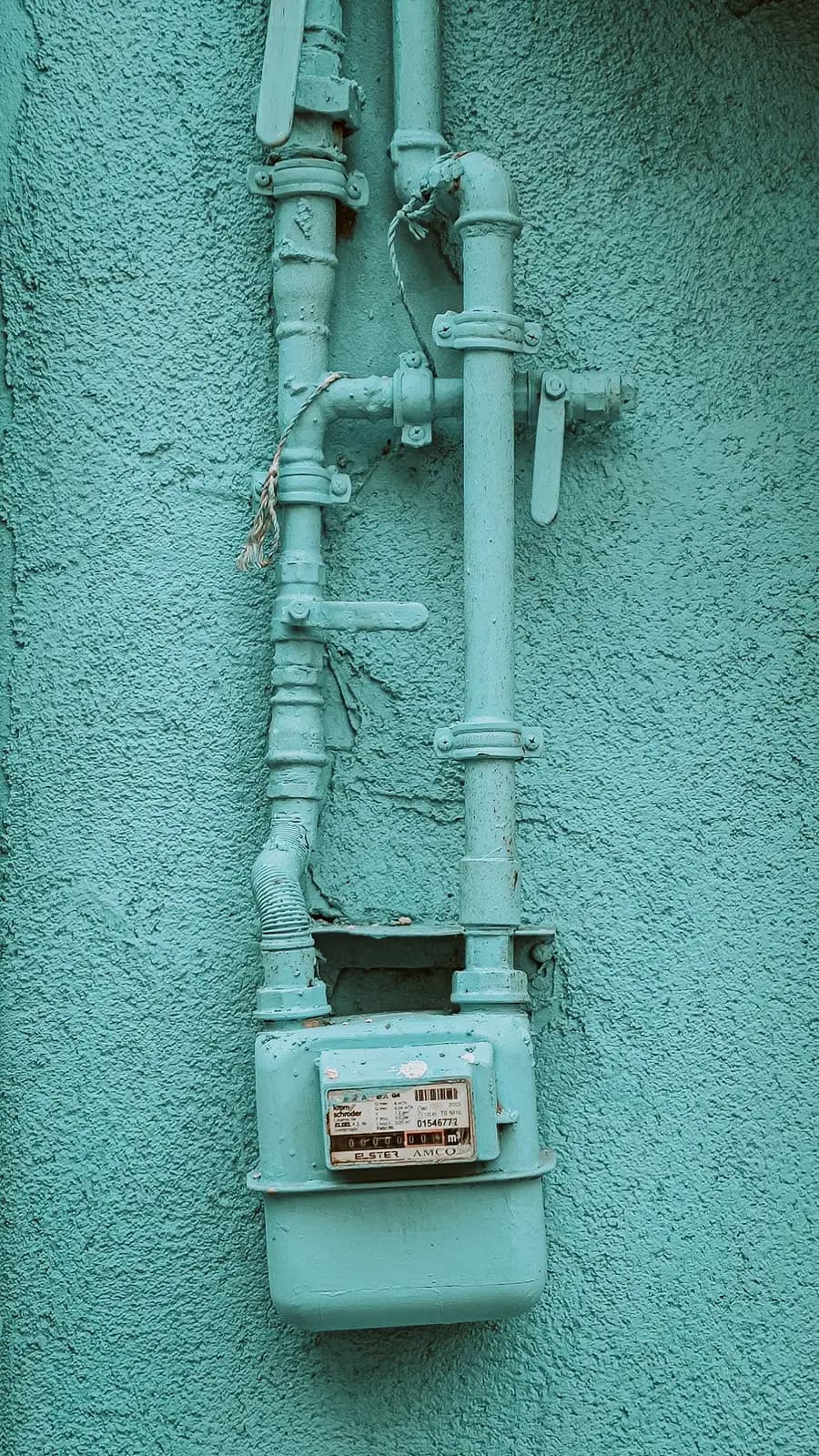
The dividing line matters for what happens next: SoCalGas owns the service up to and including the meter, and the property owner is responsible for the piping after it. So the utility secures the meter, and a licensed plumber isolates branches, finds the homeowner-side failure, replaces it, and pressure-tests the system before gas goes back on. Our [San Pedro gas line repair team](/service-areas/san-pedro/gas-lines) handles that second half. The full step-by-step is in our [what to do when you smell gas](/blog/smell-gas-home-step-by-step-safety-protocol) guide.
What's actually inside a pre-1940 San Pedro home
The 1900–1940 build era that defines Old San Pedro and the Vinegar Hill corridor predates modern gas piping standards by decades. Original gas supply in these homes is threaded black iron — rigid pipe with threaded joints, often run through wall cavities and under slabs without a protective sleeve. Black iron doesn't corrode the way galvanized water pipe does, but the threaded joints are the failure point. Decades of micro-movement from thermal cycling, settling, and seismic activity work the threads loose. When a joint fails, it doesn't burst — it seeps.
The other common finding in this era is undersized supply. A home built in 1928 for a gas range and a single floor furnace often has a 1/2-inch or 3/4-inch main running to a modern load that includes a tankless water heater, a 5-burner range, a dryer, and a fireplace insert. Gas pressure to one or more appliances drops under simultaneous load, and most homeowners attribute that to the appliance rather than the supply line. A proper load calculation is the starting point for any gas line project in these older homes — sizing the repair to the original pipe diameter is a mistake.
Mid-century homes in the hillside areas — the 1940–1965 stock above 25th Street and along the Palisades — are more likely to have had at least a partial gas line update, but partial updates create their own complexity. New CSST (corrugated stainless steel tubing) bonded to surviving black iron sections is workable, but every transition point needs to be inspected and properly fittted. LADBS inspectors look at those transitions closely.
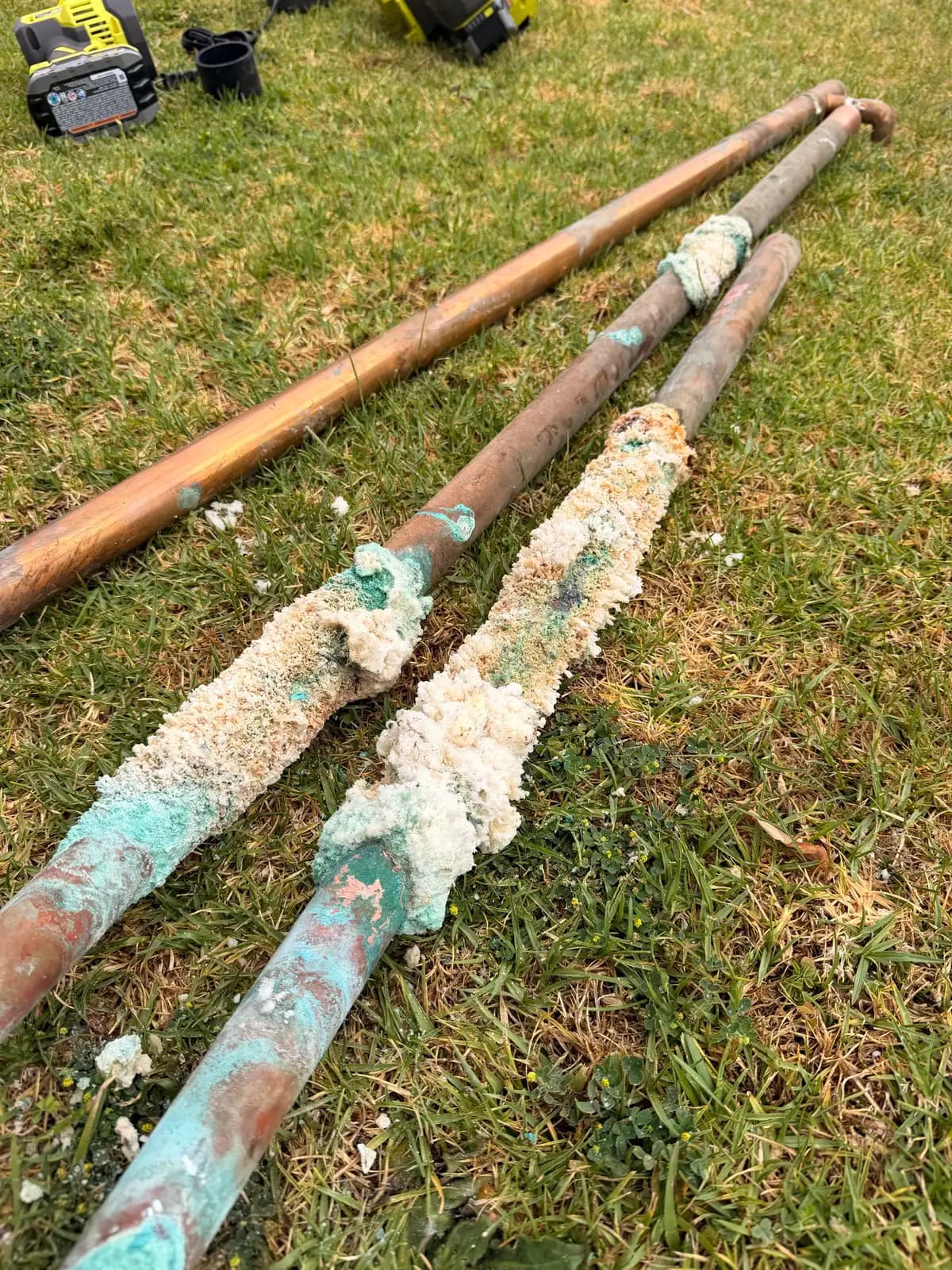
Location inside San Pedro changes the corrosion picture. Black iron doesn't rot from the inside the way galvanized water pipe does, but exposed exterior runs are a different story in the waterfront neighborhoods. Salt exposure around Cabrillo and Point Fermin ages exterior metallic components noticeably faster than inland blocks — meter risers, exposed drops along a foundation, and the fittings at an outdoor appliance are where it shows first. On a hillside lot in Vista del Oro, the added variable is developed length: long runs from a meter at the street to a house pad well below it lose pressure that a short, flat run never would.
Remodel history is the other thing worth mapping before anyone quotes a repair. Many of these homes started with a range and a floor furnace and then accumulated a dryer, a water heater, a fireplace insert, and an outdoor kitchen across several owners. A permitted kitchen addition may have been tied into an older branch that was never permitted; a fireplace may share a run with the water heater; an abandoned line may still sit capped behind a wall. Mapping the accessible piping, testing branches in isolation, and comparing the installed appliances against the meter's capacity is what separates one failed fitting from a layout that needs correcting. It takes longer than spraying joints with soap, and it produces a repair the utility and the inspector can actually evaluate.
How LADBS permitting works — and why the timeline matters
Pulling a gas permit through LADBS is not the same as pulling one through Torrance Building and Safety or Lomita's small permit counter. LADBS operates across the entire City of Los Angeles, and permit applications, plan check (when required), and inspection scheduling all move at city-scale volume. For a straightforward repair — replacing a section of failed line with like-for-like — permit processing is typically handled over-the-counter or online, and a same-day permit is possible. For a new gas line run, an addition, or a service upgrade that changes point of connection at the meter, plan check may be required, which adds time.
Inspection scheduling is the part homeowners underestimate. After rough-in, gas lines must be pressure-tested and inspected before the walls close. LADBS inspection windows vary — we've seen next-day scheduling and we've seen three-to-five business day waits depending on district workload and time of year. Work that needs to go into a finished wall can't be closed up until inspection is signed off. That affects your project timeline, and any contractor who quotes you a gas line job in San Pedro without factoring in LADBS inspection lead time is giving you an incomplete schedule.
We pull every permit required — no exceptions. An unpermitted gas line is a liability at resale, creates issues with your insurer, and means the work hasn't been pressure-tested to a standard anyone outside your contractor can verify. For [gas line work in San Pedro](/service-areas/san-pedro/gas-lines), permitted work is the only kind we do.
Section repair versus full replacement: how to decide
A camera can inspect a sewer line, but gas line condition assessment is different — it's pressure testing and visual inspection at accessible points, not video. If a single joint or short section has failed and the rest of the run tests clean under pressure, a targeted section repair is defensible. That typically means cutting out the failed segment, replacing it with new steel pipe and properly torqued fittings, and pressure-testing the full run. Cost for a single-section repair runs $400–$900 depending on access and location in the house.
Full replacement becomes the right call when pressure testing reveals multiple drops, when the pipe run passes under a slab in a way that makes future access impractical, or when a load calculation shows the existing line is undersized for current or planned appliances. In Point Fermin and Holy Trinity bungalows with original supply, the math usually favors replacement — you're not saving much by repairing one joint in a 90-year-old line with a dozen other threaded connections. New CSST or black iron run to current sizing, properly bonded and sleeved where required, gives you a system with a 50-year service horizon instead of a patchwork repair on borrowed time.
For homes planning a kitchen or bath addition, a new ADU, or a [gas appliance upgrade like a tankless water heater](/services/water-heaters), the full replacement or extension conversation is usually triggered by load requirements anyway. It's worth having that conversation before a contractor sizes the new appliance — the appliance spec and the gas supply have to be designed together.
Access constraints in San Pedro's older neighborhoods
San Pedro is not a flat-lot city. The hillside streets above Western Avenue, through Vista del Oro and the Palisades, have lots that drop sharply from the street to the house pad, with gas meters positioned wherever the original installer found flat ground. That sometimes means the meter is at the high side of a lot and the main service run crosses 20 or 30 feet of sloped terrain before it enters the structure. Rerouting or replacing that run requires careful planning — exposed runs on hillside lots need proper support, protection from physical damage, and in some cases, LADBS may require a trench drawing for plan check.
In Old San Pedro and Vinegar Hill, the challenge is different: lots are tight, homes are close together, and a significant portion of the original gas supply runs through wall cavities that were never designed to be accessed. Running new pipe in these homes often requires going up through the attic and down into the wall cavity from above, or routing through the crawlspace and up through the floor. Neither approach is unusual for this era, but both require time and add to labor cost. We scope the routing before quoting — a flat per-linear-foot number without a site look is a number that will change.
What a gas line project actually costs in San Pedro
Section repair on an accessible run: $400–$900. This covers cutting out a failed joint or short segment, replacing with new threaded pipe or fittings, and pressure testing the line. Add $150–$250 for LADBS permit fees on a minor repair.
Full lateral replacement from meter to structure, 40–60 linear feet: $3,500–$6,500 depending on pipe diameter and routing complexity. Hillside lots with difficult access or runs that require wall penetration work push toward the higher end. LADBS permit fees for a full replacement or service upgrade run $250–$500 at current fee schedules — pull the current schedule at permit time, not from a two-year-old quote.
New gas line extension for an additional appliance — range, dryer, fire pit, ADU kitchen: $800–$2,500 depending on run length and whether the existing supply line has capacity. If the main service requires upsizing to support the new load, add the cost of the lateral replacement above. These are real numbers from jobs we've run in San Pedro. They're not guarantees — site conditions, LADBS fee schedule changes, and material costs at time of job all affect final price — but they're the right order of magnitude for planning purposes. You can also explore [general gas line services](/services/gas-lines) if you're comparing scope across project types.
Pressure testing, inspection, and getting appliances back on
Once the repair or new run is in, the system is isolated from the appliances and tested with air at the required pressure for the required duration. A passing test proves the piping network holds. It proves nothing about the appliances themselves, which is a distinction worth keeping straight — a perfectly tight gas system can still feed a water heater that isn't drafting properly.
Restoration runs in a fixed order: pass the pressure test, get inspection sign-off where LADBS requires it, coordinate gas restoration with SoCalGas, then relight and verify each appliance one at a time. Water heaters and furnaces need draft or vent confirmation; ranges and fireplaces need stable ignition and a clean flame. We record which appliances were returned to service and flag any unit that should stay off until an appliance technician looks at it.
On planned work we also document shutoff locations and label new branches, so the next person under the house can read the system without opening finishes. In an older San Pedro home that detail earns its keep: several generations of pipe often share one crawlspace, and an unlabeled valve costs time during an emergency years later. You end the job knowing which portion of the system belongs to SoCalGas, which belongs to you, and who to call if an appliance itself fails.
San Pedro gas line questions we hear most
**How do I know if my gas line is original black iron?** If your home was built before 1945 and hasn't had documented gas work, the supply line is likely original black iron. A plumber can confirm by inspecting visible sections at the meter connection and at each appliance. Black iron is dark gray to black, rigid, and uses threaded joints. CSST is corrugated silver flexible tubing.
**Will LADBS shut down my gas while the permit is open?** No — the gas utility (SoCalGas) controls service shutoff, not LADBS. A permit doesn't trigger a shutoff. If a section of line needs to be isolated for repair, your gas supply is off only to that branch while work is in progress, then tested and restored before the inspector signs off.
**Can I run a gas line to a new fire pit or outdoor kitchen?** Yes, with a permit. Outdoor gas runs need to be properly rated for exterior use, buried to code depth, and bonded. LADBS requires a permit for any new branch line or extension. We've run outdoor gas lines in San Pedro on both flat and sloped lots — the hillside routing requires more planning but isn't a barrier.
**How long does the LADBS inspection process take?** For straightforward repairs, permit processing is typically same-day to three business days. Inspection scheduling after rough-in has ranged from next-day to five business days in our experience — it varies by district and current workload. We build that window into the project schedule upfront so it doesn't surprise you mid-job.
**Is Mainline licensed for gas line work?** Yes. We're a licensed C-36 plumbing contractor, license #901735, issued by the California Contractors State License Board. You can verify that license at the CSLB website using the license number. Gas line installation and repair fall within the C-36 scope.
**What's the difference between CSST and black iron for a full replacement?** CSST is flexible corrugated stainless steel tubing that runs more easily through walls and around obstacles, making it the practical choice for most residential replacements. It requires bonding to the home's grounding system — a code requirement, not optional. Black iron is still used for exposed runs and at appliance connections. Most full replacements in San Pedro homes use CSST for the interior run with black iron at the meter connection and the appliance drops.
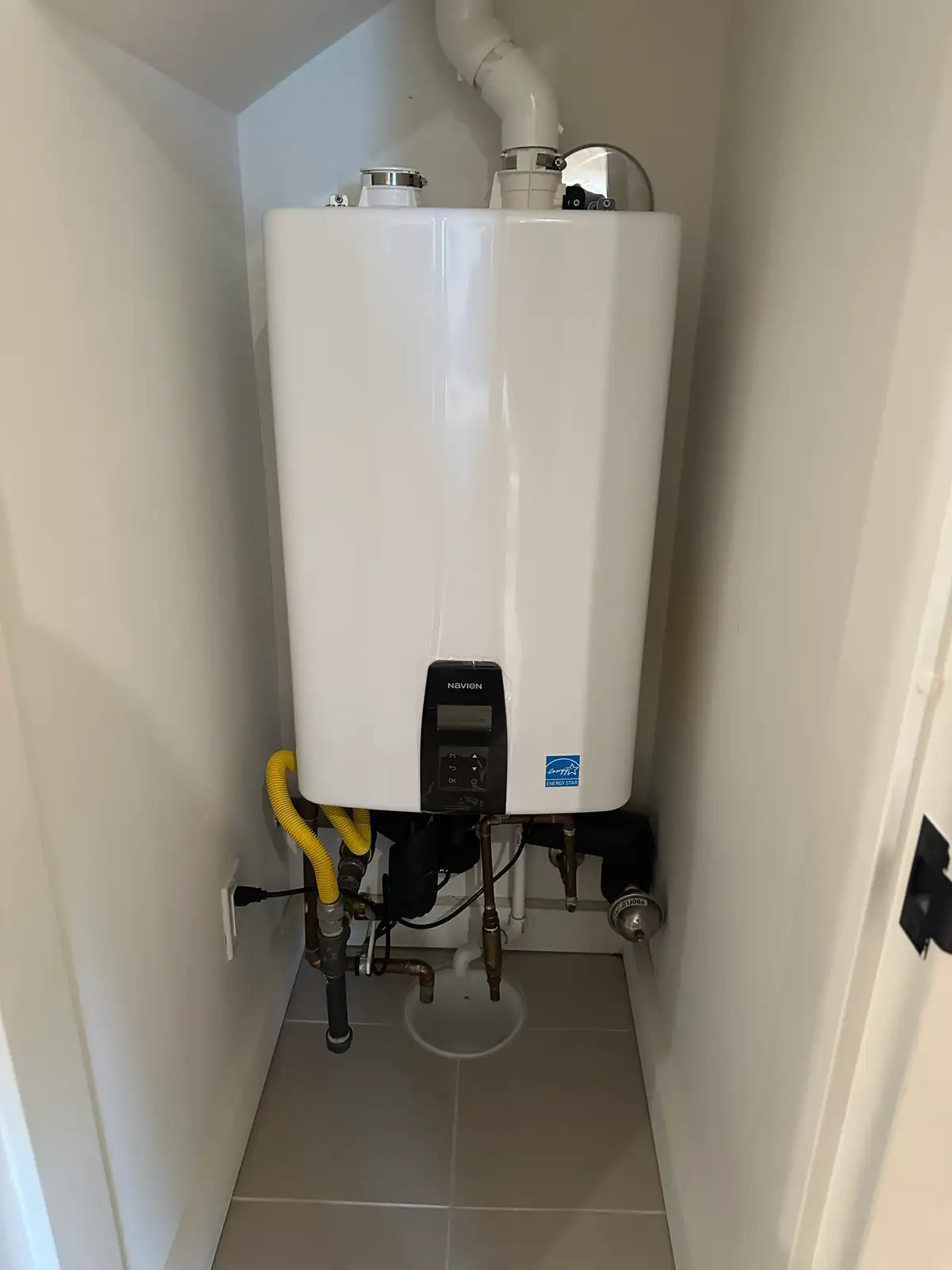
**Will a tankless water heater need a bigger gas line?** Often, yes. A tankless unit fires at several times the input of the tank it replaces, and a half-inch branch that was adequate for a 40-gallon tank usually isn't. The answer comes from the complete connected load and the developed length of the run — not from the old pipe size and not from the appliance label on its own. That calculation should happen before the unit is ordered, not after it's hanging on the wall.
**Who is responsible for the gas line — SoCalGas or me?** SoCalGas owns the service line and the meter. Everything downstream of the meter is the property owner's, which is nearly all of the piping in the house. That's why a utility shutoff after a leak stops the danger but doesn't fix anything: restoring service requires a licensed plumber to repair the homeowner-side piping and pass a pressure test first.
What to do next
If you've noticed gas smell at an appliance connection, pressure drop under load, or you're planning a kitchen remodel or appliance addition in a pre-1940 San Pedro home, the right first step is a site assessment — not a phone quote. Gas line sizing, routing, and permitting in these neighborhoods requires eyes on the meter, the existing pipe, and the appliance load before any number means anything.
Mainline No-Dig Trenchless Plumbing serves San Pedro from our Lomita headquarters with a 30-minute target response for emergencies. We're a licensed C-36 contractor (#901735) and we pull every permit LADBS requires. Call us at (310) 808-7343 to schedule an assessment, or use the contact form to describe your project and we'll follow up directly.
Frequently Asked Questions
How do I know if my gas line is original black iron?
If your home was built before 1945 and hasn't had documented gas work, the supply line is likely original black iron. A plumber can confirm by inspecting visible sections at the meter connection and at each appliance. Black iron is dark gray to black, rigid, and uses threaded joints. CSST is corrugated silver flexible tubing.
Will LADBS shut down my gas while the permit is open?
No — the gas utility (SoCalGas) controls service shutoff, not LADBS. A permit doesn't trigger a shutoff. If a section of line needs to be isolated for repair, your gas supply is off only to that branch while work is in progress, then tested and restored before the inspector signs off.
Can I run a gas line to a new fire pit or outdoor kitchen in San Pedro?
Yes, with a permit. Outdoor gas runs need to be properly rated for exterior use, buried to code depth, and bonded. LADBS requires a permit for any new branch line or extension. Hillside lot routing requires more planning but isn't a barrier.
How long does the LADBS gas line inspection process take?
For straightforward repairs, permit processing is typically same-day to three business days. Inspection scheduling after rough-in has ranged from next-day to five business days depending on district workload. We build that window into the project schedule upfront so it doesn't affect your timeline unexpectedly.
Is Mainline licensed to do gas line work in San Pedro?
Yes. We're a licensed C-36 plumbing contractor, license #901735, issued by the California Contractors State License Board. You can verify that license at the CSLB website. Gas line installation and repair fall within the C-36 scope.
What's the difference between CSST and black iron for a full gas line replacement?
CSST is flexible corrugated stainless steel tubing that runs more easily through walls and around obstacles — the practical choice for most residential replacements. It requires bonding to the home's grounding system. Black iron is still used for exposed runs and at appliance connections. Most full replacements in San Pedro use CSST for interior runs with black iron at the meter and appliance drops.
Tags
Related Services