If you smell gas inside your home, do not flip any switches, do not use your phone inside, do not look for the source. Get everyone out of the building immediately, leave the door open as you go, and call SoCalGas at 1-800-427-2200 from outside or a neighbor's house. That sequence — exit first, call second — is the entire first chapter of this situation.
Gas leaks happen across the South Bay more often than most homeowners expect. Older neighborhoods like Old Torrance, Vinegar Hill in San Pedro, and the pre-war blocks of Old Lomita all have gas supply lines that were installed decades ago, and even newer neighborhoods see failures at appliance connections, flexible corrugated connectors, and meter regulators. Knowing the protocol before you're standing in a gas-filled kitchen is the only version of this information that actually helps you.
The smell you're detecting and why it's there
Natural gas is odorless in its raw state. SoCalGas adds mercaptan — a sulfur-based odorant — specifically so you can detect it. The smell is often described as rotten eggs or sulfur, sometimes as a chemical or skunky odor. If you're smelling it, the odorant is doing its job. That doesn't tell you whether it's a small leak or a large one, so don't try to assess severity. Treat any detectable gas smell as a serious event.
Propane behaves differently from natural gas. It's heavier than air and pools at floor level rather than rising and dispersing. Most South Bay homes run on SoCalGas natural gas service, not propane, but if you have a freestanding propane tank for a barbecue, outdoor heater, or pool heater, the same exit-first protocol applies.
A few things produce smells that can be confused with gas: sulfur-reducing bacteria in a water heater anode rod, a dead animal in a crawlspace, or certain drain odors. If you're uncertain, treat it as gas and verify from outside. The cost of being wrong in either direction is not equivalent.
The exact sequence when you detect a gas odor
Step one: Don't operate anything electrical. Light switches, ceiling fans, phone chargers, garage door openers — any electrical arc can ignite a gas-air mixture. Leave lights as they are, on or off. Step two: Don't smoke, use a lighter, or light a candle. This sounds obvious but people reach for a phone flashlight without thinking about the open-flame rule they just applied.
Step three: Open a door or window if you can do it without flipping a switch or lingering — this is about seconds, not thoroughness. Step four: Get every person and pet out. Step five: Leave the front door open behind you so gas can vent. Step six: Go to a neighbor's property or at minimum the sidewalk — 100 feet of distance is reasonable before you make any calls.
Once outside: call SoCalGas at 1-800-427-2200. They respond 24/7 and will send a technician at no charge to assess and shut off service if needed. Do not re-enter the building until SoCalGas or the fire department tells you it is safe. If you can smell the gas clearly from outside or if you hear hissing, call 911 as well — don't wait for SoCalGas.
What SoCalGas does — and what they don't
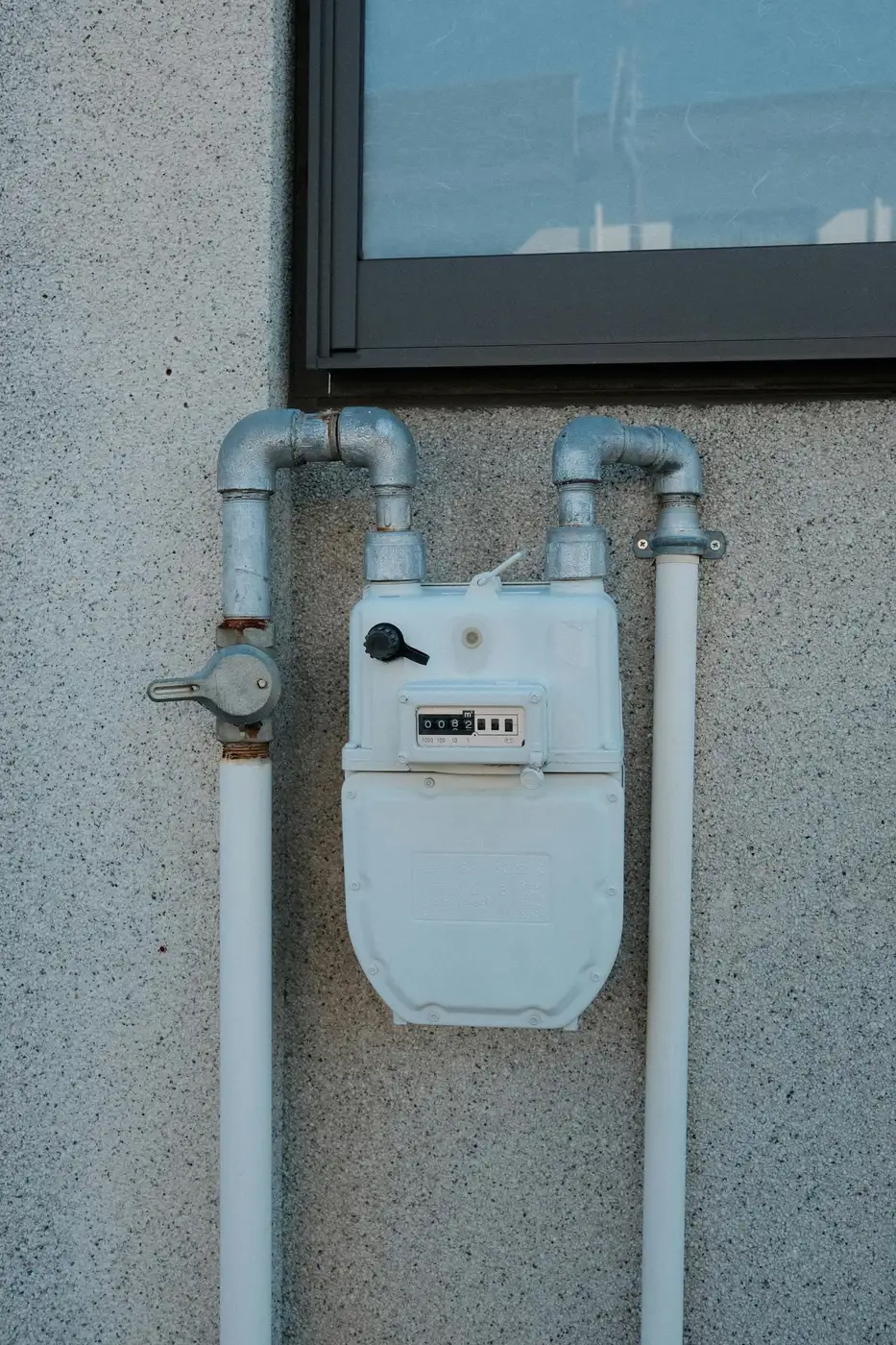
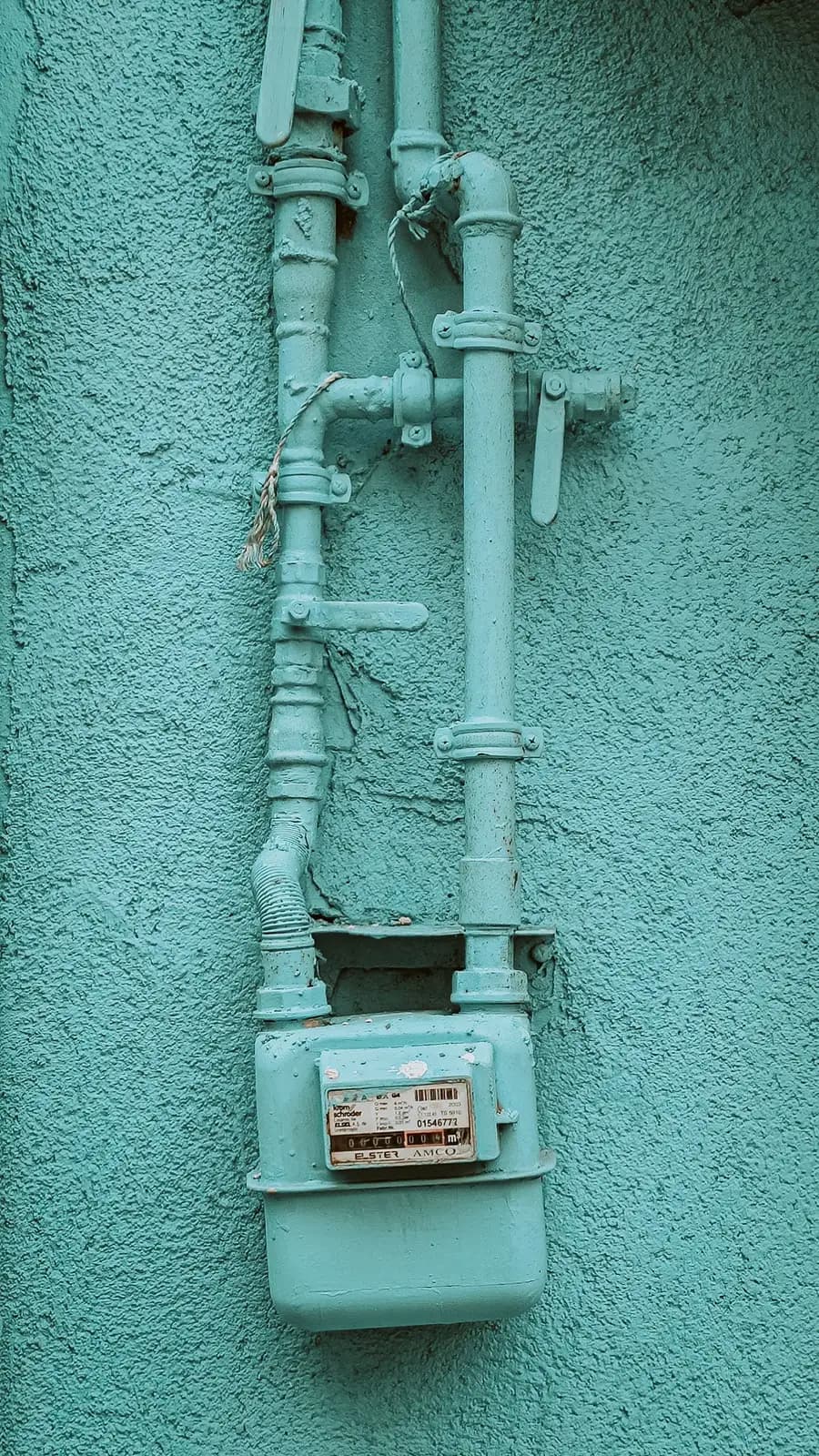
SoCalGas is responsible for gas service up to and including the meter. When their technician arrives, they will check for gas presence with a combustible-gas detector, locate the general area of the leak, and shut off gas at the meter if needed. They will not repair gas lines inside your property. Once they've cleared the immediate hazard and shut off service, the repair is yours to arrange.
Re-lighting pilots and restoring gas service after a shutoff also requires a SoCalGas technician in most cases — they need to confirm appliances are in safe condition before they turn the gas back on. This often means a second visit, and response windows can run several hours during high-demand periods. Plan accordingly if you have household members dependent on hot water or cooking facilities.
If SoCalGas determines the leak is inside your property — at a gas valve, appliance connector, flex line, or buried lateral — that repair requires a licensed plumbing contractor. In California, gas line work falls under the C-36 plumbing license. It is not a DIY repair, and it is not something an unlicensed handyman should touch.
The fire department does not repair gas lines either. Their role is life safety: ventilating the structure, confirming the concentration drops to safe levels, and ensuring no ignition source is present before anyone re-enters. They coordinate with SoCalGas on scene.
This is also why you want a plumber en route before SoCalGas leaves if possible. The SoCalGas tech can tell you roughly where the problem appears to be — near the water heater, near the furnace, underground between the meter and the house — and that information helps us scope the job faster when we arrive.
Where gas leaks actually occur in South Bay homes
The most common failure points we see on [gas line repair](/services/gas-lines) calls across the South Bay are flexible corrugated stainless steel tubing (CSST) connectors at appliances, older black iron pipe joints that have corroded or were never properly sealed, and the flexible connectors at gas ranges and dryers. CSST is common in homes built or remodeled after 1990. It's a valid material when installed correctly and properly bonded, but improperly bonded CSST can arc during a lightning event and rupture.
In older neighborhoods — pre-1940 housing stock in Vinegar Hill, the post-war slab tracts in Hawthorne's Hollyglen, and the 1930s–1940s builds in Old Lomita — the buried gas laterals are often original black iron. These don't last forever. Soil movement, ground moisture, and decades of minor seismic activity all work on those joints. A camera inspection alone can't find a gas leak; it takes a pressure test and combustible-gas detection equipment.
Homes in Carson's former oil-field zones and El Segundo's eastern industrial corridor also carry added complexity — soil conditions in those areas can accelerate external corrosion on buried lines. If you're in those zones and haven't had your gas line pressure-tested in the last decade, it's worth scheduling.
After the leak is cleared: what repair and testing involves
Once SoCalGas gives clearance to re-enter, a licensed plumber pressure-tests the gas system to isolate the failure point. The standard test uses regulated air or nitrogen — not gas — to pressurize the line and measure pressure drop over a set interval. This tells you whether you have one breach or multiple. We've run pressure tests on [gas line repairs](/services/gas-lines) in Lomita and found what looked like a single failed fitting was actually two distinct failures on the same lateral.
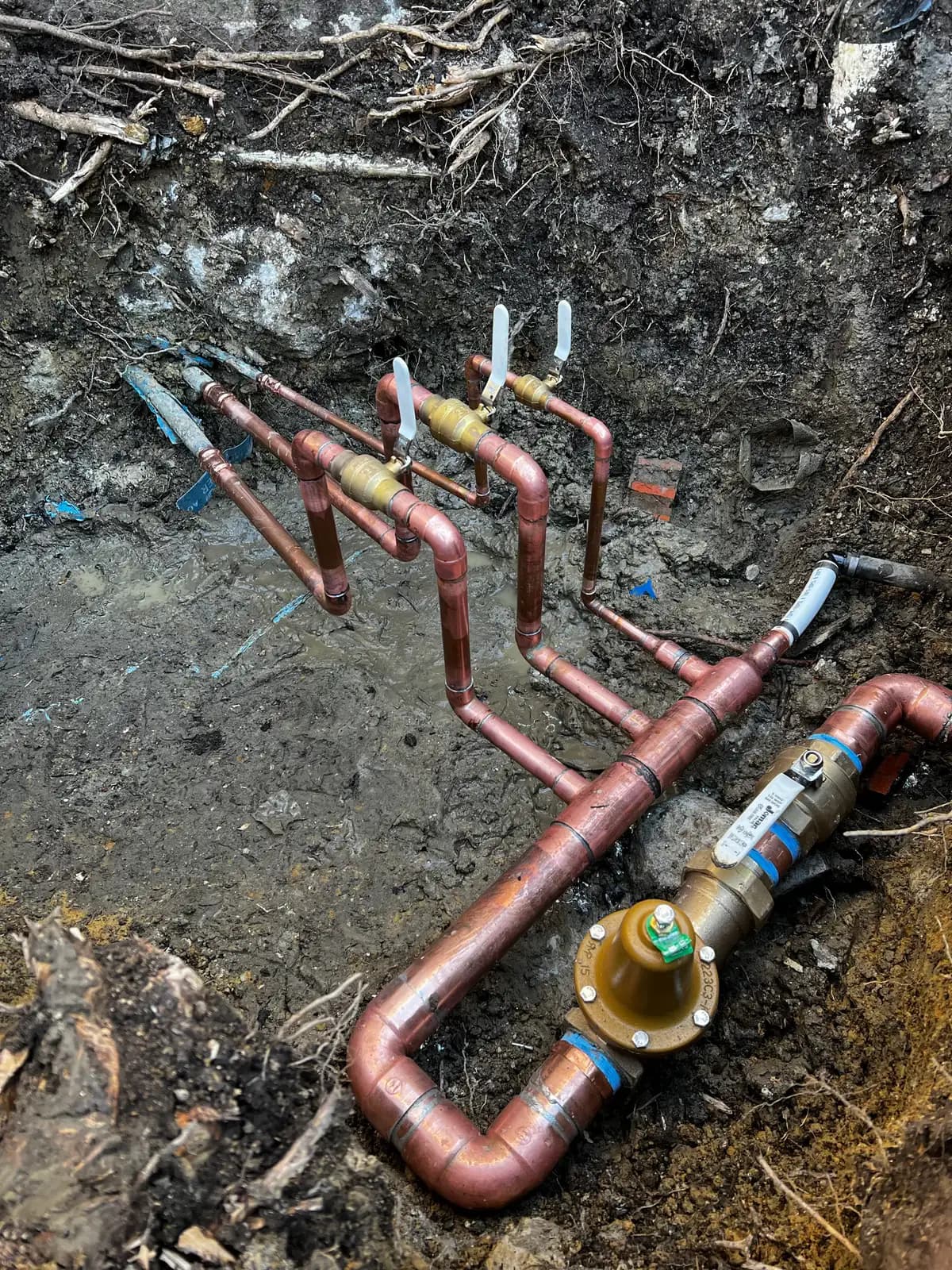
Repair scope depends entirely on what the test reveals. A failed flex connector at a dryer might be a 30-minute repair. A corroded buried iron lateral that runs 40 feet from the meter to the house is a different project — one that likely involves trenching or, where access is limited, directional boring. After any repair, the line is pressure-tested again before SoCalGas is called back to restore service.
Permits are required for most gas line work in LA County. Our quotes include the permit cost — we pull it and schedule the inspection. Don't hire a contractor who tells you a permit isn't necessary for gas line repair. It is, and the inspection is what verifies the repair is safe before gas is restored.
South Bay gas line questions we hear most
**Can I go back inside while waiting for SoCalGas if the smell seems weaker?** No. Gas concentrations shift with airflow and temperature. A smell that seems to have faded can still be at a flammable concentration in a confined area like a utility closet or under a cabinet. Stay out until SoCalGas clears the space with a meter.
**My neighbor's house shares a gas meter — does that affect my situation?** Shared meters are uncommon in single-family homes but do appear in older multi-unit buildings in areas like North Redondo and Downtown El Segundo. If there's any shared infrastructure, SoCalGas needs to assess the whole system. Tell the dispatcher when you call.
**Can I repair my own gas line?** California law does not prohibit a homeowner from doing their own plumbing work on their own residence, but gas line work requires a permit and must pass inspection. Given the failure consequences, this is one of the categories where self-repair is technically legal and practically inadvisable. Get a licensed C-36 contractor.
**How do I verify a contractor is licensed to do gas line work?** Gas line repair in California is within the C-36 plumbing contractor license scope. You can verify any C-36 license number at the CSLB website at cslb.ca.gov. Mainline No-Dig Trenchless Plumbing holds C-36 license #901735 — verifiable there directly.
**How long does the repair usually take once SoCalGas clears us to re-enter?** Simple fitting or connector repairs can be completed same-day in most cases. A buried lateral replacement depends on length and access — a typical 30–50 foot run takes one full day of work plus permit inspection scheduling, which adds time. We give you a realistic timeline at the assessment, not an optimistic one.
**Do you work on gas lines for dryers, ranges, and fireplaces — not just the main lateral?** Yes. Appliance gas connections, flexible connectors, shut-off valves, and branch lines to fireplaces and outdoor fire pits all fall within our scope. For fire pit installations specifically, see our [gas line installation service](/services/gas-lines).
What to do next
If you're dealing with an active gas smell right now, stop reading and follow the protocol above: everyone out, door open, call SoCalGas at 1-800-427-2200 from outside, then 911 if you can smell it from the street or hear hissing. This article is here when you need the context — not as a substitute for those calls.
If SoCalGas has already cleared your home and you need a licensed contractor to assess and repair the gas line, call Mainline at (310) 808-7343. We dispatch 24/7, hold C-36 license #901735, and serve all 16 South Bay cities including same-day response across Lomita, Torrance, San Pedro, Carson, and the beach cities. We pull permits, handle the inspection coordination, and don't restore gas until the repair passes pressure test.
Frequently Asked Questions
What should I do if I smell gas in my home?
Leave immediately — do not flip light switches, use phones inside, or light anything, since a spark can ignite gas. Once everyone is outside and away from the house, call SoCalGas at 1-800-427-2200, and call 911 as well if the smell is strong or you hear hissing. Only after the gas company confirms it is safe should a licensed plumber repair the source of the leak.
Who do I call if I smell gas?
From a safe location outside the home, call SoCalGas's emergency line at 1-800-427-2200, and 911 if the odor is strong or the source is unknown. The utility shuts off and makes the area safe. A licensed C-36 plumber then locates and repairs the homeowner-side leak once the utility clears the home for re-entry.
What causes a gas smell in a house?
A rotten-egg odor is the odorant added to natural gas and usually points to a leak at a fitting, an aging gas line, a loose appliance connection, or a pilot light that has gone out. Older South Bay homes with original steel gas piping are especially prone to corrosion-related leaks at threaded joints.
Tags
Related Services