A sewer camera inspection is not a gut-check. It's a structured visual survey of your lateral from the cleanout to the city main — every foot of pipe recorded, logged, and tied to a specific distance marker. When done correctly, the report tells you the pipe material, the condition at each anomaly, the depth of the line at key points, and a clear recommendation on whether to monitor, clean, repair, or replace.
Most homeowners encounter the phrase for the first time during a real estate transaction or after a drain backs up. That framing undersells what a proper scope actually delivers. The footage is evidence — the kind that determines whether you're looking at a $400 hydro-jet or a $14,000 pipe replacement. Knowing how to read that evidence is the difference between a smart repair decision and an expensive guess.
The equipment: what goes into the pipe
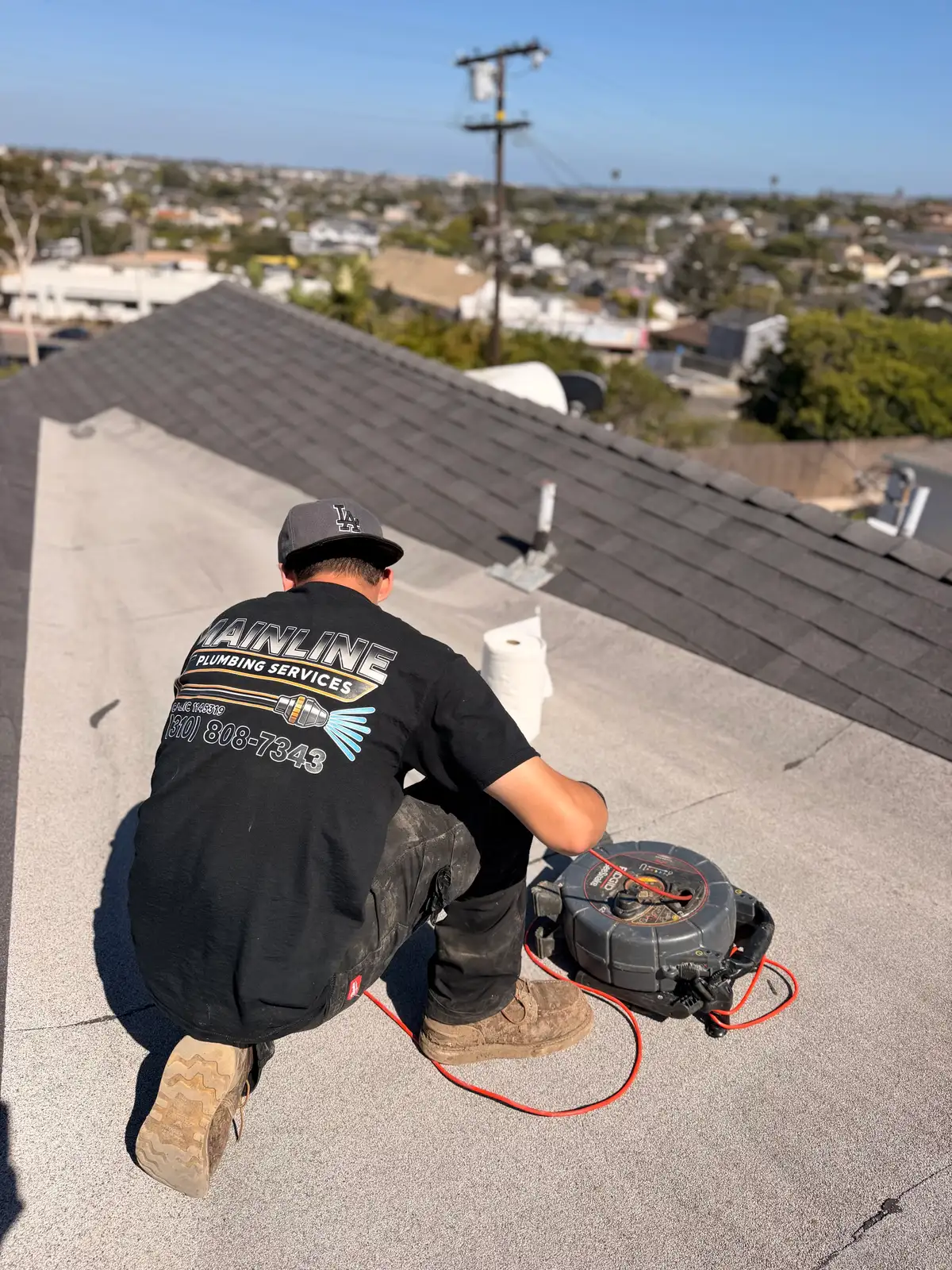
A push-rod inspection camera is a waterproof camera head mounted on a flexible fiberglass rod. The camera transmits live video to a monitor at the surface, usually with a built-in sondes — a locating transmitter that lets the technician pinpoint the camera's exact position underground using a surface locator. This is how depth readings and GPS coordinates get logged.
Camera heads range from 1.5 inches to 4 inches in diameter, matched to the pipe being inspected. A standard residential lateral is 4-inch or 6-inch drain pipe. The camera runs continuously while the rod feeds forward, and most units stamp distance markers on the video in real time — so when you see a crack at 34 feet, that number is embedded in the footage, not estimated after the fact.
High-quality units also capture still images automatically at set intervals and flag the technician when they pause on a defect. Cheaper equipment — or a rushed technician — skips that discipline. If the report you receive doesn't include timestamped stills tied to distance markers, the inspection was not thorough.
What the camera actually documents
Pipe material is the first read. Cast iron, clay tile, ABS, PVC, Orangeburg, and concrete each have a distinct visual signature on screen. In Old San Pedro and Vinegar Hill, where pre-1940 housing dominates, clay tile is common and often showing end-of-life joint separation. In Hawthorne's Hollyglen neighborhood, 1950s-era cast iron is the norm — and the interior surface tells you whether scale buildup has narrowed the flow channel.
Beyond material, the technician is logging specific defect types. Root intrusion appears as fine root masses or thick root balls at joints. Joint offsets — where two pipe sections have shifted out of alignment — show as a step or ledge in the pipe wall. Cracks range from hairline surface fractures to full circumferential breaks. Belly sections (low spots where the pipe has sagged) appear as standing water pooling ahead of the camera even when nothing is flowing. Each defect type carries different urgency.
Depth readings matter for repair planning. A lateral running 6 feet deep in Torrance's Old Torrance neighborhood is accessible by excavation if needed. A lateral that drops to 12 or 14 feet — common in Rolling Hills Estates due to steep terrain — changes the repair cost calculus entirely, often pushing pipe bursting or lining ahead of open-cut as the practical choice.
The condition rating pulls it all together. Most inspection reports use a modified NASSCO PACP scoring system or an equivalent grading scale, rating each defect from 1 (minor) to 5 (immediately structurally deficient). A Grade 1 root intrusion at a joint is a maintenance issue. A Grade 4 or 5 circumferential break means the pipe can collapse under load — and in that case, scheduling a full [sewer repair](/services/trenchless/sewer-repair) becomes non-negotiable.
Reading the report: what to look for
A complete inspection report includes the video file or a direct link to it, a written defect log with distance marker and defect code for each finding, at least one still image per defect, and a summary recommendation. If you receive a verbal debrief with no written deliverable, push back and request documentation before signing anything.
The defect log is where most homeowners get confused. Codes like RI (root intrusion), JD (joint displacement), or FB (fracture, break) map to a specific location in the pipe. Cross-reference those codes against the distance markers in the video. A root intrusion at 22 feet is likely at a pipe joint — clay tile and cast iron have joints every 2 to 4 feet, which is where roots enter. If you see multiple RI entries spaced 2 to 3 feet apart, the root system has worked its way into several consecutive joints, and a simple snake won't hold.
One thing many reports don't flag clearly: a clean-looking pipe that has a sagging belly section is often worse long-term than a pipe with visible root intrusion. Belly sections trap solids, build up grease, and eventually cause chronic backups no amount of snaking will fix. The only real solution is replacing or relining that section. If your report doesn't explicitly call out standing water observation or grade changes, ask the technician directly whether they observed any.
Why the access point matters
The cleanout location determines how much of your lateral the camera can actually reach. A main cleanout at the foundation wall gives the technician a clear run toward the street. If the only access is through a toilet or a secondary cleanout mid-yard, the footage will be incomplete — and the section closest to the city connection (where root intrusion and joint separation are most common) may not get scoped.
In Hermosa Beach's Sand Section, where lots average 30 feet wide and structures are built to the property line, finding a usable cleanout can take longer than the inspection itself. In Manhattan Beach's Tree Section, aggressive Canary Island date palms and ficus roots mean the most critical footage is in the last 20 feet before the main — exactly the section that gets missed if access is compromised. When we run a [camera inspection](/services/trenchless/camera-inspection) on a property with limited cleanout access, we note that explicitly in the report and scope from both directions where possible.
When a camera inspection saves you money
The clearest case is pre-purchase. A $250 sewer scope before close of escrow has stopped more than a few buyers from inheriting a $15,000 problem they didn't price into their offer. In cities like San Pedro and Inglewood, where pre-war and mid-century housing stock is dense, sewer laterals frequently haven't been touched since original construction. The visual record from a camera inspection becomes part of your negotiation — or your walk-away data.
The second case is chronic backups. If a drain has been snaked three or four times in two years, someone needs to put a camera in it. Snaking a pipe with a cracked belly or a partial collapse clears the immediate blockage but doesn't address the structural cause. You'll be back in six months. A scope identifies whether the root cause is maintenance (grease, debris) or structural (broken pipe, belly, root intrusion requiring excavation), and that distinction determines the entire repair path.
No South Bay city currently requires a sewer lateral inspection at point of sale, which surprises a lot of sellers who assume someone official will flag a problem before they list. Nobody will. Torrance goes further than most in the other direction, assigning the owner the full lateral including the connection to the public main. Proactive scoping on [Torrance trenchless](/service-areas/torrance/trenchless) jobs regularly surfaces issues that would have become a buyer's repair request if discovered at the wrong moment.
What we document and how we deliver it
Every camera inspection Mainline runs includes a full-length video recording, still captures at each defect location, a written defect log with distance markers and condition ratings, and a plain-language summary recommendation. The report is specific enough to hand to a contractor for a bid, or to a real estate attorney if the findings become part of a disclosure.
We use a locating sonde to mark the camera's position at the surface when requested — useful for mapping lateral routing under hardscape or identifying where a belly section is located before planning excavation. Depth readings at the cleanout, at any bends, and at the connection to the main are standard on all inspections. Licensed C-36 #901735, operating across all 16 South Bay cities.
What to do next
If you're buying a property built before 1980, schedule a scope before you remove your inspection contingency. If you've had two or more drain backups in the past 18 months, a camera inspection is the next logical step — not another snake.
Call Mainline at (310) 808-7343 to schedule a camera inspection or to ask whether your situation warrants a scope before committing to other work. We dispatch 24/7, no overtime fees for evening or weekend calls, and our target response time for the South Bay is 60 minutes or less. You can also request a scoped estimate through the contact form if you'd prefer to start there.
Tags