Southern California homeowners skip winter plumbing prep because most winters feel like autumn everywhere else. That logic is mostly correct — until the three to eight nights per year when it isn't. The South Bay averages overnight lows in the 34–39°F range between December and February, with occasional dips below 32°F during Santa Ana reversals and cold fronts off the Pacific. That's a narrow freeze window, but it's real, and exposed plumbing doesn't care how mild the average is.
The failures that result aren't dramatic in the way a Midwest burst pipe is dramatic. They're hose bibs that weep for two months before anyone notices, exterior copper elbows that develop hairline cracks and saturate wall cavities, and irrigation manifolds split at the fitting where PVC meets a metal valve. None of these make the news. All of them cost money — typically $200–$800 per incident when you add a service call and parts. Most are preventable in under two hours of prep work.
What follows is a specific, actionable checklist for South Bay homeowners. The tasks are ordered by impact, and each one notes whether it's owner-serviceable or needs a licensed plumber.
Why Southern California winters still damage pipes
Pipe freezing doesn't require a hard, sustained freeze. Water begins to expand at 32°F, but damage to fittings and thin-wall copper typically occurs when temperatures stay below 32°F for two or more hours — which happens in the South Bay more often than most homeowners track. Neighborhoods with more elevation, like Walteria in Torrance, the Hill Section in Manhattan Beach, or the Dapplegray area of Rolling Hills Estates, can run 3–5 degrees colder than the beach flats on the same night.
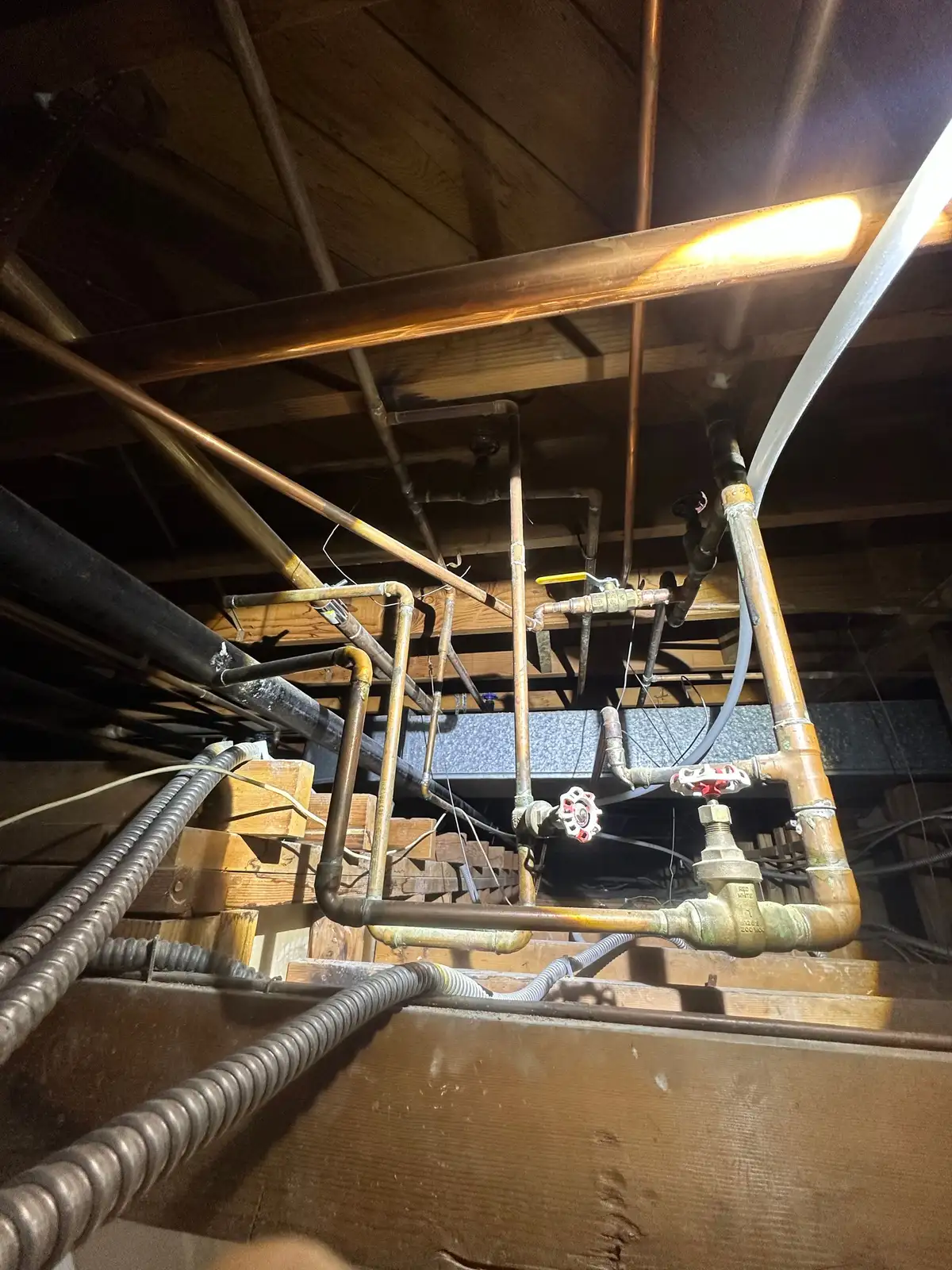
The pipes most at risk are those with no thermal mass around them: hose bibs, outdoor irrigation risers, exposed supply lines on exterior walls (especially north-facing or shaded), and any copper run through uninsulated garage walls. These sections lose heat fast when air temperature drops and wind picks up. Unlike a buried supply line, they have no soil insulation to buffer the temperature swing.
Southern California construction practices compound the risk. Homes built in the 1950s and 1960s — which account for a significant share of the housing stock in Hawthorne, Gardena, and Lawndale — often have supply lines running inside exterior walls with minimal insulation, because 'it doesn't freeze here.' For 355 nights a year, that's true. The other 10 nights are the problem.
Insulate exposed outdoor pipes now, before the first warning
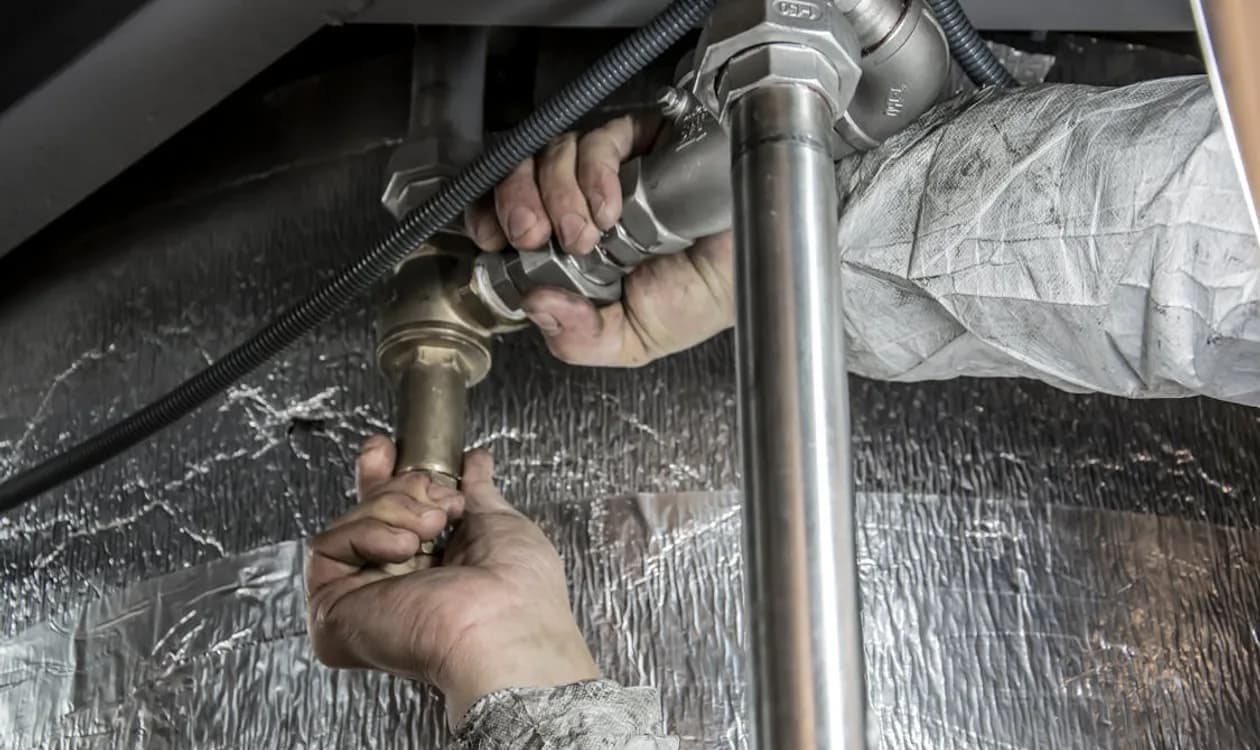
Foam pipe insulation is sold in half-inch and three-quarter-inch inside diameters at any hardware store. It costs roughly $0.50–$1.00 per linear foot and installs with no tools beyond a utility knife and tape. The goal is to wrap every section of supply pipe that's exposed to outdoor air: the horizontal run from your meter to the house exterior, any vertical risers on irrigation systems, and the supply tubing feeding exterior hose bibs.
Pay attention to fittings. A bare copper elbow loses heat faster than straight pipe because of its surface area relative to volume. Wrap fittings with foam insulation scraps and seal the joints with weatherproof tape rated for outdoor use. This matters most on north-facing and shaded west-facing walls where sunlight doesn't assist recovery after cold nights.
The insulation isn't a substitute for draining lines in advance of a forecast freeze — it buys time, not immunity. Think of it as a buffer that gives a 32°F exposure window of four to six hours instead of one to two. That buffer is usually enough for a South Bay freeze event, which rarely sustains hard temperatures past 6–7 AM.
Hose bib covers: simple, cheap, often ignored
Foam hose bib covers cost $3–$6 each at hardware stores. They slip over the bib, trap an air pocket, and slow thermal transfer to the metal inside. For mild freeze events — the kind the South Bay actually gets — they're adequate protection on their own when combined with disconnecting any attached hose. An attached hose traps water against the bib seat, and that water can freeze even when the bib itself would otherwise drain.
Before you cover a hose bib, shut off its individual supply valve if one exists inside the house, then open the bib to drain the last water out of the line. Not all hose bibs have individual interior shutoffs — older homes in Old San Pedro and Vinegar Hill frequently don't. If yours lacks one and you're in a neighborhood with colder overnight lows, add insulating the supply line leading to it as a priority.
If your hose bibs are more than 15–20 years old and have already survived a few freeze events without inspection, this is a reasonable time to have them checked. A bib that's been stressed by previous freeze-thaw cycles may have a cracked body that's been weeping slowly inside the wall without visible exterior signs.
How to drip lines correctly on freeze warning nights
The National Weather Service issues Freeze Warnings for the Los Angeles area when temperatures are forecast to drop to 32°F or below for at least two hours. When you see that warning, the right move for exposed outdoor lines is a slow drip — roughly a pencil-width stream — from the faucet served by the most at-risk pipe run. Moving water resists freezing better than standing water because the latent heat of the municipal supply line keeps the entire run slightly above air temperature.
The drip method works for outdoor faucets and any interior fixture on a supply line that runs through an uninsulated exterior wall cavity. It does not work for outdoor irrigation lines, which don't have a faucet you can leave open at low flow. Those need to be shut off at the zone valve and drained manually, or protected by a properly programmed smart irrigation controller with a weather-based freeze delay.
Run the drip from the fixture farthest from your water heater on each cold water line. That's the section that drops temperature first. For most South Bay homes, this means an outdoor hose bib or a bathroom sink on an exterior wall. The added water usage over a six-hour drip night is roughly 20–40 gallons — a minor cost compared to a service call.
Know where your main shutoff is before you need it
If a hose bib or exterior line splits during a freeze, the first sixty seconds matter. A homeowner who can locate and close the main shutoff immediately turns a potential wall cavity flood into a manageable repair. A homeowner who spends ten minutes searching for it while water runs into a garage wall turns a $300 bib replacement into a $2,000 water damage and plumbing job.
The main shutoff is typically located at or near the water meter, which in most South Bay cities is in a covered box near the street or sidewalk. Many older homes also have a secondary shutoff at the house — usually a ball valve or gate valve on the supply line where it enters the foundation or garage. Know the location of both. If you have a gate valve (round wheel handle) as your main, consider having a licensed plumber upgrade it to a ball valve — gate valves that haven't been turned in years frequently fail to close fully when you actually need them.
For properties in Lomita, Torrance, or Carson where we respond fastest, we can typically have a crew on-site within 25–35 minutes of a call during normal conditions. But those minutes still matter — knowing your shutoff location cuts the active damage window by a significant margin regardless of how quickly any plumber arrives.
Water heaters, irrigation systems, and a few things most guides skip
Tankless water heaters installed in exterior locations — a common configuration in the remodeled Beach Cities properties and in some Rolling Hills Estates estate homes — have internal freeze protection, but that protection relies on the unit having power. If your tankless unit is exterior-mounted and you lose power during a cold event, the freeze protection is inactive. Some units have a drain plug; consult your manual or call a plumber before the first hard freeze to understand your unit's specific risk.
Irrigation systems in the South Bay are frequently set-and-forgotten. Before December, shut down any zones that feed exposed risers, drain the backflow preventer if it's above grade, and inspect the manifold for cracks from any previous seasons. Backflow preventers are among the most reliably freeze-damaged components because they sit above ground, contain internal chambers, and are often in shaded locations where homeowners don't notice the damage until spring. Our [general plumbing services](/services/general-plumbing) include freeze damage assessment if you're not sure what your backflow preventer looks like post-winter.
One item almost every seasonal guide omits: check under-sink supply lines in cabinets on exterior kitchen and bathroom walls. The cabinet door traps interior air heat, which keeps the pipe above freezing. On very cold nights, open those cabinet doors slightly to let conditioned air circulate around the supply lines. It costs nothing and eliminates one of the more obscure freeze failure points in older South Bay homes — particularly relevant in Carlson Park in Culver City or the tree-lined blocks of the Torrance Madrona neighborhood, where larger older homes often have original copper runs inside exterior walls with minimal insulation behind the drywall.
What to do if a pipe freezes or cracks
If you turn on a faucet during or after a freeze event and get nothing — or a trickle — the supply line may be partially or fully frozen. Shut off the main first. Do not apply a heat gun, open flame, or heat tape without first understanding what's inside the wall cavity. Copper expands when it freezes and may already have a crack that's being held closed by the ice. When the ice melts, the crack opens. If the line is still pressurized when that happens, you have an active leak inside a wall.
Shut off the main, then apply gentle heat — a hair dryer at medium setting held six inches from the pipe is the right tool for an exposed pipe section. Work from the faucet end toward the supply side, not from the middle. Once flow resumes, keep the main on but watch for the pressure drop that indicates a crack has opened downstream. If pressure drops or you see water, shut the main again and call a licensed plumber.
For [Torrance general plumbing](/service-areas/torrance) and neighboring cities, the Mainline crew handles freeze damage repairs the same way we handle any emergency — 24/7 dispatch, 60-minute target response, and no overtime fees regardless of what time the pipe decides to fail. Licensed C-36 #901735.
What to do next
The full prep list is short: insulate exposed outdoor pipe runs, install foam covers on hose bibs and disconnect attached hoses, set a reminder to drip outdoor fixtures on freeze warning nights, locate and test both your street meter shutoff and house shutoff, and drain exposed irrigation components before December. None of it requires a licensed plumber unless you find damaged components in the process.
If you do find a cracked bib, a weeping fitting, a gate valve that won't fully close, or an irrigation backflow preventer that looks wrong, that's when to call. We work across all 16 South Bay cities and can typically scope and quote same-day for non-emergency repairs before winter weather sets in.
Call Mainline No-Dig Trenchless Plumbing at (310) 808-7343 to schedule a pre-winter inspection or to ask whether any specific pipe configuration on your property needs attention before the first freeze warning of the season.
Tags
Related Services