Heavy rain in the South Bay is not just a drainage inconvenience. An atmospheric river event — 3 to 6 inches of rainfall over 48 to 72 hours — puts mechanical stress on underground plumbing that most homeowners don't see until weeks later, when a crack widens, a lateral shifts, or a slab leak appears on a dry afternoon with no obvious cause.
The South Bay's soil mix does most of the damage. Expansive clay in Palos Verdes, Torrance, and Carson contracts during dry months and swells when saturated — sometimes exerting hundreds of pounds per square foot of lateral force on buried pipe. Sandy coastal backfill in Redondo Beach and Hermosa Beach loses compaction when saturated, allowing pipes to shift and joints to open. Neither failure is dramatic. Both are detectable with the right inspection.
This post covers five specific things to check after a major storm event, what you're actually looking for in each case, and when what you find warrants a professional scope or repair — before the next rain cycle compounds the damage.
Why storm season is a plumbing stress test
Southern California's dry-wet cycle is harder on buried plumbing than steady-rainfall climates. Pipes in consistently wet soil reach a stable equilibrium. Pipes in soil that spends eight months bone-dry and then absorbs 4 inches of rain in two days are being cycled through expansion and contraction repeatedly, year after year.
Clay-heavy soils in the Palos Verdes hill communities — Portuguese Bend, Lunada Bay, Malaga Cove — are among the most reactive in the region. The same soils underlie much of Rolling Hills Estates and parts of Old Torrance. When they swell, they move pipe. When they dry and contract, they leave voids. Those voids become the low spots where root intrusion and joint separation start.
Raised water tables after heavy rain create a secondary problem: hydrostatic pressure against slab foundations and underground pipe joints. In Carson Park and Scottsdale neighborhoods in Carson — areas built over former low-lying agricultural land — water tables can rise several feet during a major event. That pressure pushes against cast iron hub joints and concrete pipe sockets from the outside in.
Check 1 — Sewer lateral backups and slow drains
The most direct post-storm indicator is a sewer system under hydraulic overload. During heavy rain, municipal sewer mainlines can reach 80 to 100 percent capacity from groundwater infiltration and surface runoff inflow. If your lateral has any restriction — partial root intrusion, offset joint, accumulated grease — storm-period mainline surcharging will back that material into the lowest fixture in the house.
If floor drains, ground-level toilets, or utility sinks backed up during the storm or in the 24 hours after, the lateral needs a camera inspection. The backup tells you there's a restriction. It doesn't tell you whether that restriction is a root mass that predates the storm or a joint displacement that just happened. A [camera inspection](/services/trenchless/camera-inspection) is the only way to distinguish between them — and the answer changes the repair scope significantly.
Slow drains that weren't slow before the storm are the subtler version of the same problem. If your main bathroom stack is draining noticeably slower than it was two weeks ago, the storm likely mobilized debris across an existing partial restriction. That partial restriction doesn't resolve on its own.
Check 2 — Slab movement and slab leak indicators
Soil movement during saturation and the subsequent drying cycle can shift slab foundations by fractions of an inch. That's enough to stress copper supply lines embedded in or under the slab, particularly at elbows and tee fittings where thermal movement is already concentrated. Most slab leaks don't announce themselves with a flood — they announce themselves with a hot spot on the floor, a water bill that's $30 higher than expected, or the sound of running water when everything is shut off.
After a major rain event, walk your floors and note any new cracks in tile or grout lines that didn't exist before. Check your water meter at night after all fixtures are off — record the reading, wait 30 minutes without using any water, and check again. Any movement on the dial indicates a leak somewhere in the pressurized supply system. That test takes four minutes and costs nothing.
Post-storm slab leak risk is highest in homes with original copper supply on concrete slab foundations. In Hawthorne's Hollyglen and Bodger Park neighborhoods, and across much of Gardena's post-war tract stock, those homes are 60 to 70 years old with supply lines that were never designed to survive repeated soil movement cycles. If your home fits that profile, a professional [slab leak detection](/services/slab-leak-repair) check after significant rain is worth scheduling before visible damage forces the issue.
Check 3 — Water heater and mechanical room flooding
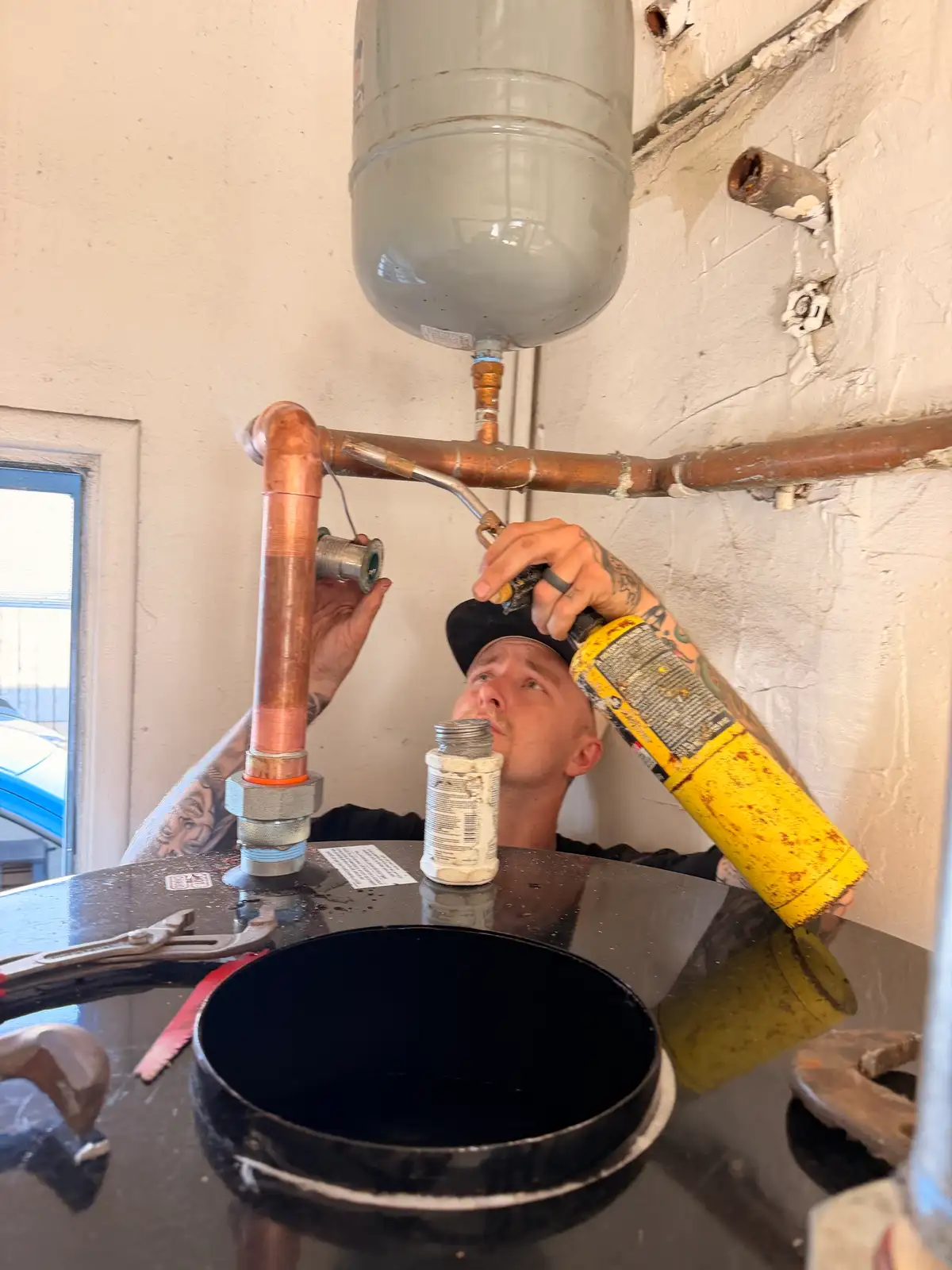
Groundwater intrusion through foundation walls or floor penetrations during high-saturation events can reach the water heater platform, the base of a tankless unit, or gas line connections in mechanical rooms and garages. Even a half-inch of standing water against a standard tank water heater's burner assembly or thermocouple can cause ignition failures days after the water has evaporated.
Check your water heater and any mechanical room or garage space that sits at or near grade level. Look for water staining on the floor or lower walls that wasn't there before the storm — calcium lines and efflorescence are the residue of prior intrusion events, but fresh water marks are a current problem. If you see evidence of water contact with gas components, have a plumber assess the connections before assuming the unit is fine.
Gas lines that run underground or through foundation penetrations are a lower-frequency but higher-consequence concern. Soil movement can stress underground gas line fittings at entry points. If you notice a sulfur odor near a gas appliance after a major rain event, treat it the same way you would any suspected gas leak — ventilate, don't use any ignition sources, and call us or your gas utility before proceeding.
Check 4 — Yard drainage and cleanout accessibility
Surface drainage that didn't exist before the storm — standing water in the yard 48 hours after rain stops, new soggy areas near the foundation, or wet patches over the sewer lateral path — can indicate a lateral breach. When a clay or cast iron pipe cracks or a joint separates, groundwater infiltrates the pipe during high-water-table conditions. The same opening that lets water in also lets sewage out, creating a saturated zone above the pipe.
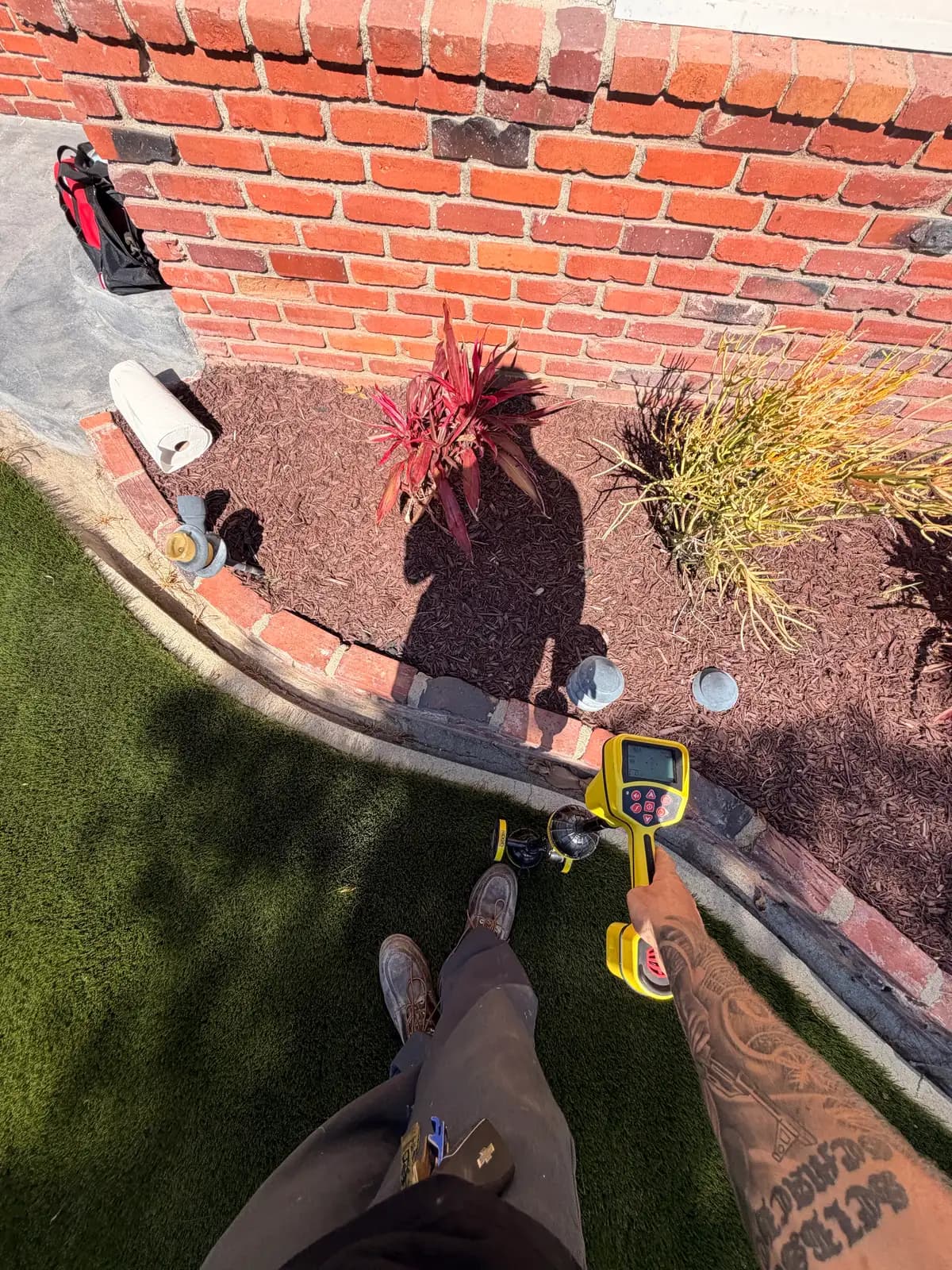
Locate your sewer cleanout — typically a 4-inch ABS or PVC cap at grade level in the front or side yard — and confirm it's accessible and the cap is intact. A missing or cracked cleanout cap is a direct entry point for groundwater and debris into the lateral. Replacing a damaged cleanout cap is a minor repair. Clearing a lateral that has accumulated saturated soil through an open cleanout is not.
If you don't know where your cleanout is, that's worth resolving independently of any storm concern. In Lawndale and Inglewood, many post-war slab homes had cleanouts poured over during later concrete work. A [camera inspection](/services/trenchless) can locate them. Knowing where your cleanout is before an emergency is the kind of detail that determines whether a backup is a 20-minute service call or a two-hour excavation.
Check 5 — Hose bibs, exterior faucets, and irrigation connections
Outdoor plumbing connections take more mechanical stress during storm events than most homeowners account for. Hose bibs attached to walls can work loose when soil adjacent to the house shifts. Irrigation backflow preventers, typically installed at grade level or slightly above, can take direct impact from debris-laden surface runoff.
After a storm, run each hose bib briefly and check for dripping at the wall penetration, not just from the spout. A drip at the wall means the bib fitting has moved relative to the supply stub-out — that's a slow leak into your wall cavity, not an exterior problem. Check irrigation valves and backflow preventers for visible cracks or displacement. Frost-free bibs that were already showing wear before the storm are a reasonable candidate for replacement before next season.
For homeowners in coastal Redondo Beach and Hermosa Beach, salt air already accelerates corrosion on exterior brass and copper fittings. Storm-driven moisture compounds that exposure. If an outdoor fitting looked marginal before the rain, inspect it closely after — corrosion failure is not gradual at the end of its service life.
When to call before you see obvious damage
The inspection points above are things you can observe yourself. What you can't observe without equipment is whether your sewer lateral has a new crack, whether a supply line under the slab has a weeping pinhole, or whether soil movement created a void under your pipe that will cause a joint failure in the next dry season. Those conditions are detectable now, before they become visible damage, and the cost to find them is a fraction of the cost to repair them after a second storm compounds the problem.
If your home is in a high-clay or hillside neighborhood — Palos Verdes, Rolling Hills Estates, parts of Old Torrance, or San Pedro's hillside blocks — a post-storm [general plumbing inspection](/service-areas/torrance) after significant atmospheric river events is a defensible maintenance practice, not an overreaction. The soil behavior in those zones is documented and repeatable.
Homes with cast iron or clay tile laterals, galvanized supply on slab, or original pre-1965 plumbing in any South Bay neighborhood are the ones most likely to show post-storm damage. Age, material, and soil type are the three variables that predict where we find problems. If your home checks two or three of those boxes, the inspection window after a major rain event — before the soil dries and masks movement — is the right time to look.
What to do next
Work through the five checks above in the 48 to 72 hours after the storm passes. If you find a slow drain, a wet spot in the yard over the lateral path, or evidence of water intrusion near mechanical equipment, don't wait for the next rain to confirm the problem. Post-storm conditions are the best diagnostic window you have — the soil is still telling you what it did.
Mainline No-Dig Trenchless Plumbing is a Licensed C-36 #901735 contractor headquartered in Lomita serving 16 South Bay cities. Our 24/7 dispatch operates year-round with a 25–45-minute target response for emergencies. For non-emergency post-storm inspections, we schedule within 24 to 48 hours. Call (310) 808-7343 or use the contact form on the site to set up a scope.
Tags