Most plumbing service calls we take across the South Bay — from Old Torrance bungalows to Gardena's Moneta tract homes — trace back to one of two things: a failure that was inevitable, or a failure that a five-minute fix could have prevented. The second category is where owning the right tools pays off. Not a full toolkit. Not a contractor's van. Five specific items that cost less than a single after-hours dispatch fee.
This isn't about turning homeowners into plumbers. It's about giving you the ability to shut things off fast, stop a slow leak from becoming a flooded cabinet, and handle the handful of minor repairs that genuinely don't require a licensed technician. Know your limits — anything involving gas lines, sewer laterals, water heaters, or supply line modifications is licensed-contractor work. But for the gap between 'nothing' and 'calling for help,' these five tools close most of it.
Each item below costs under $40 at any hardware store. Together they probably prevent two to three service calls over the life of owning a home. Do the math.
1. Adjustable Wrench — 10-Inch, Not 6-Inch
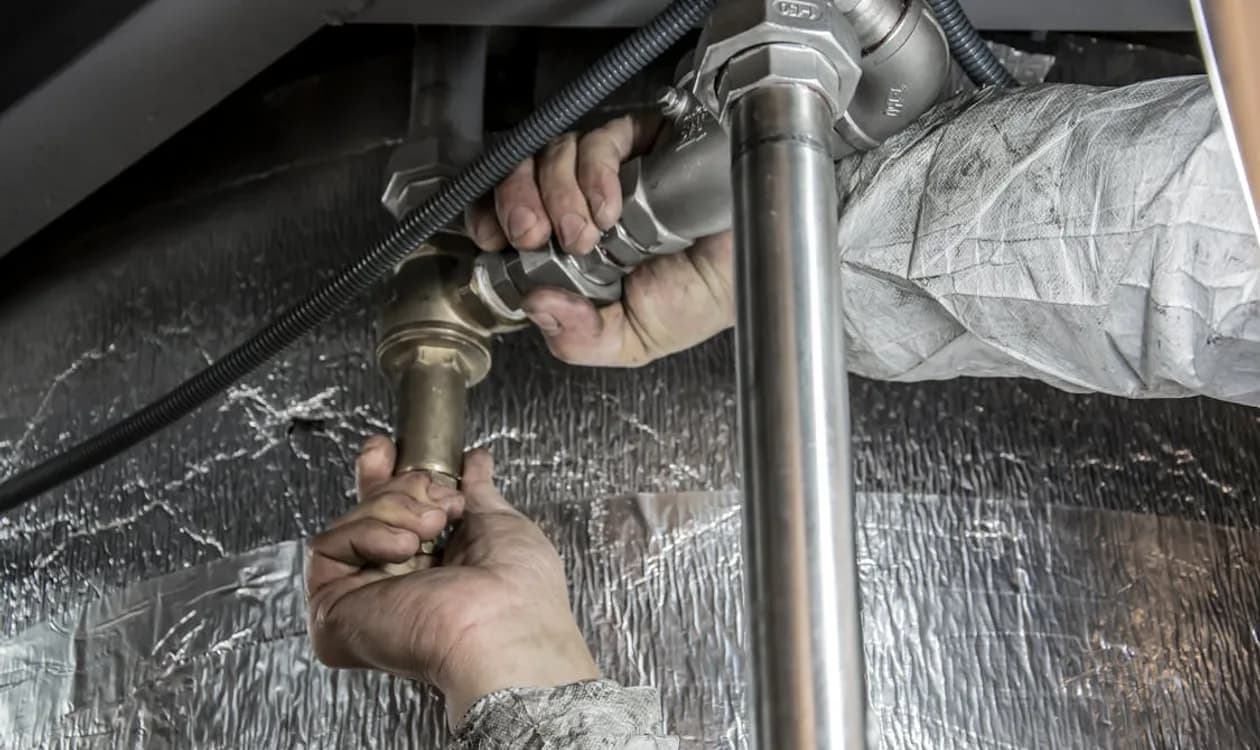
The standard 6-inch adjustable wrench sold in most starter sets is undersized for almost every plumbing fitting a homeowner encounters. The hex nuts on supply lines under a sink, the packing nuts on outdoor hose bibs, and the slip-joint nuts on P-traps all require more jaw clearance and torque than a 6-inch tool provides. Get a 10-inch Channellock-style or a 12-inch adjustable — either works.
The most common use case: a supply line starts dripping at the compression fitting behind a toilet or under a kitchen sink. In most cases, a quarter-turn snug with a wrench stops it entirely. In 1950s and 1960s tract homes like those throughout Hollyglen in Hawthorne or the post-war sections of Lawndale, those fittings haven't been touched in decades and the hex nuts are soft from mineral buildup — go slow, don't crank hard, and stop when the drip stops.
One rule: use a wrench on fittings, not on chrome-plated supply lines themselves. Chrome is thin and decorative. You're turning the nut, not the pipe. If you're not sure which part moves, stop and call.
2. Flange Plunger — The Right Plunger for the Right Drain
There are two types of plungers at the hardware store. The flat-cup plunger is designed for sinks and tubs. The flange plunger — which has an inner rubber bell that folds down from the cup — is designed for toilets. Most homes have the wrong one, or a cheap version of either that lost its suction seal years ago.
A flange plunger that fits properly against a toilet drain creates a true pressure differential when you push and pull. A flat cup on a toilet does almost nothing useful. The difference in price between a good flange plunger and a bad one is about $8. The difference in effectiveness is the gap between clearing a clog yourself and calling for a snake.
For sink drains — kitchen or bathroom — the flat-cup plunger works, but only if you block the overflow opening first. On bathroom sinks, that's the small hole near the top of the basin. Cover it with a wet rag before you plunge. Without that seal, you're just moving air around. This single technique resolves about half the slow-sink complaints we hear from homeowners who say 'plunging didn't work.'
3. Water Meter Key — Know Where Your Shutoff Is Before You Need It
A water meter key is a T-bar tool that opens the meter box at the curb and actuates the main shutoff valve. In most South Bay cities, the box is a round concrete lid in the parkway strip, between the sidewalk and the street. The tool itself costs $10 to $15 and is one of those items you will own for 15 years and use once — at exactly the right moment.
The scenario where it matters: a supply line fails inside the house, your interior shutoff valve is stuck or missing (common in older homes that have never had the valve exercised), and you need to cut water to the entire property immediately. In that situation, 30 seconds with a meter key prevents thousands of dollars in water damage. Without it, you're waiting for a technician to arrive or trying to turn a corroded valve stem with your hand.
Before a real emergency, go find your meter box and confirm you can open it. Some older boxes in San Pedro's Vinegar Hill or Point Fermin neighborhoods have corroded lids that require a flathead to pry up first. Know what you're dealing with before 2am. If the shutoff valve inside the box is stuck or broken, that's a repair call — [general plumbing service](/services) can address it during normal hours before it becomes urgent.
4. Stub-Out Cap Kit — For Fixtures You Remove Before You're Ready to Replace
A stub-out cap kit is a set of threaded and slip-joint caps in common sizes — typically 1/2-inch and 3/4-inch — that let you temporarily cap off supply lines or drain outlets when a fixture is removed. This comes up more often than most homeowners expect: replacing a toilet and the new one doesn't arrive for two days, pulling out an old vanity during a bathroom remodel, or removing an ice maker line when repositioning a refrigerator.
Without a cap kit, a removed fixture leaves an open supply stub that must either stay connected to something or have the water shut off to that zone entirely. A $12 cap kit from any hardware store handles this in under five minutes and lets you use the rest of the house normally while one fixture is out of commission.
The caps you want: push-to-connect versions (SharkBite-compatible) work on copper, PEX, and CPVC without tools, which matters in older homes in Gardena or the mid-century sections of Inglewood where you might encounter any of those materials under the same sink. Confirm what your pipe material is before you buy — the wrong cap style won't seal.
5. PTFE Tape (Plumber's Tape) — Two Wraps, Not Six
PTFE tape — sold as Teflon tape or plumber's tape — seals threaded pipe connections by filling the microscopic gaps between male and female threads. It prevents slow seep leaks at threaded fittings on hose bibs, shower arms, supply line to angle stop connections, and any other threaded joint that doesn't use a compression fitting or o-ring.
The technique matters. Two to three wraps in the direction of the thread (clockwise when looking at the male end, so the tape doesn't unwind as you thread it in) is enough for most residential connections. Six or eight wraps is too many — it makes the joint harder to thread properly and can cause cross-threading. Wrap tight, pull the tape taut as you go, and tear it clean at the end.
Common misuse: people apply PTFE tape to compression fittings, which already seal through the ferrule and don't need it. It won't cause damage, but it doesn't help either. PTFE tape is specifically for tapered NPT threads. If you're unsure what type of fitting you have, a quick look at [general plumbing service areas like Torrance](/service-areas/torrance) gives you a sense of what fittings we typically encounter in South Bay homes and how they're serviced.
What These Tools Won't Cover
These five items handle the short list of minor issues a homeowner can legitimately address without a license: dripping supply line fittings, toilet and sink clogs, temporary fixture capping, threaded joint weeps, and emergency main shutoff. They do not replace a licensed plumber for anything involving the sewer lateral, water heater, gas supply, main supply line, or any repair inside a wall or under a slab.
If you're in an older home — pre-1960s construction in Old Gardena, Eastside El Segundo, or the post-war sections of Carson Park — there's a decent chance your supply lines are galvanized steel. On galvanized, every fitting you touch is a potential failure point because the metal is corroded internally and the threads are weak. Be more cautious with older pipe, not less. If a fitting doesn't tighten cleanly or you see flaking rust, stop and call.
The tools described here are preventive and emergency-response tools. The goal is to reduce the frequency of service calls, not to DIY your way through problems that require scoping, camera work, or permit-required repair. Know which category you're in before you start.
What to Do Next
Put together this kit once and store it near your water heater or under a sink — somewhere you'll actually find it in a stressful moment. Total cost for all five items from a hardware store is under $80. That's less than the after-hours surcharge on most emergency plumbing calls, and these tools stay with the house.
For anything beyond minor fixture work — sewer backups, persistent low pressure, water heater issues, underground leaks, or supply line failures that won't stop — Mainline No-Dig Trenchless Plumbing handles [general plumbing service](/services/general-plumbing) across all 16 South Bay cities, 24 hours a day with no overtime fees. Licensed C-36 #901735. Call (310) 808-7343 or use the contact form to schedule.
Tags
Related Services