A pipe bursts at 11 p.m. on a Tuesday. Water is sheeting across your hardwood floor, your washing machine hose has let go, or your toilet supply line has blown at the base. The only thing standing between a wet floor and a gutted house is how fast you can get to your main water shutoff. Most South Bay homeowners have never located it deliberately — they find out where it is during the emergency, which is the worst possible time to learn.
This guide covers three physical locations to check right now, the one tool that costs under $20 and earns its keep the first time you need it, and a simple drill you can run on a Sunday afternoon that will make an actual burst feel manageable instead of catastrophic. None of this is complicated. It just requires doing it once before you need it.
Location 1: The interior shutoff near the point of entry
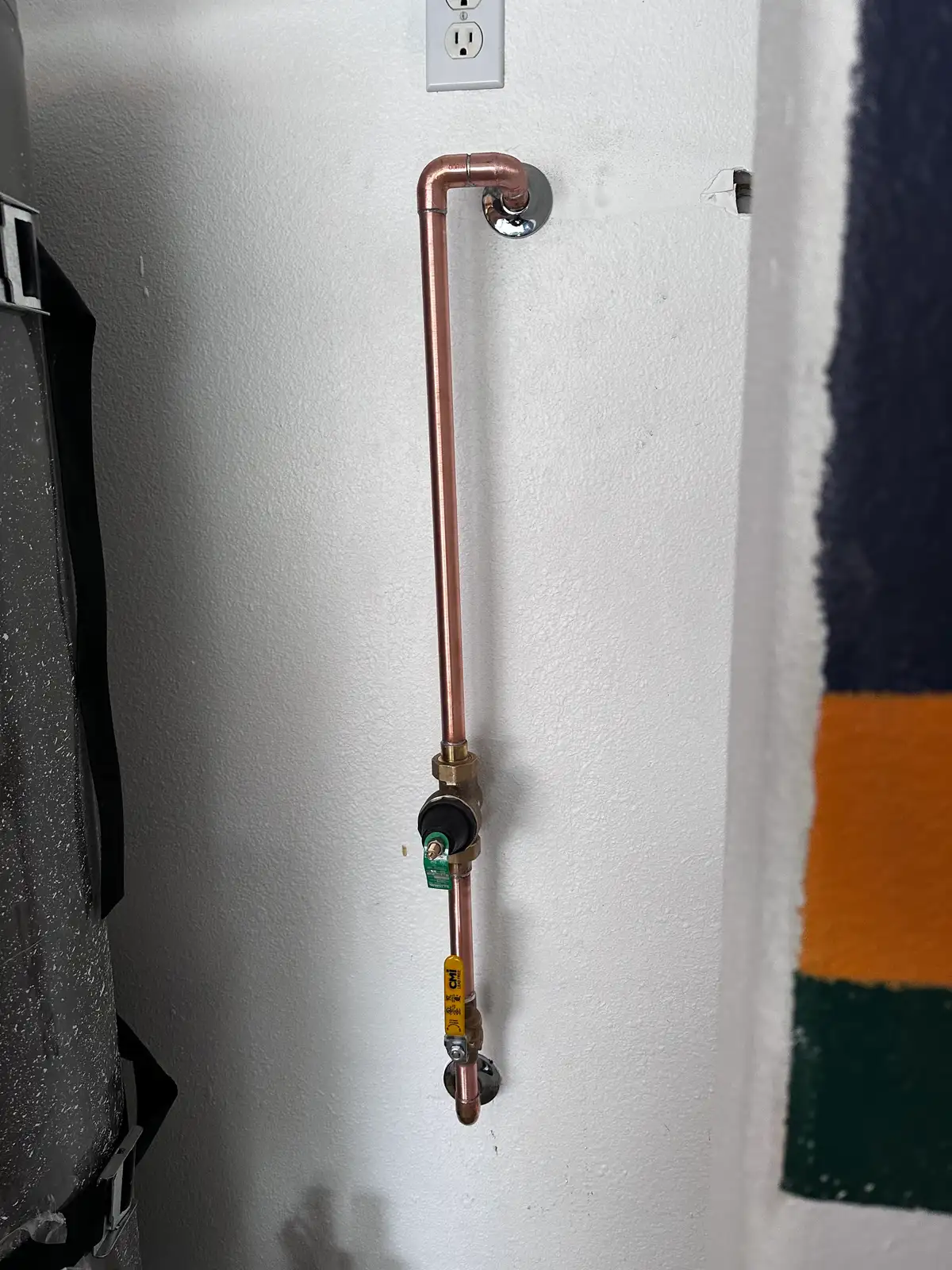
In most South Bay homes built after the mid-1960s, there is a main shutoff valve inside the house, typically within a few feet of where the water supply line enters the structure. For slab foundations — which dominate in Lawndale, Hawthorne, and Carson's 1960s–1970s tract developments — look in a utility closet, under the kitchen sink near an exterior wall, or in the garage. The valve is usually a ball valve with a lever handle, or an older gate valve with a round wheel handle.
Ball valves are quarter-turn: handle parallel to the pipe means open, handle perpendicular means closed. Gate valves require multiple full rotations to shut off flow, and older ones — common in pre-1970 construction — can seize partially open if they haven't been exercised in years. If you find a gate valve that turns with difficulty or not at all, that's a repair to schedule now, not during a flood.
In older homes in neighborhoods like Old Gardena or Moneta, the interior shutoff may not exist at all. Builders in the 1940s and early 1950s didn't always install one between the meter and the fixtures. If you've walked the garage, utility room, and every cabinet along the exterior walls and found nothing, the meter box is your primary shutoff.
Location 2: The meter box at the curb
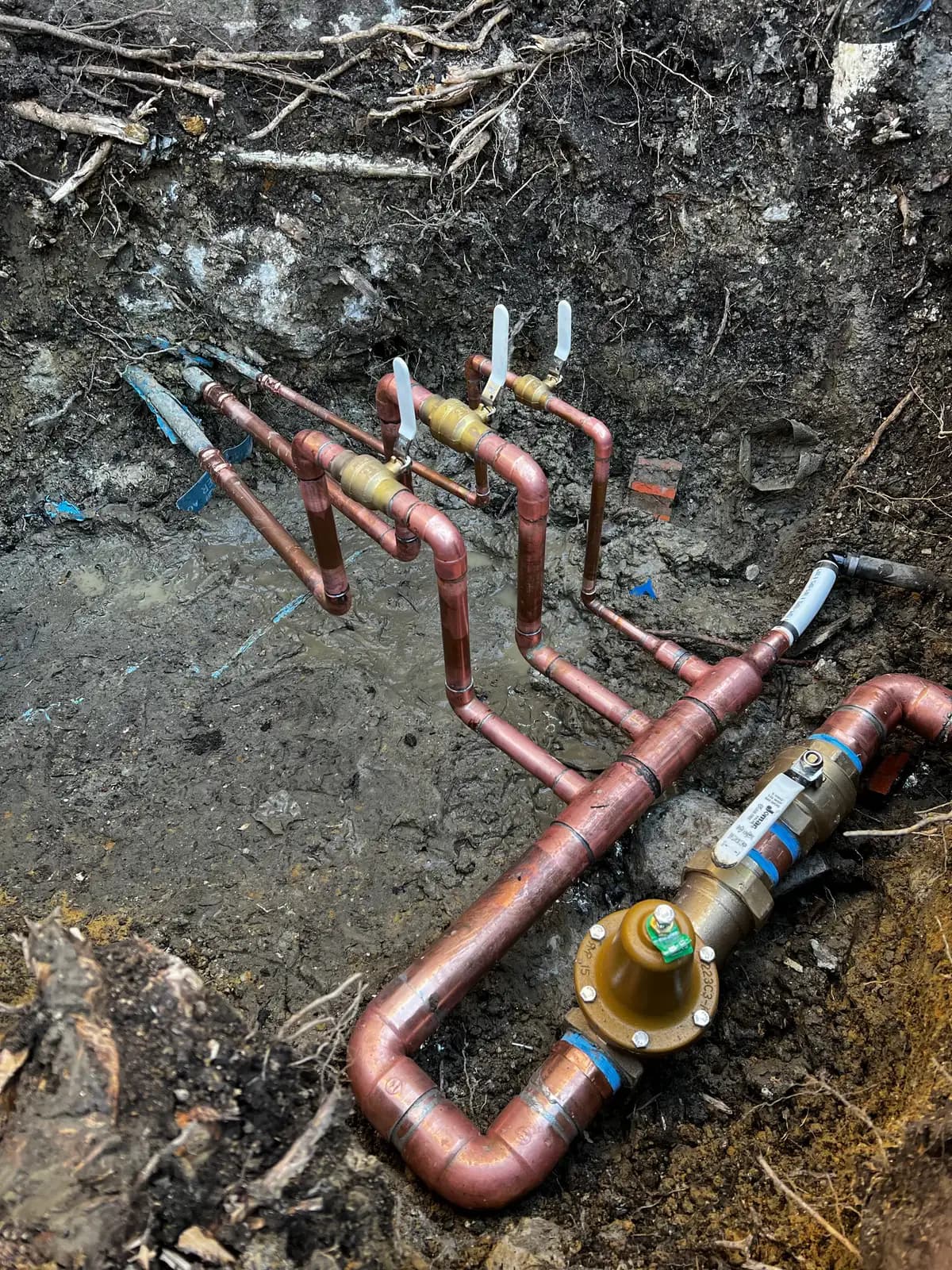
Every South Bay property has a water meter box set into the ground near the curb or sidewalk, usually within 10 feet of the property line. The box has a rectangular or round cover — often concrete, sometimes plastic — marked "Water" or stamped with the utility logo. In most cases there are two valves inside: one on the street side controlled exclusively by the water utility, and one on the house side that you own and can legally operate.
The house-side valve is what you want. It's usually a ball valve or a curb stop — a brass valve that requires a specific tool to turn. This is where the meter key (also called a curb key or t-handle water key) becomes essential. Most meter valves have a pentagon-shaped stem, not a slot or a standard hex. Without the correct tool, you cannot shut off flow here. Standard pliers and channel locks will strip the stem or fail to engage it at all.
Find your meter box now — in daylight, when there's no emergency. Note which side of the lid is street-facing, confirm the house-side valve is accessible and not packed with debris or seized with rust, and make sure the box lid opens without tools. If the box is cracked, buried under overgrown landscaping, or impossible to open without a screwdriver, call your utility to get it corrected. A box you can't open in 20 seconds is not a useful emergency shutoff.
The meter key: a $12–$18 tool worth owning
A dual-head water meter key handles both the pentagon curb stop and the standard T-bar valve. Hardware stores carry them. Some utilities sell them at their customer service counters. Keep one in the garage, not in a junk drawer inside the house — if the emergency involves water coming in through the interior, you may not want to be wading through a wet utility room hunting for a tool.
Test the meter key on your curb stop during your initial walkthrough. Some older curb stops in Lomita, San Pedro, and the western Torrance supply grid have been in the ground since the 1950s and require significant torque to move. If yours won't turn at all, contact your water utility to service the valve — it's their infrastructure on the street side, and corroded utility valves are a documented problem in older South Bay supply networks.
One more thing: once you've confirmed the curb stop works, count how many quarter-turns it takes to fully close. Some are a single quarter-turn. Others require a full 180-degree rotation. Know what yours does before 11 p.m. on a Tuesday.
Location 3: Individual fixture stops — what they cover and what they don't
Every toilet, sink, dishwasher, and washing machine should have an angle stop or fixture shutoff valve on the supply line feeding it. These are the small oval-handle or lever valves under sinks and behind toilets. They let you isolate a single fixture without cutting water to the whole house, which matters when a toilet fill valve fails at 2 a.m. and you don't want to turn off water to the kitchen while your spouse makes coffee.
The problem is that fixture stops in older South Bay homes — anything built before the mid-1980s — are often original and may not close completely. A corroded angle stop that's never been touched will sometimes hold at a slow drip even when turned fully clockwise. If you're not sure yours work, test them now: turn each one off and confirm the water to that fixture actually stops. If it doesn't fully stop, or if the handle is stiff to the point of needing channel locks to move it, replace the valve. They're inexpensive and a non-functional fixture stop gives you a false sense of control during an actual failure.
Fixture stops are not a substitute for knowing your main shutoff. If a supply line bursts between the main and the fixture stop, the individual valve does nothing. Main shutoff knowledge is the baseline. Fixture stops are additional precision on top of it.
The 90-second drill — run it once
Pick a calm afternoon and time yourself doing this sequence: walk to your interior main shutoff, close it, open a faucet to confirm no flow, reopen the shutoff, then walk to the meter box, open the lid, confirm the house-side valve position, close it with the meter key, and reopen it. That full sequence — interior shutoff identified and exercised, meter box located and accessed, curb stop tested — should take under 90 seconds once you've done it deliberately. The first time you do it may take ten minutes, and that's the point.
For households with multiple adults or older kids, repeat the drill with everyone who might be home alone during an emergency. A burst pipe in a Hollywood Riviera home in South Redondo Beach while one adult is traveling is not the time to discover that no one else in the house knows where the meter box is. Write the location down on an index card and tape it inside a kitchen cabinet or on the back of the utility closet door.
After the drill, check the condition of both valves. If the interior shutoff requires more than modest hand pressure to operate, if the gate valve wheel is frozen, or if the curb stop won't engage the meter key cleanly, those are maintenance items to address. A shutoff valve you can't actually close is no shutoff at all. If [emergency plumbing repair](/services/emergency-repair) has already been called out to your house once for a burst or a major leak, make sure this drill happens before you close the service call.
What's typically behind a slow shutoff response
Most burst pipe scenarios we respond to in the South Bay share a common thread: the homeowner lost 15–30 minutes to uncertainty before water flow actually stopped. That time window is when flooring buckles, drywall wicks, and insulation becomes a remediation project. Finding the shutoff in 90 seconds versus 30 minutes is not a trivial difference — it's often the difference between a plumbing repair and a plumbing repair plus a general contractor.
The homes that fare worst in these situations are typically 1950s–1960s slab construction where no interior shutoff was installed, the meter box hasn't been opened in a decade, and the curb stop is seized. That describes a significant portion of the housing stock in Hawthorne's Hollyglen and Bodger Park neighborhoods, as well as older blocks in West Carson. If your house is in that category, make locating and exercising the curb stop a priority before anything else.
Our [Torrance emergency plumbing](/service-areas/torrance/emergency-repair) calls regularly involve homes in Walteria and South Torrance where the curb stop is the only shutoff option — and homeowners arrive at the meter box without a key, without a light, and unsure which valve is the house-side. Twenty minutes later, water has spread to adjacent rooms. The drill described above would have prevented most of that damage.
What to do next
Do the 90-second drill this week. Locate your interior shutoff, test it, find the meter box, and confirm your meter key fits the curb stop. If any valve won't operate correctly — seized gate valve, frozen curb stop, angle stops that don't fully close — schedule a repair before an emergency forces the issue.
If you're in any of the 16 South Bay cities we serve and need a valve replaced, a shutoff inspection, or emergency response, call Mainline No-Dig Trenchless Plumbing at (310) 808-7343. We run 24/7 dispatch with a 60-minute target response and no overtime fees — but a working shutoff valve means you might not need us at 11 p.m. at all. Licensed C-36 #901735.
Tags
Related Services