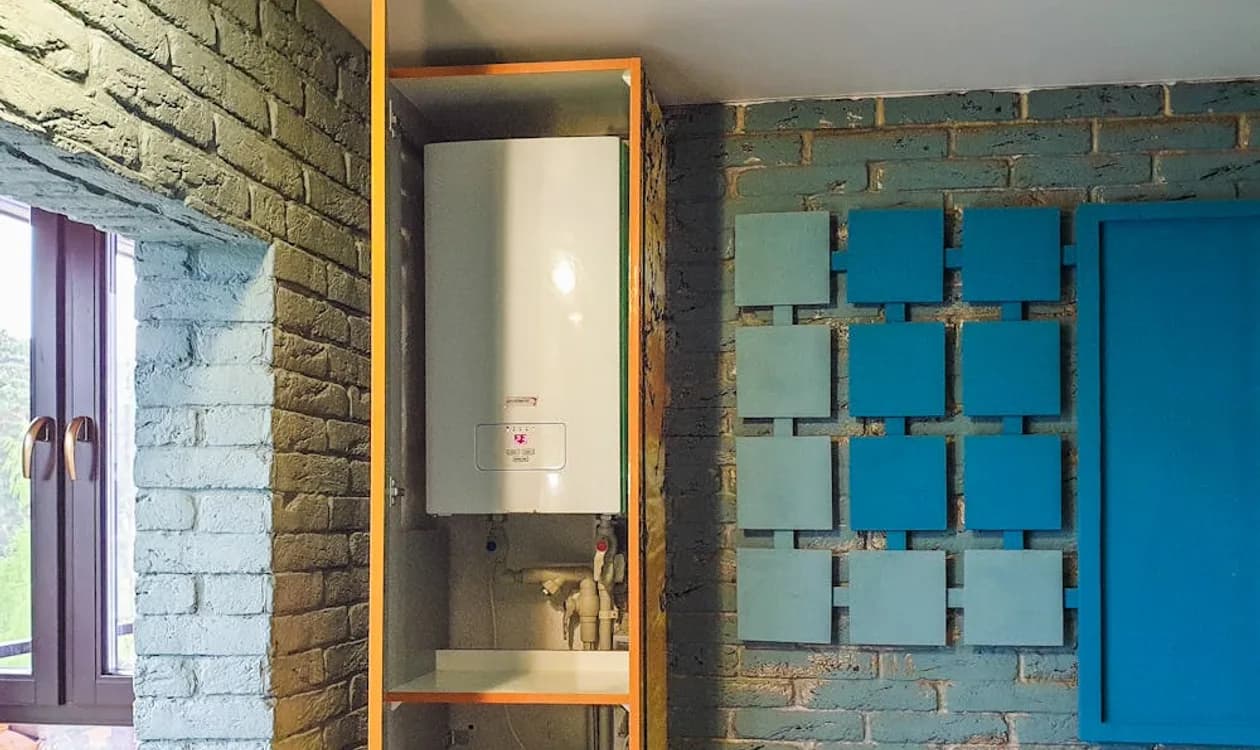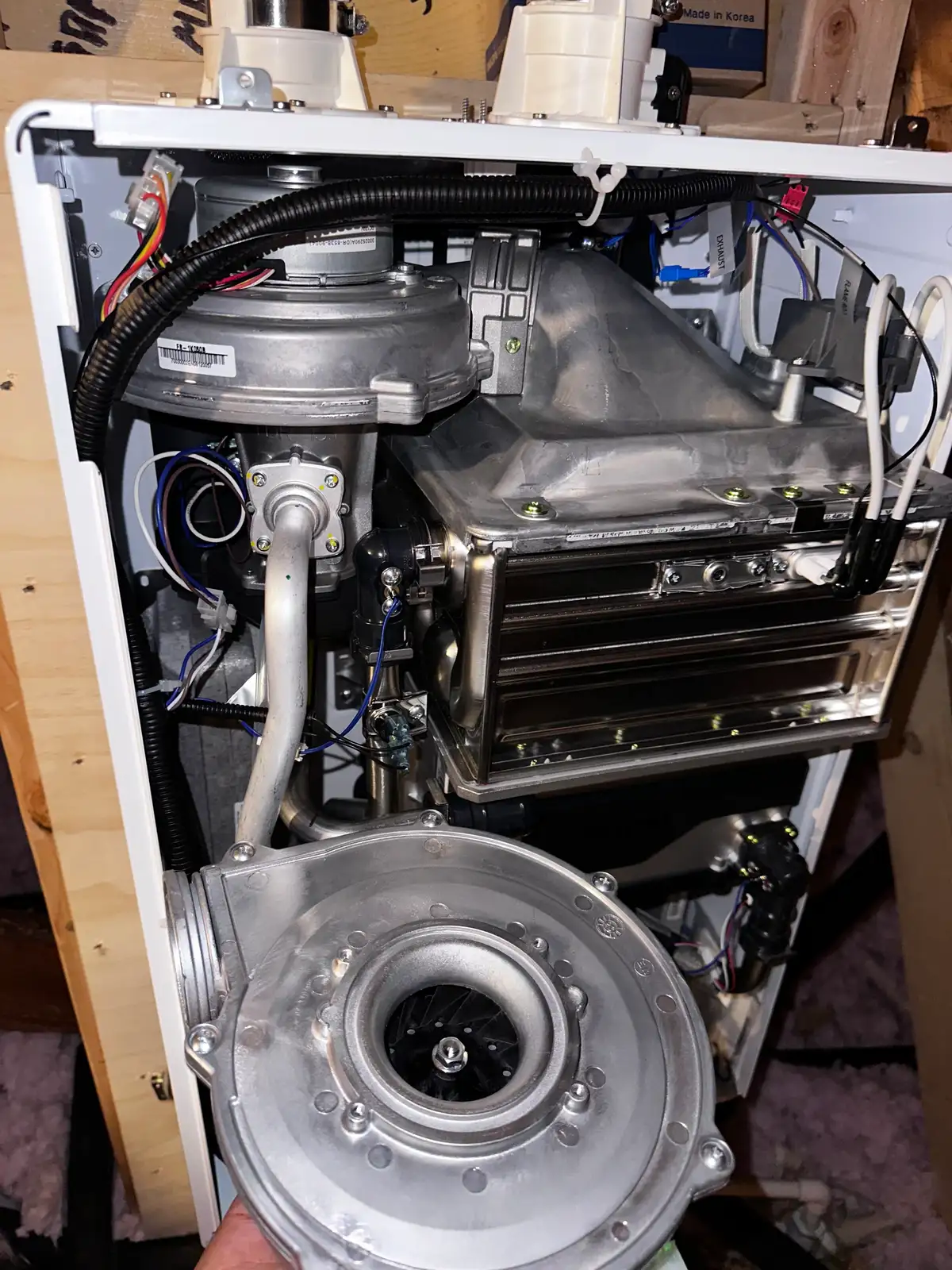
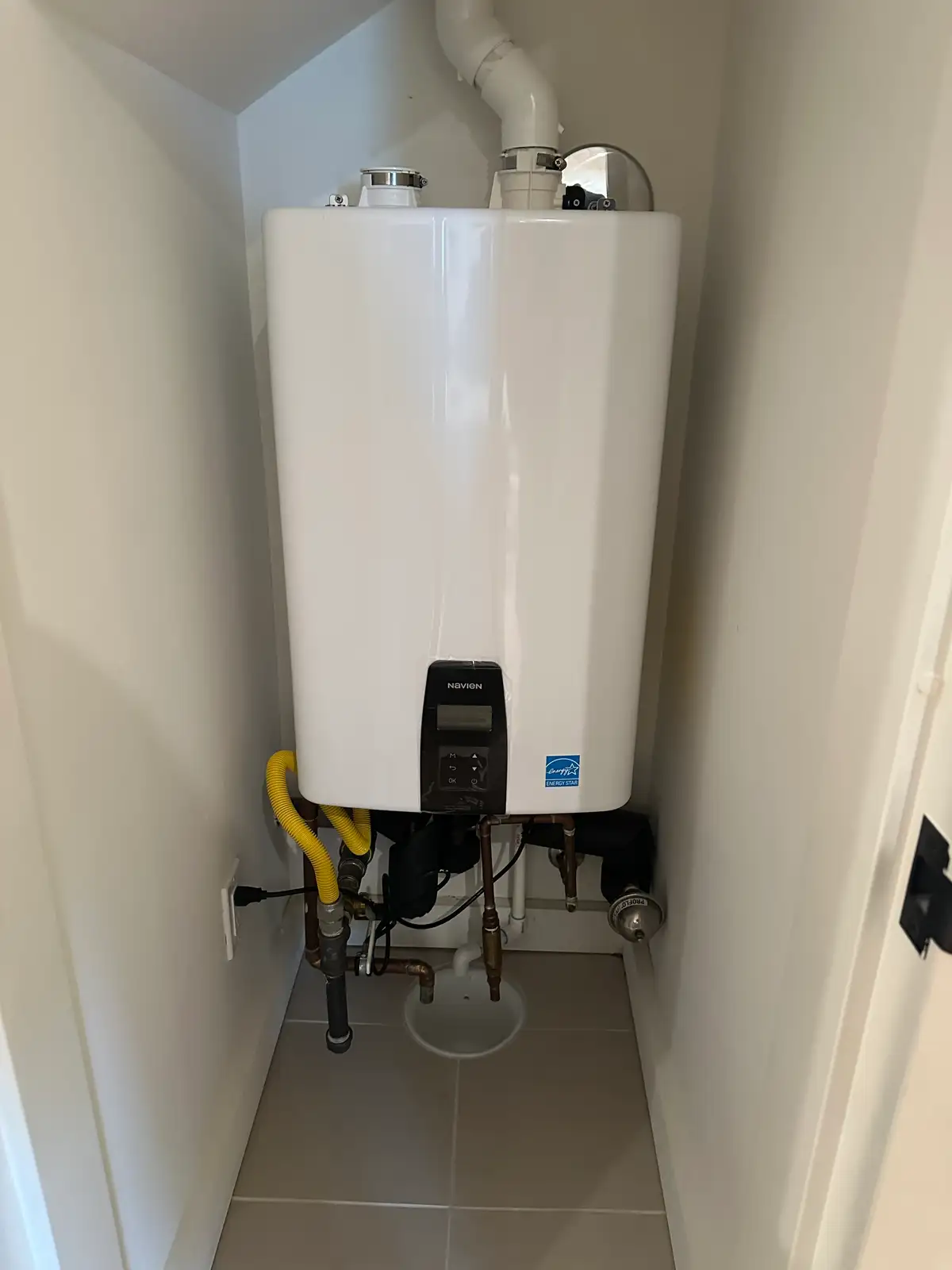
A tankless water heater installation in Torrance typically runs $2,800 to $5,500 all-in — unit, labor, permits, and required upgrades combined. That range exists because the unit price is only one piece. Gas line capacity, venting configuration, and electrical service all have to match the new appliance, and in Torrance's post-war tract housing stock, at least one of those three usually needs work before the new unit can go in.
Torrance's housing inventory spans two main eras: pre-war bungalows in Old Torrance dating to the 1920s and 1930s, and the post-war tract homes that fill Walteria, West Torrance, and South Torrance from the late 1940s through the mid-1960s. Both eras were built around 30- to 40-gallon tank heaters with modest gas demand. A modern condensing tankless unit pulls 150,000 to 200,000 BTU at peak — sometimes triple what the original gas line was sized to deliver. That gap drives most of the cost variation on these jobs.
What the unit itself costs — and why that's the smaller number
A quality condensing tankless unit — the type that makes sense for a Torrance home with hard Southern California water — runs $900 to $1,600 at the supply house depending on flow rate. Non-condensing units cost less upfront but require metal B-vent or stainless exhaust runs, which often cost more to install than the price difference between unit categories. For most Torrance installs, the condensing unit with PVC venting is the better total-cost option.
Labor on a straightforward swap — same location, adequate gas, correct venting path already present — is typically $400 to $600. That scenario is uncommon in homes built before 1970. More often, the labor figure climbs because the crew is also modifying gas supply, running new vent terminations, or installing a dedicated 120V circuit for the unit's control board. Each of those adds time and materials.
Permit fees through the City of Torrance add $150 to $300 for a water heater replacement, depending on scope. Any gas line work triggers an additional mechanical permit. Skipping permits to save money on a gas appliance is a decision that creates real liability — both for resale and for insurance claims if something goes wrong.
Gas line upsize: the most common cost add in Torrance
Most Torrance tract homes were originally piped with 3/4-inch gas mains and 1/2-inch branch lines to the water heater location. A high-output tankless unit typically requires a 3/4-inch dedicated run from the meter, sometimes larger depending on total house BTU load from all appliances. When the existing branch is undersized, adding a new run from the meter to the heater location costs $400 to $900 depending on distance and routing complexity.
In Walteria and South Torrance, where the original gas infrastructure in some homes dates to the late 1950s, black iron pipe may also be corroded at fittings or transitions. If our camera or pressure test finds a compromised section during the job, that section gets replaced. We don't leave known defects behind on a gas system — and we don't fabricate problems that aren't there either. The work scope is documented and the homeowner sees it before we proceed.
One scenario where gas line cost is unavoidable: if a home has already added a tankless dryer, a gas range, or a fireplace insert since original construction, the meter and main may already be at capacity for the existing appliances. A load calculation determines whether the meter itself needs to be upgraded through SoCalGas — a process that typically takes two to three weeks and is coordinated by the contractor, not the homeowner.
Venting: where condensing vs. non-condensing really matters
Condensing tankless units exhaust at low temperatures and can use schedule 40 PVC pipe — the same material used for drain lines. That makes venting relatively straightforward: a 3-inch or 4-inch PVC run to an exterior wall or through the roof, with a listed termination cap. Most Torrance garage installs can reach an exterior wall in 10 feet or less, which keeps this cost to $150 to $300 in materials and an hour of labor.
Non-condensing units exhaust hot flue gas and require either Category III stainless steel vent pipe or existing metal B-vent that's properly sized. If the old tank heater used a shared B-vent flue that also serves a furnace, a non-condensing tankless cannot share that flue — it needs a dedicated run. Stainless vent pipe runs $30 to $50 per foot installed. A 15-foot run adds $450 to $750 to the job before you account for roof penetration and flashing.
Direct-vent (sealed combustion) units pull intake air from outside through a coaxial pipe rather than from the garage or utility room. This is required in some Torrance installations where the mechanical room is inside conditioned space or where combustion air calculations don't support an atmospheric draw. It adds modest cost — typically $100 to $200 in additional pipe fittings — but eliminates backdraft risk and improves efficiency in tighter spaces.
Rebate stacking: Southern California Gas, SoCalREN, and federal tax credit
Start with what changed, because getting this wrong costs real money. The federal 25C energy efficiency tax credit is gone. Section 70505 of the One Big Beautiful Bill Act, signed July 4, 2025, terminated the Energy Efficient Home Improvement Credit for any property placed in service after December 31, 2025. The IRS uses the installation date, not the purchase date. If a contractor quotes you a job in 2026 that assumes a $600 federal credit, that credit does not exist and the quote is wrong.
The good news is that the rebate that remains is far larger than the credit that went away, and it's tiered by efficiency. SoCalGas's 2026 residential rebate for ENERGY STAR certified natural gas tankless water heaters pays $80 for a UEF of .82 to .86, $900 for .87 to .94, $1,100 at .95, $1,300 for .96 to .97, and $1,500 for .98 or above. The unit has to be replacing a conventional gas tank-type water heater in a single-family detached home.
That tiering is the single most important number in this whole article, because the gap between a .94 unit and a .95 unit is $200 of rebate on what is often a smaller difference in equipment price. Before you approve a model, check its UEF against the tier table and against the ENERGY STAR product list. We do this as part of quoting, and on Torrance jobs it regularly moves the recommendation one model up the line.
To claim the rebate the unit must be installed by a licensed contractor and the application submitted within the program's window after installation. Keep the permit, the final inspection sign-off, and the contractor's invoice — those are the documents the program asks for. Rebate programs are budget-funded and tiers change, so confirm current amounts at socalgas.com before you commit to a model.
Payback math for a Torrance household
A 40-gallon natural gas tank with an Energy Factor of 0.60 uses roughly 220 to 250 therms per year for a household of four, much of it lost to standby heat. A comparable condensing tankless unit uses 160 to 185 therms for the same household. At SoCalGas residential rates near $1.60 per therm, that's roughly $90 to $110 in annual gas savings.
Here's the honest version of the arithmetic. On energy savings alone, at $90 to $110 a year, a $3,500 install would take decades to pay back and we're not going to pretend otherwise. What changes the picture is the rebate. A condensing unit at UEF .95 or above brings $1,100 to $1,500 back, which takes a $3,500 job to $2,000 to $2,400 net — and at that point you're comparing against the $1,800 to $2,400 you'd have spent replacing the tank with another tank anyway.
Framed that way, the real question isn't payback period. It's whether the tankless premium over a like-for-like tank replacement — often a few hundred dollars net of rebate — buys you things you want: no standby loss, unlimited hot water for a larger household, a reclaimed corner of the garage, and 20-plus years of service life against 10 to 12 on a tank.
For homes in Hollywood Riviera or Madrona where remodels regularly add bathrooms and ADUs, right-sizing the hot water system is a practical upgrade rather than a luxury. A correctly sized [tankless water heater](/services/water-heaters) eliminates the capacity problems a stretched tank creates as demand grows. Our [Torrance water heater installations](/service-areas/torrance/water-heaters) include permits, rebate paperwork, and gas line coordination in one quote.
Torrance tankless water heater questions we hear most
**Does Torrance require a permit for a tankless water heater install?** Yes. The City of Torrance Building and Safety Division requires a permit for any water heater replacement, tank or tankless. Gas line modifications require an additional mechanical permit. Inspections are standard — final sign-off confirms the venting, gas connections, and seismic strapping (where applicable) meet code. We pull permits on every job.
**Can I keep the tankless unit in the same location as my old tank?** Usually yes, with some modifications. The gas supply, venting path, and electrical outlet all need to work for the new unit. In older Torrance garages, the existing venting may need to be rerouted or replaced depending on unit type. We assess the current location before quoting — we don't assume it's a straight swap until we've confirmed the conditions.
**What happens if my gas meter isn't large enough?** We run a BTU load calculation on the existing appliances plus the new unit. If the total demand exceeds the meter's capacity, a meter upgrade request goes to SoCalGas. That process typically takes two to three weeks and doesn't cost the homeowner directly — SoCalGas handles meter infrastructure — but it does delay the install. We identify this before scheduling the job, not during it.
**How do I verify Mainline is licensed to do this work?** Mainline No-Dig Trenchless Plumbing holds C-36 Plumbing Contractor license #901735. You can verify that license directly at the California State License Board website at cslb.ca.gov — search by license number. A C-36 license covers all plumbing work including water heater installation and gas line modifications.
**Is hard water a problem for tankless units in Torrance?** It can be. Municipal water in Torrance typically tests at 9 to 12 grains per gallon of hardness. Scale buildup inside a tankless heat exchanger reduces efficiency and shortens service life. Annual descaling — flushing the heat exchanger with a food-grade descaling solution — keeps the unit performing correctly. Some manufacturers require documented annual maintenance to preserve the warranty.
**What's the realistic lifespan of a tankless unit in this area?** A properly installed and annually maintained condensing tankless unit in Torrance should last 18 to 22 years. Units that aren't descaled annually, or that were installed with undersized gas supply, tend to fail earlier — often around the 10 to 12 year mark, which is the same lifespan as a tank and removes the longevity argument for going tankless. Maintenance is not optional; it's part of the cost equation.
What to do next
If your current tank heater is more than 10 years old, is showing rust at the relief valve, or you're planning to add a bathroom or ADU in Walteria or West Torrance, it's worth getting an accurate quote before the unit fails and the decision becomes urgent. Emergency replacements cost more and limit your options.
Call Mainline No-Dig Trenchless Plumbing at (310) 808-7343 to schedule an assessment. We'll look at your gas supply, venting path, and electrical situation before quoting — so the number you get reflects what the actual job requires, not an optimistic base case.
Frequently Asked Questions
How much does tankless water heater installation cost in Torrance?
Most Torrance tankless conversions run $4,800 to $7,200 installed, including the gas line resize and venting that a retrofit usually requires. The SoCalGas rebate then returns $80 to $1,500 depending on the unit's efficiency rating, which changes the net number substantially.
Is there still a federal tax credit for tankless water heaters in 2026?
No. The One Big Beautiful Bill Act terminated the 25C Energy Efficient Home Improvement Credit for property placed in service after December 31, 2025, and the IRS uses the installation date rather than the purchase date. Any 2026 quote assuming a $600 federal credit is incorrect.
How much is the SoCalGas tankless water heater rebate?
SoCalGas's 2026 residential tiers pay $80 for a UEF of .82–.86, $900 for .87–.94, $1,100 at .95, $1,300 for .96–.97, and $1,500 for .98 or above. The unit must replace a conventional gas tank-type heater in a single-family detached home. Confirm current amounts at socalgas.com.
Does a tankless water heater need a bigger gas line?
Usually, yes. A tank unit draws around 40,000 BTU while a whole-home tankless draws 150,000 to 199,000. Most Torrance tract homes were plumbed with a 1/2-inch branch that can't carry that load, so the retrofit commonly includes upsizing to 3/4-inch from the meter.
Do I need a permit for a tankless conversion in Torrance?
Yes. A tankless conversion involves gas line work and new venting, both permitted and inspected. Torrance water heater permits run roughly $95 to $140, with the gas line permit separate. The rebate application also asks for the final inspection sign-off, so skipping the permit forfeits the rebate.
How long does a tankless water heater last in the South Bay?
Well-maintained condensing units reach 18 to 22 years; non-condensing units run 14 to 18. Torrance water tests at 9 to 12 grains per gallon, which is hard enough that annual descaling is genuinely necessary rather than an upsell — scale on the heat exchanger is what kills these units early.
Tags
Related Services